

Could Europe's Future In Space Be Without America?
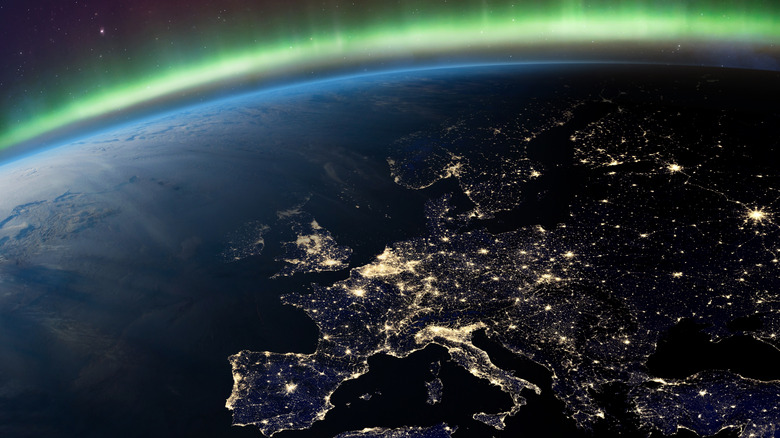
In an era of trade wars and threats against Greenland, Europe's space sector is beginning to imagine the once unthinkable: disentangling itself from America. The need came into stark relief in the last week, as Ukraine suddenly had its access to the SpaceX-built Starshield satellite network throttled. Reportedly a decision made by SpaceX CEO Elon Musk, possibly with the input of the Trump White House, the network slowdown affected Ukraine's ability to conduct both drone strikes and drone and missile defense. That makes modern warfare highly dependent on American space companies, assets, and policies. Meanwhile, as the U.S. and China are racing to put humans back on the Moon in permanent moon bases on rockets built by their own countries, Europe mostly launches its satellites and astronauts from the U.S. or Russia. That dependency on foreign partnership is looking dicey right now, and it's not clear if it will get better anytime soon.
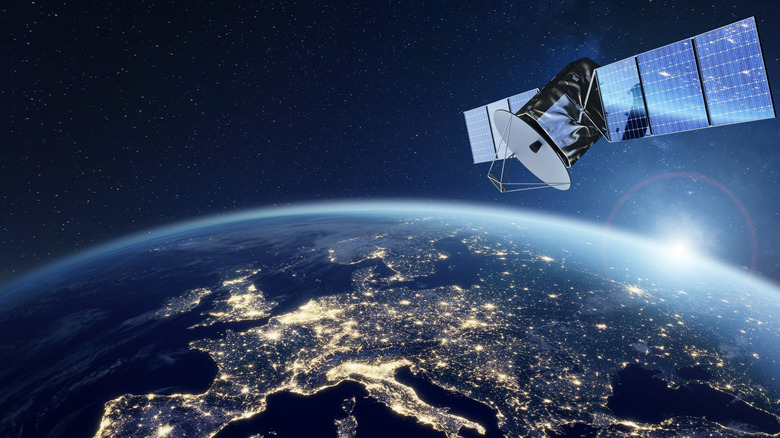
It's a tough gravitational well to break out of. For context, the last time a European rocket launched from European soil all the way to orbit was on September 5. For additional context, that was also the first time, ever, that Europe achieved this feat. Normally, Europe launches its missions from French Guiana, a French territory in South America. If the EU wants to position itself for space independence, it's going to have to build up launch capacity in the form of both spaceports and rocket production. The EU will also need more satellites, a lot more, for communications, navigation, intelligence, and early missile warning.
To date, Europe has mostly been content to let America foot the bill for all this and then get the benefits secondhand. But tensions between the two are mounting; for space specifically, the Trump administration reportedly pressured U.S. companies to pull out of the International Space Summit in Paris this year. If the future of warfare, exploration, and resources is in space, then Europe's future depends on its ability to get there on its own. And the bloc's politicians are beginning to wake up to it.
Investing for the future, now
At that Paris summit that American companies shunned, French President Emmanuel Macron didn't pull punches. "Our European space program remains fragile and we must step up our efforts," he said, before listing out some objectives: moving cargo to the Internationals Space Station in two years, landing cargo on the Moon in five, and launching astronauts on its own rockets in 10, per DW. He also explicitly said that Europe needed to stop being so reliant on American and Russian space capability. Hard to get clearer than that.
Building up all these muscles in production, infrastructure, technology, and workforce takes time. Time, and money. Probably around $1 billion per year to really get going. The European Commission is standing up a new budget allocation system called the European Competitiveness Fund, which will focus on the bloc's defense and space interests. That title is a bit of a clue: Europe wants to get to a place where it is competing directly with the other space superpowers. However, the current space boom is being driven by the private sector as much as by government projects, and in 2025, only 12% of all space investment went to European companies. The EU will need to find a way to attract more, and part of that is developing a homegrown space economy.
That part, at least, is going pretty well. A public-private partnership is already launching an EU-owned satellite communications network called IRIS2, a sort of competitor to Starlink for European governments and militaries. European startups are helping build the next generation of spy satellites; meanwhile, just a day after Starshield throttled Ukraine's access, satellite-maker Eutelsat's stock value jumped by 23%. Investors are realizing Europe's need and are starting to put money there. So the road to independence may be long, but then again, most things in the space sector take a long time to execute. While it's not like Europe will stop using American rockets any time soon, the direction of the political winds is pretty clear. If Europe pulls it off, America will have inadvertently made itself a new competitor. If it doesn't, then the Moon may remain in the skies above Europe, but it will slip out of its grasp.