

Gas-Powered 2027 BMW 3 Series Has Neue Klasse Looks, But It's Not Just An i3 With An Engine
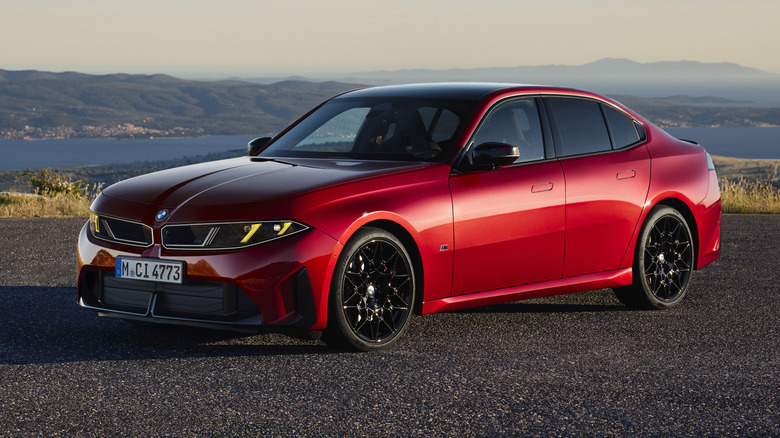
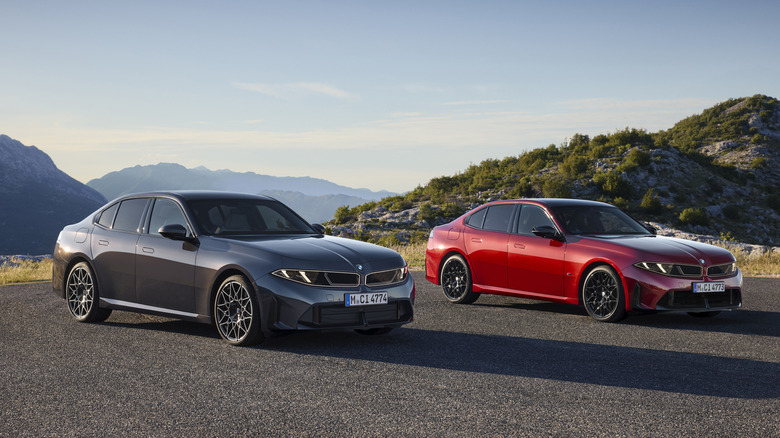
Back in March BMW revealed the new i3, not to be confused with the old i3. Though it shares its name with that beloved city car, the new i3 (codename NA0) is the electric version of the next-generation 3 Series, the second model in BMW's Neue Klasse lineup to be unveiled. Now that the i3 is about to be launched in Europe, BMW is showing off the internal combustion version of the new 3 Series (codename G50) that will sit alongside the i3 in showrooms.
While the i3 is built on the electric Neue Klasse architecture, the gas 3 Series still uses the outgoing model's CLAR platform, but both models share the awesome Neue Klasse design language. When the 3 Series goes on sale in the U.S. in early 2027 it'll launch in both 330 and M350 guises, the latter of which gets a performance-tuned turbocharged inline-6. You'll have to wait a bit longer to see the new M3, which will also be offered with both electric and gas powertrains.
Take a closer look
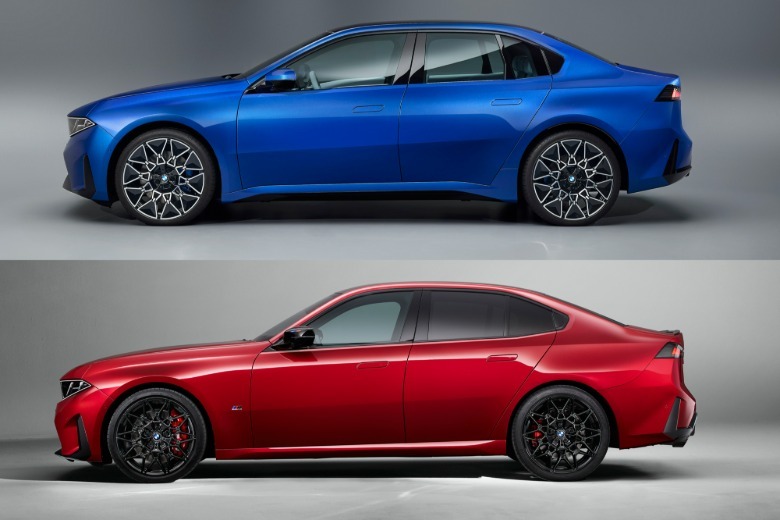
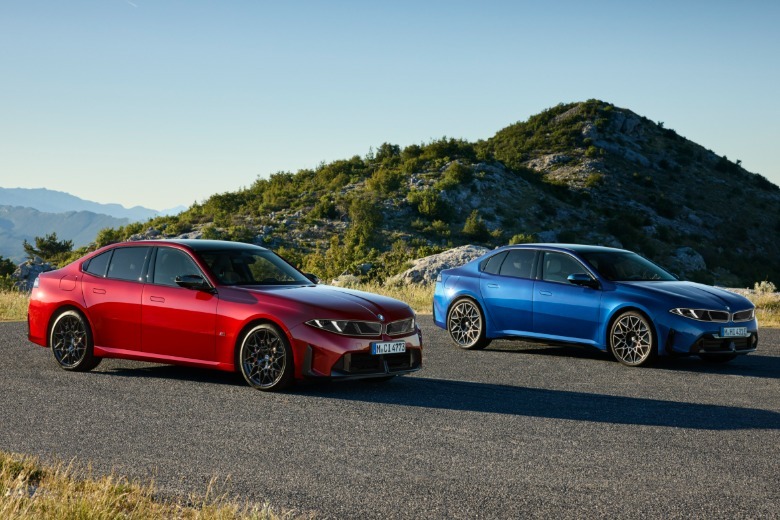
The gas 3 Series (the red one below) may look pretty much identical to the electric i3 (the blue one below) at first, but they're actually completely different on the outside. The biggest difference is in the proportions — the gas model has a sizable dash-to-axle ratio that's more like a classic rear-drive car, while the i3 has almost no gap between the front door edge and the wheel well; its hood is longer and flatter, while its trunk is a bit stubbier; the gas model's windshield is more upright, but its greenhouse and rear window are sleeker. Even the side glass is totally different, with the i3 having hidden seals and less trim.
 BMW
BMW
It's not just about the looks, as the two cars are sized differently, too. The gas 3 Series is 187.2 inches long, 57.3 inches tall, and 72.8 inches wide, 0.2 inch shorter, 1 inch lower and 0.6 inch narrower than the i3. (Compared to the outgoing G20 generation, the new G50 is just over an inch longer, an inch wider, and half an inch taller.) The biggest difference is in the wheelbase, which is 112.6 inches on the gas cars but 114.1 inches on the EV. Both cars have wider track widths than the old one, with the i3's being slightly wider out of the two, and the smallest wheels you can get are 19-inchers.
 BMW
BMW
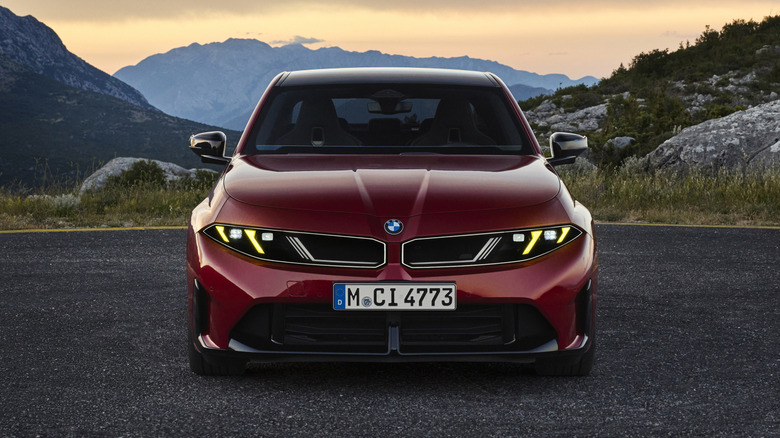
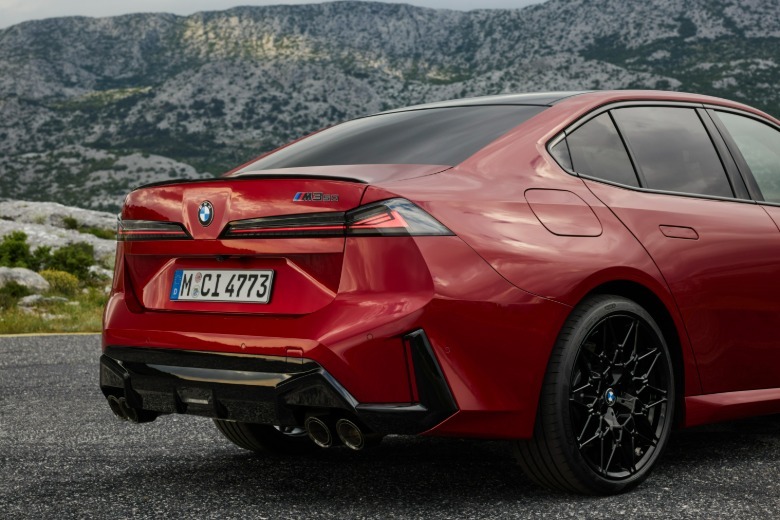
Despite all that, the gas 3 Series and the i3 are clearly part of the same model line and Neue Klasse family. Even though it's got an engine to cool, the G50 has the same mask-like nose, with headlights integrated in illuminated grille panels. The wide intake in the front bumper has some additional cooling vents, and the rear bumper has exhaust tips, but otherwise there's not much else to point out. At launch there will be eleven paint colors, with a wide range of BMW Individual options to come next year.
One design feature I do really love are the optional M Yellow Lights that are offered on the M350 model. These yellow running lights are inspired by the M Hybrid V8 race car, and previously only limited-edition M cars like the M3 CS and M5 CS have had them in production. The "grille" panels are available with the BMW Iconic Glow system, which includes welcome animations and configurable light signatures.
Techy and spacious
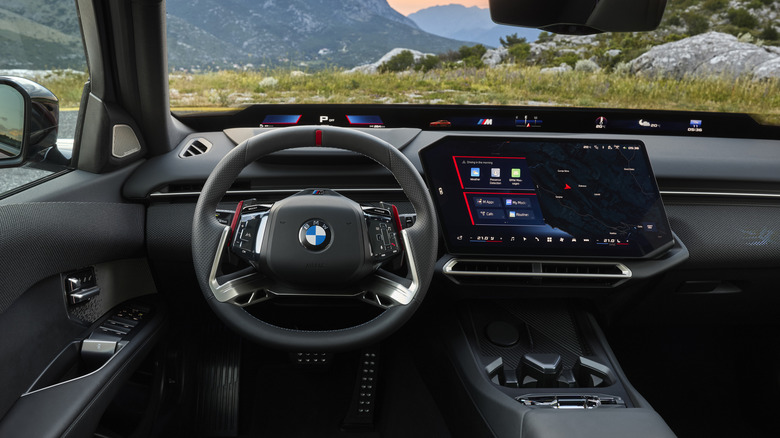
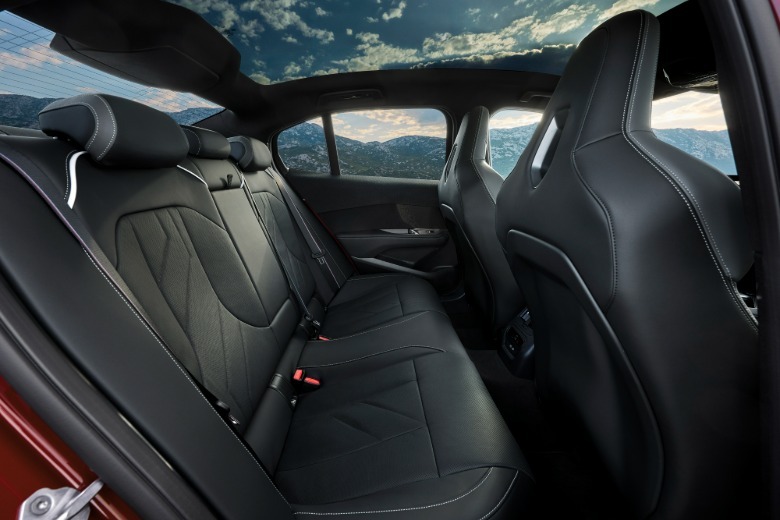
BMW hasn't released full interior dimensions for either version of the new 3 Series yet, but the gas model will have a little more rear headroom while the i3 has more front headroom, and the EV will surely have more legroom thanks to that longer wheelbase. A fixed panoramic sunroof is standard on every model. We don't know about trunk volume yet either, though we do know the i3 will have a frunk. M Sport seats with thicker bolsters and illuminated M logos are optional, but only the i3 gets an available massage function.
 BMW
BMW
Other than that, the 3 Series' cabin is even more similar to the i3 than the exterior is. The Neue Klasse interior design definitely won't be for everyone, but it's definitely for me. Every 3 Series has that "free-cut" 17.9-inch central touchscreen and Panoramic Vision display spanning the entire width of the base of the windshield, with a 3D head-up display being optional. Wireless Apple CarPlay and Android Auto come standard, but BMW's new Operating System X has been designed so you hopefully won't want to use them. It's got lots of customization and configurability, an advanced AI assistant, a routines function, and various entertainment apps. You can get an optional dashcam that can automatically record if there's a collision, including in-cabin views.
There's a few different steering wheel designs, all of which are pretty strange, and three different interior styling packages. And don't worry, you can get your 3 Series' interior in some real colors: the terracotta-like Castanea and Agave Green, along with black, Digital White and Adelaide Grey. Available features include three-zone climate control, heated rear seats, and a Harman Kardon sound system with Dolby Atmos.
437 hp and a drift mode
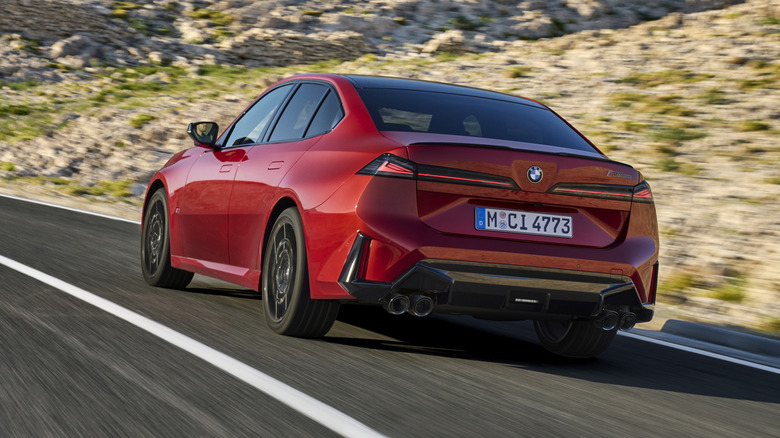
The base 3 Series is the 330 (BMW has dropped the "i" from its model nomenclature, RIP to 330i) powered by the B48 turbocharged 2.0-liter inline-4, which is unchanged from last year. It produces 255 horsepower and 295 pound-feet of torque, sent through an 8-speed automatic transmission to the rear wheels as standard, or all four wheels if you get the xDrive all-wheel-drive system. BMW says it'll hit 60 mph in 5.9 seconds, a few tenths slower than last year's model; chalk that up to the new car weighing a couple hundred pounds more.
Then there's the M350, which is an actually notable upgrade over the old M340i. Its B58 turbocharged 3.0-liter inline-6 makes 437 hp and 428 lb-ft, increases of 51 hp and 59 lb-ft. xDrive comes standard, and the M350's 3.9-second 0-to-60 time is two tenths quicker than the old M340i xDrive. Both powertrains have a 130-mph top speed, unless you spec performance tires in which case they'll do 155 mph, and they both also have a 48-volt mild-hybrid system with a 17-hp electric starter/generator motor integrated into the transmission housing.
 BMW
BMW
The gas models apparently have a "near-perfect" weight distribution, and BMW made improvements to the steering ratio, drive modes, brakes and suspension that should all make the car handle more precisely. There are two optional adaptive suspension setups, one of which is M-tuned, and both of which are only available if you get the variable sport steering setup. The M350 comes with those two items as standard, plus M Sport brakes, an M Sport rear differential, model-specific suspension tuning and a front strut bar.
BMW says the M350's quad exhaust tips give it "a sporty acoustic character," though that doesn't really matter because all the fuckboys who buy them will put on a burble tune anyway. Also appealing to those guys will be the M350's Drift Moment feature, which disconnects the front axle and turns off stability control so you can really kick the tail out. It won't be available until some point in 2027, but it'll be added to already-delivered cars via a software update.
On sale early next year
BMW also upgraded the 3 Series' active-safety systems, giving it the new Symbiotic Drive setup that "is designed for seamless interaction between SAE Level 2 assistance and the driver's normal behavior." This means the driver can give gas, brake and steering inputs without the systems shutting off, for smoother daily operation. As an example, here's how that improves the lane-keeping assist functionality:
Lane Keeping Assistant provides warnings or steering inputs only when it detects unintentional lane departure or an impending collision. It does not intervene during deliberate maneuvers if there is no foreseeable risk of collision or of the vehicle leaving the road. Turn-signal use, active steering inputs and a glance over the shoulder can indicate driver intent.
While the i3 is being produced at BMW's new state-of-the-art factory in Munich, the gas 3 Series will continue to be built in Dingolfing alongside the 4 Series, 5 Series and 7 Series. The 2027 BMW 330 will start at $51,250 including the $1,350 destination charge, an increase of $1,900 over the 2026 330i. Adding on xDrive will cost you an extra $2,000. The M350 will set you back $67,250, only $1,600 more than last year's M340i. BMW is launching the i3 in dual-motor 50 xDrive guise first, with its starting price of $62,850 slightly undercutting the existing i4 40 xDrive.