

'The Great American Road Trip' Is An Incoherent Mess, Even If You Ignore All The Ethical Issues
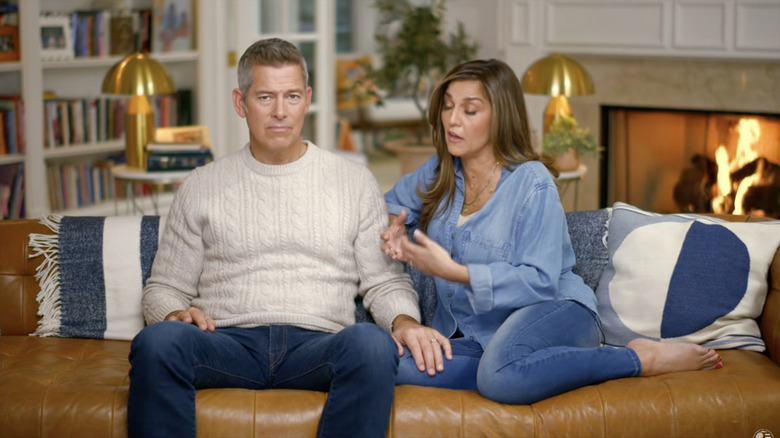
After a mysterious multi-month delay, Transportation Secretary Sean Duffy's family road trip reality TV show "The Great American Road Trip" has finally aired. Which meant someone here at Jalopnik had to bite the bullet and actually watch the damn thing. That someone was me, and I'm pretty sure I'm at least 10% stupider as a result. Even beyond being an ethical nightmare, it's an incoherent mess of a show that's beyond boring. Oh, and it barely includes any actual road-tripping. It does, however, include lots of shots of Rachel Campos Duffy's bare feet for some inexplicable reason.
There's so much to say about this show, I almost don't even know where to begin, but the ethical issues feel like a solid place to start. After all, every episode opens with a disclaimer that claims no taxpayer dollars were used to make the show. Instead, the costs were covered by The Great American Road Trip organization, a sponsor-funded 501(c)(4) nonprofit. That alone should be a problem, just like it was when Elon Musk proposed paying TSA agents' salaries during a government shutdown. Federal funds should be spent on federal projects because the alternative is a recipe for corruption if left unchecked.
Making things worse, many of the sponsors are the same companies Sean Duffy is in charge of regulating. Boeing, CHR, Enterprise, Lyft, Royal Caribbean, Shell, Toyota, and United Airlines all gave money to The Great American Road Trip, and while the Duffy family didn't get a free cruise, they did drive Toyota vehicles and visit several other sponsors in various episodes. If you want to hear how great Boeing is or get inspired by CHR's asphalt, you won't leave disappointed. If you have concerns about giant corporations being able to buy influence with an administration that appears to be fully open for business, it'll leave you feeling gross.
It's also not like the show didn't use federal resources. Sean Duffy is the Secretary of Transportation, and every minute he spent on this show was time he could have been doing the job the taxpayers pay him to do. Interior Secretary Doug Burgum took time off to appear in the show, as well. Wonderful.
Ethical issues aside, though
Based on the title, you'd assume "The Great American Road Trip" would include more road tripping. Or at least some road tripping. Instead, there's barely any. I get that they have nine kids plus their daughter's husband, and that's too many people to fit in one Toyota, but come on. A convoy could have been fun. A few episodes feature some in-car conversations, but it's more of a travel show — in the sense that I'm pretty sure the Duffy family flew from city to city and then drove around for filming.
But it's not actually a travel show. Not really. It's edited as more of a family reality show, and it comes off feeling like Duffys are mostly hoping to land a post-Trump TV deal. Production values are high. Everyone looks and sounds pretty comfortable on camera. An entire separate article could probably be written on their fashion choices. It looks slick enough, but once you get past the first episode's nominal, "To love America is to see America" messaging and visit to the White House (with footage that doesn't show the East Wing demolition), "The Great American Road Trip" mostly focuses on the Duffy family.
I'm not sure focusing less on the Duffy family would have made this show any better, though. They go to Philadelphia in the first episode, and the history that gets mentioned is pretty basic, almost like they wanted to make a children's history show before pivoting. Maybe it would have been better as a children's show. That would have at least given "The Great American Road Trip" a purpose, but by episode two, you realize the only real purpose was to put the Duffy family on camera. As a result, I can't overstate how boring the entire thing is. I persevered because I had to, but I promise you don't have to. As a show, it isn't even bad enough to hate watch.
Episode two takes place in Boston and includes a visit to the "Real World" house where Sean and Rachel met, which was the first remotely interesting thing they'd showed. It also featured Sean saying, "Without Merchant mariners, you don't have a military because you don't have a supply chain that can get the supplies to the men and women who need it when they're fighting for freedom and democracy around the world." They may have missed the part of the summer where people do most of their road-tripping, but they timed the release perfectly if they wanted to make Pete Hegseth mad.
An incoherent mess
It may sound like I'm taking a cheap shot with the Hegseth thing, but it's actually part of a larger issue with inconsistency. Throughout the series, "The Great American Road Trip" has an incredibly pro-Trump and pro-Republican attitude, but it continually undermines its own messaging. I don't know if I would have survived six episodes that sounded like Dennis Prager wrote them himself, but at least that would have made sense on some level. That's a thing the Trump DOT would plausibly do. That would have also required more effort than, "Let's go visit some cool places and let everyone see how fun and wacky our family is!"
In the Yellowstone episode, Sean gives a talk to his family about how the more buffalo stand together, the safer they are as a herd. In the Texas episode, Sean participates in vaccinating animals with a farm owner who tells him it's almost impossible to break into farming if you don't inherit land from your parents. The Arizona episode heavily features Rachel's second-generation immigrant father and first-generation immigrant mother, while going hard on the importance of family. And then there's the closest thing this show has to a plot — Sean and Rachel pushing their high school senior daughter Paloma to go to a Catholic college instead of more prestigious colleges like Harvard and University of Chicago.
In the Boston episode, while trying to convince Paloma not to go to Harvard, Sean says he wants her to be exposed to all ideas, not just one side, and liberal schools only give one side. She responds by saying she's spent her whole life in conservative schools, so a conservative college won't expose her to any new ideas. Sean's view, however, is that, "They have professionalized figuring out how they can take good young girls like you, and I think, corrupt their minds." It's an incredibly weird, uncomfortable conversation in general, but at least it's consistent with Republican beliefs about education.
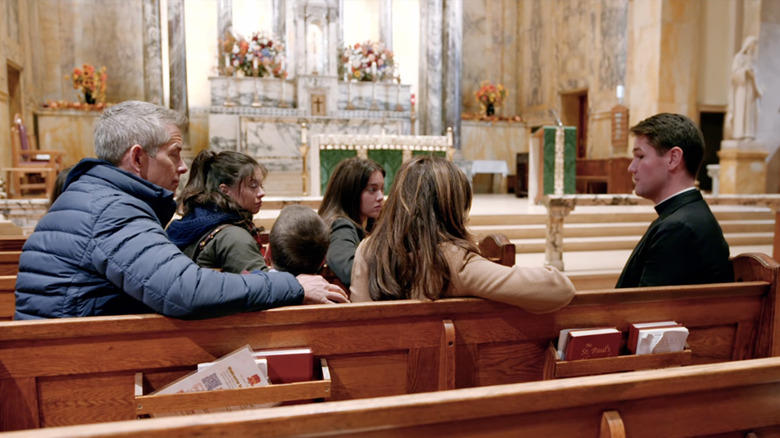
Instead of giving us a story about how Paloma learned the error of her ways, resisted the temptation of earthly knowledge, and chose a good conservative school, "The Great American Road Trip" does exactly the opposite. Later in episode two, they talk with a priest who assures them that there's an active Catholic community at Harvard and she'll be just fine. By the end of the show, despite Rachel asking, "Why are we giving our money to people who hate us?", both parents come around and end up fully supportive of her attending the University of Chicago.
Government and religion
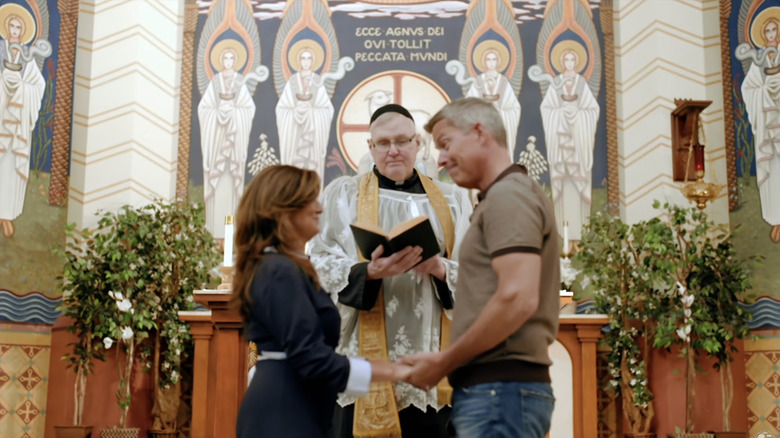
"The Great American Road Trip" is full of uncomfortable, sometimes deeply weird moments. Rachel's constant bare feet. Everyone's reactions to elementary-school-aged Patrick collapsing on the ground in pain and needing to go to the hospital. Sean saying they need some of that famous Texas barbecue before heading to Billy Bob's, a dance hall in Fort Worth that isn't known for great barbecue. All the lines that make you look up "parentification" again. A conversation in Charleston about how affordable travel is if you just pay with points. But it doesn't get more uncomfortable than the DOT attaching its name to such a religious project.
From the first episode, the Duffys make sure to emphasize how Catholic they are, and their Catholic faith is heavily featured throughout the entire show. Sean's administration isn't exactly in great standing with the current Pope, but none of that really matters. If you swapped in literally any other religion, no federal agency would have gone anywhere near this show. Nor should they have been expected to. It's extremely religious. If you told me the Catholic church was a sponsor, the only reason I wouldn't believe you is because I already checked. Separation of church and state should mean separation of church and state.
"The Great American Road Trip" shows some historic, interesting, and even beautiful locations across the U.S., but ultimately, it doesn't care about road-tripping, showcasing all the beauty the U.S. has to offer, or even giving you new reasons to visit the locations featured on the show. A lot of the spots they visit are either paid sponsor visits, owned by family friends, or obvious tourist traps. I mean, when they stopped for cheesesteaks in Philly, they went to Geno's. Because of course they did. It's a show that's deeply disinterested in anything other than the Duffy family and their religion. Good food barely registers when you're making a show with no purpose.
After watching all six episodes, the only way "The Great American Road Trip" makes sense in any way is if they're auditioning for a Duffy family reality TV show. Streaming? Network? Probably doesn't matter. Whoever cuts the biggest check, probably. And that makes this whole thing even more of an ethical red flag. It really feels like Sean Duffy leveraged his position the administration and America 250 hype to get corporations to fund his audition tape for his family's next reality show. Whether that's true or not, it might still be preferable to the alternative — living in a reality where a show as dull, forgettable, incoherent, ethically challenged, and road-trip-free as "The Great American Road Trip" is a serious attempt to inspire people to take more road trips.