

Auto Journalists Harassed By Cops Just A Result Of Flock Cameras Working 'Correctly'
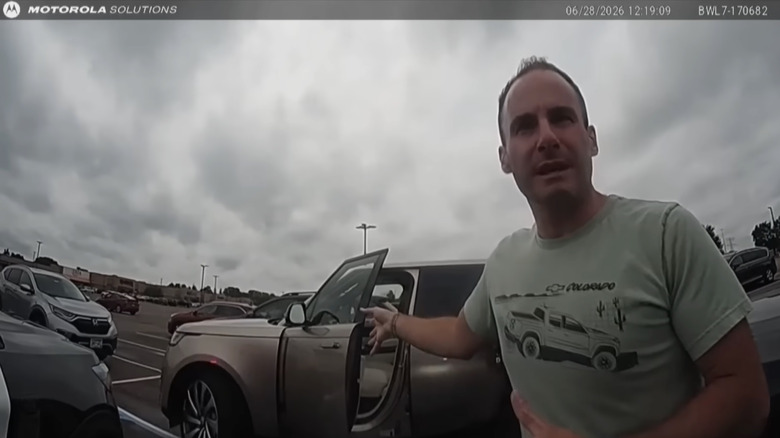
The story of The Drive's Joel Feder being detained over a false Flock camera hit for a "stolen" vehicle has spread across mainstream media like wildfire since it was published. Since this story broke, many have been asking how things came to be this way and how to prevent an incident like this from happening again. Last week Feder posted a follow-up story after speaking to Flock's chief communications officer, and the news is not good. Turns out the system worked "correctly" according to Flock, which is totally reassuring. Right?
The original stop occurred because a production studio in California lost a license plate during a photo shoot and reported it to the Los Angeles County Sheriff's Department (not LAPD as originally reported). The New Jersey manufacturer plate 34 03 DTM was incorrectly entered as 34 DTM. It was also listed as stolen, not simply lost. This eventually led police in Plymouth, Minnesota, to track Feder through Flock cameras for a week before surrounding him and his wife in a parking lot due to the clerical error. Feder's very much not stolen Range Rover press car had the plate 34 10 DTM, and those two middle digits are much smaller than normal numbers, so the cameras weren't taking that into account either.
Feder was fortunately able to explain himself to the officers' satisfaction, which led to the discovery of this error. He and one of the officers then realized that this situation could happen again to anyone driving one of Jaguar Land Rover's fleet cars containing 34 ## DTM in its license plate. It didn't take long for their prediction to come true.
It happened again
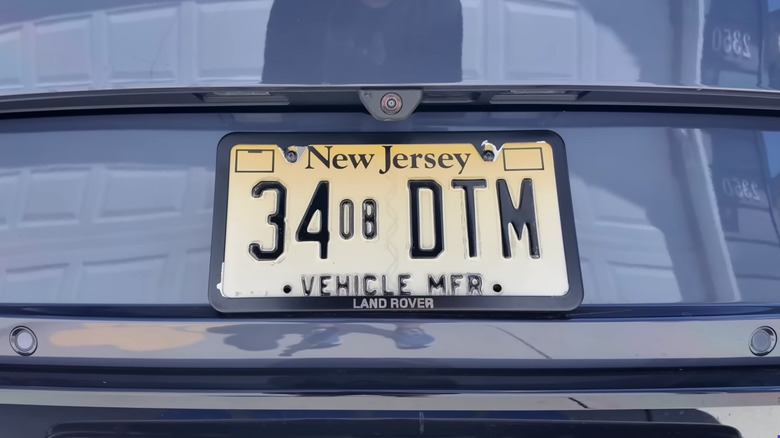
Last week, Tim Esterdahl of Pickup Truck +SUV Talk found himself pulled over while driving a Range Rover in the manufacturer fleet with the license plate 34 08 DTM. It was exactly the same situation, a Flock camera hit on a reportedly "stolen" license plate. Esterdahl had read Feder's story and luckily had a much easier time explaining the situation, but he ran into another hangup. The officer was unable to verify the Range Rover's VIN. Since the vehicle still belongs to JLR and has never been sold to the public, its VIN does not appear in the cops' computer.
After an hour on the side of the road the officer let Esterdahl go, despite still not having resolved the VIN issue. Esterdahl is quite clear in his video that he has no problem with the officer himself, what he did, or how he acted. He was just genuinely confused by the information he was (and wasn't) being given by the computers he relied on to do his job. And once again, all this happened because of one incorrectly entered license plate on the other side of the country. For a system that can supposedly track a vehicle with no license plate at all, or even individual people, it's a pretty big mistake.
It's not a bug, it's a feature
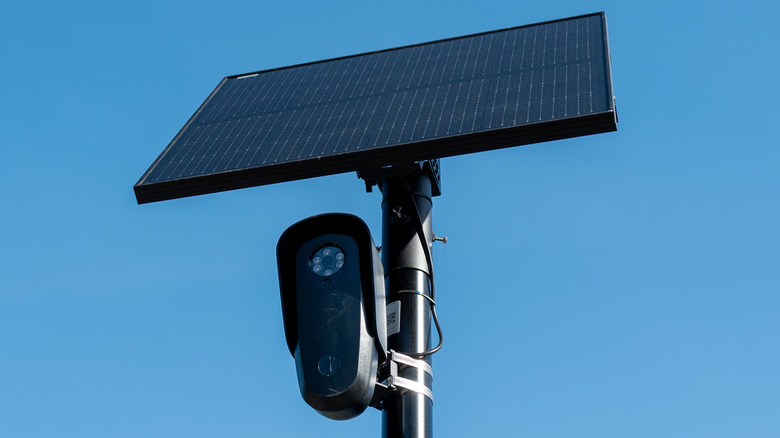
Flock Systems has finally weighed in on this problem. Flock's chief communications officer Joshua Thomas told The Drive:
"The way that the ML [machine learning] works is it correctly read what it was supposed to read. It was fed those characters that you said, 34 DTM, and it spit back out [a result] with the characters, 34 DTM," Thomas said. "It was asked, can you find this? And it did find that. It just didn't say if there's more here, then don't do it. It just simply said, is it there? And the answer was yes."
So technically, the system is working perfectly when it pulls up all these false matches. There appears to be no distinction between a full and partial match. That's a huge oversight, because sometimes a partial plate is all police have to go on. If Plymouth police had known that 34 DTM was only a partial match, their response would likely not have been as intense as Feder experienced. While Thomas agrees that there is room for improvement in this area, he also puts responsibility back on the people who use it:
"A human entered this into a system. And a human didn't put enough information into the system," he said. "The system made a read. And the outcome was a problem. But the steps to get there were riddled with errors of humans making mistakes."
Flock claims that its system is 99% accurate. That may well be true, but it's also true that it's scanning 20 billion vehicles a month, which means it's still making 200 million mistakes per month. While the situation around JLR's fleet vehicle plates is rather unique, it's not even a drop in the bucket when it comes to millions of mistakes in the system, combined with mistakes by law enforcement (who are only human, mostly). Feder said it best in his most recent update:
The technology is moving so fast without guardrails in place and it's amplifying human errors, humans aren't catching the errors on the front or middle or back end of the loop, at least not in this case, and it could've led to someone getting hurt or even killed.
If Flock cameras detect an improperly flagged license plate in a bad neighborhood with a person of color behind the wheel, things could get really bad, really quick.