

Tire Particles Linked Directly To Alzheimer's Disease, But I Can't Remember Whether That's Bad Or Not
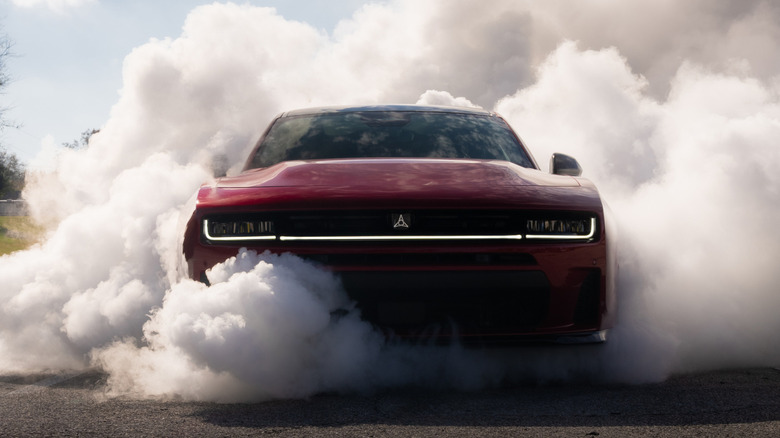
No matter how you struggle and strive, you'll never get out of this world alive. But not everyone leaves the same way, either. Anyone who's watched a loved one slip away due to Alzheimer's can tell you it's a horrible way to go that they wouldn't wish on their worst enemies. Thankfully other countries that still value science are working incredibly hard to find a cure, but our friends at Futurism recently shared a new study published in the medical journal Open Medicine that found a direct link between Alzheimer's disease and tire particles.
Researchers already knew that 6PPD, a chemical commonly used in tire manufacturing, turned into what's known as 6PPD-Q when exposed to ozone in the air, as well as the fact that it could cross the blood-brain barrier and had been linked to "significant cognitive deficits" in animal studies. But it appears the connection between 6PPD-Q and Alzheimer's disease is a new discovery. According to the study, "6PPD-Q can disrupt neurotransmitter synthesis, ion channel function, and GABA receptor activity, while promoting lipid accumulation, enhancing ROS generation, and inducing oxidative damage" in humans, as well. Additionally, 6PPD-Q exposure "induces mitochondrial dysfunction and exacerbates α-synuclein aggregation a core pathological hallmark of Parkinson's disease (PD) and 6PPD-Q levels are significantly elevated in the CSF of PD patients."
Considering the U.S. essentially built its transportation infrastructure entirely around cars, that's a problem. Not only is our country full of tires that apparently cause Alzheimer's, we also can't easily reduce the number of tires on our roads without making major changes to our infrastructure. Robotaxis and EVs won't help, either, since they still need tires. Unless you want to argue that we should just accept everyone getting Alzheimer's, we're going to need to make some big, structural changes in the U.S. that a whole lot of people aren't going to like.
Can't robotaxi our way out of this one
Of course, you didn't have to know that ozone exposure turned 6PPD into 6PPD-Q or hold a degree in neuroscience to be pretty sure tire particles were bad for humans. We've known for years that tire particles were killing salmon, lawsuits have already been filed over its use, and Nisqually Tribe natural resources director David Troutt previously called 6PPD-Q "the DDT of our generation." We all love a joke about nominative determinism, but you generally don't want people who study nature for a living telling you there's a new DDT to worry about. Humans may be God's most favorite animals, but we still have to worry about most of the chemicals that kill other animals. Even if you're convinced those fish were asking for it.
The good news is, tire manufacturers say they don't know when how long it will take to develop an alternative to 6PPD that won't kill all the fish or cause Alzheimer's, and 6PPD is just one of seven toxic chemicals that we've already identified in tire particles. Oh wait, that's bad news. On top of all that, moving to a neighborhood where you can get around without driving won't keep you from breathing in all those 6PPD-containing tire particles from other drivers. Unless tire manufacturers have been keeping their 6PPD alternative a secret, reducing our exposure is going to require everyone to collectively use fewer tires.
Since the oil-loving Republican Party appears to be fully bought and paid for, even going as far as to pay companies building renewable energy projects to stop their work, don't expect anything to happen at the federal level. At least not until voters decide they've had enough anti-science nonsense and kick Republicans to the curb. But state and local governments still have the power to offer more alternatives to driving everywhere all the time. Whether it's building separate bike lanes, improving public transportation, or increasing density in downtown areas, we have lots of options.
Heck, we could even start throwing incentives at motorcycles. Half the number of tires means half the Alzheimer's-causing tire particles in the air, and that's even before you get to reduced tire wear that comes with a much lower curb weight. You don't need that liter bike for fun motorcycle reasons. You need it so you'll still remember who your kids are by the time you turn 70. It's just science, and you believe in science, right?
What's next, demanding lead-free gas?
Then again, this isn't the first time the U.S. has had to make big changes after we learned something about cars was really bad for people and the planet. Turns out, lead is terrible for you, too, and gas used to be full of it. Despite objections from the oil and gas industry (as well as everyone in their pocket), the U.S. banned leaded gas, and America became a better place to live because of it. Meanwhile, the people who freaked out about government interference have been proven wrong again and again, as we learn how much damage leaded gas really did to people before finally being banned in 1996.
Aside from the fact that enough lead exposure can literally kill you, lower levels of lead make people more impulsive and violent, something that likely contributed to increases in violent crime until leaded gasoline was finally banned. In fact, a 2022 meta-analysis published in the journal Regional Science and Urban Economics looked at 24 of the most reputable studies on the subject and found that it probably wasn't the only factor at play, but lead exposure is still tied to an increase in violent crime. Meanwhile, a lot of those "new made-up diseases kids didn't have in the past," such as anxiety, depression, and ADHD, are now directly tied to lead exposure, as well.
Like lead, policies that would reduce tire use have other benefits. Building more apartments and condos in downtown areas would give more people the option to drive less, but more housing supply also means more affordable housing. That's just how supply and demand work. Want to see America get healthier? Great news! Driving everywhere all the time is directly linked to a long list of bad health outcomes, whether we're talking about how much fast food we eat, obesity rates, chronic stress, or other mental health issues. The more cities disincentivize driving, the easier it will be to actually make America healthy again.
Are big changes scary? For some people, sure. Would we benefit from more research that confirms the Alzheimer's link? Absolutely. But we already figured out how to slash the amount of lead we're exposed to on a daily basis, and we can do the same thing with 6PPD. It's just a matter of whether we choose to do something about it or let the oil and gas industry convince us everything is hopeless, and there's nothing to be done about filling our lungs with Alzheimer's-causing tire particles. They're going to fight to keep raking in piles of cash, but we don't have to let them. After all, are we not the same nation that won back-to-back world wars, landed the first person on the moon, and invented the Crunchwrap Supreme? I think we've got this.