

America Faced Competition From These 7 Muscle Cars That Spawned Abroad
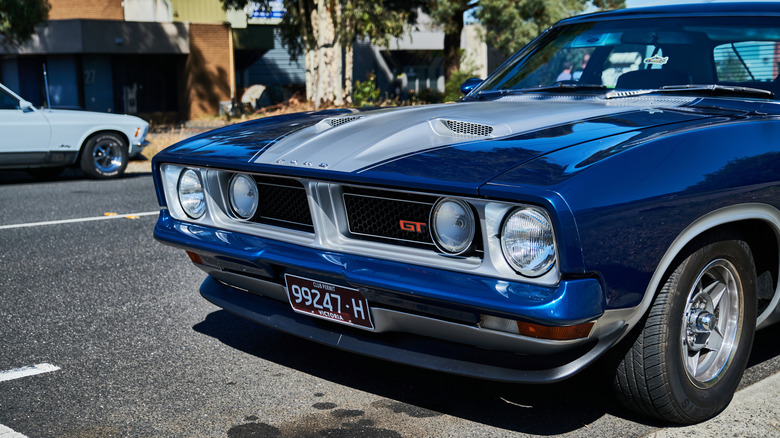
You've been conditioned to think that authentic muscle requires an American zip code. But muscle cars don't necessarily need to be American. And we aren't talking about just any powerful coupe/sedan equipped with a massive V8. We are instead examining vehicles that perfectly fit the American definition of a muscle car, produced and sold in other markets.
What would that definition be? They all need to have a roaring engine under the hood, rear-wheel drive, and cool looks. Yeah, that last part is kind of subjective, but we're referring to the classic 1960s and 1970s American muscle car design. When you see these muscle cars that spawned abroad, you'll know what we're talking about. To put it another way, you won't see Supra MK4s or BMW M5s on this list. That would've been too easy.
Oh, but don't for a second think that automakers abroad just copied the American muscle car blueprint. They adapted the formula, sure, but also refined it, and in some cases, built machines that were sharper, lighter, and faster than anything rolling off Detroit assembly lines. Don't believe us? Get ready for some foreign V8-powered shock!
1973 to 1976 Ford Falcon XB GT
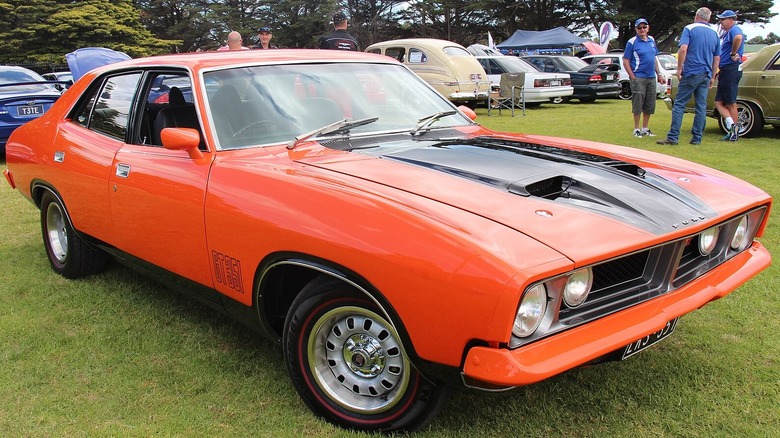
The Australia-bound Ford Falcon XB GT ticks all the boxes of a traditional American muscle car. It features a dramatic "Coke-bottle" profile that swells over the rear wheels, giving it a broad-shouldered stance. The aggressive front fascia, double-scoop hood, and fastback roofline further accentuate the muscular design. Ford also offered the model in a more practical, but equally attractive, sedan form.
But it's not only the looks. The Falcon XB GT also has the mechanical brawn to match American muscle cars. Pop up the hood and you'll find a 351-cubic-inch (5.75-liter) Cleveland V8, which, thanks to Australia's then-nonexistent smog regulations, produces 300 horsepower and 380 pound-feet of torque. The Falcon XB GT also had the right gearbox (four-speed manual, duh) as standard, with a three-speed automatic an option. Step inside the Falcon XB GT, and the driver-oriented dashboard immediately tells you this is an enthusiast vehicle. The GT models even feature a tachometer that tops at 8,000 rpm and a 140-mph speedometer, further amplifying the muscle car image.
But the Falcon XB GT didn't enjoy the market success of its American Ford cousins; Ford sold only 1,950 sedans and 949 hardtops during its 1973-'76 production span. Still, the Falcon XB GT commands a cult following in movie circles. Modified into the menacing "Interceptor," a 1973 model served as the signature ride for Mel Gibson's character, Max Rockatansky, in the 1979 post-apocalyptic Australian hit "Mad Max." A 1975 Falcon XB GT Coupe was used in the 1981 sequel, "Mad Max 2," aka "The Road Warrior," further cementing the car's cult status.
1969 to 1970 Holden Monaro GTS 350 (HT Series)
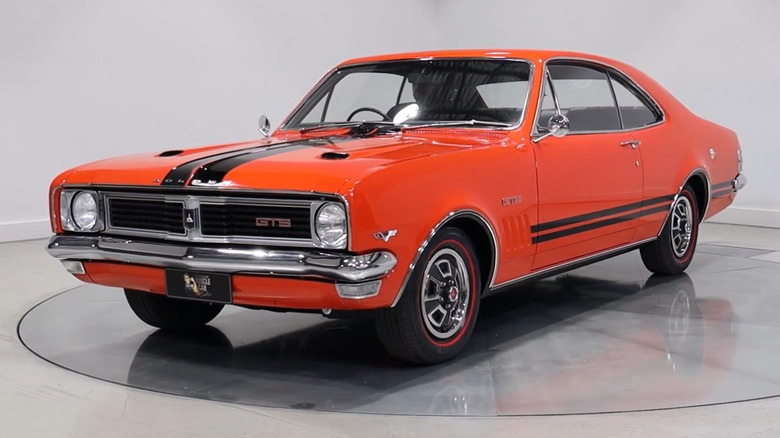
The Holden Monaro is a certified icon in Australian muscle car circles, spanning multiple generations, with the last model discontinued in 2006. It was so influential in Australia that the last-gen Monaro VXR is one of the few performance cars powered by Corvette engines. However, the early GTS 350 classics are the coolest of the bunch, as they etched the Holden name in the minds of enthusiasts during an era when the automaker mainly produced family cars.
With a pillarless design and elegant side profile, the Monaro GTS 350 still looks attractive, but it also has the muscle to compete with the best. The HT Series, in particular, was a performance beast with a 308-cubic-inch (5.7-liter) V8 borrowed from Chevrolet, good for 300 hp. Paired with the four-speed manual, the V8 propelled the GTS 350 to 60 in 8.1 seconds and the quarter mile in 15.9 seconds. Top speed: 125 mph.
To put the power down successfully, Holden chose a Salisbury 10-bolt rear axle with limited-slip differential. The GTS 350 also had a more sophisticated suspension and better brakes than its American rivals. That was especially true for the manual-equipped model, which received a competition-tuned suspension and quick-ratio unassisted steering.
Because it was an all-around package, the GTS 350 served as a homologation special for Bathurst. It proved successful in racing, winning the 1969 Bathurst 500 endurance race and the 1970 Australian Touring Car championship.
1972 Chrysler Valiant Charger R/T E49
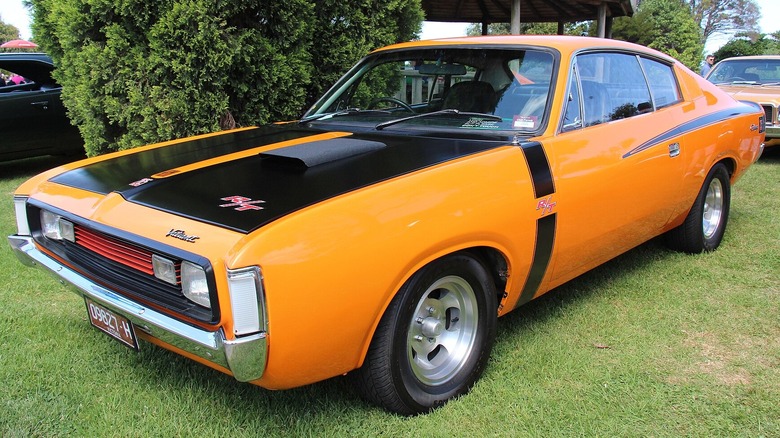
Another of Australia's muscle car greats, the Chrysler Valiant Charger R/T E49 went the opposite direction of its rivals. Instead of Chrysler's established Hemi V8s, this high-performance muscle coupe used an inline-6, despite V8s also being available.
That sounds like a recipe for disaster, but the 265-cubic-inch (4.34-liter) engine inside this beast was tuned to the teeth. Thanks to the three dual-barrel carbs and hemispherical combustion chambers, it produced 302 hp and 320 lb-ft. If you followed closely, that's more powerful than the Monaro GTS 350 and Falcon XB GT, despite the significant shortage in capacity. Oh, and the R/T E49 was also quicker than its V8 rivals. It sprinted to 60 in 6.1 seconds and to the quarter mile in 14.4 seconds, making it the fastest-accelerating Australian muscle car in 1972 as measured by Wheels magazine (via Australian Muscle Car Sales).
But the real reason Chrysler went with the smaller engine was to keep the front axle light and nimble. After all, the Valiant Charger was designed for racing, where the lighter front end benefited handling. The car was also compact, as it was based on a shortened wheelbase of the family-oriented Chrysler Valiant, not the American Dodge Charger.
The compact design gives the Valiant Charger a more dynamic sports car appearance. However, the traditional muscle car bits, like the fastback rear profile, aggressive front fascia, and customary decals are still present. Chrysler only built 149 of these cool inline-6-powered machines, and they fetch stupendous six-figure prices today.
1970 to 1972 Ford Capri Perana V8
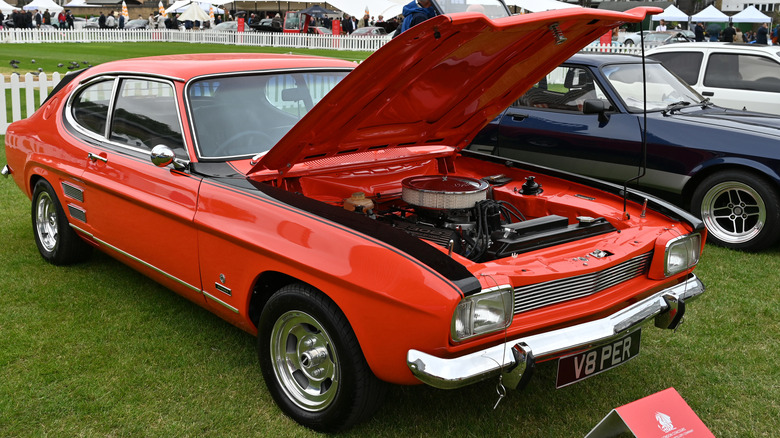
The Ford Capri enjoyed a fairly successful run in Europe, although it could never fill the shoes of its American cousin, the Mustang. Yes, Ford built it as a Mustang alternative, but the Capri was never meant as a muscle car, but rather as a sporty coupe. Case in point, it initially came with 1.3-liter and 1.6-liter inline-4 engines, with the most potent RS3100 model packing a 3.1-liter V6 with 148 hp. Good, but a far cry from Mustangs' V8s.
However, the Capri did eventually receive a V8 so powerful it could outrun its American cousin, only not in Europe, but in South Africa. A limited homologation special built for Group 5 racing, the Ford Capri Perana V8 was built by Basil Green, an engineer who owned a tuning shop in South Africa at the time.
To make it more competitive, Green equipped the Capri with a 302-cubic-inch (5.0-liter) Windsor V8 with 281 hp and 300 lb-ft. But the biggest story here is Perana's curb weight of just 2,392 pounds, which gave the car an outstanding power-to-weight ratio of 0.1175 hp per pound. Most notably, the Capri Perana V8 had a higher power-to-weight ratio than the Mustang Boss 429 (0.1053 hp per pound), which packed a 429-cubic-inch (7.0-liter) V8 with 375 hp and weighed 3,560 pounds.
And Green didn't stop there. The Capri Perana V8 also had an upgraded suspension, better brakes, and a rear limited-slip differential. As a result, Ford's South African racer, Bobby Olthoff, demolished the competition, winning 13 of the 14 races in the 1970-'71 South African Saloon Car Championship season.
1973 Chevrolet Firenza Can-Am
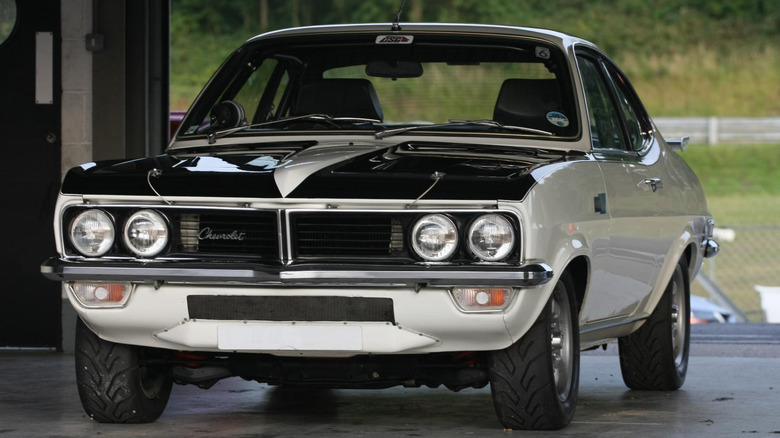
The Chevrolet Firenza Can-Am is another South African legend that follows the "muscle car internals, light body shell" ethos. Based on the Firenza GT coupe, this V8-powered racer was GM's answer to the Capri Perana V8. The car was the brain child of Basil van Rooyen, who had raced Perana V8s and used the same philosophy when he crossed to GM. The plan was to build 100 homologation cars, each equipped with GM's 302-cubic-inch (5.0-liter) V8 from the Camaro Z28 with 290 hp and 295 lb-ft. That was quite an upgrade over the regular Firenza GT, which had a 2.5-liter engine under the hood.
Although already compact and light, the Firenza GT was further lightened with a fiberglass hood, resulting in a curb weight of just 2,425 pounds. As a result, when equipped with the standard four-speed manual transmission, the Firenza Can-Am accelerated to 62 mph in just 5.4 seconds and had a top speed of 140 mph. Like its fierce rival, the Firenza Can Am also had a limited-slip differential and upgraded suspension and brakes to deal with the overwhelming power output. It even had a rear spoiler, albeit a very small one.
As a result, the Firenza Can Am was a menace at racing, just like the Capri Perana V8 before it. With Van Rooyen behind the wheel, the little Firenza won 11 races in a row in 1973. Unfortunately, its success was prematurely interrupted after South Africa banned motorsport because of the 1973 oil crisis.
1971 to 1981 Dodge Charger (Brazilian Spec)
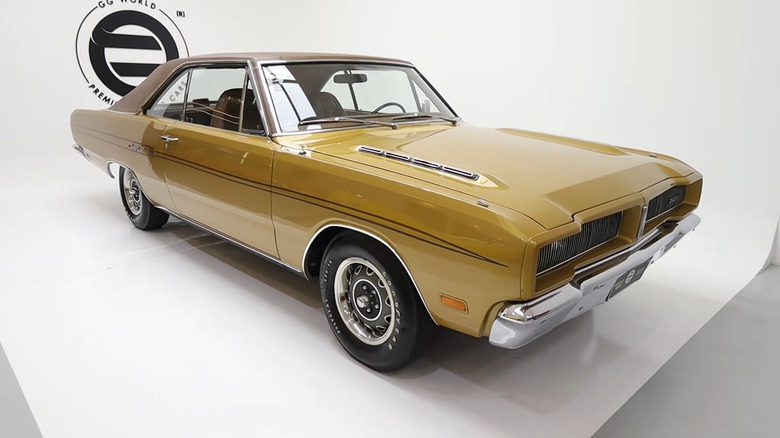
Yup, that's another Charger that's not actually the Dodge Charger you know and love. In Brazil, the Charger was actually based on the American Dodge Dart, so it was more compact and lighter. In fact, the car's regular versions were still called the Dart — only the high-performance version carried the popular muscle car moniker.
Looking at it, you can't help but notice the aggressive makeover that truly makes this Brazilian muscle car look like a shrunken-down Charger. The full-width front grille and hidden headlights are reminiscent of the first two Charger generations, while the extended C-pillar gives off a near-fastback look. The 14-inch Magnum wheels added that extra muscle car punch, while R/T models also featured racing stripes.
Dodge also made changes on the performance front. The Brazilian Dart was already plenty powerful, thanks to its 318-cubic-inch (5.2-liter) V8 with 198 hp. However, that model was equipped with four drum brakes, which weren't up to snuff. So for the Charger, Dodge installed front disc brakes, which were more than necessary, because the engine was also upgraded. Dodge used high-performance two-barrel carbs and a higher compression ratio, resulting in 215 hp. As standard, the Charger came with a three-speed manual, though a luxury-oriented LS trim with an automatic was also available.
The Brazilian Charger ended up having a long production span, remaining in the lineup until 1981. However, it was more of a luxury coupe by then, with the R/T trim discontinued a year earlier.
1973 to 1979 Ford Maverick GT
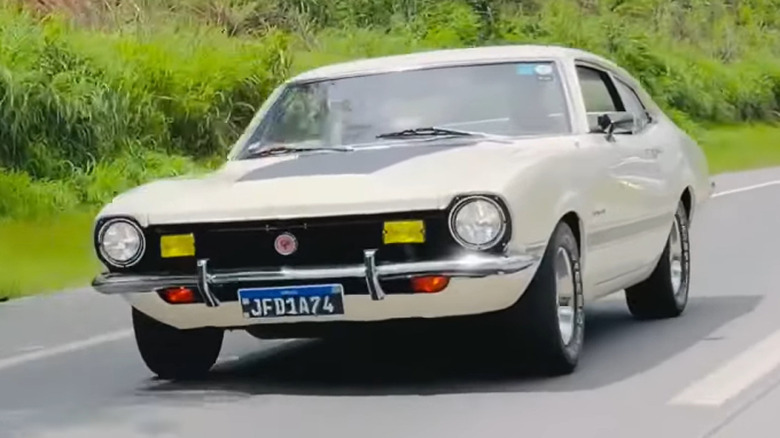
In the U.S., the Maverick was positioned as a sensible, budget-friendly economy compact. However, the Brazilian Ford Maverick, launched in 1973, was more of an upmarket car. Ford didn't sell the Mustang in Brazil; instead, the Maverick that served that role. It was so popular in Brazil that used Maverick GTs are selling at Mustang Mk1 prices there.
Yup, it's the GT model you should seek out if you live in Brazil. Regular Brazilian Mavericks were equipped with a 3.0-liter inline-6 and had a low top speed of 93 mph. However, the Maverick GT received an aggressive hot-rod infusion in the name of the 302-cubic-inch (5.0-liter) V8, which produced way more respectable 198 hp. Still not a particularly impressive figure, but Ford had to use a low 7.5:1 compression ratio because Brazilian fuel at the time was of a very low quality. Still, the Maverick GT had a top speed of 111 mph, making it the fastest production car in Brazil at the time.
The V8 wasn't the only upgrade in the Maverick GT model. It also came standard with a four-speed manual, bigger wheels, and a sporty suspension. As far as looks go, the Brazilian Maverick shared much of its design with the American version. But the Maverick GT received the customary racing stripes and rectangular driving lights.