

Trump Claims 'Right To Repair' Victory That Really Just Tries To Defang CARB
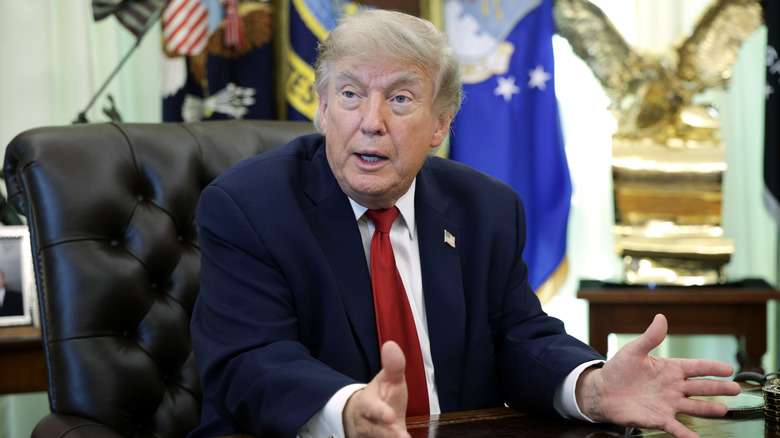
President Trump has signed a memorandum that many are reporting as a major Right to Repair win. Reading the memorandum itself, however, reveals that while it may have a few positive effects in that area, it's actually another attack on the California Air Resources Board (CARB), specifically its process of certifying aftermarket emissions-compliant parts.
The memo, titled "Lowering the Cost of Living by Promoting the Freedom to Fix," starts by claiming that the Biden Administration's "crushing environmental regulatory burdens caused the average cost of vehicles to soar." In reality, it was because of low supply during COVID-19, factory shutdowns, and supply chain issues not being able to keep up with the demand for new vehicles. It also claims that eliminating penalties for not meeting emissions regulations and spewing toxic fumes into the atmosphere for all of us to breathe is actually a good thing. Hyperbole aside, it then gets into what this memorandum is really about, and there's a lot to unpack here:
Consumers and aftermarket-parts manufacturers and resellers, however, face continuing regulatory uncertainty concerning whether aftermarket parts may be used in repairs due to the Clean Air Act's (CAA) prohibition on tampering with emissions controls. The California Air Resources Board (CARB) has the only certification process for aftermarket parts currently recognized as sufficient under the CAA, but that process is faulty. Obtaining a CARB Executive Order certifying that a part does not increase vehicle emissions takes increasingly long — now well over a year — even when an applicant has all of the paperwork and testing in order. It is increasingly costly, and it effectively hands the determination of Federal compliance over to the State of California. Further, because it is the only currently available and accepted certification process, the certification of parts is bottlenecked at CARB, driving up costs and limiting the supply of compliant parts. To further ensure vehicle affordability, it is the policy of my Administration that consumers should be able to fix their vehicles with affordable parts without being deemed to have circumvented emissions controls.
California makes the rules
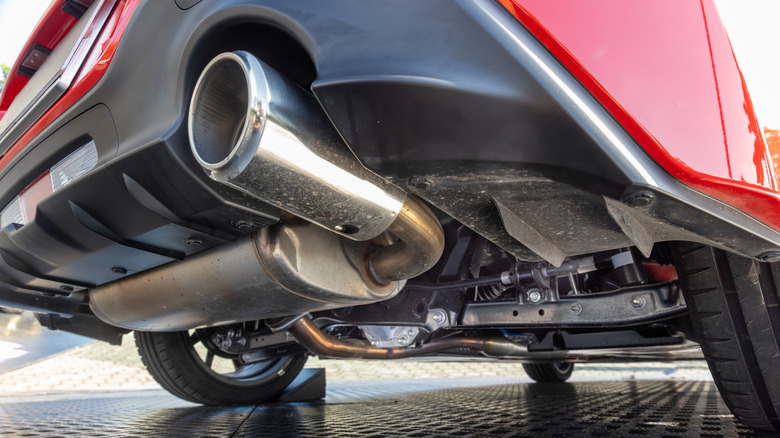
CARB has been making its own emission rules for decades, more strict than the Clean Air Act because California believes that's necessary to prevent the smog that plagued its major cities in the 1960s and 1970s. There, it is illegal to run emission-related aftermarket parts unless CARB has tested and proven them to not increase emissions. We're not just talking parts like catalytic converters that directly affect the gas coming out the tailpipe, but also intakes and engine tunes, since they can have an effect as well. Any non-factory part that does not have a CARB exemption is illegal and will not pass California inspection.
A number of states choose to follow California's lead on stricter emission standards. The exact number varies, as some states adopt these standards, others eliminate them, and New Hampshire sits in limbo with a federal judge saying "do it" and the state saying "no, make me." According to CARB, 40.7% of light-duty vehicle registrations are in states following CARB's rules. That said, enforcement in these states isn't always as strict as in California itself. For example, I saved money and rarely used the more expensive CARB-approved parts on my cars when I lived in Massachusetts, yet I never failed an annual inspection for not having CARB-approved parts the way I would in California. (I occasionally failed for other reasons, but not for that.)
The Clean Air Act also prohibits the sale and use of aftermarket parts that would make emissions worse, such as defeat devices, but currently offers no clearly defined method to prove that these parts comply with the law, either. According to SEMA, the best way to do that is CARB approval, effectively outsourcing what should be a federal responsibility to a single state: California, just as Trump says.
Did you get the memo?
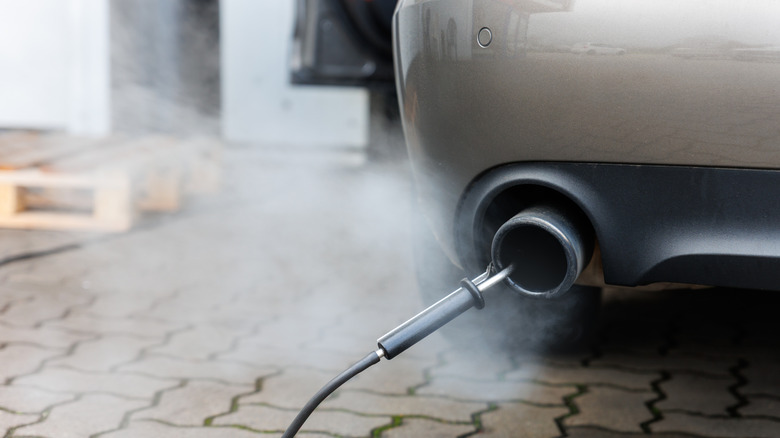
Back to the memorandum, which is not an executive order, but more like a polite request. It contains three major provisions. The first is:
The Administrator of the Environmental Protection Agency (EPA) shall provide guidance within 30 days of the date of this memorandum on the freedom to fix by clarifying what actions individuals may take on their own vehicles to conduct emission repairs or have emission repairs conducted, consistent with the CAA.
With no federal restrictions currently in place other than to not violate the Clean Air Act, how exactly does this help? A great deal of recent reporting on this calls it support for the Right to Repair movement. Trump has voiced vague support for it in the past, but this is the same man who also said that many Americans are better at fixing their own cars than mechanics, according to the Detroit News. We know this isn't true. Any new guidance Zeldin provides may end up being more restrictive rather than less. It doesn't get much less restrictive than simply "don't break the law."
The second provision is where I see the real meat and potatoes of this memorandum:
To increase clarity for aftermarket-equipment manufacturers, prevent cheap foreign knock-offs, and reduce reliance on CARB's faulty and backlogged certification process, the Administrator of the EPA shall encourage the submission of, expeditiously consider, and act on any requests from organizations capable of testing aftermarket parts for conformance with the CAA.
Trump wants the federal government to oversee the testing and certification of aftermarket parts for Clean Air Act compliance. In itself, this is a good idea. There's clearly a need for unambiguous certification of whether parts are legal or not, one that CARB has taken upon itself to fill in the absence of federal certification. But given the Trump Administration's lax attitude toward the environment, it makes me wonder not only whether this would become a rubber stamp on non-compliant parts with a nudge and a wink, but also whether California would be forced to abandon CARB's genuine testing to adopt weaker federal standards. Trump has also said that emission standards don't "mean a damn bit of difference for the environment," which could indicate that concern for the environment may not be his top priority. Which leads right into the third provision:
The Administrator of the EPA shall consider deprioritizing civil tampering enforcement actions against anyone who, in good faith, attempts to fix his or her own vehicle to its original configuration.
This sounds good on paper, and makes sense if you take the memo at face value. We shouldn't live in fear of prosecution for installing a part on our car that didn't pass a non-existent federal certification process. However, this also provides an easy out for anyone Zeldin's EPA doesn't feel like prosecuting. He's already called for eliminating "Low Def" limp mode in diesel trucks, despite this violating the EPA's own requirements listed on its website. Trump has already pardoned a diesel tuner convicted of violating the Clean Air Act. What's to stop the EPA from halting prosecutions of other genuine polluters because they were acting "on good faith?"
It will be interesting to check back in 30 days and see exactly what guidance EPA Administrator Lee Zeldin has issued regarding aftermarket parts. Will it make regulations more restrictive than they are now, or will it regulate CARB's standards out of existence? Only time will tell.