

11 Toyota Tacoma Mods Drivers Say Are Totally Worth It
We may receive a commission on purchases made from links.
It's far too easy to be swept up by the vast world of vehicle modification on the internet these days. Every other post, every other hour, there's someone with too much money showcasing SEMA-level builds that the average enthusiast could never dream of completing. And this fact becomes even more prevalent when popular platforms are involved. The aftermarket is larger, the options grow, and deciding what direction to take your build becomes that much more difficult.
Take the Toyota Tacoma, for example. It revolutionized the mid-sized, light-duty pickup all the way back in 1995. Thirty years and four great generations later, factory production is still going full-steam ahead, and its aftermarket has become one of the largest in the truck industry. And if you took the Internet's advice, you'd probably believe that nothing short of a 2JZ-swapped pre-runner race truck is the best path.
If only there were another side of the internet where folks discuss the modifications that were actually worth it to the average Tacoma owner for everyday usability and performance. Surprise — there is. Forums like TacomaWorld, Reddit, and others provide a much clearer picture of the real-world reception on these modifications. So we've done the job of scouring these online corners to bring forth a handful or two of aftermarket additions that, to many Tacoma owners, are completely free of buyer's remorse.
Lift kit
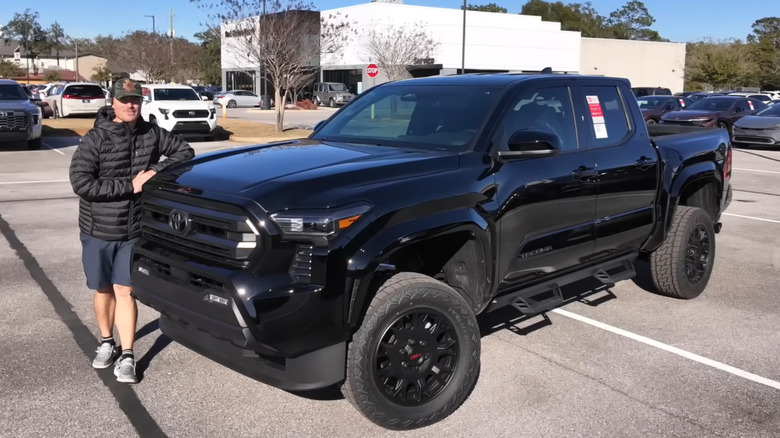
As cliché as it sounds, a lift kit is one of the most popular mods for a reason. Deciding if you should lift your truck or not is the first step, but it's an addition that has an incredible amount of potential. Beyond providing more ground clearance, it grants the opportunity for a larger wheel and tire combination, and you can tune the stance to your liking. And, unsurprisingly, a large number of posts on Tacoma modification forums mentioned their satisfaction with lift kits.
However — and this will be the case with several of the items on this list — a lift kit can easily be done poorly. Less reputable parts may give your Tacoma too much or too little difference from stock ride height, cause wacky suspension geometries, or underperform with the wrong wheel and tire setup. In general, you'll want to do your research on high-quality, proven kits, and decide how extreme you want to go for your desired function — whether it's for pure aesthetic pleasure, light off-roading, or rock crawling.
What's cool about Toyota, though, is that it sells official TRD-designed lift kits for third- and fourth-generation Tacomas. They provide all the typical benefits, but with proper factory-designed or approved parts like Bilstein shocks and additional sensors that will keep your truck happy. The cheapest Tacoma lift kit available from Toyota itself is set at around $1,750, but the prices will vary depending on your model.
Wheels
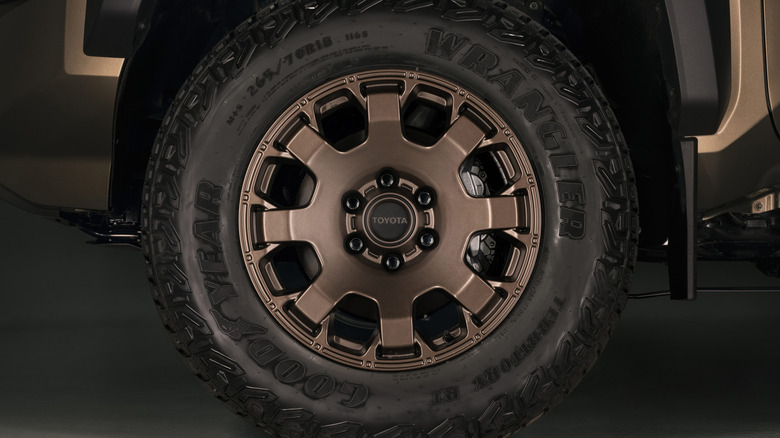
If a lift kit is a solid pair of pants, then good aftermarket wheels are your Tacoma's new shoes. Both need to combine in a way that promotes style and function if you intend to go down the path of modification. Of course, a stock-height Tacoma can also benefit from new wheels, too. But the question we're focusing on here is why aftermarket wheels are popular, and there are several unimpeachable reasons offered by owners on many forums.
Firstly, a new set of wheels can vastly expand your options when it comes to tires. Stock wheel sizes for later Tacoma generations are anywhere from 16 to 18 inches, which can certainly fit new tires on their own. But if you're looking for additional width, a set of performance-focused aftermarket wheels is a no-brainer. (Consider something like the Moto Metal MO970, a sub-$300 wheel that's been highly recommended by major outlets.) Secondly, depending on the wheel, you can save rotational weight, especially if you want to offset the additional pounds you may have added with new tires. Lastly, performance wheels just simply look cool. Install all the crash bars, fog lights, and lift kits you want, but it won't come together without a set of spinners that complement the aesthetic.
Of course, aftermarket wheels are yet another item that can go wrong if you don't know where to start. But if you need a good ballpark guide, both owner forums and Tacoma-specific aftermarket outlets recommend wheel sizes from 16x8 to 18x9 with tire widths ranging from 265 to 285 millimeters, depending on the setup.
LED headlights
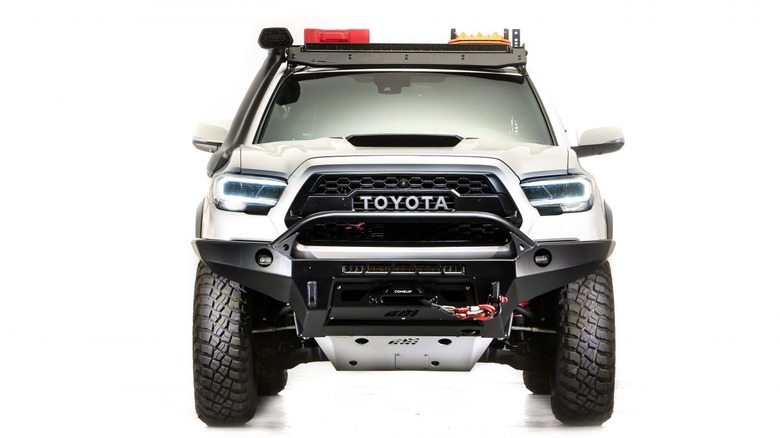
You wouldn't believe the difference a good set of LED headlights makes, especially when coming from the traditional yellow-hue halogens that many previous-generation Tacomas were equipped with. For current generation owners (fourth-gen), you likely won't need an upgrade in the headlight department. Every new Tacoma comes with LEDs from the factory nowadays. However, for those with third-gen Tacomas or older, the community's opinion is that you should consider an upgrade.
This particular modification is one of the very first and most agreed-upon additions we noticed in our deep dive. Unsurprisingly, many avoided the aftermarket altogether and recommended going straight to OEM Toyota LEDs. This trick will only work for third-gen pickups, however. During its production run, certain high-trim Tacomas were available with LEDs, making it easy to find those OEM units and install them on a truck with halogens. For first-gen and second-gen examples, the aftermarket is the only option.
The benefits of an LED headlight setup are fairly obvious: seeing farther, wider, and more clearly at night. This also makes it a justified upgrade for off-roading. But for the technical nerds out there, you'll also be pleased with the significantly lower energy consumption, as LEDs require far less power to operate than halogens.
Tires
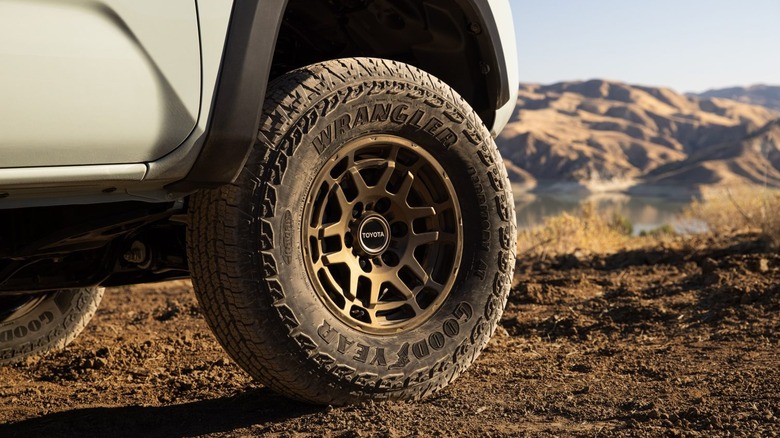
You may be asking, "Why separate wheels and tires into distinct sections?" The answer is simply a matter of diversified functions. Some owners may want that sporty performance look, but they don't need a set of tires more aggressive than stock. On the other hand, certain Tacoma owners could have an inkling for the "sleeper" style, with performance tires (whether they're using off-road rubber or otherwise) mounted on either stock or understated rims.
Funnily enough, many of the posts and discussions we frequented didn't often specify the tires they bought – only stating that tires in general are a mod they didn't regret whatsoever. There are many lists about the best all-terrain tires. But after a bit of digging through the forums, a few of the standout owner-approved choices included the Falken Wildpeaks (particularly for the snow), Nitto Ridge Grapplers, and BFGoodrich K02s. But the tires that work for others might not work for your setup, so be sure to take your environment into account before making a decision.
Fog lights
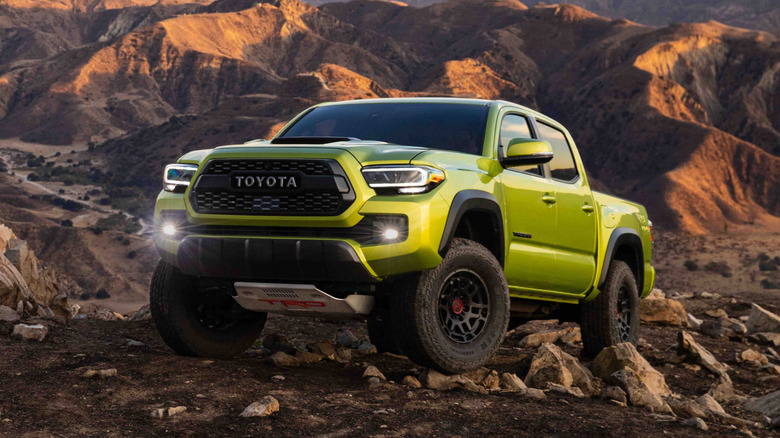
To some, aftermarket fog lights may feel like a waste of money. They're great for drivers on hardcore off-road adventures in extremely harsh conditions, but those driving primarily on paved public roads wouldn't often need them. That being said, not everyone lives in regions with mild, temperate climates. The conditions one might encounter on a "regular" public roadway could involve intense snow, fog, dust, rain, hail, and everything in between – and all of those conditions are navigated more easily with a good set of fog lights.
Unlike a modification such as the lift kit, it's hard to mess up an addition like fog lights. Instead of changing a fundamental aspect of the truck (like its suspension geometry), all you're doing here is installing lights. As long as they're better than whatever your stock vehicle comes with, Tacoma folks typically recommend this mod.
We won't be making specific recommendations for most of these Tacoma mods, but there is one brand that's impossible to ignore: Diode Dynamics. In the forums, listicles, and just about everywhere else we looked, Diode Dynamics' various fog light options for the Tacoma were easily the most frequently cited product out there. Again, this is no endorsement or sponsorship — and the lights from this company cost around $380 – but when car people agree on something to this degree, it's likely worth a look.
Overland Tailor Tuning
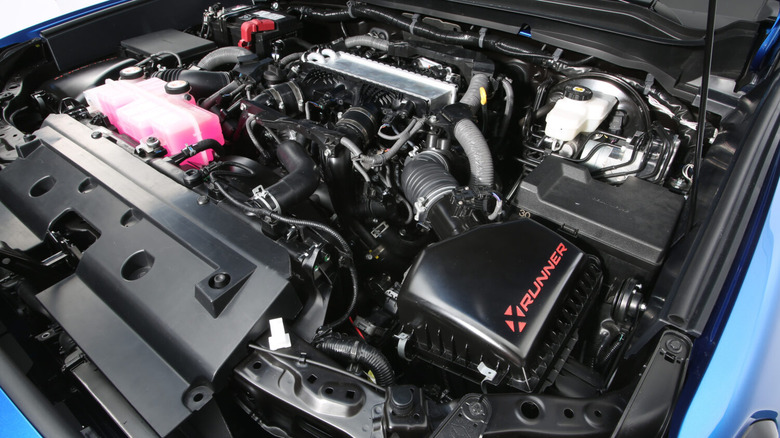
Ironically, despite the last slide's statement that most of these sections wouldn't include a specific product, our next featured modification is exactly that. To be fair, a tune can mean many different things depending on the degree of your build, ranging anywhere from a mild fuel economy flash to a race-ready, fuel-guzzling setup for a built motor. And due to the endless possibilities of this topic, we decided to focus on a singular tune that is extremely popular in the Tacoma community: Overland Tailor Tuning (OTT). In one single forum thread we scoured regarding well-liked mods, OTT was mentioned nearly 30 times. Plus, this thread was not specifically about tunes — only mods in general. And with such a high amount of praise, it was an obvious choice for our list.
OTT essentially just grants the third-generation Tacoma access to performance it already has the potential for. For around $400-$500, it has multiple settings for its functions, ranging from "light" to "spicy," all of which prioritize things like a stronger low-to-mid-range power curve, throttle response, and improved shifting accuracy and smoothness. By most accounts, the results of the Overland tune are how the Tacoma should have come from the factory, and its ability to refine the power train's output makes the $400-$500 purchase a game-changer. Not to mention, it typically doesn't have much of a negative effect on fuel economy.
Bed header rail
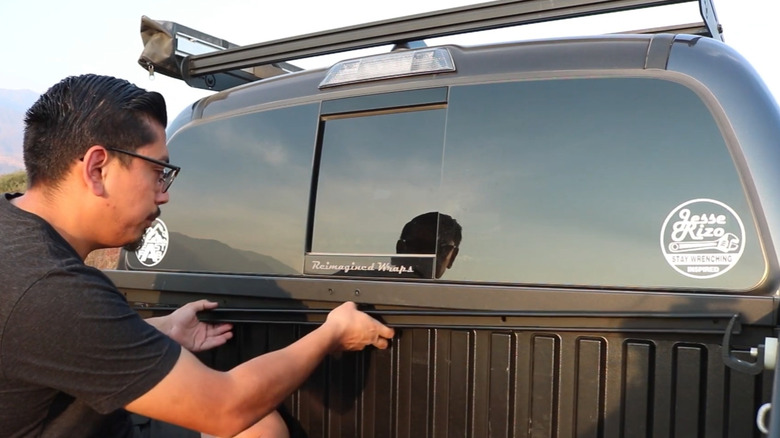
No offense to truck folks out there, but too many owners of utility vehicles don't actually use them for utility purposes. If you are, however, the kind of pickup owner to frequently take advantage of your bed, the bed header rail is the modification for you. Among the many aftermarket items mentioned by Tacoma owners, the header rail seemed to be one of the more popular choices, likely due to its simplicity and straightforward purpose. The average header rail sits right at the front of the bed, behind the cab, and secures to the upper edge. You can also install adjustable cleats on the rail to assist in hauling awkward loads or items of different sizes.
Things like header rails aren't hard to get right as long as you aren't sacrificing rear visibility or bed practicality. So finding the right one for you will typically be a case of good old careful judgment and online research. Although, if there were a best place to start, it's certainly worth looking for a Toyota-branded product. We've even seen dome dealerships with brand-new genuine Toyota bed header rails for sale at under $40.
Rock sliders
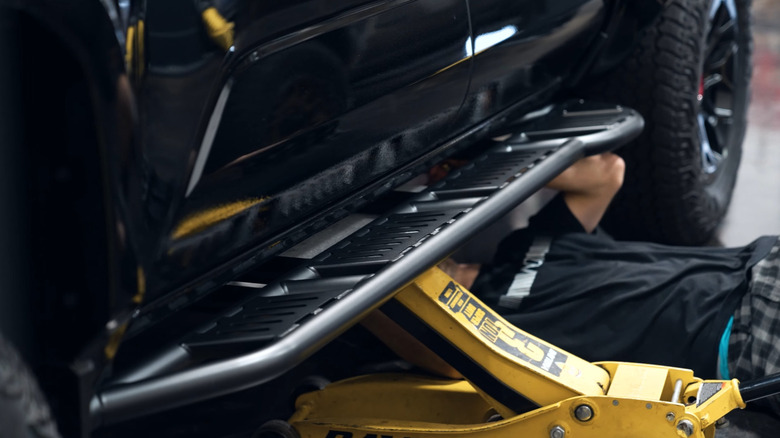
This article was initially going to focus on what Tacoma owners thought about the running boards meant to help with ingress and egress. However, among the various kinds of side skirt accessories discussed in the forums, traditional running boards were all but disregarded in favor of their more rugged cousins: rock sliders. Those heavy metal bar configurations secure underneath the side skirt and protect the body from getting high-centered or bruised from off-roading. And, according to owners, there isn't much reason to avoid considering these for yourself.
Owners found rock sliders to be far better for off-roading while also looking cooler and providing just as much practicality as traditional running boards — if not more. As an extra perk, if they stick out far enough from under your truck, they will take the hit from any unaware door openers in the grocery store parking lot. Still, although the benefits are clear, this isn't going to be a universal upgrade for everyone.
Potential buyers should thoroughly know the differences between rock sliders and running boards to cater to their personal needs. In particular, it's worth mentioning that the former are usually fairly heavy compared to running boards. If you want the aesthetics and protection of rock sliders, you'll have to be okay with carrying around that extra weight.
Bed and footwell lights
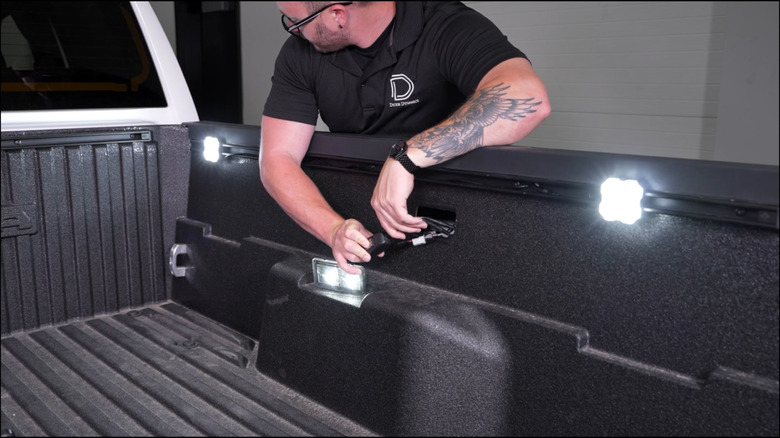
Collectively, both bed and footwell lighting were mentioned more than a dozen times in the same TacomaWorld thread mentioned earlier. Additionally, other owner forums raved about how easy and useful these mods turn out to be after installation. In terms of cost, a simple set of LEDs and supporting hardware will always be among the most affordable items on lists like these.
Despite the benefits, you may want to err on the side of caution when looking at colored LEDs. In the bed, especially, you'll want maximum visibility to interact with the cargo. Tools and heavier machines are stowed back there, and you don't want to rummage around in red or dark blue lighting that could hinder the task at hand. As such, white or soft yellow lighting is always a good choice in the back — and Toyota sells OEM Tacoma bed lights that can provide such helpful visual clarity for about $60.
Inside, it's a bit of a different story. Visibility is obviously a primary objective for this modification, but many Tacoma owners still use it as an opportunity to add some feng shui to their cabin with ambient colors. It's not a terrible thing to add, but don't complain when you drop your keys into a blurry abyss of royal purple at night.
Console/Glove box divider
Someone who modifies their Tacoma for overlanding or general outdoor adventures is probably carrying plenty of different categories of items. You might have electronic cables, pocket knives, gloves, tape, papers, and whatever else you'd need in the great outdoors. But that also makes it easy to fill your console or glove box with a jumbled mess reminiscent of your kitchen junk drawer.
Being an organized car or truck enthusiast is a virtue many owners weren't born with, but there are things you can do to make up for it. Across the forums, a surprising number of owners cited dividers in the glove box or center console. They were installed either for safety and privacy reasons (what's inside your car is nobody's business, after all), or simply for the sake of easily organizing documents and other items.
There are several divider products on the internet with various designs that essentially do the same thing. Look over the items you have and use that to visualize the type of divider kit you want to purchase. To help you get going, though, there is a fairly well-reviewed kit for second, third, and fourth-generation Tacomas sold by Vehicle OCD on Amazon for about $44.
Bed mat
This may be an unpopular statement, but most folks don't need a traditional cast bed liner or spray-on solution. They can be time-consuming to install and cost a ton of money, depending on the kind you purchase. So, it's no wonder that Tacoma owners have flocked to the much simpler — and arguably just as useful – bed mat.
There are Toyota-made bed mats available from dealers, but for a truck like the Tacoma, aftermarket examples are abundant. Essentially, it's just a giant rubber mat, usually designed to fit the bed of your exact model and year. This mat acts as a protective barrier between the true bed floor and the sharp and rough items you carry back there.
Additionally, these kinds of bed mats help your cargo stay in place. Whereas a factory bed lining is lined with smooth plastic, a rubber bed mat allows lighter things like toolboxes, crates, and bags to grip the floor and avoid sliding around. We found that the cheapest Toyota-manufactured mats reach close to $150, while aftermarket products can cut that down to around $75.