

2028 Mercedes-Benz VLE Is The Most Exciting New Luxury Car In Ages
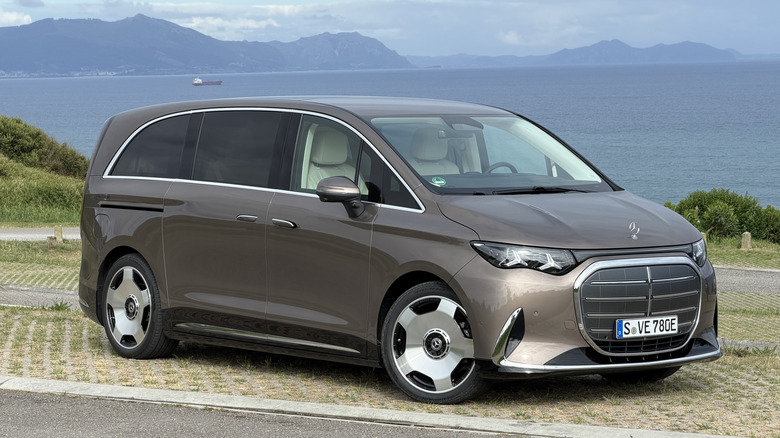
Talk to any real car enthusiast, and they'll probably agree that vans rule. That's true whether we're talking about minivans, cargo vans, kei vans, funky MPVs or anything in-between. Passenger vans are still rather popular in the U.S., but they've become mostly boring family vehicles with a "soccer parent" stigma. For years, us enthusiasts have been lamenting our country's lack of futuristic high-end vans, watching from afar as China and Europe have seen scores of cool new vans get introduced. But now, for the first time, we're getting a luxury van in the U.S., and it's coming from Mercedes-Benz.
You've been driven in them on trips overseas, as Uber Blacks or hotel shuttles. You've seen characters ferried around in them on "Succession" and "Industry." Maybe you've seen photos of celebrities riding around in faux Maybach vans created by aftermarket companies. The Mercedes V-Class has long been the luxury van of note in Europe, and somewhat even in Asia where the luxury van market is already huge. But the V-Class was always based on a basic van at the end of the day, which is partially why Mercedes never bothered bringing it over here.
The 2028 Mercedes-Benz VLE, though, is a ground-up design on a bespoke electric van platform, designed from the outset with plans to launch in America. In its more basic form the VLE is already a major step up over the V-Class it replaces in terms of style, luxury and technology. But right out the gate Mercedes is launching the VLE in fancy trims with some of the nicest back seats you'll ever see, and this is only the beginning of its van ambitions. Van lovers, we may be entering a new golden age.
Full disclosure: Mercedes flew me to Bilbao, put me up in a hotel and fed me for a few days so I could drive and be driven in the new VLE.
Don't knock it til you see it
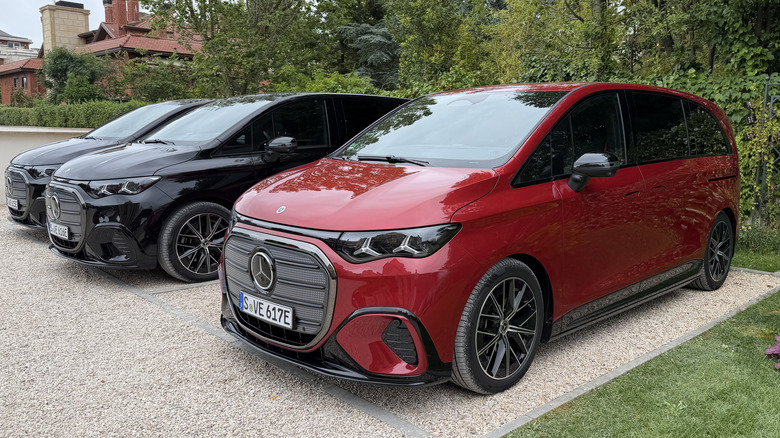
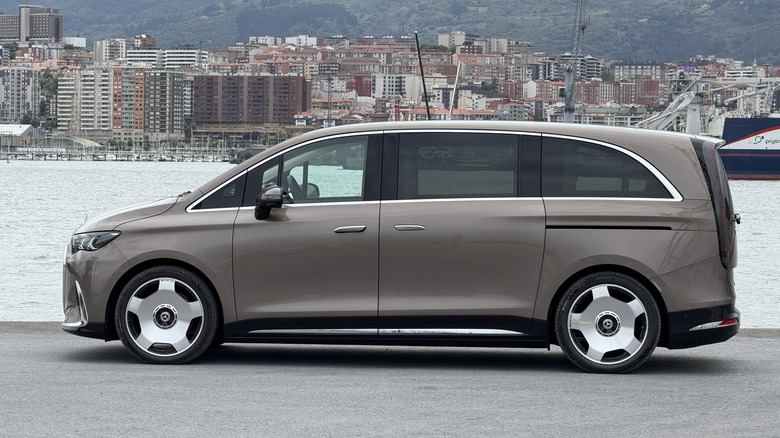
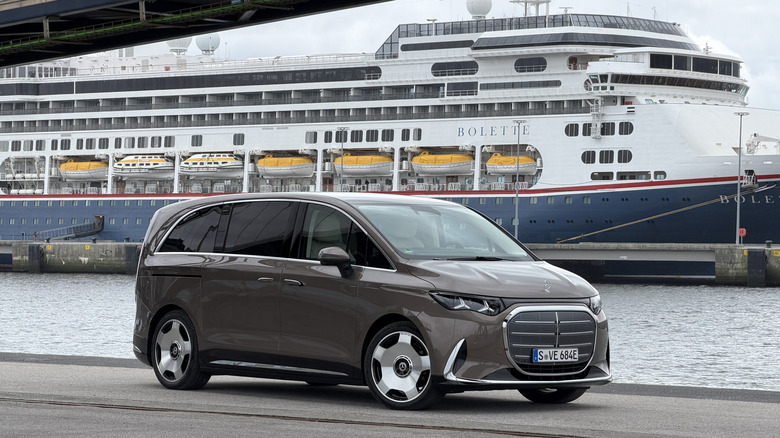
I'm not going to try and change anyone's mind about Mercedes-Benz's current design language, which has been quite controversial to say the least, but is quickly becoming more interesting and recognizable as a Benz with the latest models. I will say wait until you see a VLE in person before really making a judgment — I think it looks absolutely fantastic. The outgoing V-Class was already an attractive van, but the VLE is far more refined and premium-looking. It has crisp lines across the shoulders and subtle side surfacing, without the fat belly that a lot of EVs have, and the D-pillar and tailgate shapes are quite sporty.
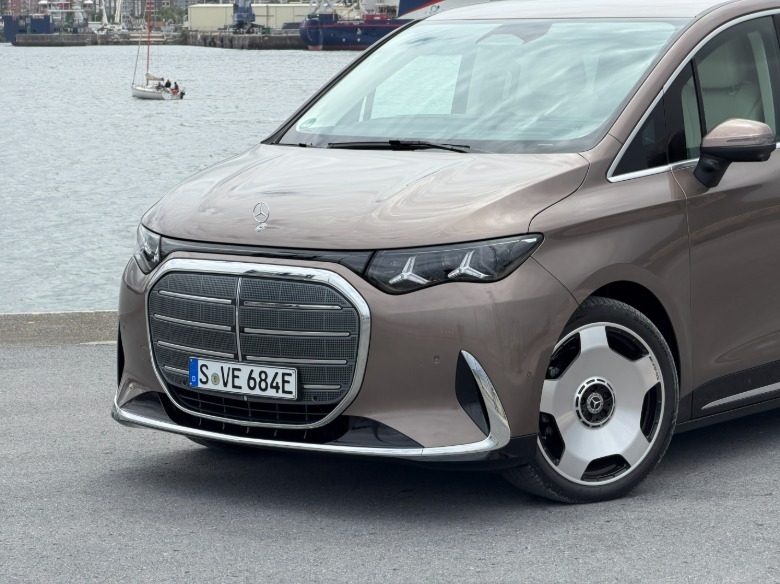
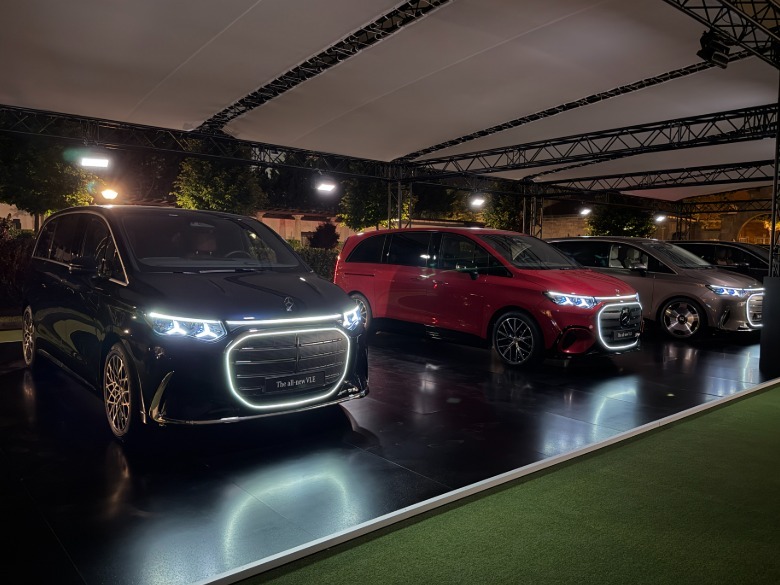
Even the most basic VLE looks nice, with less-fancy headlights and black trim in the grille instead of the checkerboard look, but it's especially hot in the AMG Line trim (above) that has a large star in the center of the grille, or as the Exclusive Line with a standing hood ornament and available monoblock wheels. I think the center light bar really works on the VLE, and the car looks awesome at night thanks to the illuminated grille surround and the wraparound taillights that look like piano keys.
 Daniel Golson/Jalopnik
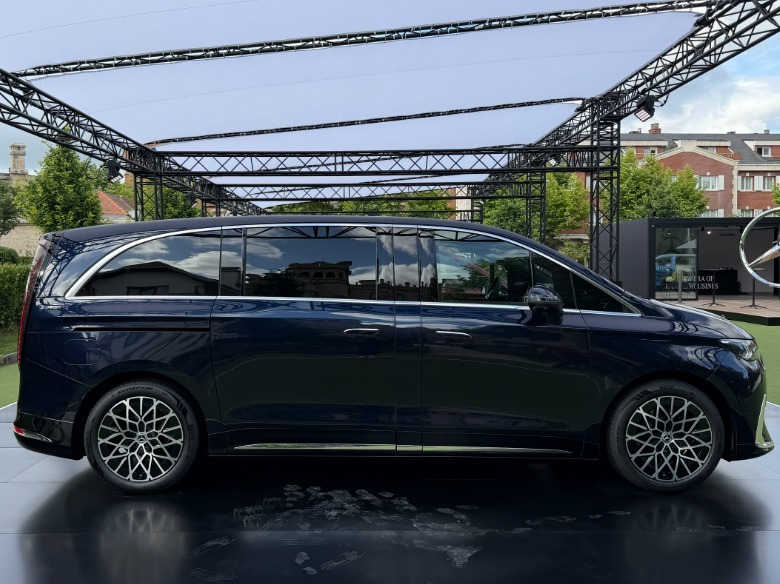
All the vans we drove are the short-wheelbase model, measuring 209.0 inches long with a 131.6-inch wheelbase, but in the U.S. we're only going to get a long-wheelbase version of the VLE (the blue one above) that's 215 inches long with a 138-inch wheelbase. The additional length is stuck between the doors, which looks a little awkward, but just wait until you see the treatment Mercedes does for that on the VLS and its Maybach variant.
Yeah, that's right. Following the VLE will be a longer, fancier model called the VLS that will also come to the U.S., and there will be a Maybach version the VLS, which will also be sold in America. Just something to keep in mind as you read the rest of this review — what you see here is only the start of how wild Mercedes' new vans will get.
It's no speed demon
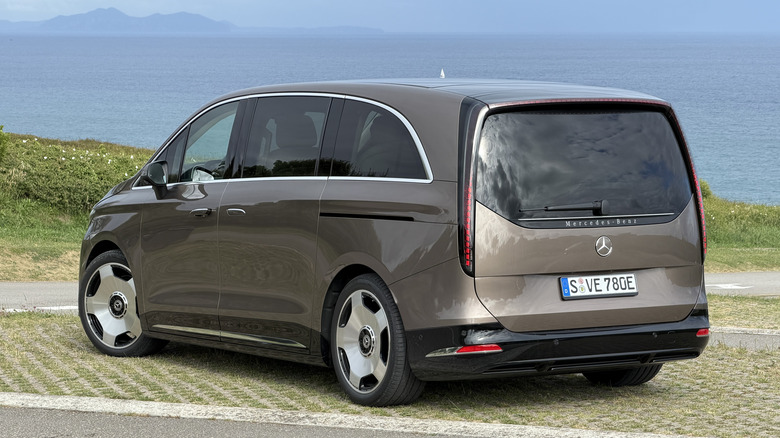
The first van I drive is a VLE300, which has a single motor powering the front axle. Some of the other American journalists on the program really decry it at dinner later in the evening, saying how it's far too slow and underpowered for its price and audience in the U.S., but I don't think it's that bad. The motor makes 272 horsepower, and Mercedes says the VLE300 will hit 62 mph in 9.5 seconds, about a second slower than the old bare-bones Metris passenger van. It doesn't feel that slow in practice, at least not on the city streets, freeways and mountain roads in and around Bilbao.
Still, it would probably be a smart move for Mercedes to only sell the VLE in dual-motor VLE400 guise in the U.S., especially as it doesn't come with a big range penalty. The all-wheel-drive model has 416 hp and a 6.5-second 0-to-62-mph time, both big improvements over the VLE300. On the European WLTP cycle Mercedes says the VLE400 has a range of more than 391 miles, while the lower-power rear-drive model will do 404 miles. Both vans have an 800-volt 115-kWh battery pack that can be DC fast-charged from 10% to 80% in less than 25 minutes, with 221 WLTP miles gained in 15 minutes. The regenerative braking is very well-tuned, and Mercedes finally offers actual one-pedal driving capability.
The VLE400 certainly feels quicker than the VLE300, both off the line and when accelerating from speed, but don't think it's sporty. Power delivery is less gut-punchy than in many EVs, with torque instead slowly ramping up in a linear way as I accelerate. Going into Sport mode in both cars makes a noticeable difference in the powertrain's responsiveness, particularly in the throttle tuning. The steering is direct but extremely light, and while VLE's center of gravity is low (and it has F1-style inboard rear suspension), this is a tall vehicle at the end of the day, so there's a good amount of roll in corners. Though very unlikely to actually happen, I think an AMG model could be cool and actually pretty good...
But it's hella comfortable
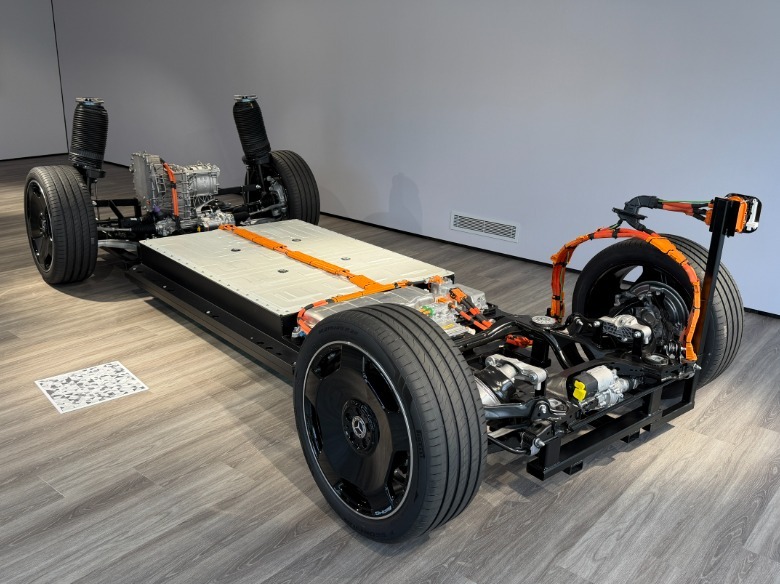
Speed and handling don't matter for this car, though. It's all about the smoothness and luxuriousness, which the VLE delivers in spades. Airmatic air suspension with individual adaptive dampers for all four wheels is standard, with the rear shocks being mounted inboard. In addition to automatically lowering above 68 mph for better efficiency or when Sport mode is on, the suspension can be raised 1.5 inches for unpaved roads or lowered 1.5 inches for ease of entry and exit. Even on 22-inch wheels that have fairly low-profile 265/40 Pirelli Scorpion all-season tires, the VLE has an extremely nice ride that rivals (or perhaps even surpasses) the S-Class in comfort, completely soaking up cobblestones and rough pavement. There's some floatiness if you hit a bump at higher speeds, but it doesn't ruin the experience. It feels just as quiet inside as an S-Class too, with only the slightest whispers of wind and tire noise coming in at freeway speeds.
 Daniel Golson/Jalopnik
The difference in passenger experience between an old V-Class and the new VLE is night and day, and those old vans were already pretty nice vehicles to be shuttled around in. It's not just because the VLE is electric and that makes a car inherently nicer, either — it's also noticeably better than the old electric V-Class, the EQV. Building the VLE as its own distinct model on the new modular Van.EA platform was definitely the right move versus basing it on the upcoming next-gen commercial vans that we have yet to see. If you were blindfolded and tossed into the back of a VLE, you'd never guess that you were in a van, but you'd know you were in something expensive and luxurious.
Despite the VLE's flat, low floor the front seats have me sitting up pretty high. Luckily the driving position is barely van-like, with nicely adjustable front seats, the ideal armrest positioning on the door cards, and not too long of a dashboard to peer over. The steering wheel is angled like on a car, too. The driver's side A-pillar is really thick and steeply raked, creating a gnarly blind spot that's most annoying on twisty roads, but visibility is much better on the passenger side, and the short hood and front overhang make the VLE easy to place. The side windows and back window are all huge, and an available digital mirror is a boon when the van has one of the fancier rear seat setups.
 Daniel Golson/Jalopnik
Helping maneuverability even more is the rear-wheel steering system, which comes standard. It turns the rear wheels up to 7 degrees, giving the short-wheelbase VLE a turning circle of just 37.5 feet, about the same as a CLA. Our LWB model will still have a really tight 39.7-feet turning circle. To give you a tangible visual, a VLE could turn around within a tennis court. It really makes the VLE so easy and effortless to drive on the narrow and hectic city streets in and around Bilbao.
Mercedes' automated parking systems have also gotten a major upgrade. The sensors and cameras can now spot parking spots from far away and create a map, so you no longer have to drive past a spot before it can engage. It can now park in diagonal spots and both enter and exit a spot for you, and there's a new reverse maneuvering function that can reverse up to 490 feet to recreate the drive forward you just did, useful if you get to a dead end or pulled off a particularly tricky parking job. Another really great new feature is a transparent rim protection view and warning system that helps stop you from curbing a wheel, adding red highlights above a wheel if it gets too close to the edge. The 12 ultrasonic sensors, 5 radar cameras and 10 external cameras are also used for the suite of driver-assist systems, which will include the hands-free MB.Drive Assist Pro system that will be able to handle point-to-point city driving.
Something to vent about
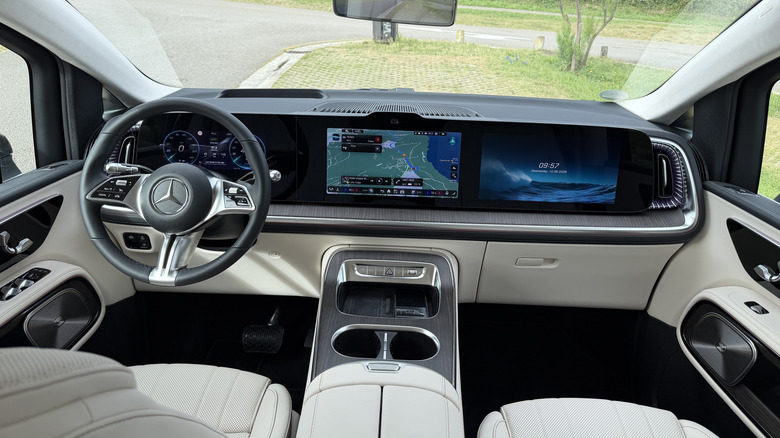
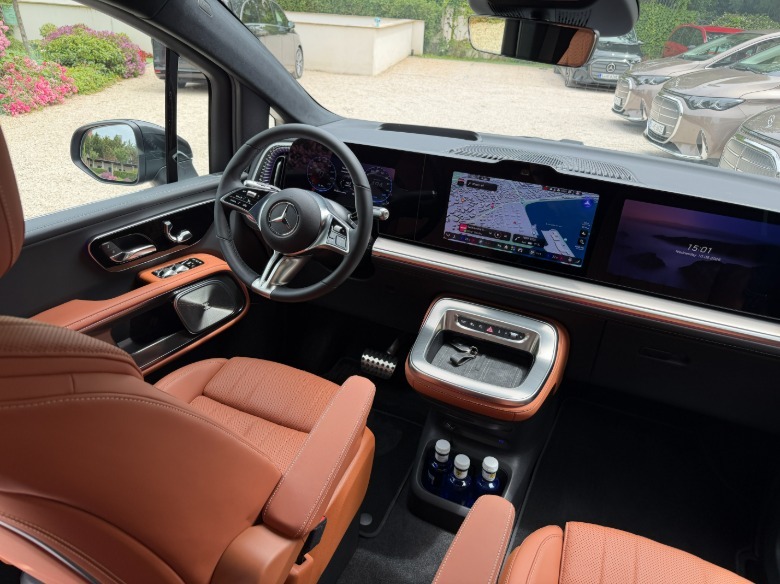
The VLE's dashboard has the same Superscreen setup as a lot of other new Benzes, with a 10.25-inch gauge cluster, 14-inch center touchscreen and 14-inch passenger display under one panel of glass, floating within a trim surround. The brand's latest MB.OS infotainment system is stellar, but the borders and bezels are disappointing after being in a car like the GLC that has a seamless Superscreen option. Hopefully with a model year update the VLE will gain the seamless screen.
Mercedes' interior quality is at least getting better, and the materials used in all the VLEs we drive are excellent, even the lower-end trims. On the Exclusive Line car almost every surface is covered in leather or a padded material, with the only hard plastics being in places that will regularly get whacked. There's big storage cubbies in the door panels, and you'll be able to choose between a few different center console setups. One is more like a shelf that features wireless charging pads, a few physical controls and cupholders lower down on the floor, leaving the space behind the front seats open. Then you can get a large fixed console that has armrests, a fridge under them, integrated cupholders and storage, a fragrance dispenser, a UV disinfectant tray, and enough space underneath for a large purse or backpack.
 Daniel Golson/Jalopnik
There is one really big problem I foresee Americans having with the VLE: the climate control vents. On either side of the Superscreen are big vertical air vents with a straked, illuminated surround. Those aren't the issue, nor is the climate control system's performance the problem (though you might not like how all of the controls are in the screen). No, the problem is that there are no vents anywhere in the center of the dashboard or console. There are air vents on top of the dash just behind the center of the screen, but I can't get the air from them to really hit my hands and face how I like. I could probably get used to it, and like I said the climate system itself works great, but I could genuinely see this being a turn-off for some people.
There's so much space
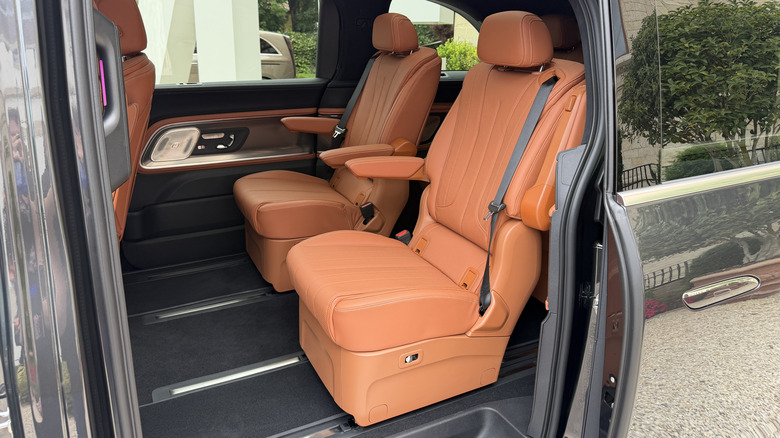
No matter what configuration you go for, the VLEs we'll get in the U.S. will have three rows of seats, with the third row being a three-across bench. Base setups have a three-across bench for the second row, and in Europe those seats are able to be flipped around to face the wayback seats. Then there's the option of having a pair of captain's chairs in the second row instead, which are offered with individual armrests that have pop-out tray tables, power adjustments, and heating and ventilation. The seats are much faster to slide forward or backward than other powered seats, and the flat floor gives the VLE more than 4 feet of floor-to-ceiling height, so it's easy to get in and out of both the second and third row. The sliding doors have huge openings, and buttons on the interior grab handles can open or close them from either side.
 Daniel Golson/Jalopnik
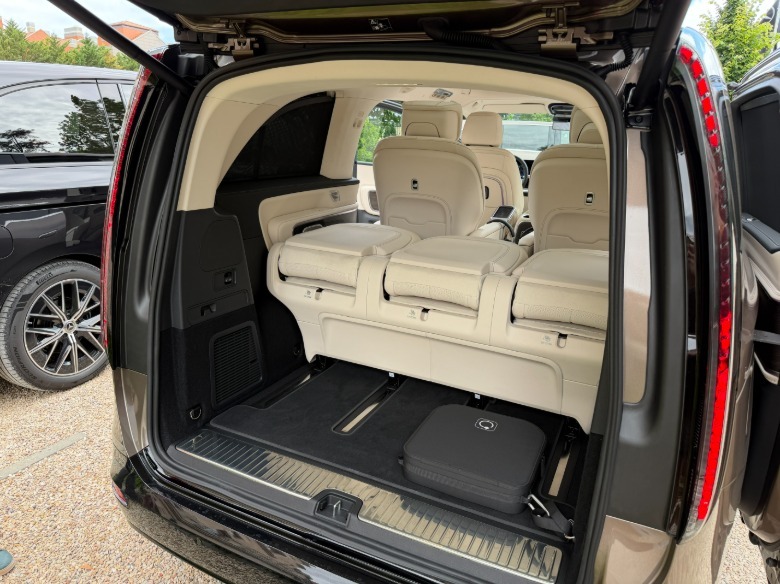
From the center screen, you can select between four different "seat ballet" settings that will automatically fold the seats and adjust their positions on the rails in the floor to maximize cargo space, or give the most room to all passengers or specifically the ones in the second row. There's a lot of cargo space even with the third row up, and the tailgate opening is low and huge to make it easy to get big bags in and out. You can get a horizontal cargo divider that luggage can be placed on, which is useful when accessing the space through just the rear window, as it can be opened separately from the power tailgate. Depending on the interior setup the second and third rows can be removed; do that and there's 152 cubic feet of cargo space, which is almost 10 cubes more than a Chevy Suburban with all its seats folded. If that's not enough, the AWD model can tow over 5,500 pounds.
 Daniel Golson/Jalopnik
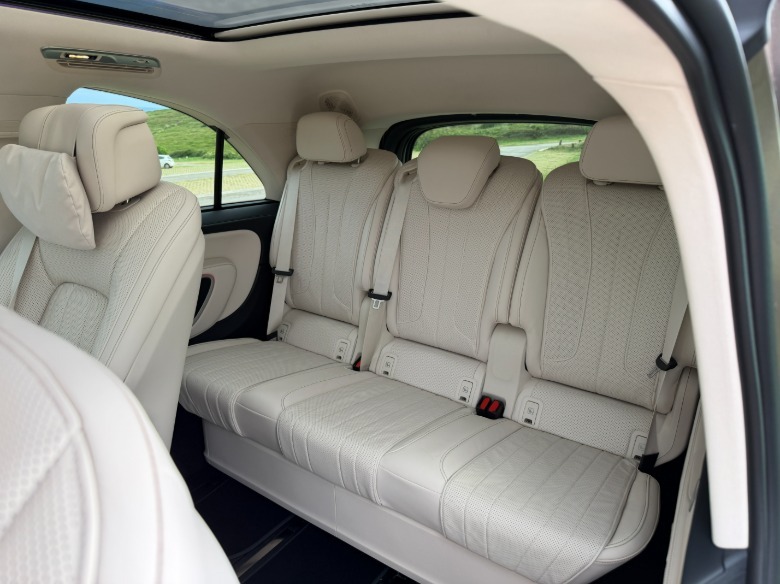
There's no sunroof over the driver and front passenger, but a giant single-piece pane of glass extends from just behind them to over the third row. It's surrounded by ambient lighting, and it has a powered, fully opaque sunblind. You can also get retractable mesh sun shades for the side windows in the doors and the ones behind, plus a shade for the rear window, all of which can be raised or lowered with the touch of one button. The old V-Class didn't have rear windows that rolled down, but the VLE's doors are large enough that the windows can be rolled down fully. That's genuinely a big deal in the world of vans.
Now we're talking
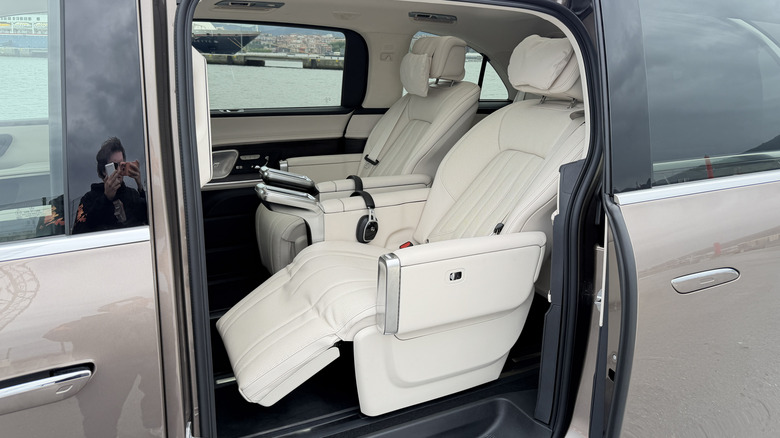
"Enough of that boring stuff," I can hear you screaming, "tell us about the really crazy seat setup." On the Exclusive Line trim the second-row seats become throne-like recliners that wouldn't be out of place in a Maybach or a business-class airliner. These Grand Comfort seats have an extendable leg rest, plush headrests, cushier seatbacks that recline, adjustable lumbar and a massage function. The taller armrests have pop-out cupholders and even nicer tray tables, but their fixed nature can make the seats harder to get in and out of for some people. On the inner back edge of each front seat is a pair of USB-C ports, and in addition to a climate control panel, the back of the center console has a fridge (separate from the fridge under the front armrests) and a slide-out tray that has two more USB-C ports plus an HDMI port.
 Daniel Golson/Jalopnik
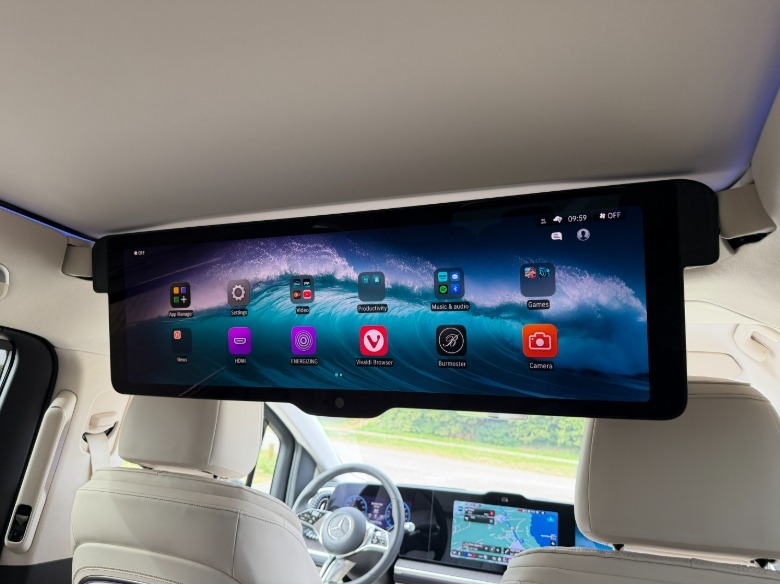
Why an HDMI port? The Exclusive Line also gets you a 31.3-inch 8K screen that deploys from the ceiling — it sits above the front passengers' heads where a sunroof would be — controlled via touch or by using two smartphone-like controllers that sit in the front seatbacks. Those remotes can also adjust the seats, climate control and all sorts of other vehicle functions, but they're most useful for quickly entering the Cinema mode, which turns on the screen and closes all the blinds. With that HDMI port, you can plug in DVD players or game consoles.
@dsgolson The @mercedesbenzusa VLE is the most exciting new luxury car in ages #mercedes #mercedesvle #luxurycars
The remotes have intuitive touch controls with the ability to be used kind of like a laptop trackpad, useful for swiping through the different apps and actually using them. It has a built-in camera so you can take selfies or make zoom calls, with the camera able to focus on both people or just one rear passenger. A split-screen function lets both second-row passengers watch or do different things, and there's a set of wireless Burmester noise-canceling headphones for both seats. But you really want to listen to music or watch a movie using the available 22-speaker Burmester 3D surround sound system that has Dolby Atmos capability, which sounds especially good for people in the second row. On a chauffeured ride through Bilbao, we put on the "F1: The Movie" trailer, and both image and streaming quality was excellent through the YouTube app.
There's still a three-across rear bench behind those amazing seats, which have just as high a level of fit and finish as the first two rows. The wayback seats are heated and power-adjusted, there's two USB-C ports on each side, metal Burmester speaker grilles and real wood trim pieces. The floor is low and the roof tall enough that there's actual space for adults to sit back there for longer periods without feeling too cramped. It's certainly nicer to ride in than any body-on-frame SUV, large crossover or any other minivan, regardless of which row you sit in.
Entering the unknown
One big, unknown question remains: Will people in the U.S. actually buy this thing? In a roundtable with media at the launch, head of vans development Andreas Zygan is frank that Mercedes has no specific sales expectations for the VLE, nor does the company really know what the sales split will be between private owners and commercial/fleet buyers (in Europe, about 80% of buyers will be commercial). The automaker is entering the unknown here, but Zygan is confident that the VLE will be a success, and that it will capture a lot of new customers for the brand.
The VLE feels like a no-brainer buy for those professional chauffeurs, hotel fleets and the like. Why the hell would you buy a big SUV when this exists? It's comfier, quieter, easier to get in and out of, nicer to drive, much nicer to sit in the back of, vastly more spacious, and a lot cooler to pull up in whether you're arriving at a resort or a red carpet. I mean, Kim Kardashian owns a Metris that's converted to be a fake Maybach, and onlookers are none the wiser. Just wait 'til the really fancy VLS and VLS Maybach are out!
 Daniel Golson/Jalopnik
Mercedes does say it's coming to the U.S. with the fanciest configurations first, as those are what it's seen the most demand for from both potential customers and dealers, but we'll probably get at least the mid-range powered second-row bench setup as well. The company says its dealers have been begging for a vehicle with three genuinely useful rows of seats for a long time, as even the third row in the huge GLS is only suitable for kids or adults on short journeys, and I can see regular families eager to get out of an SUV and into a VLE. Well-off regular families, I should say, as the VLE will likely start at above $80,000 and stretch to around $130,000.
Still, there's a stigma around vans in the U.S., particularly the word "minivan" itself. That's why Mercedes isn't marketing this as a van — no, it's a "grand limousine," simply the best luxury experience you can get from a Benz regardless of shape and vehicle type. More than just being a fan of the VLE and excited that it'll come to our shores, I'm optimistic that it could bring about a whole new segment of luxury vans in America, especially as many people in the country are reaching peak huge SUV fatigue. That would be a win for all of us.