

2027 Mercedes-Benz S-Class Is An Incremental Improvement Upon An Already Brilliant Car
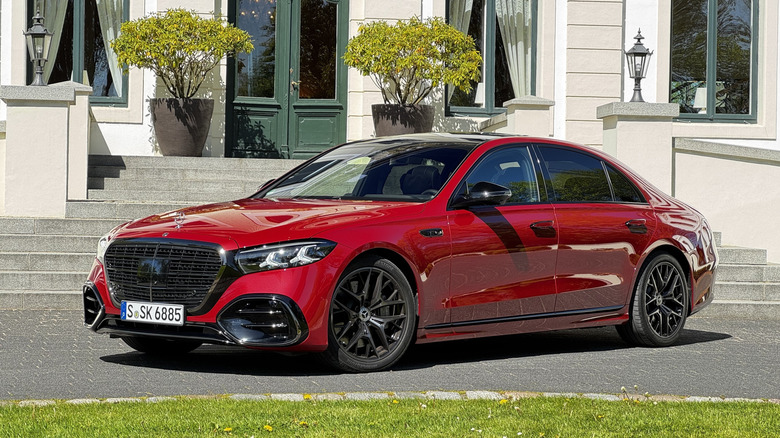
The Mercedes-Benz S-Class is your favorite flagship's favorite flagship. It's hot off a red carpet debut in "The Devil Wears Prada 2," where the Maybach variant acted as the limousine of choice for the more important characters, which is basically the car's whole MO. In Mercedes-Benz's lineup of masterfully engineered, titanically techy and good-to-drive cars, the S-Class is the pinnacle, and it's gotten a facelift for 2027.
Jalopnik's own Andy Kalmowitz broke down the details of this newest nip-and-tuck when the design debuted earlier this year, but I just got to experience the newly star-spangled 2027 Mercedes-Benz S-Class from behind the wheel in Germany, and I found it to be an incremental improvement upon the already exceptional W223 — so long as you love screens.
Full disclosure: Mercedes-Benz flew me out to Hamburg in the impossibly green and lush northern coast of Germany to experience the new S-Class, as well as a couple other updated and upcoming cars that we'll discuss at a later date. The Mercedes team kept me well-fed and well-housed for a few days just so I could drive these new cars, but I still had quite a limited time behind the wheel. These are my first-drive impressions.
Tweaked looks, tech, and powertrain
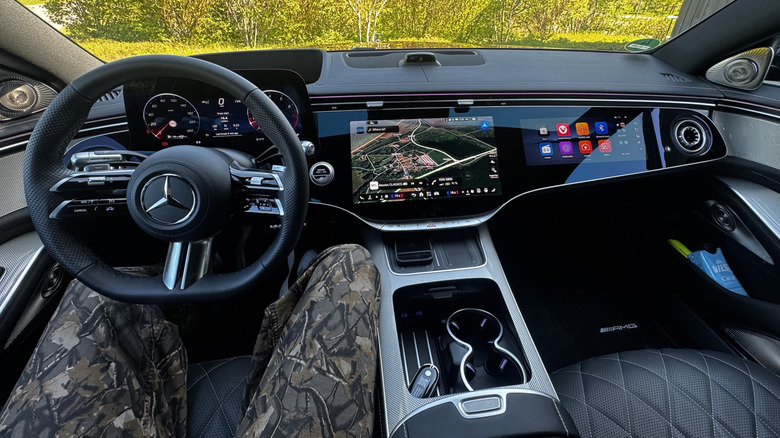
Mercedes insists that this is the most thorough facelift of any S-Class ever, with over 50% of its parts having undergone some kind of change, but it's still vastly the same as before. That is to say, it's a supremely comfortable, luxurious, powerful, and technologically advanced large sedan that can be tough to fault. The most noticeable changes for 2027 are the updated styling, the introduction of the giant slab of glass that acts as the dashboard and protection for three separate screens, the introduction of the brand's latest MB.OS software, and a new flat-plane crank V8 called the M177 Evo.
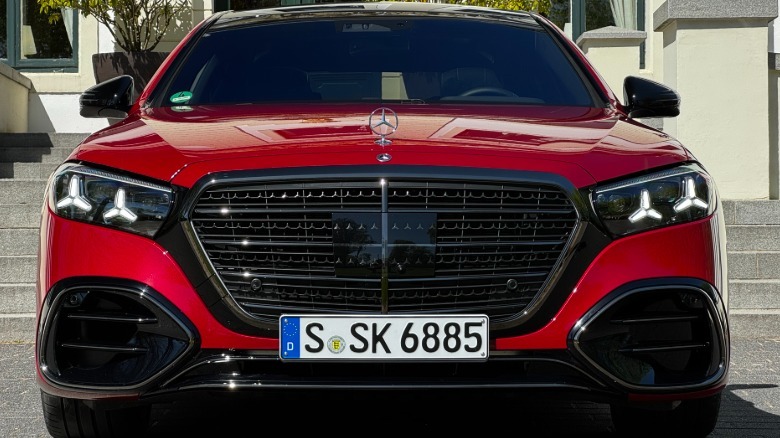
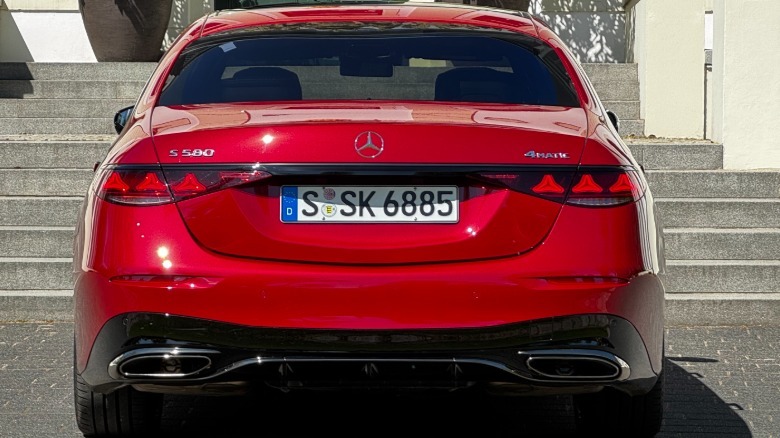
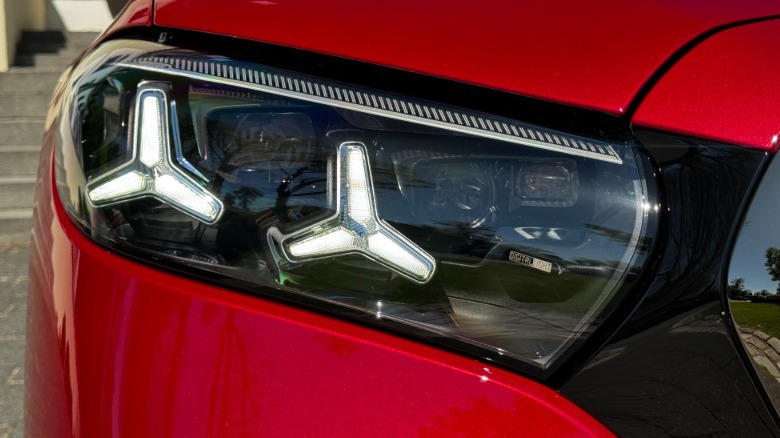
Styling-wise, the S-Class ditches the W223's subtle, understated looks and replaces them with bits of flash like the illuminated hood ornament, the star-shaped front DRLs and taillights, and the larger grille with its rows of tiny chromed three-pointed stars. The new V8 is actually a reworked version of the M177 that has powered AMG's 63 models for a while (as well as the pre-facelift S580), but it now features a flat-plane design and runs on the Miller Cycle to meet stricter Euro 7 emissions standards.
 Logan K. Carter/ Jalopnik
Inside, the S-Class does away with the graceful flowing dashboard design of the old car, and replaces it with a trio of screens with massive blacked-out bezels that highlight every molecule of dust, every ridged fingerprint, and every gram of spittle you spewed when you sneezed. If you couldn't tell by the tone of the prior sentence, I'm not convinced by how much this change improves the car, but behind the screens there is plenty of new tech to keep even the most discerning technophile happy. Most of the 2027 S-Class's other changes happened under the skin, too.
Three powertrain choices with similar levels of power and refinement
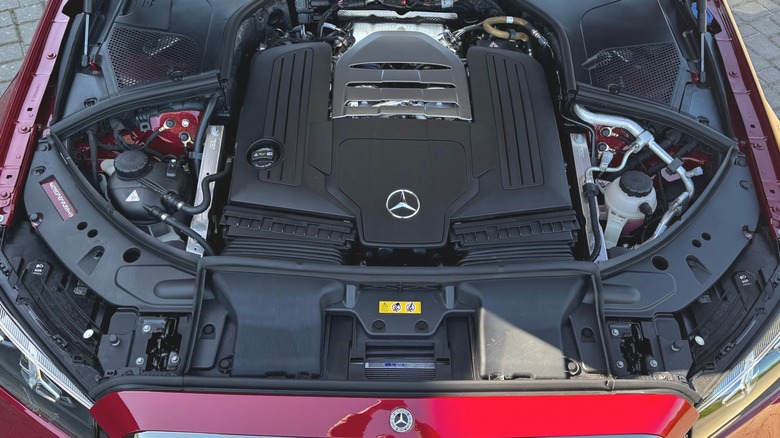
As of now, the 2027 S-Class will be offered with three different powertrains in the U.S., each with standard 4Matic all-wheel drive: the standard twin-turbocharged 3.0-liter inline-six (the S500), the inline-six plug-in hybrid (the S580e), and the twin-turbocharged 4.0-liter V8 (the S580). The straight-six engine doesn't get many changes for 2027, though I don't think it needed any; it produces the same 442 horsepower as before, but torque is up by 30 to 443 lb-ft. The new V8 makes 520 horsepower and 553 lb-ft, increases of 84 hp and 37 lb-ft from the old engine. Despite having two fewer cylinders, the PHEV is the most powerful option, with 73 more horses than last year for a total of 576 horsepower and the same 553 lb-ft of torque. Honestly, after driving all three S-Class models, they don't feel vastly different.
All three powertrains provide ample power whilst simultaneously operating in a manner that's so smooth, you truly have to glare at the tachometer to know they're running at low engine speeds. Dig deeper into the long-travel throttle pedal that facilitates smooth acceleration, though, and the smooth inline-six creates a pleasant, throaty growl. Do the same in a V8-equipped S580, and the M177 Evo bellows deeply, emitting a more muscular baritone than either six.
 Logan K. Carter/ Jalopnik
Acceleration figures are markedly improved over last year, but don't vary as greatly between the different powertrain options as you may think. The PHEV posts the slowest 0-to-60-mph time of 4.4 seconds, though that's still an improvement of 0.4 seconds over the outgoing car. The inline-six boasts a 4.3-second 0-to-60 time, around two tenths quicker than last year, but the new V8 makes the most impressive statement with a claimed time of just 3.9 seconds, or 0.4 seconds quicker than the old V8.
Despite these differences on paper, when I hopped out of a S580e PHEV and into a V8-powered S580, I expected the V8 to feel significantly more powerful, but they felt quite comparable to my inner ear. I then got into the S500 expecting it to feel like the lame duck, but it too felt remarkably similar to the other engine options. They all felt plenty powerful, and they all pulled hard to their 155-mph limiters on the autobahn, feeling planted and drama-free despite the obscenely rapid pace and quite a lot of wind noise, understandably.
Choosing the "base model" S500 does not mean forfeiting power, performance, luxury or refinement, so it's really a choose-your-own-adventure situation: do you really want the grunt and pedigree of the V8, or would the inline-six do just fine? If you're a greenie, or perhaps you know of some kind of tax loophole you can take advantage of for buying a hybrid, then go for the PHEV. They're all spectacular.
Incremental improvements in driving dynamics
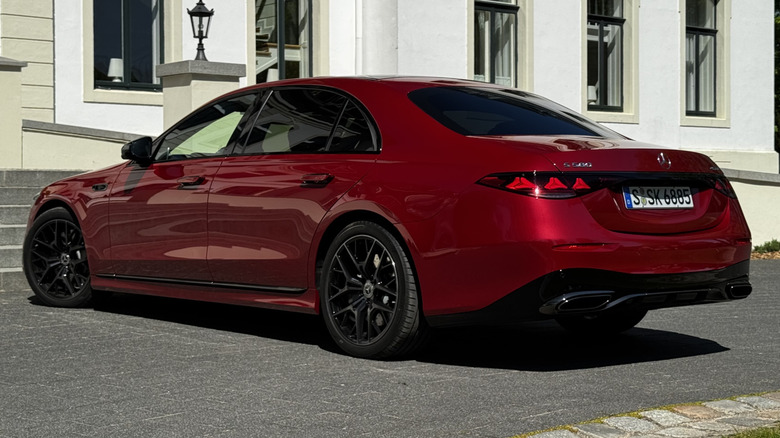
The W223 S-Class has remained a plush, cosseting, and positively pampering player in the large luxury sedan market since its introduction in 2021, which was six years ago now if you can believe that, but the S-Class is not like other cars. It has the weight of a sterling reputation on its elegant shoulders. It's the flagship of one of the most prestigious car companies in the world, and it has made a name for itself by continuously raising the bar that it already raised a few years prior.
Piloting the S-Class is a unique experience in the automotive world. Unlike lesser cars, the throttle pedal and brake pedal encourage smooth driving by requiring a lot of travel before the car's reactions become too jarring. It's been that way for several generations now, and this facelift doesn't change that one bit. The spectacularly spongy brake pedal caused some pucker moments when taking a freeway offramp and approaching stopped traffic, for example; it requires a deeper stomp than you might think. Once you recalibrate your driving style to the S-Class's memory foam–like inputs, though, you might find yourself making a game out of how smoothly you can drive it.
That memory foam analogy also applies to the suspension, which has also received tweaks in this facelift. I found the updated suspension to be most noticeable over sharper lower-speed impacts like potholes or recessed manhole covers, which the standard Airmatic air suspension effectively erases. It is also offered with E-Active Body Control, which should not only make it even more comfortable but also eliminate body roll in corners. Sadly I was not able to experience it on this first-drive trip.
 Logan K. Carter/ Jalopnik
Regardless of which suspension option you pick, the S-Class now uses cloud-based data from other Mercedes-Benz vehicles to inform them about upcoming bumps, allowing the car to slacken the suspension in anticipation of the bump. As standard, the facelifted S-Class also features 4.5 degrees of rear-axle steering, and an optional upgrade increases that to 10 degrees of rear-steer, which makes the sedan feel remarkably maneuverable despite its large stature.
It's far from a night-and-day difference when compared to the pre-facelift model, which already had a buttery ride, but it's still notable given how good the W223 already was before the Mercedes engineers reworked over 50% of its parts.
Beyond the suspension and engine, the steering remains light and effortless at low speeds while weighting up nicely at speed and in Sport mode, which when paired with the rear steering makes it feel agile on a twisty road — for a large sedan, that is. It's capable of corner carving, but it was certainly not what I'd call fun to drive on the narrow winding roads I took it on. But you don't buy an S-Class to carve corners, you buy an S-Class because you're a successful and wealthy person who deserves the utmost in comfort, isolation, and luxury, and the new S-Class provides all of those traits in spades.
Techy techy
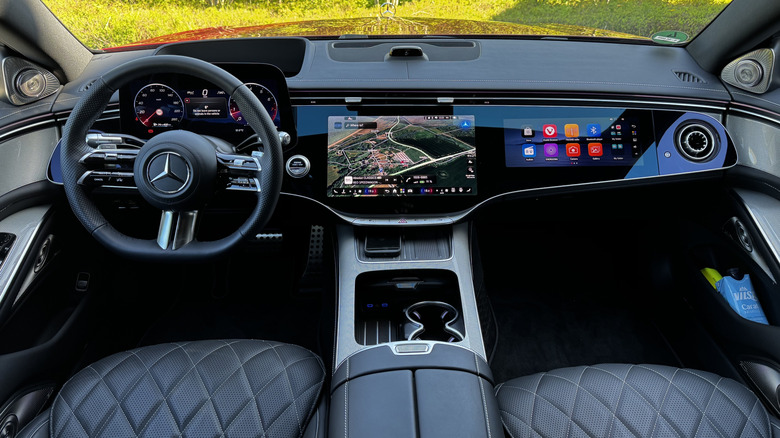
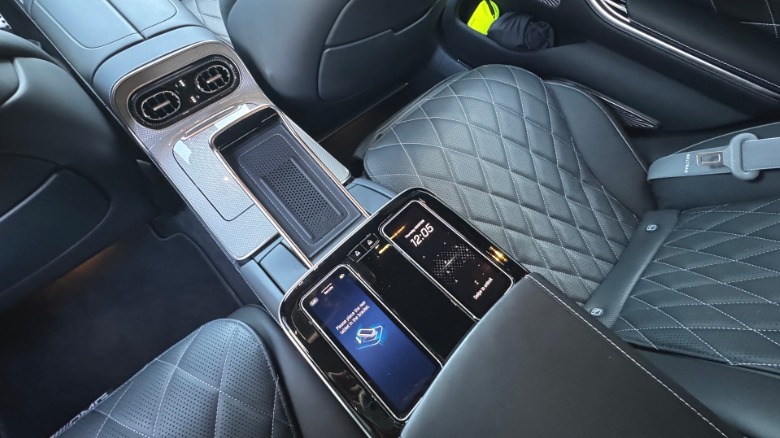
Despite Mercedes-Benz's now-ex-chief design officer Gordon Wagener admitting that screens are not luxury over a year ago now, Mercedes sure seems to be adding a lot more screens to its new models. With this facelift, the S-Class gets a new MBUX Superscreen, which comes standard with three digital displays behind a single pane of glass: a 12.3-inch driver display, a 14.4-inch central infotainment touchscreen, and a 12.3-inch front passenger touchscreen. The optional High-End Rear Seat Entertainment package brings dual 13.1-inch touchscreens for the outboard rear seats. These can also be combined with optional MBUX remote controllers that look like little smartphones that control the rear screen, if your passengers can't be bothered to lift their arm to touch the screen.
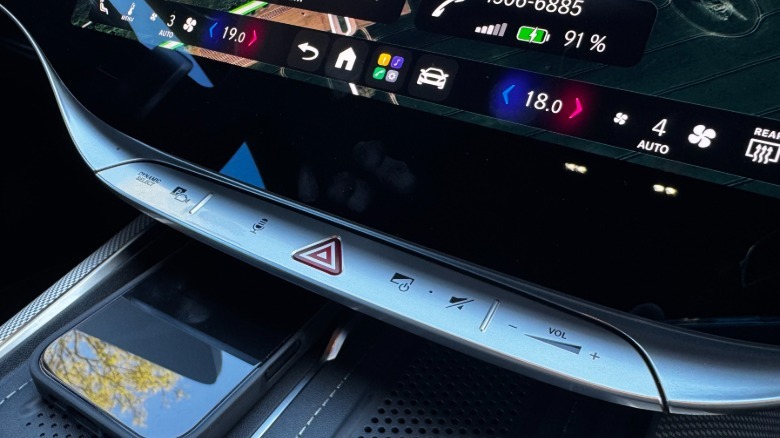
The new dashboard design incorporates a row of silver haptic touch-sensitive shortcut buttons for frequently accessed functions, but their low location, awkward angle, and inconsistent operation made them more of an annoyance than a benefit. In fact, my co-driver and I ended up asking whoever was in the passenger seat to change the drive mode because it took too much dedicated concentration to accurately tap the drive mode "button." It's bad.
 Logan K. Carter/ Jalopnik
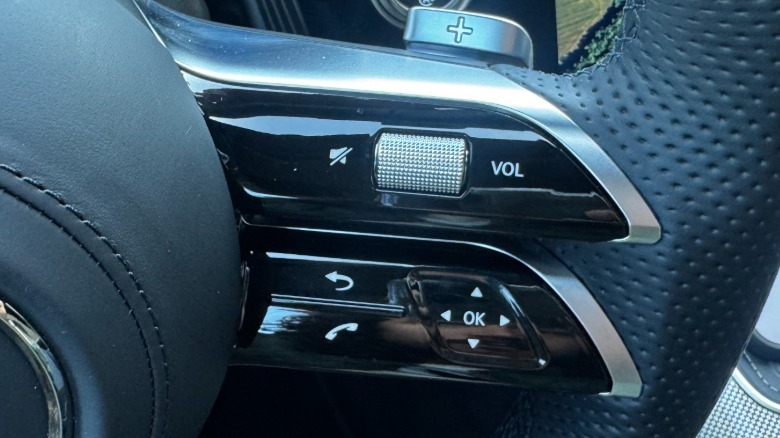
The Mercedes representatives were excited to brag about the new physical controls on the S-Class's steering wheel, but they're limited to a volume roller and a physical toggle to alter the cruise control speed. All other functions remain operated by infuriating and inconsistent touchpad controls.
It feels like Mercedes' engineers are acting as overprotective German shepherds nipping at the fingertips of the driver who dares try to interact with the touch buttons while driving, giving them no option other than to announce to the world, "Hey Mercedes, my butt's sweating!" Voice commands are nifty, but especially when you are not alone in the car, it's kind of cringey to bark seemingly simple commands at your windshield because you don't want to induce an aneurysm trying to find the right touch button to turn on your ventilated seat. But S-Class owners are a discerning breed, and if they want tech, they get tech.
 Logan K. Carter/ Jalopnik
Mercedes is quite proud of its new in-house OS, which will allow faster processing, greater computing power, and more frequent OTA upgrades that can include post-purchase feature additions like MB.Drive. Everything connected to the Mercedes-Benz Intelligent Cloud to maximize functionality.
Feature rich is an understatement — cost permitting, of course
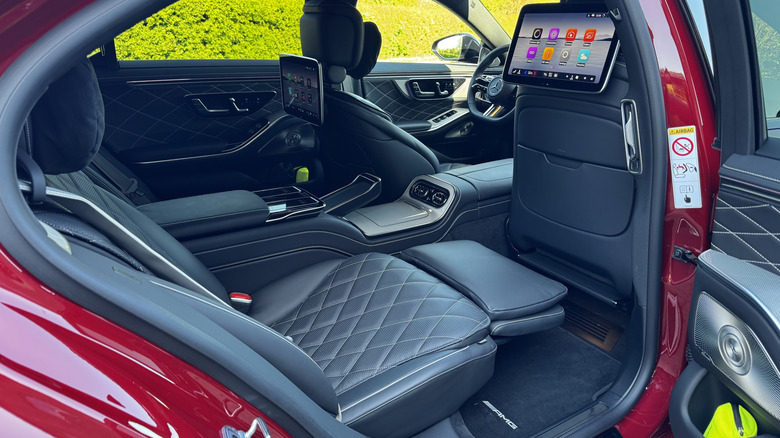
The new S is naturally available with a veritable onslaught of options, though all cars come with a full sensor and camera suite to allow for easy addition of driver assistance features at any time. That includes 10 external cameras, five radar sensors and 12 ultrasonic sensors, which help enable the optional MB.Drive Assist system that enhances the adaptive cruise control with steering assist and lane-change assist.
It will also eventually enable MB Drive Assist Pro, a Level 2 hands-free driving system that will offer similar capabilities (and limitations) to Tesla's Full Self Driving Level 2 system. With the City Pro feature, it enables point-to-point automated driving, but there are a couple catches: it's not available yet, and it's basically in place of the optional Level 3 eyes-off Drive Pilot system that debuted on the pre-facelift S-Class.
 Logan K. Carter/ Jalopnik
Mercedes said the take rate for its admittedly very restrictive Drive Pilot system was lower than it anticipated, so it's focusing on a Level 2 "plus plus" system which will have a wider use case, despite still being a Level 2 system that holds the driver accountable for the car's actions no matter what. We were not able to experience the system on this first drive.
Now more personalizable than ever
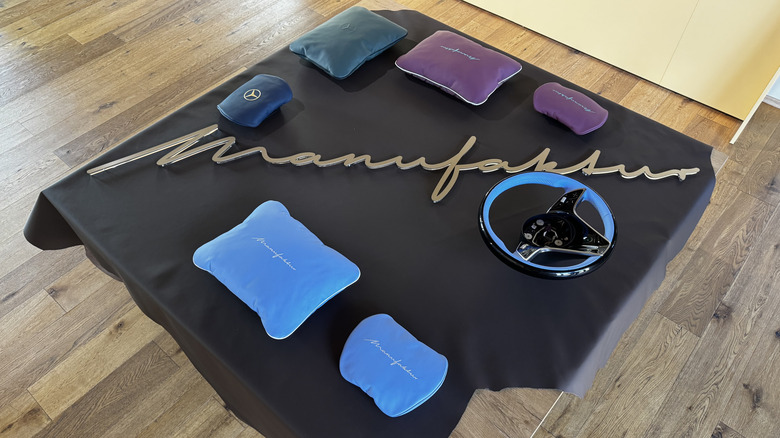
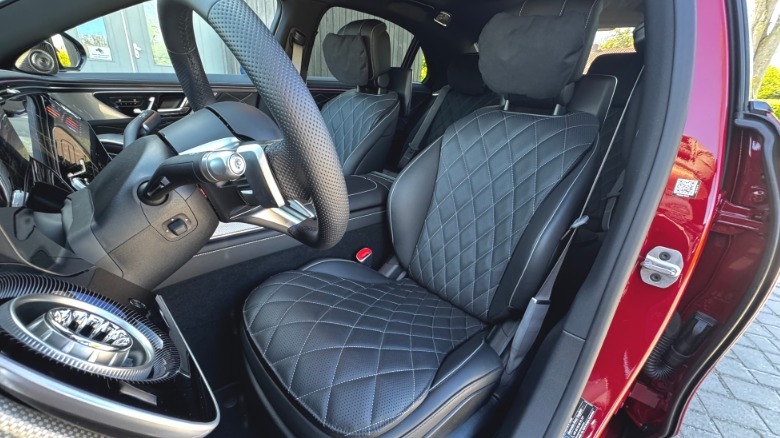
Mercedes' Manufaktur Made To Measure program unlocks over 150 pre-approved exterior paint colors and over 400 pre-approved interior colors, as well as further personalization options such as custom door sills, head restraint embroidery, stitching colors, emblem packages, and pretty much anything else you may want to customize on your S-Class.
Should you wish to personalize your S-Class using the new program, Mercedes will require you to work with a Made To Measure expert as a consultant for your customization needs, and expect it to take between 12 and 14 weeks longer than a non-Manufaktur model would, so long as you stick with pre-approved colors and materials.
 Logan K. Carter/ Jalopnik
I really hope that buyers take advantage of this new program, and the plan is to have Made To Measure options for a bunch of other Mercedes-Benz models soon, with the G-Wagen being next in line. The color and material options are virtually endless, so there's no excuse to order a boring black, white, or silver S-Class. It's got a light-up hood ornament for god's sake, don't try to tell me you're still trying to fly under the radar in the facelifted S-Class.
Very deserving of the title of Mercedes-Benz's flagship
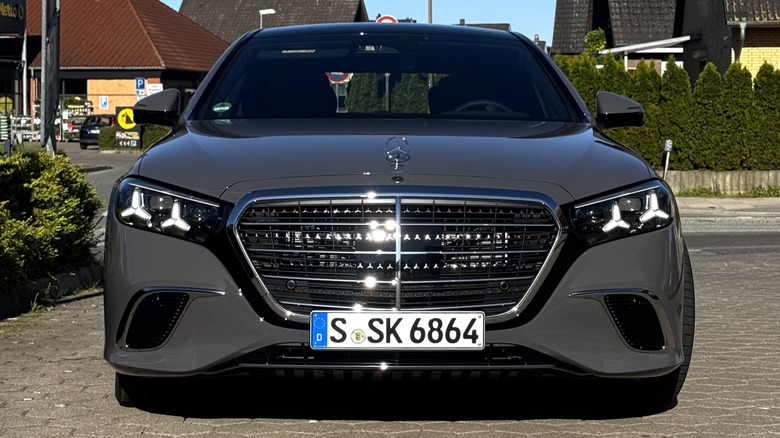
The facelifted 2027 Mercedes-Benz S-Class is a somehow even-further refined iteration of the legendary car, and it's very deserving of the title of flagship. It's big, powerful, technologically advanced, and extremely coddling. Styling is subjective, and though I'm not especially fond of the star-spangled redesign, it's certainly more visually distinctive than before. I can't help but see the plastic stars in the grille as the parts you break out of their plastic molds from a build-it-yourself model car, but maybe you think they along with the illuminated hood ornament are the bees knees.
This large sedan is more comfortable, more technologically advanced, more imposing, more efficient, and more customizable than ever before, and it remains an excellent performer. What's the catch? Mercedes has not announced pricing yet, but considering that the current car starts out at over $120,000, it's not going to be cheap. If you can afford it, though, it's one marvelous piece of engineering.