

2026 Lexus ES, Whether Hybrid Or EV, Offers Accessible Luxury With Few Drawbacks
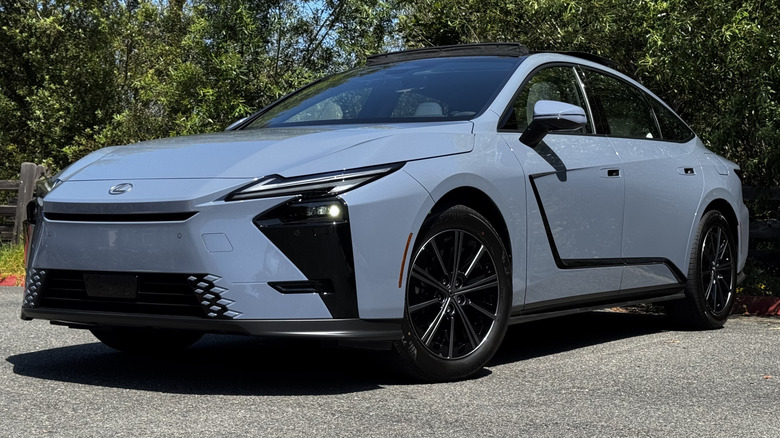
Despite receiving less press fanfare than its big sibling the LS, the Lexus ES was introduced alongside the larger sedan in 1989 as the first two Lexus models ever sold. Over its seven generations, the ES has always lived its life as the Lexus version of the excellent if utilitarian Toyota Camry, and it has occupied a cushy, wallowy part of the midsize luxury sedan segment.
For its 37th birthday, though, Lexus gave the ES the biggest redesign of its life, now exclusively offering hybrid or fully electric powertrains, as well as a much taller and longer stature. What's the result? A comfortable, efficient and massively spacious luxury sedan-ish thing that should still appeal to both the ES's preexisting fans and newcomers alike.
Full disclosure: Lexus put me up in a lovely hotel in La Jolla and kept me fed for a few nights so I could drive its new ES in both hybrid and EV powertrains.
The humble ES gets big changes for 2026
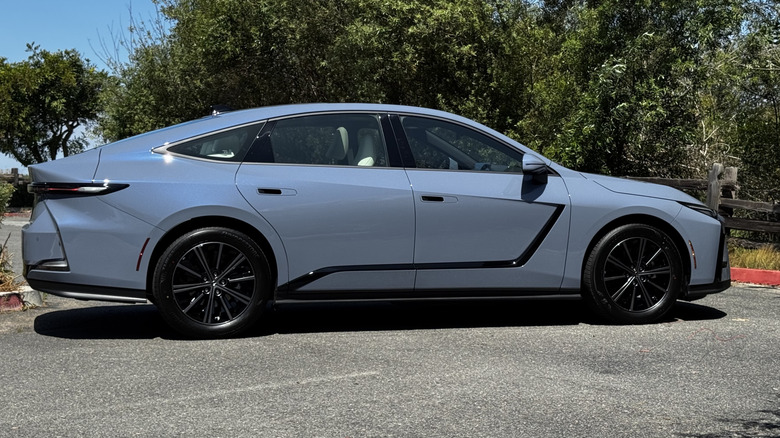
The new ES is bigger in pretty much every exterior dimension, with the most noticeable gains being a 4.5-inch height increase compared to the outgoing car, and a huge 6.5-inch gain in overall length to a total of 202.4 inches. That makes the new ES just 3.7 inches shorter than the 2026 Lexus LS 500. It seems like Lexus is trying to inch the ES closer to crossover territory, not unlike the also peculiarly proportioned Toyota Crown.
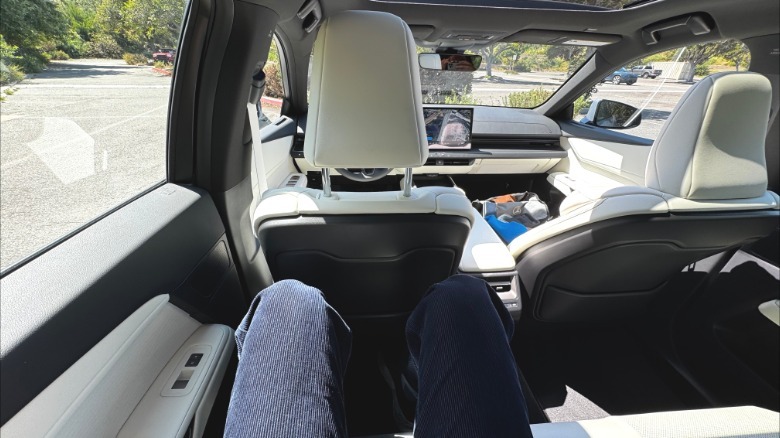
Thanks to that growth the ES has a huge interior, particularly in the rear cabin where all 6-foot-8-inches of my leggy body were able to sit comfortably behind my all-the-way-back driving position, and I can't believe I'm saying this, but I still had legroom to spare. You can take the rear seats to a whole new level with the Executive package on certain trims, which even adds a powered ottoman. Considering the demise of its S-Class fighter, the LS, Toyota's luxury arm can now afford to bestow such size and niceties upon the lowly ES.
 Logan K. Carter/ Jalopnik
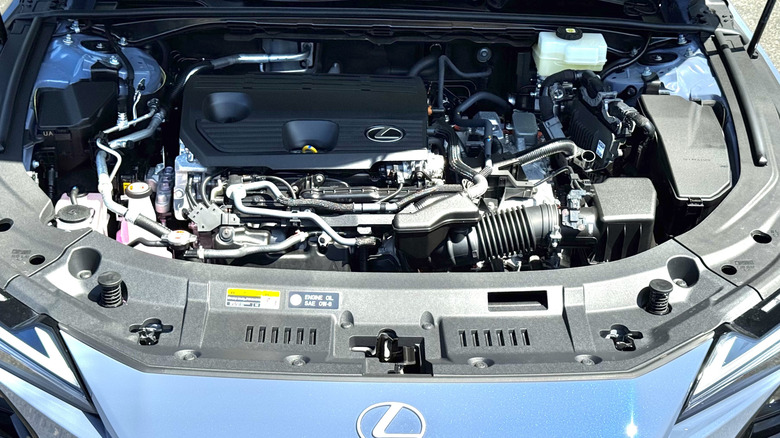
The sole gas-powered model is the hybrid ES 350h. Its 2.5-liter inline-4 engine is combined with Lexus' sixth-generation hybrid system, sending 244 horsepower through a CVT to either the front wheels or all four wheels. Front-wheel-drive ES 350h models are EPA rated at an excellent 48 mpg in the city, 44 mpg on the highway, and 46 mpg combined, while all-wheel drive drops each figure by one or two mpg in each scenario, which is still commendably efficient, and slightly better than the front-wheel-drive-only 2025 Lexus ES 300h, which was EPA rated for 43 mpg city, 44 mpg highway and combined.
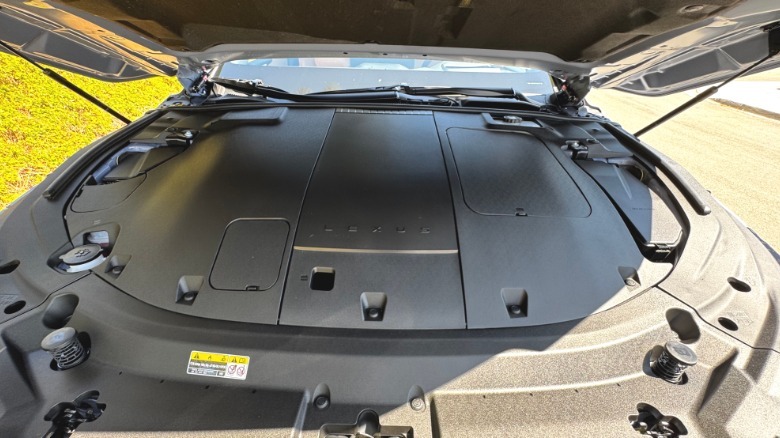
New for the ES nameplate are two fully electric powertrains. There's the ES 350e, which is front-wheel drive only, or the ES 500e that has dual motors and standard all-wheel drive. The ES 350e is powered by a single front-mounted motor that produces 221 horsepower, while the ES 500e uses the same motor up front and gains a rear-axle motor that together bump the power output up to 338 horsepower. Both EVs use the same 74.7-kWh lithium-ion battery pack; the base ES 350e returns the best maximum range number with an EPA-estimated 307-miles, while the ES 500e is rated to travel 276 miles on a charge. As for charge speeds, electric ESes are saddled with a 74.7-kWh battery that's capable of being charged at a maximum of 150 kW, which can get the battery from 10% to 80% in a middling 30 minutes when DC fast-charging.
 Logan K. Carter/ Jalopnik
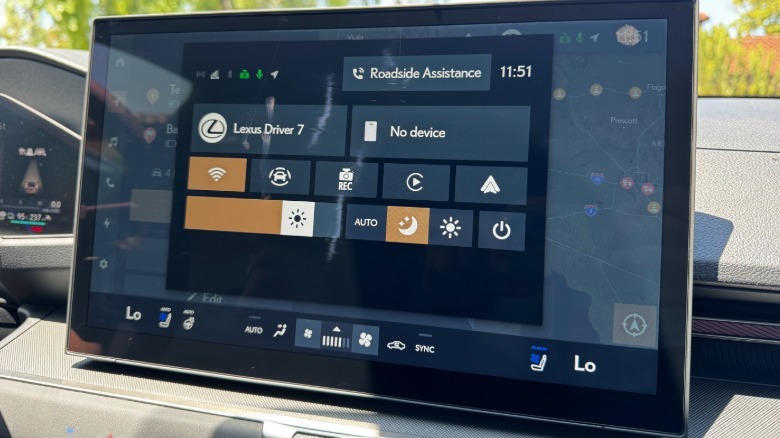
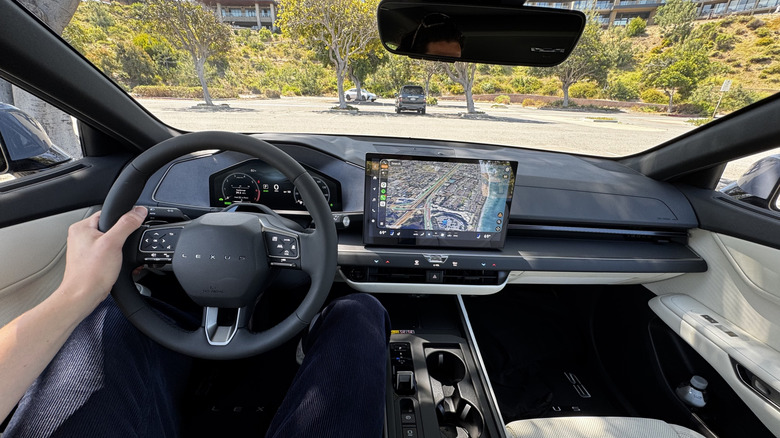
Lexus is also debuting its newest Lexus Interface infotainment system on the ES, which lives in the standard 14-inch central touchscreen and 12.3-inch digital driver's display. It's packed full of useful EV-centric features that were notably lacking on Lexus's first EV, the RZ, including a range blob that clearly shows how far in any direction you can go at your current state of charge, and exceptional route planning that can be customized to meet your wildest charging desires.
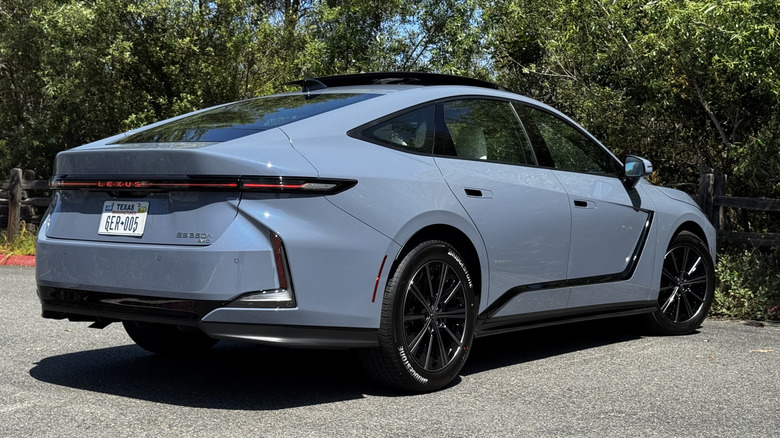
Now to address the elephant in the room: the styling. Looks are subjective, and I'm not here to tell you how to feel, but I think it's fair to say the new ES is a bold-looking thing. I like the way Lexus still incorporated its spindle grille design into both the hybrid and the EV, and I don't actually mind the way the car looks up until you reach the C-pillar. The rear three-quarters is awkwardly proportioned, with a big rear overhang that makes the back-end of the car look bulky and ungainly to my eyes. The primary stylistic difference between the hybrid and EV is the little grille slot you see on the hybrid, which naturally the EV lacks. It's all just a bit... funky looking, but I can't argue with the acres of interior room that the awkward shape facilitates.
Even the EVs are very smooth
The ES is all about smoothness and comfort, so I suppose it's not too surprising that, even in the 338-hp ES 500e, there's no neck-snapping acceleration. Instead, even when matting the throttle, I found the ES slowly drizzled on more and more power until eventually reaching its maximum output.
This is especially true for the ES 350e, which despite its claimed 7.4-second 0-to-60-mph time felt concerningly slow pulling away from a stop. When I floored the throttle in the ES 350e, it's almost as though it gathered itself, took the snotty kleenex out of its pocket, wiped its nose, then started picking up speed. I found this same behavior in each drive mode, including Sport.
The ES 500e felt peppier with its claimed 5.1-second 0-to-60 time, but not overly so, and it also displayed a distinctly gradual acceleration curve. The ES 350h falls somewhere in between the pokey 350e and the quick 500e, but my overall impression after driving all three cars was one of remarkable similarity — whether you go EV or hybrid, front- or all-wheel drive, the 2026 Lexus ES is a smooth cruiser.
 Logan K. Carter
Annoyingly, though, neither electric ES is capable of one-pedal driving. There are five regenerative braking intensities that can be conveniently controlled by the steering wheel mounted paddles, and yet not one of them enables one-pedal driving. Boo.
Lexus anticipates the ES350h hybrid to be the biggest seller in the U.S. market, and the good news is, it's yet another excellent hybrid drivetrain from Toyota. As you'd expect, the gasoline engine did make a bit of a racket when it was operational, especially when merging onto the freeway, but once its revs dropped or the engine turned off, the interior noise subsided.
They still aren't going to light your hair on fire
During my short time behind the wheel of each different ES model, I never got the chance to chuck the cars around twisty roads, which is probably not a bad thing when you remember the type of person who typically buys a Lexus ES. These are not sport sedans, and they don't drive like sport sedans. They're quick to understeer around tight turns, and I found the tires started squealing at remarkably low speeds.
On the other hand, the ES is generally comfortable and cosetting, and the interior is a huge and rather serene place to be, which is exactly how an ES should be. I was surprised by the occasional harsh impacts and jittery moments over broken pavement, though. I suspect the Bridgestone Turanza EL450 all-season tires may have played a role in the sporadic ride harshness, but despite this, the ES maintains a mostly well-composed and luxurious vibe, much of which is due to its interior.
It had an utterly massive rear seat
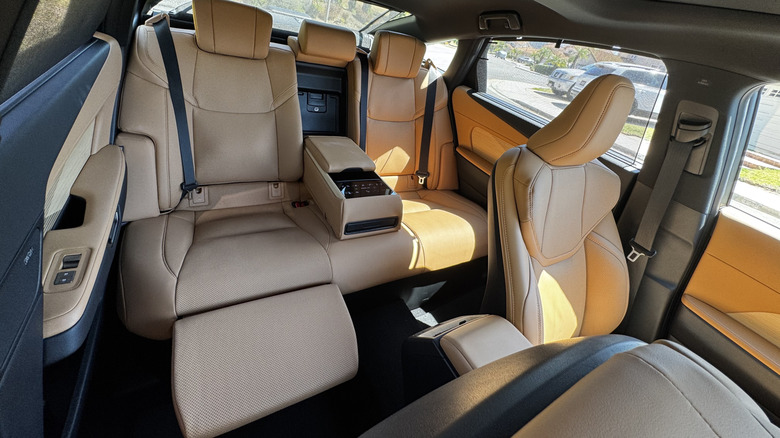
The new ES might be the ultimate Uber, as its cavernous rear cabin is a magnificent place to be. I was able to sit behind my desired driving position, which naturally is all the way down and all the way back, and I still had room between my knees and the seat. This is especially notable because I have a 40-inch inseam, so most of my height is in my legs. I was blown away by how much legroom the new ES has — it's up 1.4 inches from last year to a whopping 40.7 inches whether you opt for the Executive package or not. That's actually 1.8 inches more rear-seat legroom than in the larger 2026 Lexus LS 500, so trust me, the rear seats are properly roomy.
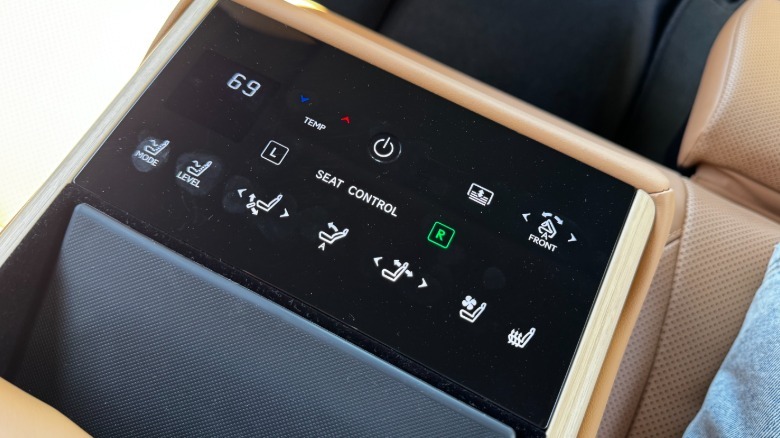
If you do opt for the ES 350e Luxury with the Executive package, the outboard rear passengers get a proper first-class experience. Fold down the center arm rest and you find a black plastic touch pad with backlit symbols that are kinda confusing, but once you touch a few of them you find one that the passenger side can fold and slide the passenger seat forward to maximize their own space, and to make room for the electrically deployable ottoman. The other buttons deploy the rear roller blind that's only available with this package, activate the massage function, the seat heating or ventilation, and you can take advantage of the two-way adjustments for the outboard seats.
 Logan K. Carter
I did not fit well in the fully reclined passenger-side rear seat, though, so I had to keep my knees bent even with the front passenger seat folded up. This is not all that surprising since it's the same case in the back seat of an S-Class for me, but it's worth sharing. It's also worth noting that the rear seats do not fold down on any 2026 ES; there is a little pass-through in the middle of the rear seatback, but it's very limiting.
Taking things up front
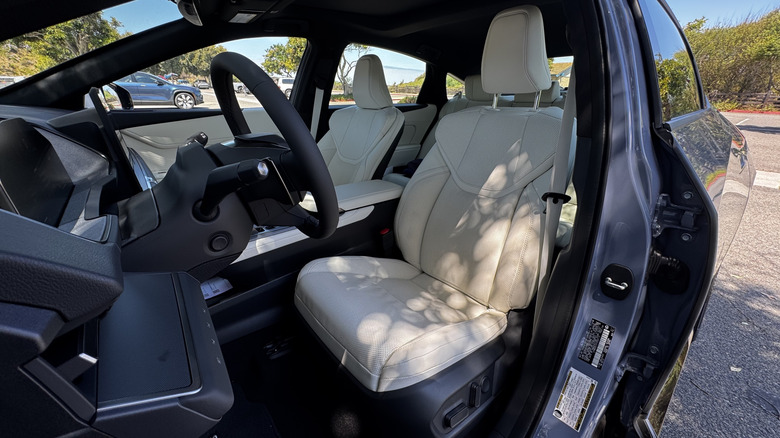
The front seat of the ES was a pleasant place to be, but I found headroom to be limited despite the fact that this generation is 4.5 inches taller than the old one, so long torso'd folks beware. Legroom was more abundant than headroom, but I still found my shins to end up awfully close to the bottom of the dashboard. I wasn't uncomfortable, but if my legs were any longer I might've been.
I also found it a shame that the only seats available with a massage function are the rear seats in ES 350e Luxury cars with the Executive package. You cannot get an ES with massaging front seats, and you cannot option the Executive package on any other powertrain or trim level. At least ventilated front seats are standard, which I really value, especially considering I found the air conditioning to be a bit weak, and it was not an especially hot day.
 Logan K. Carter/ Jalopnik
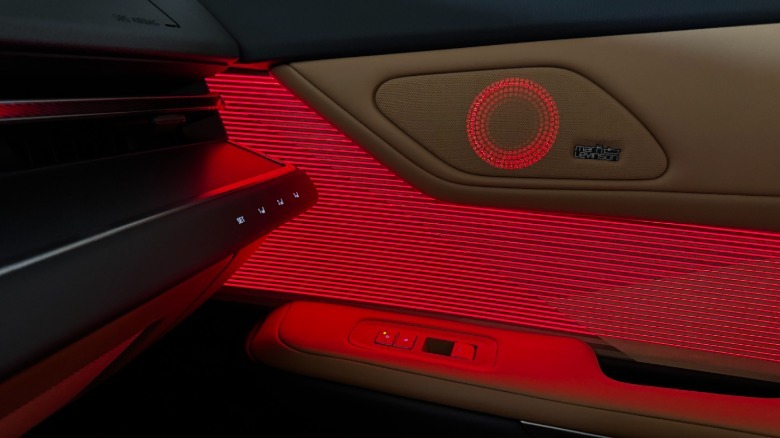
Fortunately for Lexus, the rest of the interior is pretty darn good. The materials in the cabin look and feel upscale and elegant. The layered bamboo interior paneling that comes on Luxury trims is beautiful in the daytime, and at night ambient and interactive lights shine through the bamboo, which looks downright cool. There are three interior color options — black, white, or Palomino, which is a pleasing peanut-buttery color — and a handful of exterior paint colors. There are two paint standouts: Lexus's perfect Copper Crest, and a new periwinkle-ish color with blue flake called Wavelength. I know most of them will be sold in the boring blacks and whites, but at least Lexus offers some compelling color options.
The new infotainment system is great, particularly on EVs
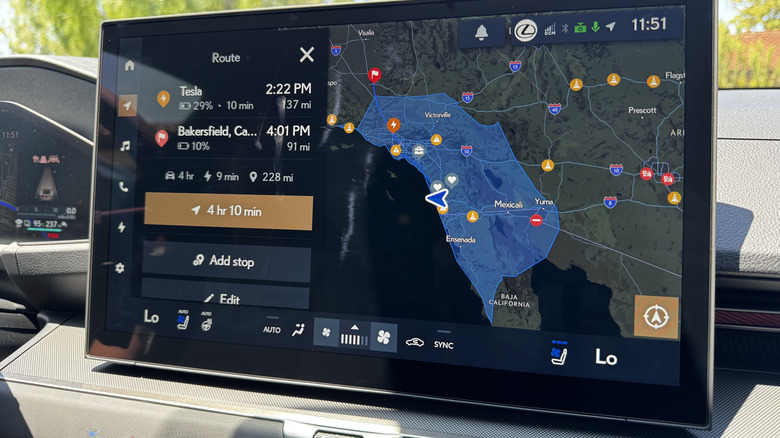
The ES debuts a new infotainment for Lexus, and straight away I'll say it's a great system. If you opt for an electric ES, the navigation includes lots of easy-peasy data that will make charging and route planning a breeze. Where the RZ felt half-baked, the ES feels like a loaf of bread that Lexus spent a long time kneading and proofing, and it comes out of the oven with the perfect bake. No soggy bottoms to complain about here.
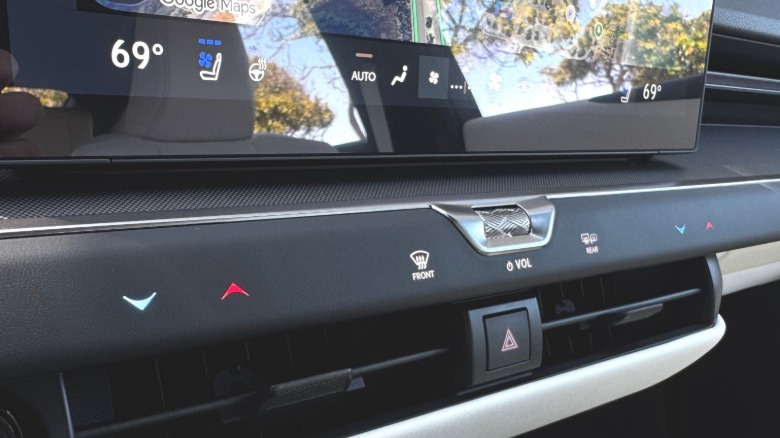
Other than the improved EV features, the rest of the infotainment is great, too, save for one thing: most of the climate controls are only accessed through the screen. There's a row of snazzy looking buttons that manifest as light that shines through a leather-like material on the dashboard, but the only climate adjustments on that bar are for adjusting the temperature or activating the defrost function. I emphatically prefer physical knobs that you can grab and twist without visual confirmation, but everybody's different.
 Logan K. Carter/ Jalopnik
This also feels like a bit of a nitpick, but I wasn't fond of the volume roller, since it was way too easy to accidentally click the button and mute your music when what I wanted to do was turn up the volume.
The infotainment menu structure is remarkably similar to an iPhone's menu structure; there's even a quick control menu that is always accessible via a box in the top right corner of the screen, kind of like the one on your iPhone. It controls various system settings like screen brightness, night and daytime mode, and some vehicle controls. It also introduces a customizable home screen with active widgets, like the weather widget that will display blue when it's sunny out or gray when it's cloudy. It's a great system and I'm eager to see it on other Lexus models.
The new Lexus ES is bigger and better than ever before
Overall, I quite liked my time driving the Lexus ES. I was thoroughly impressed by its capacious rear cabin, its slick new infotainment, and its plush driving experience, regardless of drivetrain. Considering its competition is notably more aimed at sporty driving dynamics like the BMW 5 Series and Audi A6, I think the Lexus ES occupies a unique position as the distinctly luxurious choice. It doesn't hurt that its price point is much lower than its competitors, too, with the cheapest ES 350e Premium starting out at $48,895 including destination, or around $20,000 less than a base BMW i5. The ES 350h Premium is next up with a base price of $51,095, and the ES 500e Premium with its standard all-wheel drive starts at $51,895.
If you're interested in a new electric Lexus ES then you're in luck, because they should be at dealers already. If you've got your heart set on the ES 350h hybrid, though, you'll have to wait a little bit as they are slated to arrive at dealerships next month. With the new ES, it seems like Lexus finally has a competitive and desirable EV, and I predict it'll be a hit with the brand's customers that value luxury and serenity above all else.