

If You Want Better Fuel Economy, You've Got To Give Something Up
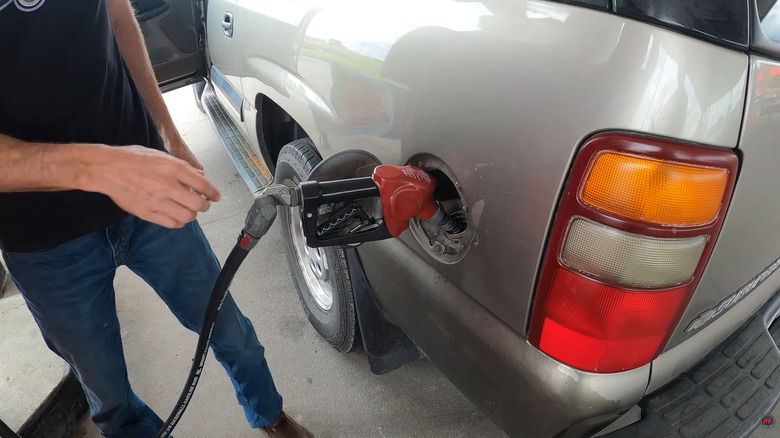
It's getting to be that time again. Fuel prices are soaring, and everyone is broke just in time for summer. This is the best time of year to be heading out on the open road and getting lost on a great road trip, but with the fuel bills going deep into the triple digits, it's harder than ever to keep your road trip under budget. You're looking for something that will reduce your fuel costs, you're getting desperate, and you're willing to try anything. Thankfully, Project Farm on YouTube has already tested a number of products that won't help at all.
Will the Fuel Shark, OBD2 Cats, or 2G Fuel Saver actually work to keep your fuel numbers in check? Absolutely not. Americans are addicted to instant gratification without compromise. There's something wired into our brains that sees a "fuel saving device" on the shelves of a gas station, or among the pages of Jeff Bezos' monopoly emporium, and we want to try it out. But running back-to-back fuel economy runs, Project Farm actually found the best baseline fuel economy with no fuel-saving devices installed at all. That's not to say there aren't devices that can improve your fuel economy, but these easy plug-in devices, or magnetic aero pieces, are little more than junk plastic.
If you watch the full Project Farm video, you'll see that the only things that actually improve your fuel economy will cost you much more than $19.99. If you want a fuel-saving device that works, you're going to need to install some performance-enhancing modifications to improve airflow through your car's engine. A high-flow exhaust system, a large cold air intake system, and an ECU tuner set up for producing fuel economy numbers are the only ways Project Farm found success.
Are the fuel savings actually worth it?
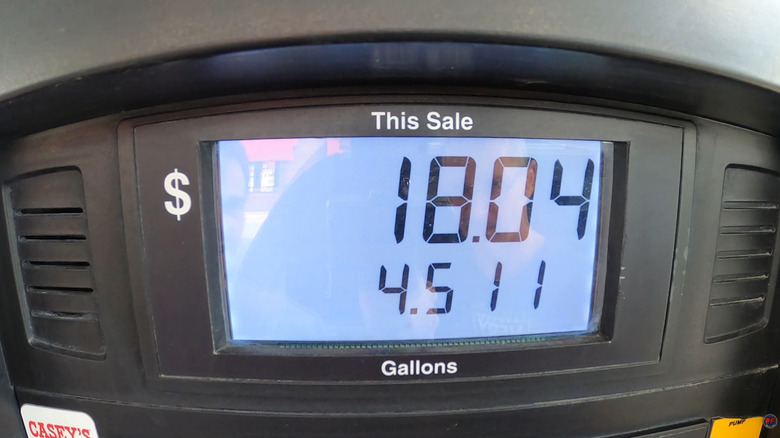
Based on Project Farm's findings, a nice high-flow exhaust and a cold air intake do improve fuel economy a little bit. With a baseline reading of 17.06 miles per gallon from his big 319,000-mile Chevy Suburban, it would be hard to do much worse. After installing $513 worth of airflow-improving modifications, the Suburban returned 17.74 miles per gallon. At the current $4.51 per gallon national average cost of regular gasoline, Project Farm was paying around 26.4 cents per mile before, and almost exactly a penny less per mile after (25.4 cents per mile). It would take that Suburban just over 50,000 miles to make up the cost of the mods at the pump — a fact that might've been useful about 300,000 miles ago.
Once the mods were installed, it was obvious that the engine wasn't compensating enough for the newfound improvement in the flow of air into and out of the engine. A Superchips tuner optimized the old ECU for its new modifications at an additional cost of $461. This time, the fuel economy jumped more than one full mile per gallon, so it's a fairly substantial increase. With 18.78 miles per gallon returned in testing, there's a quicker return on the investment. The total cost of mods is now up to $974, though, so how long would it take to pay off at the pump? At around 24 cents per mile in fuel costs, it would still take about 40,750 miles to recoup that spend.
For the final test on the Suburban, Project Farm re-tested with the tires inflated to their maximum PSI for lower rolling resistance and reduced the highway test's speed from 70 miles per hour down to 63 miles per hour. This saw the biggest jump of fuel economy in the test, returning 20.39 MPGs, getting the per-mile fuel costs of the trip down to just 22.11 cents. After these driving behavioral changes, the truck will only need to travel 22,700 miles at the lower speed in order to recover the money spent on modifications. It's not exactly instant gratification, but slowing down and keeping an eye on your tire pressures appears to have had the biggest impact singular impact.