

Tesla Rumored To Be In Talks With Suppliers Over Smaller, Cheaper Crossover, But We'll Believe It When We See It
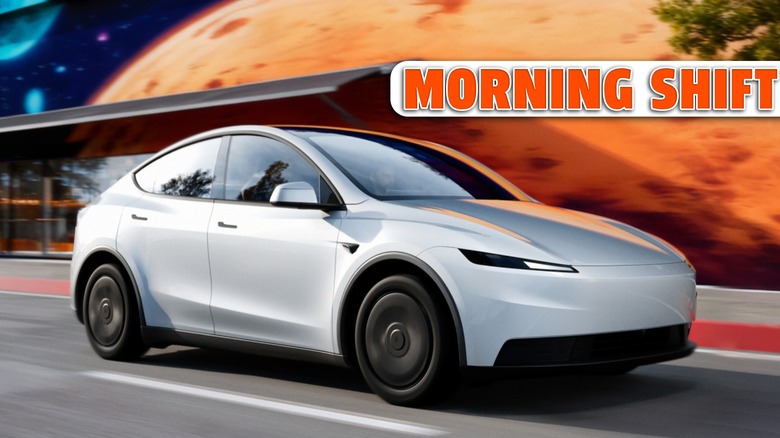
Good morning! It's Thursday, April 9, 2026, and this is The Morning Shift, your daily roundup of the top automotive headlines from around the world, in one place. This is where you'll find the most important stories that are shaping the way Americans drive and get around.
In this morning's edition, Tesla is probably wasting everyone's time with the promise of a smaller, cheaper vehicle once again, Chrysler's CEO has a plan, Hyundai is finding ways to get around the war in the Middle East and over a quarter million Chevy Malibus are being recalled, impacting exactly nine private owners and a handful of fleet companies.
1st Gear: Oh look, another cheap Tesla rumor
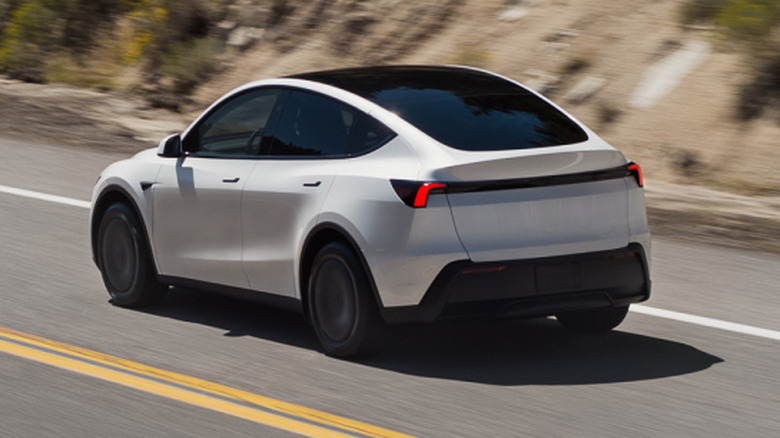
Tesla is reportedly working on a brand new, smaller and cheaper electric crossover, according to a handful of anonymous sources, and the company has been in contact with suppliers in recent weeks to discuss details its plans for the small SUV. Unlike the enshittened Model 3 and Model Y Standard, this won't be a variant of an existing car, but an all-new vehicle. We've all heard this story before, but maybe it's real this time.
Not much is known right now, but the sources say the compact crossover will indeed be compact — just 14 feet long, which is roughly the size of a Chevy Bolt. It'll also be produced in China, Europe and the U.S. Of course, this all comes a bit out of left field. After all, CEO Elon Musk killed Tesla's low-cost EV project in 2024 to focus in on humanoid robots and autonomous robotaxis. Perhaps he had a change of heart, perhaps he felt Tesla's stock needed another pump or perhaps the new model will be some sort of autonomous box. Who the hell really knows? From Reuters:
Two of the sources said Tesla aims to offer the new vehicle at a substantially lower price than its entry-level Model 3 sedan, which starts at $34,000 in China and about $37,000 in the United States. They said Tesla planned to save costs in part by using a smaller battery, which would mean a shorter driving range compared with 306 to 327 miles for the Model Y.
One of the people added that the automaker would also offer a single electric motor instead of two, a performance option on current Tesla models. Tesla also wants to make the car much lighter, this person said, at about 1.5 metric tons compared with about two tons for the Model Y.
[...]
[I]n 2024, Reuters reported that Tesla had abandoned plans for the Model 2, although it still planned a driverless robotaxi on the same platform. Tesla's biggest EV rivals in China had already started producing much cheaper EVs. Later that year, Musk said it would be "pointless" and "silly" for Tesla to make a $25,000 EV for human drivers because the company would soon offer driverless vehicles.
A former Tesla manager said an all-new cheaper traditional car would represent a significant departure from the company's philosophy through mid-2025. Until then, the manager said, Tesla had dropped the effort to mass-produce an entry-level car in favor of robotaxis as the key to lowering costs per mile for riders and the car owners charging them for trips.
After scrapping the Model 2, Musk and other Tesla executives described different plans for new, "more affordable" EVs in vague terms. When the vehicles arrived last fall, however, they were stripped-down versions of the current Model 3 and Y offered in new "standard" trim levels at only a modest discount.
There's a high likelihood that if this car does get made, Tesla tries to slap its autonomy gimmicks on top of it. Surprise, surprise, I know.
The Tesla employee declined to confirm or deny details of any specific vehicle but said, in general, the automaker now aims to build models that would be driverless but offer a human-driven option.
While aiming for full autonomy across its lineup, the person said, Tesla realizes many global markets won't see meaningful adoption – nor regulatory acceptance – of driverless vehicles for years. Preserving the option to build a particular model with or without driving controls could enable more sales and help ensure Tesla can keep its car factories running near capacity, the person said.
Obviously, it's incredibly important to take all of this information with a heaping dose of skepticism. The four people who spoke with Reuters said the project is in the early development stages, and the outlet was unable to determine whether or not Tesla had given the green light to the car's production just yet. Hell, even if it did, that doesn't mean anything. Just look at the poor Roadster.
2nd Gear: Chrysler dealers want something else to sell
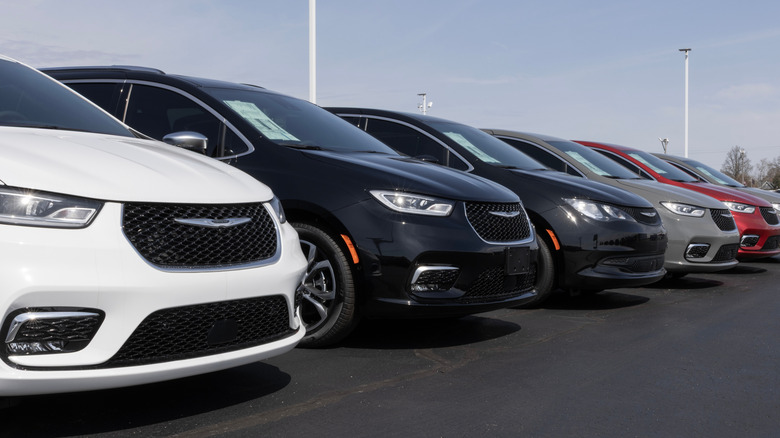
Everybody likes the Chrysler Pacifica. Despite its age, it's a good minivan, and its latest facelift isn't offensive enough to ruin the reputation the van has built for itself, but dealers are starting to get a bit annoyed that they've only got one vehicle to sell. Luckily for them, newly installed CEO, Matt McAlear, says he's got a plan to turn the brand around.
Those details are going to be laid out by Stellantis CEO Antonio Filosa at an upcoming investor presentation in May, and, while he admits the Pacifica is still the backbone of the brand, there's a lot in store for Chrysler's broader product lineup. That news doesn't come a moment too soon for dealers. From Automotive News:
Retailers are eager for clarity — and urgency — from the automaker, said Murray Haukaas, president of Winnipeg-based Twin Motors Group and head of the Stellantis dealer council.
"Dealers want to know what the direction of the Chrysler brand is," Haukaas said, noting there are about 425 Stellantis dealers across Canada. "We know what the Dodge brand stands for, we know what Jeep stands for, and Ram's vision is clear — but what is the direction for Chrysler, product-wise?"
Chrysler still holds strong emotional and historical value for retailers, many of whom continue to identify themselves as "Chrysler dealers" despite the Stellantis umbrella, Haukaas said.
"There's room in our showrooms for a well-executed product wearing the Chrysler wing," he said.
But patience is wearing thin.
"There's been a lot of fits and starts with the Chrysler brand," Haukaas said. "We need something in our showroom sooner than later. They need to commit to a direction and execute on it."
He pointed to the successful reinvention of Buick as evidence that a legacy brand can be revitalized with the right strategy.
Back in 2025, Chrysler celebrated its 100th birthday, and McAlear made it clear that the milestone wasn't a "finish line." More so, it was "the starting line for the next 100 years."
3rd Gear: Hyundai finds its way around Hormuz
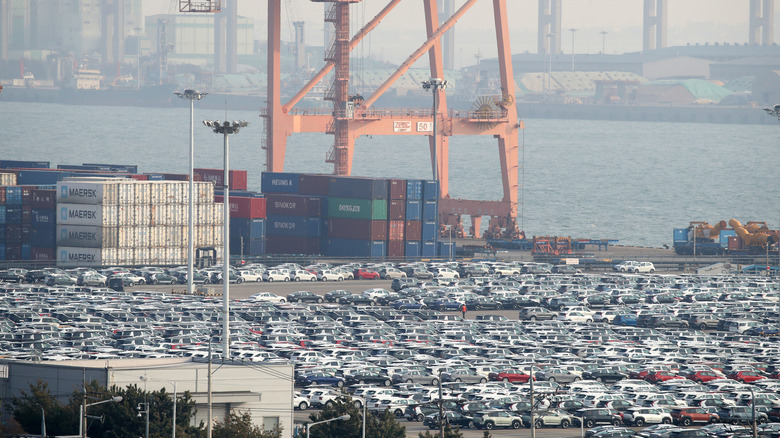
We've talked a lot about how the Strait of Hormuz's closure is messing up the world's oil supply, but it's also forcing companies to rethink their shipping strategies as a whole. Hyundai, for example, is rerouting its ships around Africa to avoid the Strait altogether. The move has slowed the company's global supply lines as the U.S. and Israel's war with Iran continues to add pressure to the already struggling movement of goods. From Bloomberg:
"We have deviated our ships to the Cape of Good Hope," Chief Executive Officer José Muñoz said Wednesday in an interview, referring to the southern tip of South Africa. "This is a lot of additional lead time."
The shift is part of a broader plan to rework its operations to insulate the company from supply-chain shocks, tariffs and geopolitical tension, he said. Longer term, Hyundai is seeking to source more components locally in Europe rather than ship them from South Korea, a path that relies on passing through the Strait of Hormuz.
Hyundai has been keeping more inventory on hand to buffer against supply shocks since the global pandemic upended supply chains, Muñoz said. Meetings to make supply-chain decisions — once an annual occurrence — are now happening on roughly a weekly basis, he said.
"We try to put together supply and demand, take decisions and maximize as much as we possibly can the production capacity that we have, so that we don't lose production," Muñoz said. "But it's tough. It's never been as tough as it is now."
Hyundai's Chief Executive Officer José Muñoz says that his company has been able to maintain its level of production because of the flexibility it has built in, and there's a hell of a lot it's gotta deal with right now. The U.S. car market is hot and cold, there's an affordability crisis, gas prices won't stop going up and the federal tax break on electric vehicles is dead. Still, Hyundai managed a significant jump in first-quarter EV sales from the same time a year ago. It's mighty impressive.
4th Gear: Your rental car is being recalled
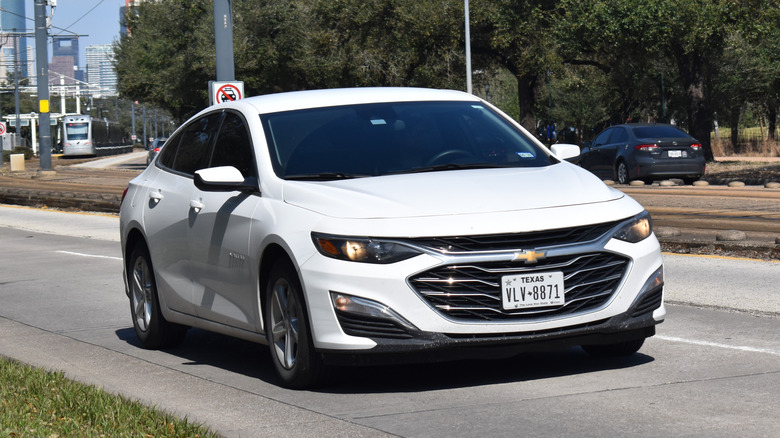
Chevy is recalling over 270,000 Malibus because of an issue with the rearview camera that might make it "display a distorted or blank image," which is the last thing you want when you're backing out of a parking space in an airport parking lot. Obviously, an issue like that is a big no-no in today's world, where rearview cameras are compulsory. From the Detroit Free Press:
GM spokesman Bill Grotz said in an emailed statement that the automaker is "voluntarily recalling certain model year 2023-2025 Chevrolet Malibus to replace potentially defective rearview cameras."
"The safety of our customers is the highest priority for the entire GM team, and we're working to resolve this matter as quickly as possible," the statement said.
GM discontinued the sedan after the 2025 model year. In 2024, GM sold 117,319 Chevrolet Malibus. Last year, the number dwindled to 10,026 vehicles.
The automaker says that just 6% of the 271,770 sedans potentially have the issue, and it's using manufacturing records to determine the affected vehicles. I'm gonna go out on a limb and say most of those are rental cars.
For the few that aren't, owners should get mailed a letter by May 18 to let them know they should take their 'Bu to their local dealership to replace the camera free of charge.
Reverse: Happy Birthday, Pop!
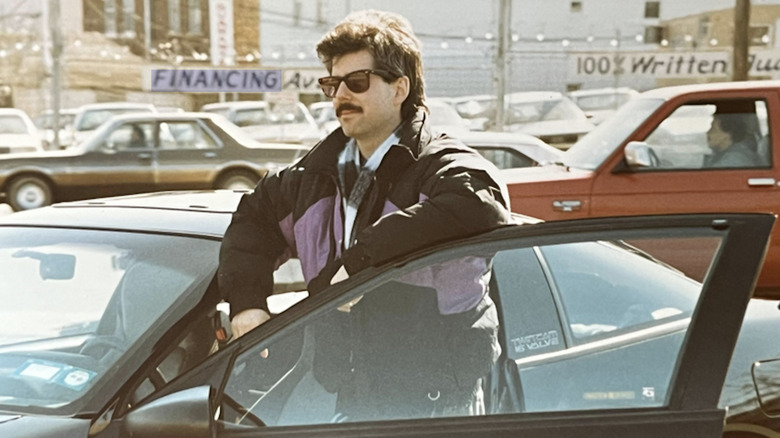
Today's my dad's 67th birthday, and he's quite a guy, let me tell you. While not much of a car person, he's very much into motorcycles, so I hope the weather can cooperate with him today. He just traded his old BMW F800GT for a Triumph Tiger, and he deserves to go out for a ride. Wouldn't you agree?
If you're not out on the road, I'll give you a call later, pop. Love you.
Oh, and that picture of him is from the day he bought his 1991 Plymouth Laser Twin Cam five-speed. That would end up being the first car I was ever cognizant of. What a machine.
The Fuel Up
For a minute there, it was looking like the Strait of Hormuz was back in business, and oil tankers were flowing through the passageway once again (as long as they were willing to pay multi-million-dollar tolls to the Iranian government). Welp, that didn't last long, because Israel quickly ran afoul of its ceasefire with Iran when it bombed Lebanon, killing over 250 people in the country and wounding hundreds more. Now, the Strait is closed again. This back and forth has caused a similar effect on oil prices, witch WTI Crude Oil futures dipping well into the low $90s, but they're now back near $100. It's a similar story with Brent Crude. Oh well, it was nice while it lasted.
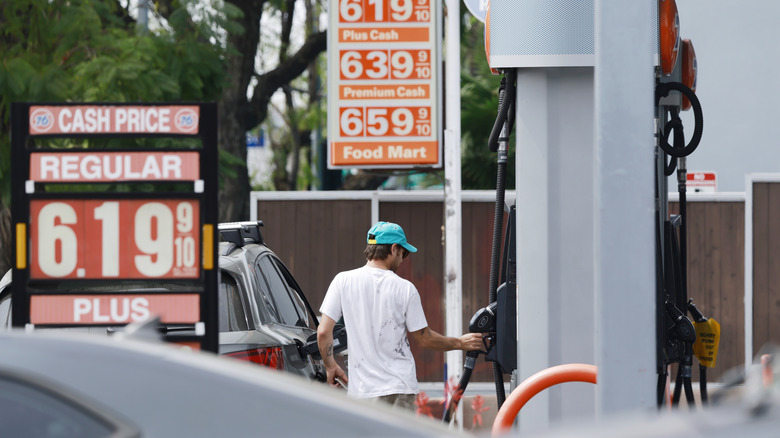
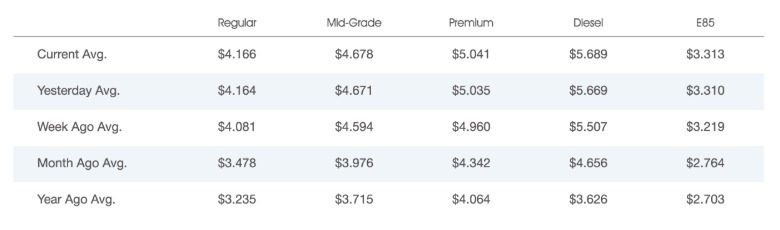
All of this is to say that gas prices did actually only tick up a tiny bit overnight — $0.002, to be exact, but that's technically enough to say the average price of a gallon of gas went from $4.16 to $4.17, according to AAA. Math is a jerk sometimes.
For those who like to torture themselves, the last time gas was over $4.16 per gallon was back in July of 2022, according to data from the Energy Information Administration. The average price of a gallon of gas is now up $1.19 — or about 33.3% — since the war first broke out on February 28, when it was $2.98.
Here's where national average prices stand right now, according to AAA:
 AAA
AAA
On the radio: Jackie Chan - 'OK I Love You'
If only Jackie Chan were as good a father as he was a musician, then, he'd really be cooking as a human. Still, this song is a certified bop, and no, I've got no idea what anything outside of "OK I love you" in the chorus means. You don't really need to, either. Just enjoy the vibes, my guy.