

11 Supercars With Mind-Boggling Torque Specs
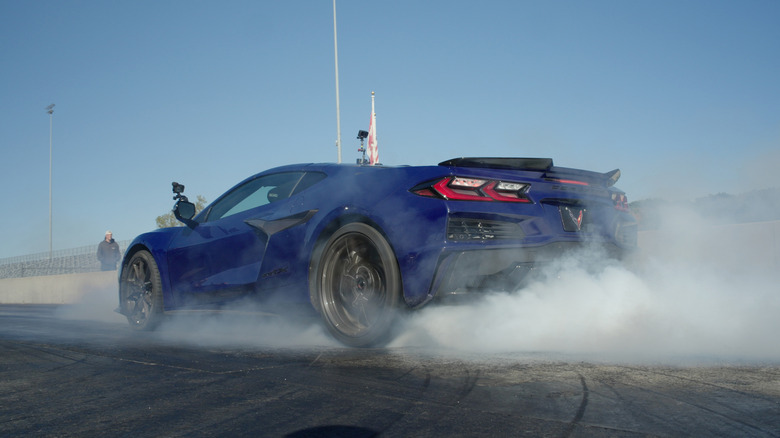
The supercar world has recently descended into glorious madness. On one hand, you have the naturally aspirated models that refuse to follow recent trends. On the other, you have the electrified monsters that compete for the highest horsepower figures in their respective categories. Even American automakers have amped up the game quite significantly in the last few years.
But, of course, it's the advanced turbocharged and electrified supercars that will boast the highest power and torque figures. Electric motors produce a lot of instantaneous torque, and turbocharged engines are also usually more torquey. So, expect to mostly see supercars with that exact combo in our list of supercars with mind-boggling torque specs.
A quick note before we continue — for the most part, we've excluded hypercars from this list. Yes, they have the highest horsepower and torque figures, but they also cost millions and are produced in limited quantities. This article will focus only on supercars that are relatively easy to get to — assuming you have the budget, of course. Yes, we'll also list prices with destination fees included.
2026 Maserati MCPura (531 pound-feet)
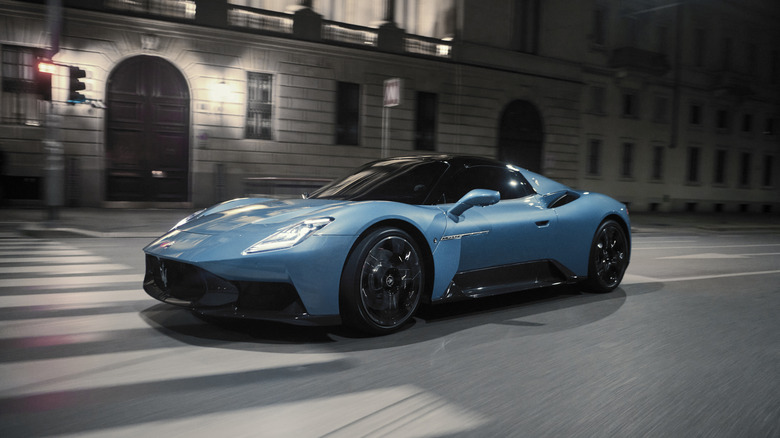
Back in 2020, Maserati returned to its roots with the MC20 mid-engine supercar. Six years later, the slightly evolved MCPura isn't as talked about as the latest offerings from Ferrari and Lamborghini, despite having all the hallmarks of a great supercar. Heck, in 2026, it might be the purest supercar on sale. The only electric motors in the MCPura are those powering the windows and wipers. To move, the MC20 utilizes only the 3.0-liter twin-turbo V6, paired with an eight-speed dual-clutch automatic. The Nettuno engine produces 621 horsepower and a meaty 531 pound-feet of torque, enough for a brisk 0-60 sprint of 2.9 seconds and a top speed of 202 mph.
The purity doesn't end there. The car has a lightweight, all-composite body designed by Dallara. So, since it has no heavy batteries, it weighs 3,404 pounds for the coupe, with the Cielo convertible adding a bit extra. Oh, and both also come standard with rear-wheel drive. How does this all translate into the real world, though? Well, reviewers have praised the MCPura's ride and handling, which is not hard to believe considering its lightweight, RWD, mid-engine configuration. The $246,000 base price for the MCPura coupe is also one of its strong selling points. Sure, it's out of reach for most people, but scroll down this list and you'll soon see exotics that dwarf MCPura's price.
2026 McLaren 750S (590 pound-feet)
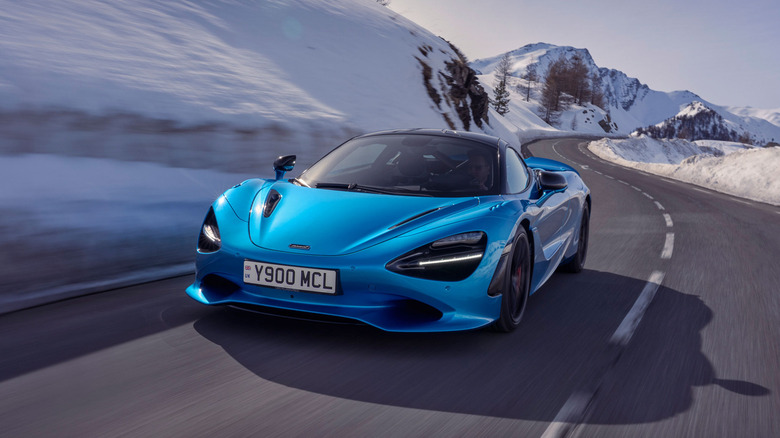
The McLaren 750S takes the "pure driving experience" approach and amps it up to eleven. Instead of the MCPura's puny V6, the 750S employs a 4.0-liter twin-turbo V8 without any electric assistance. The V8 powerhouse produces 740 horsepower and 590 pound-feet of torque. Add to that a quick seven-speed dual-clutch and a low weight of just 3,029 pounds, and you reach 60 mph in just 2.6 seconds. More impressively, the top speed reaches as high as 206 mph.
When we took a look at it ourselves, we found the McLaren 750S to truly be the supercar that other supercars dream of being. Put it through its paces on a twisty road, and you'll feel like a fighter pilot. The handling is fantastic — agile, balanced, and approachable. Exactly what you'd expect from a supercar that doesn't carry heavy batteries around. Thanks to the improved aerodynamics over the 720S, the 750S has even more downforce, making it great for track use.
Not that you should expect anything less from a $365,100 supercar. Unfortunately, even with that price point, this is also a supercar that's also not very practical and comes with questionable tech implementation. Heck, McLaren didn't even care to implement Android Auto.
2026 Porsche 911 Turbo S (590 pound-feet)
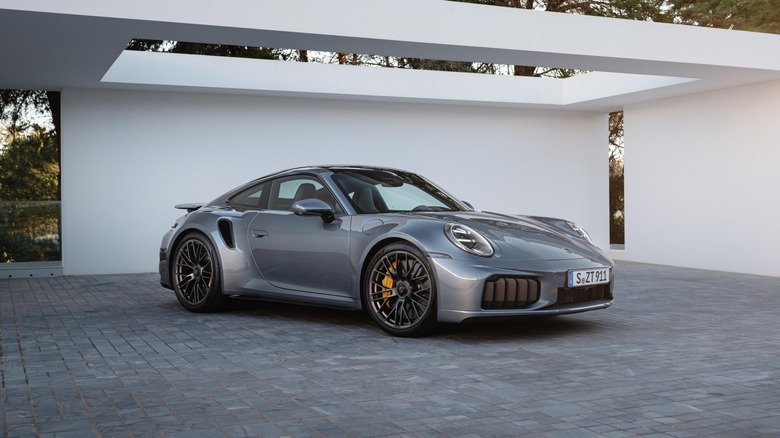
The latest 992.2 generation 911 Turbo S wows with its power and torque figures, but in this case, that's not very surprising. Yes, the 701 horsepower figure is a significant upgrade over the predecessor's 640 horses. But the 590 pound-feet torque figure remained the same for the new model, and you could get it for yourself at a starting price of $272,650.
However, thanks to Porsche's new T-Hybrid system, the new 911 Turbo S drives like a completely different car on the road. For starters, there's no turbo lag. The 911 Turbo S has two turbochargers, which can be spun to 145,000 rpm via electric motors for instant torque. In that sense, the 3.7-liter flat-six should now feel more like a naturally-aspirated, high-displacement engine rather than a boosted one. Top speed: 200 mph. Oh, and there's an additional 80 horsepower/139 pound-feet electric motor in the eight-speed dual-clutch transmission, further enhancing responsiveness and recharging the 1.9-kWh battery under braking. AWD is standard, as well.
As a result, the 911 Turbo S catapults to 60 in just 2.2 seconds. More importantly, the engine produces its 590 pound-feet peak torque from 2,300 to 6,000 rpm. Unsurprisingly, this newfound responsiveness made the new 911 Turbo S a much faster track weapon, with a time of 7:03.92 at the Nürburgring Nordschleife. Of course, the hybrid hardware added weight to the new 911 Turbo S. The coupe now weighs 3,803 pounds, or 175 pounds more than the predecessor.
2027 Ferrari 849 Testarossa (621 pound-feet)
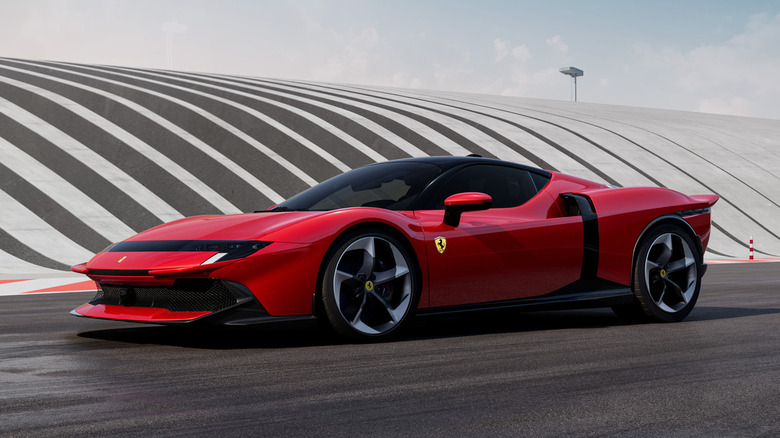
Unsurprisingly, the controversial design is the main talking point of the new Ferrari 849 Testarossa. Purists are disgusted by it, but some find it kind of attractive. Nobody questions the performance of Ferrari's new PHEV supercar, though. The 849 Testarossa packs a 4.0-liter twin-turbo V8, good for 819 horsepower and 621 pound-feet of torque, alongside three electric motors that produce a combined 217 horsepower. One of those motors sits on the rear axle, able to recuperate energy and help the engine during acceleration. The other two power the front wheels, giving the 849 Testarossa AWD traction.
Now, Ferrari doesn't state the combined torque output of the whole PHEV powertrain. Hence, we went with the figure from the twin-turbo V8. We do know that the 849 Testarossa has a combined output of 1,035 horsepower and that it sprints to 62 mph in 2.3 seconds. It also manages a top speed higher than 205 mph.
Straight-line speed is only a portion of the 849 Testarossa story. It features the Ferrari Integrated Vehicle Estimator (FIVE), which controls the eight-speed dual-clutch gearbox to maximize grip and enhance drivability. And thanks to the twin-tail rear wings (inspired by the 512 S) and the active rear spoiler, the 849 Testarossa produces 915 pounds of downforce at 155 mph.
2026 Ford Mustang GTD (664 pound-feet)
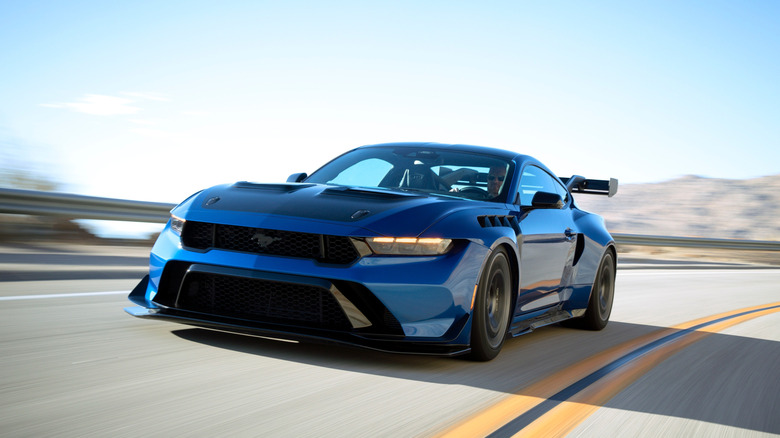
The GTD is still a Mustang by name and design, but it has said goodbye to its muscle car roots to compete directly with supercars. It has no rear seats, for instance, because Ford opted for a transaxle setup, where the transmission sits in the rear for a 50/50 weight distribution. The remaining space was used for the semi-active pushrod rear suspension which is visible through a window, similar to the engine in supercars. And those are just some of the supercar-adjacent ingredients. The Mustang GTD also has very aggressive active aerodynamics, helping it produce up to 1,323 pounds of downforce at 155 mph. There's also an F1-like Drag Reduction System, which enables a top speed of 202 mph.
And then we arrive at the supercharged 5.2-liter powerhouse. Called the Predator, Ford's highest-capacity V8 produces a staggering 815 horsepower and 664 pound-feet of torque, which is more than enough to compete with most supercars. And it manages that with no electrification onboard. The engine is paired with an eight-speed dual-clutch gearbox for quicker shifts, and for that extra supercar glitz, Ford utilized 3D-printed titanium paddle shifters.
The purchasing experience is also supercar-like. Ford allows buyers to ban anyone from picking their color to make the Mustang GTD even more exclusive. Unfortunately, the price also reflects that; the 2025 Mustang GTD started at $327,690, with the 2026 model probably costing about the same.
2026 Ferrari 296 Speciale (557 pound-feet & 232 pound-feet)
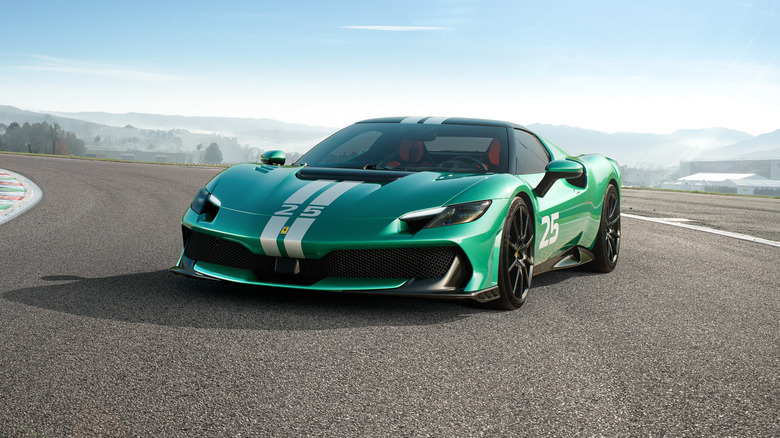
Ferrari's entry-level mid-engine supercar, the 296 GTB, starts at an eye-watering $338,250. But with 819 combined horsepower from its PHEV powertrain, it doesn't feel entry-level. 2026 also has a 296 Speciale, which costs a whopping $475,364. For the additional $140,000, you get bumped up to 868 horsepower courtesy of an improved 3.0-liter twin-turbo V6. Ferrari equipped the block with a new engine management system, titanium connecting rods, stronger pistons, and a lighter crankshaft.
As a result, on its own, the engine produces about 690 horsepower and 557 pound-feet of torque, and it can rev to 8,500 rpm. But, of course, 296 Speciale's engine is aided by a more powerful electric motor, which produces 178 horsepower and 232 pound-feet of torque. Ferrari doesn't provide a torque figure for the hybrid system, and you can't simply add the two values and come up with a conclusion. Regardless, it's a lot of power and torque, and that's reflected in the performance. The 296 Speciale arrives to 62 mph in just 2.8 seconds, despite being RWD, and its top speed is over 205 mph.
The 296 Speciale received other performance-improving upgrades. Ferrari has shaved 132 pounds of weight over the 296 GTB and provided more aggressive aerodynamics, resulting in 20% more downforce. Furthermore, the lowered suspension and revised spring/damper settings improved the at-the-limit handling behavior.
2026 Aston Martin Vanquish (738 pound-feet)
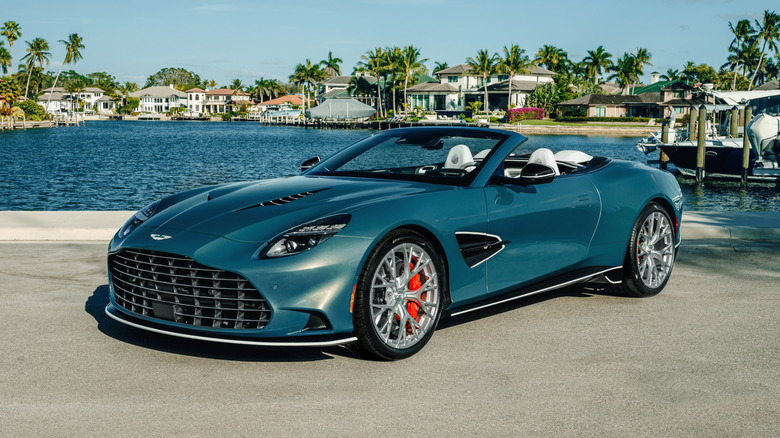
Much like the 296 Speciale, the 2026 Aston Martin Vanquish sends all its power to the rear wheels. This can prove challenging for the driver, because the source of that power is a 5.2-liter twin-turbo V12 positioned in the front — and front-engine cars don't handle as well as mid-engine ones. But the Vanquish's engine produces a whopping 823 horsepower and 738 pound-feet of torque without any electric support. The V12 is mated to an eight-speed ZF automatic, which sits on the rear axle for better weight distribution. Provided you can put all that power down successfully, the Vanquish blitzes to 62 mph in 3.3 seconds and doesn't stop until it hits 214 mph.
Aston Martin did everything it could to make the Vanquish more drivable. There's an electronic limited slip differential onboard, alongside advanced Billstein DTX dampers. The Vanquish also comes standard with carbon ceramic brakes, which are crucial to tame the V12 beast.
It's impressive stuff, but so is the $436,500 base price. The stunningly beautiful Vanquish Volante convertible costs even more, starting at $489,700. But at least you get a unique drive at that price. We found the overall experience of driving the Vanquish Volante invigorating and overwhelming, but in a good way. Let's also not forget that the Vanquish is a grand tourer first and foremost, with a highly luxurious interior and excellent ride.
2026 Lamborghini Temerario (538 pound-feet & 3x221 pound-feet)
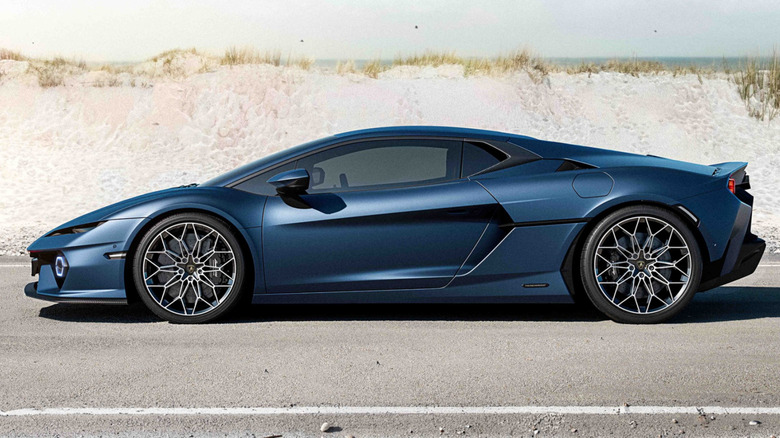
At $389,554, the 2026 Lamborghini Temerario is right up there with the 296 GTB and 750S. Still, the Temerario offers much more for the price. Take the 4.0-liter twin-turbo V8, for example, which produces an astonishing 789 horsepower and 538 pound-feet of torque. Oh, and it revs to 10,000 rpm, because the two large turbos feed better at higher engine speeds.
And that's just the beginning. Lamborghini implemented three additional electric motors in the Temerario, each producing 148 horsepower and 221 pound-feet of torque. One axial flux unit is sandwiched between the engine and transmission for rear torque while the other two power the front wheels for all-wheel drive. Combined, the hybrid system produces 908 horsepower, though Lamborghini doesn't provide a combined torque figure. What we certainly know is that the Temerario is mega fast, reaching 62 mph in 2.7 seconds and a top speed of 213 mph.
When we drove the car in a rainy session during Sonoma rainstorm, we liked the responsive powertrain, though we couldn't properly put the Temerario through its paces. Other publications praised the supercar's handling, and there's no reason to believe the Temerario isn't exhilarating to drive. After all, it's a mid-engine supercar with an aluminum spaceframe backbone, refined aerodynamics, and the advanced LDVI (Lamborghini Integrated Vehicle Dynamics) 2.0 system, which even has a built-in drift mode to help novice drivers get the most out of their supercar.
2026 Lamborghini Revuelto (535 pound-feet, 2x254 pound-feet, 1x110 pound-feet)
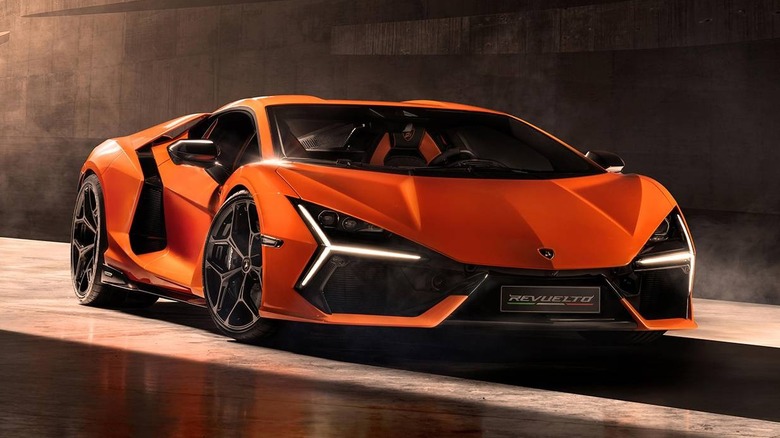
You probably noticed that we didn't talk much about engine sound. Well, sorry, but turbocharged engines will never sound as good as naturally aspirated ones. That's the biggest reason Lambo kept the 6.5-liter V12 unit in the Revuelto. Yes, the V12-powered Aventador replacement is a plug-in hybrid, but the exhilarating V12 noise is still there, all the way up to 9,500 rpm.
Now, Lamborghini kept the bore and stroke from Aventador's V12, but the engine has been extensively redesigned, so it now produces 814 horsepower and 535 pound-feet of torque. In the Revuelto, though, it's aided by three electric motors. Like in the Temerario, the rear motor sits between the V12 and the eight-speed dual-clutch transmission, acting as a torque fill. It produces 147 horsepower and 110 pound-feet of torque. Meanwhile, the other two motors power the front wheels for AWD, each producing 147 horses and 254 pound-feet of torque. According to Lamborghini, the system has a combined output of a staggering 1,001 hp, though the automaker doesn't mention combined torque.
Still, with a 0-62 mph time of just 2.5 seconds and a top speed higher than 217 mph, the Revuelto is easily one of the fastest naturally-aspirated cars ever made. It should also a beast in corners, too. The front electric motors provide real torque vectoring, which keeps the car stable in the corners. Not that you should expect anything less from a $608,358 supercar that's practically trespassing on hypercar territory.
2026 Chevrolet Corvette ZR1X (828 pound-feet & 145 pound-feet)
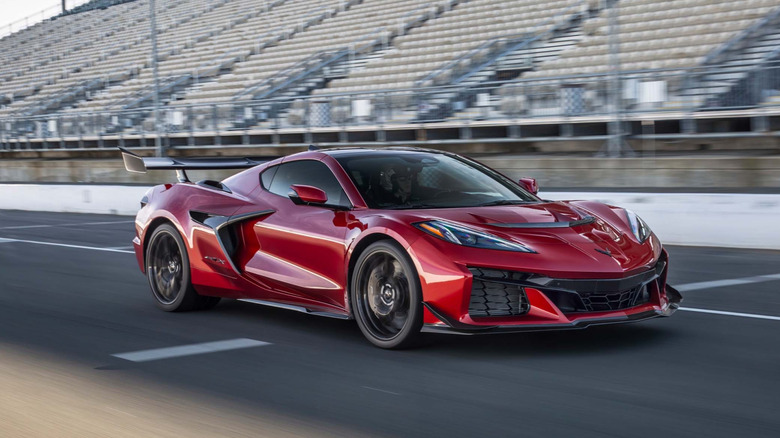
Wait, doesn't Chevrolet call the Corvette ZR1X a hypercar? Yes, and in terms of performance, it more than fits the bill. It's the most powerful Corvette ever made, trumping the already impressive ZR1. It might pack the same 5.5-liter twin-turbo V8 in the middle, making it good for an astounding 1,064 horsepower and 828 pound-feet of torque. However, like in the E-Ray, the ZR1X is aided by an electric motor on the front axle, which pumps out an additional 186 horses and 145 pound-feet of torque.
Chevy says the system produces a combined 1,250 horsepower, but it doesn't provide an official combined torque figure. Make no mistake, though: the Corvette ZR1X is quicker than almost any car in production today. According to Chevrolet, a ZR1X equipped with the ZTK Performance Package teleports to 60 mph in 1.89 seconds. Then, it rushes to the quarter mile in 8.99 seconds, with a trap speed of 157 mph. Oh, and the top speed is around 225 mph. Also, the Corvette ZR1X is a sophisticated corner carver, if perhaps not as focused as the RWD-only ZR1. Not to mention, the Alcon carbon-ceramic brakes more than match the powertrain's performance.
Overall, that would more than qualify the Corvette ZR1X for a hypercar. Still, we wanted to include it here because the ZR1X also starts at just $212,195, which undercuts the current crop of hypercars by a significant margin. Heck, that's cheaper than most mid-engine supercars.
2026 Mercedes-AMG GT 63 S E Performance Coupe (1,047 pound-feet)
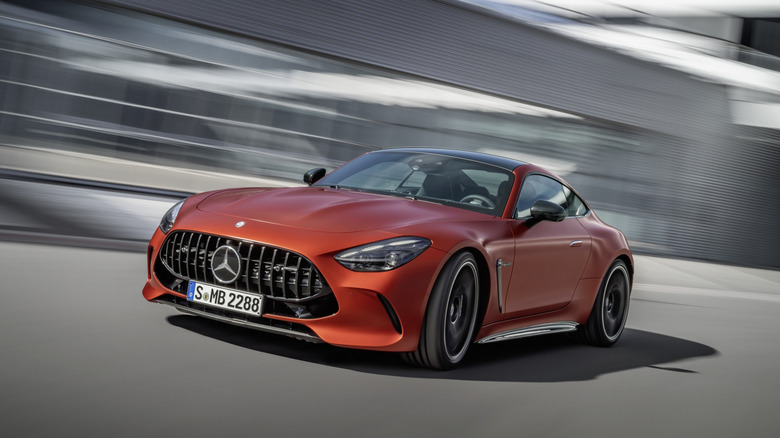
Unlike most automakers, Mercedes-AMG provides combined torque figures for its sports cars. And the AMG GT 63 S E Performance Coupe (yup, that's the full name) packs a massive 1,047 pound-feet of torque from its twin-turbo V8 hybrid powertrain. That's higher than the Chevy Silverado HD diesel, with its 6.6-liter turbocharged V8 "just" producing 975 pound-feet.
AMG GT 63 S E's powertrain also produces a maniacal 805 horsepower, enough for a 0-60 mph sprint of just 2.7 seconds. Mercedes-AMG got to these numbers differently than most other automakers, though. The 4.0-liter twin-turbo V8, paired to a nine-speed auto, sits under the hood. It produces 603 horsepower and 627 pound-feet of torque on its own. Then, there's an additional electric motor on the rear axle paired with a two-speed gearbox. That one is good for 201 horsepower and 236 pound-feet of torque, powered by a 6.1-kWh battery. To make things even more complicated, the AMG GT 63 has all-wheel drive.
The result: a curb weight of 4,743 pounds. When we drove the 2025 AMG GT 63 S E Performance Coupe, we found that this weight has hurt its agility. Still, AMG's active roll control and rear-wheel steering — among other technologies — keep the car stable and entertaining in the corners. Not to mention, the V8's noise is thunderous. Of course, you can forgo the electric bits in the regular GT 63 Coupe to enjoy more agile handling without losing on the noise.