

These Cars Are Way Quicker Than Their Price Tags Suggest
The world is obsessed with 0-to-60 times. People often ask us about a car, and the first follow up question is usually, "how quick is it to 60?" Although, it doesn't matter much. Traffic congestion is at an all-time high lately, and speed limits mean most modern cars can't be driven pedal to the metal.
But let's face it — you don't care what we say. Your friends don't care. Nobody cares. All you want is a car that can pin you down to the seat as hard as possible. You want to be first at the traffic light. You want to reach highway speeds in seconds, because merging into traffic with a slow car is the automotive equivalent of the boogeyman. Most of all, fast cars are empowering.
We feel you. Today more than ever, it's easier and cheaper to buy neck-snapping cars, and with this piece, we set out to prove it. So, we made a list of cars that are quicker than their price tags suggest. Some of these vehicles are cheap, yet as quick as past supercars. Others are less attainable but still offer outstanding 0-to-60 times for less money than their high-performance counterparts. From family EVs to rear-wheel-drive joy rides, here are some surprisingly quick cars.
2026 Ford Mustang GT ($48,555, 0 to 60: 4.2 seconds)

The entry-level, $34,635 Mustang EcoBoost (including the destination fee) is already one of the quickest vehicles at its price point. With 315 horsepower on tap and a quick-shifting 10-speed auto, it gets to 60 in brisk 4.5 seconds and could easily earn a spot on this list.
But let's be real: Any chance to talk up the Coyote-powered GT is one we're going to take. And it's not just the V8 engine. The Mustang GT Coupe/Convertible also comes with a six-speed manual. Thanks to the rev-matching feature, it's a stick shift anyone can use. Crucially, though, it makes playing that V8 musical instrument significantly more enjoyable and engaging.
Yes, the V8 model is more expensive at $48,555 (including the destination fee). Still, it's 0.3 seconds quicker to 60 and feels significantly more potent pretty much all the time. Of course it does — the 5.0-liter Coyote produces 480 horsepower and 415 pound-feet of torque. The V8 symphony adds that finishing touch to every acceleration run and turns the bland Mustang EcoBoost into the American dream car. It's cheap, powerful, and decibel-heavy, just how a Mustang should be. Adding the Active Valve Performance Exhaust turns up the soundtrack to 11, while adding 6 horsepower and 3 pound-feet of torque.
But the Mustang GT isn't just about retro muscle car vibes. It handles and rides like a modern sports car, especially if you opt for the MagneRide adaptive suspension. Inside, the ultra-modern setup with a digital instrument panel and touchscreen infotainment system is a clear win for the tech-savvy crowd. Meanwhile, the Unreal Engine's ability to flawlessly mimic the vintage Mustang gauges will strike a chord with long-time enthusiasts.
2026 BMW M240i xDrive Coupe ($56,950, 0 to 60: 4.5/4.1 seconds)

The BMW M2 may just be the best current M car. It's relatively affordable yet offers similar performance and driving experience to the M4. But there is a jewel in BMW's lineup not many people are talking about: the M240i. The toned-down M240i starts at $54,950 (including the destination fee), a full $14,600 cheaper than the M2. Still, it's almost as quick to 60, reaching the mark in 4.5 seconds.
Unlike the M2, however, you can also have the M240i with xDrive AWD for an additional $2,000, which catapults the car to 60 in just 4.1 seconds. Hang on just a second — that's the same time as the M2. Well, the M2 will smoke the M240i xDrive over 60 mph. After all, the M2 packs 473 horsepower. The M240i? 382 horsepower. But, in the real world, the AWD traction may take the cake. Rain or snow? The M240i xDrive will run circles around the M2.
You may be thinking that the M2 is better in the corners, and it is. But the M240i is not too far behind. In our 2022 review, we found the handling to be nimble and responsive, even with the AWD system onboard. That's because BMW got all the basics right. The M240i has 50/50 weight distribution, high torsional rigidity, adaptive M suspension, and multi-adjustable M Sport seats to hold you tight in the corners.
The M240i's design gives off less of the tuner car vibes of the M2. Some will prefer the massive front cooling ducts, but like many BMW design decisions lately, they are a bit overblown. In our eyes, M240i's front and rear look a bit more cohesive.
2026 Hyundai Elantra N with DCT ($37,845, 0 to 60: 4.9 seconds)

Although it doesn't steal headlines like the Civic Type R and GR Corolla do, the Hyundai Elantra N is a worthy competitor to the best compact performance cars. Yes, it's front-wheel drive, but it doesn't matter as much as you think. In fact, we think the Elantra N is a bargain store BMW M3. Hyundai's cheap performance sedan has more interior space than many of its rivals and a relatively large 14-cubic-feet of trunk space.
Apart from being super comfortable, your kids will also scream when experiencing the 2.0-liter turbo-four at open throttle. Producing up to 286 horsepower with the N Grin Shift (NGS) function and 289 pound-feet of torque, the small engine propels the Elantra N to 60 in just 4.8 seconds, according to Car and Driver. In our 2024 test, using the on-board timer, we measured 4.9 seconds. Quite an astonishing result for an FWD car. Now, those times are achievable with the eight-speed dual-clutch gearbox, which starts at $37,845 (including the destination fee). However, you can save $1,500 and choose the six-speed manual. It will probably be slower to 60 but also significantly more engaging.
However, there is no way the Elantra N also corners well, right? Well, we didn't call it the budget M3 just because it's fast in a straight line. As a matter of fact, the Elantra N is a sharp cornering tool. It has a limited-slip differential, performance suspension, and an additional trunk brace to stiffen up the body. Heck, Hyundai even equipped it with different driving modes, allowing you to change the suspension parameters and exhaust note, just like in an M3.
2026 Subaru WRX Base ($33,690, 0 to 60: 5.5 seconds)

The latest Subaru WRX is still one of the best performance sedan at its price. Like, come on, standard AWD and a three-pedal setup at $33,690 (including the destination fee) is an absolute steal. The base WRX isn't without its faults, but engaging and entertaining the driver in all weather conditions isn't one of them.
True, the Subaru WRX tS fixes most foibles of the base model. It has larger Brembo brakes, STI-tuned suspension, and snug Recaros, all of which improve the driving experience quite dramatically. But there is also a downside to the WRX tS — it's significantly slower than the base model. Due to the larger wheels and brakes, the tS is heavier, which, according to Car and Driver's 2025 test, adds 2 seconds to the 0-to-130 mph acceleration.
Fact — the WRX tS needs more power, especially because it costs $13,000 more than the base model. On the other hand, this means you'll already experience the best straight-line speed in the cheapest WRX. Like all models, it comes with a 2.4-liter turbocharged boxer four-cylinder engine, good for 271 horsepower and 258 pound-feet of torque. The 0-to-60 time is 5.6 seconds (with the manual transmission), per Car and Driver, while the top speed is 145 mph.
The best part — a six-speed manual is the standard transmission. A slightly quicker CVT is available as an option, but leave it to the Crosstrek and Forester folks. The WRX is at its best with a stick shift, not a transmission designed for fuel efficiency.
2026 Nissan Z ($44,265, 0 to 60: 4.3 seconds)

The Nissan Z is easily one of the best deals in the sports car market right now. It starts at just $44,265 (including the destination fee) yet comes with a potent 3.0-liter twin-turbo V6 engine with 400 horsepower and 350 pound-feet of torque. For comparison, the Civic Type R starts at $48,090 (including the destination fee) and packs a 2.0-liter turbo-four with 315 horsepower. The Nissan Z is also rear-wheel drive, which helps it blast off to 60 in just 4.3 seconds.
The absolute win — the base model comes standard with a six-speed manual. Not so good — it doesn't have a limited-slip differential, and its suspension is a bit soft for a spirited drive. The Performance trim solves both issues but starts at $54,265 (including the destination fee). Alas, you also get better brakes, larger 19-inch wheels, bigger infotainment with custom mobile apps, and power-adjustable, leather seats.
All these make the Nissan Z a better sports car, but at a significant surcharge. The Nissan Z still offers cheaper thrills compared to most other sports cars, and the base model already hits the basics, which include a powerful engine, rear-wheel drive, and a stick shift. What more do you really want in an era when sports cars are a dying breed?
You can, of course, go the enthusiast route and choose the $67,045 Nismo model (including the destination fee). The hardcore variant produces an extra 20 horsepower and 34 more pound-feet of torque. It also comes with a special Nismo-tuned suspension, alongside better Akebono brakes. Nissan also added additional body reinforcements to improve stiffness. Right now, it's only available with the nine-speed auto, but Nissan confirmed a manual Nismo is coming soon.
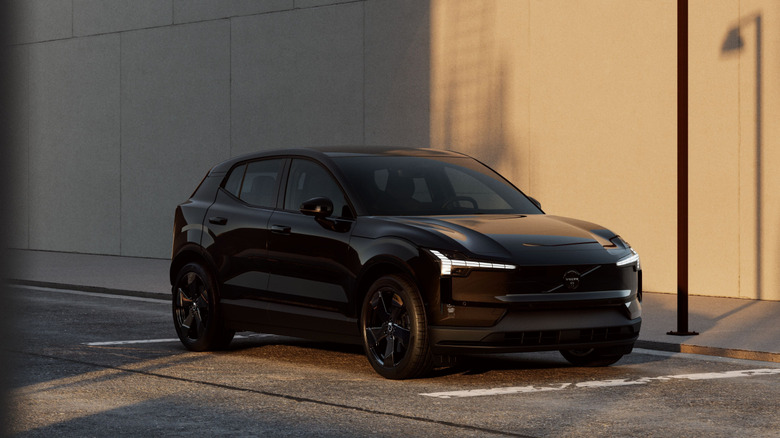
2026 Volvo EX30 Plus Twin Motor ($46,425, 0 to 60: 3.4 seconds)

No need to do a double take on the numbers — the Volvo EX30 Plus Twin Motor indeed costs $46,425 (including the destination fee) and accelerates to 60 in just 3.4 seconds. That makes it as fast to 60 as a Ferrari 458 Italia. Heck, it's quicker than the $150,650 Mercedes-AMG GT55 Coupe, which comes with a 4.0-liter biturbo engine, good for 469 horsepower and 516 pound-feet of torque.
Indeed, the Volvo EX30 is the perfect showcase of a fun, affordable car. It's a small crossover — not the words enthusiasts often like to hear, but it does have merit as an urban runabout car. That said, to slash the price so dramatically, Volvo used a relatively small 69.0-kWh battery. It's not a big issue, because the EX30 is also a small vehicle, but some may still find the the 253-mile EPA range limiting. Expect much shorter range if you frequently use most of the available 422 horsepower and 400 pound-feet of torque. For urban driving, however, the EX30 is more than adequate.
Volvo also offers a cheaper ($40,345, including the destination fee) rear-wheel-drive variant with 268 horsepower, which provides a slightly longer 261-mile range. Crucially, the RWD model is still very quick, sprinting to the 60-mph mark in 5.1 seconds. Both variants feel more expensive inside than their price suggests. The cabin is quiet, too. However, family buyers might find it a bit tight inside, particularly on the rear bench.
2026 Tesla Model 3 Premium AWD ($49,130, 0 to 60: 4.2 seconds)

The Model 3 Performance is already a verified supercar-slayer that snaps necks with incredible acceleration. The fact is, you can save $7,500 and still beat sports cars at the traffic light. The Tesla Model 3 Premium AWD may not carry the cachet of its high-performance sibling, but it's still a rocket in a straight line. Thanks to the 425-horsepower, dual-motor drivetrain, it catapults to 60 in 4.2 seconds.
The Model 3 Performance is quicker, sure, finishing the 0-to-60 sprint in a scarcely believable 2.9 seconds. But the performance add-ons eat into range — the Model 3 Premium AWD has a 346-mile EPA estimated range, while the Performance is rated at 309 miles. And let's be real, in an EV, range matters more than acceleration.
The Premium trim also brings all the hi-tech goodies, like a rear infotainment screen, heated front and rear seats, ventilated front seats, and an electronically adjustable steering wheel. However, most features are operated via the massive center touchscreen. Fortunately, the automaker returned the turn signal stalks recently, but if you want to shift gears manually, you still need to operate the transmission via the touchscreen or overhead buttons.
Yeah, Tesla continues to make questionable decisions lately. Still, anyone that has driven a Model 3 will know that it's an excellent sports sedan. It's quick, comfortable, and decently practical. With a home charger, it can be very cheap to run, too. Just make sure you know your way around touchscreens particularly well!
2026 Hyundai Ioniq 5 SE AWD ($42,600, 0 to 60: 4.9 seconds)

The Ioniq 5 N is perhaps the most fun-to-drive electric car currently on sale. But you need to make a few sacrifices to enjoy it as a daily driver. Pricing for the 2026 model is yet to be announced, but it should cost around $68,000. Moreover, due to the relatively small battery, the Ioniq 5 N has an EPA estimated range of only 221 miles, which frankly defeats its purpose as a family-oriented crossover.
Of course, there is a solution, and it's called the Ioniq 5 SE AWD. This model doesn't have the performance goodies of its N sibling but starts at significantly lower $42,600 (including the destination fee). Crucially, it has a longer 290-mile EPA estimated range, which translates to genuine, day-to-day-to-day usability. Oh, don't worry, it's more than quick enough, reaching the 60-mph mark in just 4.9 seconds. The 320-horsepower, dual-motor AWD drivetrain also means good traction in rainy and snowy conditions.
In fact, since Hyundai implemented a bigger 84.0-kWh battery in the 2025 model, the Ioniq 5 became a great family car. Its retro-styled boxy body frees up quite a lot of space inside, and the suspension soaks up bumps pretty well. The Ioniq 5 is also very easy to drive, especially with the one-pedal-driving mode. Inside, it comes with a lot of tech, like a large 12.3-inch touchscreen infotainment system with wireless Apple CarPlay and Android Auto, digital instrument cluster, and five USB Type-C ports scattered around the cabin. Fortunately, you still operate the most important functions with physical buttons, which adds to the Ioniq 5's appeal.
2026 Kia K5 GT ($34,835; 0-60, 0 to 60: 5.4 seconds)

The Toyota Camry and Honda Accord dominate the U.S. sales charts. That's hardly surprising, as they feature highly efficient hybrid powertrains that resonate with sensible buyers. But you didn't read to this point because you are sensible. You want speed. The Kia K5 GT has a great 0-to-60 time and delivers impressive speed.
Kia's performance-oriented mid-size sedan isn't currently offered with a hybrid powertrain, which hurts its sales. But it warms our hearts to see that it comes with a 2.5-liter turbocharged four-cylinder, good for 290 horsepower and a meaty 311 pound-feet of torque. Aided by the eight-speed dual-clutch gearbox, the K5 GT sprints to 60 in 5.4 seconds and doesn't stop until the needle reaches 155 mph. That's quite the performance for a family sedan that costs just $34,835 (including the destination fee).
A small downside — the K5 GT is only available as FWD. This doesn't hurt performance much, but AWD would've made the K5 GT a much more usable daily driver. Kia, hear us out: Putting the torque-vectoring AWD on this model will turn it into a bigger, more practical Subaru WRX killer. Heck, it may entice enthusiasts more than the Ioniq 5 N does.
Even as it is, the K5 GT is an attractive alternative to the mid-size sedan norm. It can accommodate adults comfortably in both rows and fit a lot of cargo in the 16-cubic-feet trunk. The nicely laid-out dashboard also features a large infotainment touchscreen and digital instrument cluster. Kia was even kind enough to install a regular shifter!
2026 Cadillac CT4 2.7 Premium Luxury ($47,145, 0 to 60: 4.8 seconds)

The Cadillac CT4-V Series is a great performance sedan. The Blackwing's 3.6-liter twin-turbo V6 packs a 472-horsepower punch, and it handles corners really well. Still, at $65,395 (including the destination fee), it's out of reach for most people. You can save almost $20,000 by opting for the CT4 with the 2.7-liter engine, though, and still be pinned to your seat.
The CT4's 2.7-liter turbo-four, available in the Premium Luxury trim, produces 310 horsepower and 350 pound-feet of torque, enough for a 0-to-60 sprint of just 4.8 seconds. The 2.7-liter only comes with a 10-speed automatic, but we don't mind it in a premium vehicle. Have we mentioned that the CT4 is RWD? Yup, it has all the hallmarks of a good sports sedan.
What the CT4 doesn't have is a luxurious interior. Yes, it undercuts its German rivals in price, so lower quality materials are to be expected. But, come on, the dashboard looks last season. Have you noticed the tiny 8.0-inch touchscreen? Yes, we are talking about Cadillac, the same company that offers a massive 55-inch screen in its Escalade flagships. The infotainment system is powered by Cadillac's latest CUE software, but it could really use a bigger screen.
The sad story is that the CT4 will never receive a tech upgrade. Cadillac is killing the CT4 and CT5 after this model year, and only the bigger model will have a successor. In fact, Cadillac will stop producing the CT4 in June this year, so make sure you make a reservation before its imminent demise.