

The Rich Are Increasingly Propping Up New Car Sales
Good morning! It's Thursday, March 5, 2026, and this is The Morning Shift, your daily roundup of the top automotive headlines from around the world, in one place. This is where you'll find the most important stories that are shaping the way Americans drive and get around.
In this morning's edition, the rich are making the new car market seem a lot stronger than it really might be, we're now just a few weeks away from the covers being pulled off the new BMW i3 (no, not the weird little hatchback), the Kia EV6 GT is as good as dead in the U.S. and, oh, would you look at that? Ford is issuing another recall.
We're also adding in a bonus section, called "The Fuel Stop" where we'll take a look at average fuel prices across the country as they continue to spike due to the U.S.-Israeli war with Iran.
1st Gear: Only the rich can afford new cars
As is the case with just about everything these days, the car buying market is a tale of the haves and the have-nots. Higher-income customers seem to be doing quite well, but their lower-income counterparts are struggling to say the least. What we've got here is a "bifurcated consumer" base, according to an Cox Automotive Chief Economist Jeremy Robb, and it's part of the "K-shaped" economy.
Higher-income consumers have pretty much been propping up consumer spending metrics while also experiencing faster wage growth, and at the same time, lower-income consumers have felt the "sting of inflation," Patrick Manzi, National Automobile Dealers Association Chief Economist, said. It's killing folks when it comes to vehicle ownership.
Between 2019 and 2025, auto parts and equipment prices increased by about 25%, according to the Bureau of Labor Statistics. At the same time, vehicle maintenance and repair costs rose 46%, and insurance rates rose 56%. It almost makes the 22% rise for new vehicles and 32% rise for used seem palatable, but even that's disastrous. From Automotive News:
Cox also has a Private Mobility Transport index that looks at the total cost of ownership — not just the monthly payment but also gasoline, insurance and repairs. From prepandemic January 2019 to December 2025, that cost metric increased 48 percent, Robb said. It should be around 54 percent by 2027, he said.
In 2019, the average monthly cost of ownership for all vehicles — new and used combined — was $750 according to the index, Robb said. At the end of 2025, it was $1,030.
[...]
"[W]
e are really seeing what we call a 'no-growth' labor market out there in the economy overall," he said. "We're not seeing a lot of people with new jobs created."
Lower net immigration also reduces job growth and household formation, Robb said.
"That is not good for housing, automotive — things like that," he said.
Manzi said "job growth really came to a big halt" at the end of 2025, with the U.S. even posting net job losses some months.
Last year, the U.S. created about 49,000 new jobs per month on average, compared with about 167,000 jobs per month in 2024, Manzi said. And much of 2025's gains were in health care, he said.
Still, the rich are getting richer, and that means sales will probably still be pretty solid in 2026. Manzi predicts about 16 million vehicles will sell this year, but they're going to far wealthier individuals on the whole.
In 2020, 50% of new-vehicle buyers made less than $100,000 a year. In 2025, that number dropped to 37%. In that same time period, the percentage of buyers making over a quarter million bucks a year doubled to 21%.
I'd say we live in Hell, but we probably couldn't afford the rent.
2nd Gear: Hello, BMW i3
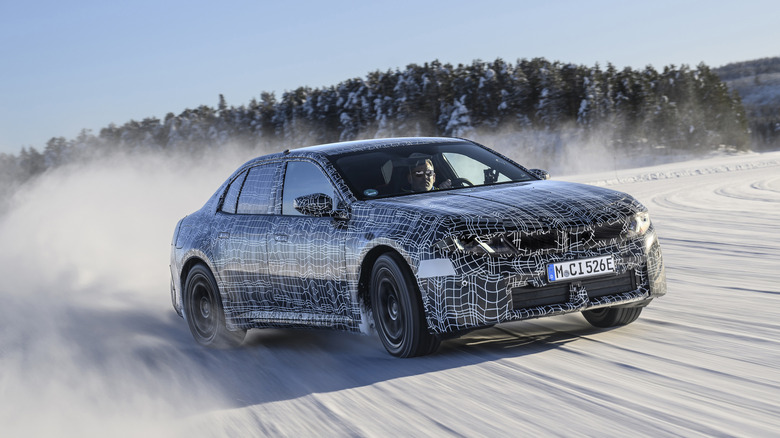
We're now just a few weeks away from the second Neue Klasse BMW breaking cover, as the i3 sedan is set to make its global debut on March 18. I, for one, cannot wait. If the iX3 crossover — which runs on the same 800-volt architecture — is anything to go off of, the i3 is going to be one hell of a car. I know the naming is a bit confusing, but this car really has nothing to do with that little electric hatchback BMW sold a few years back. Rather, this car is the electric version of the upcoming 3 Series. From Autocar:
Previewed by a series of concepts and shown recently in heavily camouflaged prototype form, Munich's answer to the best-selling Tesla Model 3 will depart dramatically from today's G20-generation 3 Series with a sharp, heavily angled design treatment that nods to historic BMW models while embracing a more minimalist, futuristic ethos.
A new preview image confirms that the saloon will feature a wraparound, illuminated 'kidney' motif on its front end that mimics the trademark BMW grille, with the distinctive new diagonal light signature that will be a calling card of the Neue Klasse line-up.
It is expected that this full-width graphic will be shared with other saloons in BMW's next-gen line-up, while the SUVs will wear the smaller, vertically oriented kidney design that features on the iX3.
BMW is gearing up to refresh its entire range with 40 new EVs and heavily updated combustion cars, which all share the Neue Klasse look and are due by the end of 2027.
[...]
While the X3 SUV is now BMW's best-seller, the 3 Series saloon remains the cornerstone of the brand – and this will be the first time an electric version has been offered. BMW has sold the similar-sized i4 four-door coupé since 2021, but it chose to wait until EV technology could deliver a closer match to combustion models before launching a battery-powered 3 Series.
Eventually, there will be a slew of power outputs available in the i3 — including an electric M3 (iM3?/Mi3?), but the launch vehicle will be the i3 50 xDrive. BMW says it makes 469 (nice) horsepower and 476 pound-feet of torque from its dual-motor setup. It'll also be able to charge at up to 400 kW, which should be fast as hell.
The i3 will be joined by a heavily updated version of the petrol-engined 3 Series, which will remain on the unrelated CLAR architecture but will receive a makeover with the Neue Klasse design language and the latest in-car technology.
The Vision Neue Klasse saloon concept previewed how the upcoming EV and ICE 3 Series will look, with a distinctly different interpretation of BMW's kidney grille that is also destined for the iX3 and future SUVs. The camouflaged i3 prototype shown recently confirms that the EV will retain the typical 3 Series body shape, with smoother lines and BMW's signature Hofmeister kink employed for the C-pillar.
Inside, the i3 will feature BMW's new Panoramic iDrive system, seen in the iX3, which mates an angled touchscreen with a projected head-up display that runs the length of the front windscreen. The company claims that this system enables key data to be displayed closer to the driver's eyeline.
Production is slated to start sometime in the second-half of 2026, with deliveries beginning soon after that.
3rd Gear: Goodbye, Kia EV6 GT
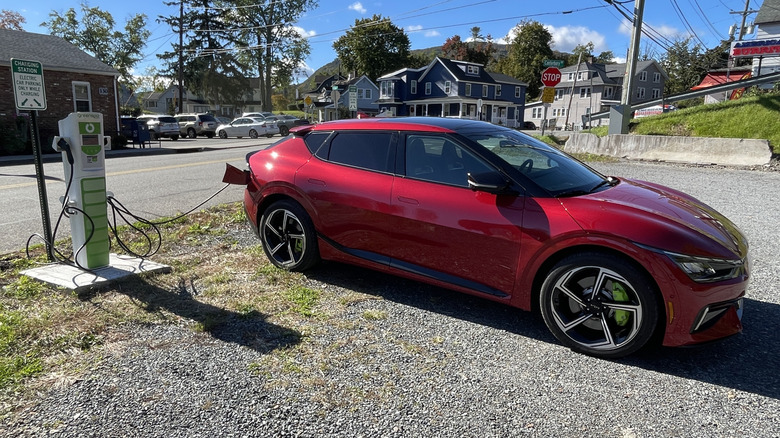
The Kia EV6 GT was a fickle car. It had some really solid performance metrics for a car that cost well under $100,000, but it's terrible range meant it wasn't really useful for any sort of real-world use. I mean, for 65-grand-and-change, 641 hp, 568 lb-ft of torque and a 0-60 time under 3.5 seconds is hard to beat. Alas, that doesn't much matter now, as the funky little hot hatch/crossover thing won't be available in the U.S. going forward. From Road & Track:
"Offering tremendous value and exhilarating performance to customers across Kia's full range of vehicles is paramount, but due to changing market conditions, the 2026 EV6 GT will be delayed until further notice. This delay does not impact the availability of other trims in the EV6 lineup, which are proudly assembled in our world-class facility in West Point, Georgia," a statement provided by Kia to Road & Track reads.
Kia is the latest automaker to join the ranks of those with delayed or paused electric vehicles. Not all automakers are delaying EVs for the same reasons; brands like Polestar paused U.S. sales over tariff challenges, while Audi hinted at software woes as a deciding factor in holding back the A6 E-Tron. In the case of Kia, its statement suggests that importing the EV6 GT from Korea at a reasonable price point may not be feasible, likely as a result of President Donald Trump's automotive tariff war. Currently, the South Korean vehicle import tariff rate is set at 25 percent.
Hyundai and Kia have both invested significant infrastructure in U.S. production, focusing on the state of Georgia as a hub for vehicle and battery production. Because Kia's other EV6 models are produced here, the Korean automaker skirts the majority of tariff pains on those machines. However, given its previous pricepoint of $65,295, importing the EV6 GT would likely represent pushing the car's MSRP too high for the current market to accept.
The carmaker is also delaying its impending compact electric sedan, known as the Kia EV4, and a hatchback sibling, named the Kia EV3, from the U.S. until further notice. Electric sales have been abysmal for the automaker this year, falling in line with broader industry trends following the elimination of federal EV subsidies.
Kia's sibling Hyundai also axed nearly every trim of the Ioniq 6 sedan for 2026, leaving just the Ioniq 6 N available in the U.S. following a 77% sales decline year-over-year.
"Going forward, our award-winning Ioniq 6 lineup will consist of the all-new Ioniq 6 N. This high-performance electric sport sedan delivers truly thrilling, track-ready dynamics coupled with everyday usability. Ioniq 6 N arrives later this year. In the meantime, 2025 Ioniq 6 sedans continue to be available at dealers alongside our award-winning and U.S.-assembled Ioniq 5 and Ioniq 9 SUVs," the statement reads.
That's a real shame. I gushed over the Ioniq 6 during my first drive of the car nearly three years ago, saying I'd take it over its far-more-popular Ioniq 5 crossover sibling. Alas, no one else seemed to have felt that way.
In any case, it's time to bid adieu to the EV6 Gt and Ioniq 6. You guys did a good job, and we'll miss you.
4th Gear: Ford recalls keep me young
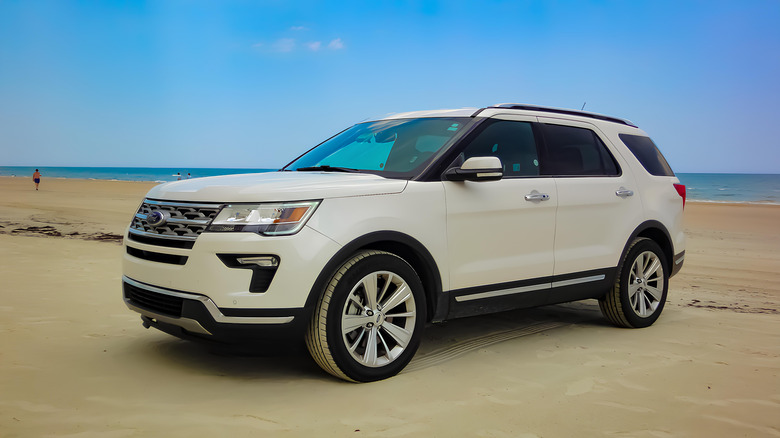
I know you were getting worried that Ford was being quiet for too long, so I'm here to quell those fears. The Blue Oval is back at it with another recall. This time, it's asking for a do-over on 604,533 2020-2022 Explorers, Escapes, Lincoln Aviators and Lincoln Corsairs because the windshield wiper motor could fair, according to the National Highway Traffic Safety Administration. When that happens, there's a very real chance of both reducing visibility and increasing the risk of a crash. Here's what NHTSA says:
Dealers will inspect and replace the front wiper motors as necessary, free of charge. Interim letters, notifying owners of the safety risk, are expected to be mailed March 9, 2026. Additional letters will be sent once the final remedy is available, anticipated in May 2026. Owners may contact Ford customer service at 1-866-436-7332. Ford's number for this recall is 26S14.
Oh, just to ad insult to injury, the automaker issued two other recalls on the same day. One impacts 11,431 2026 and 2026 F-250 and F-350 Super Duties that have a pesky little issue of their driveshafts separating. The other is impacting 316 2026 E-350 and E-450 vans that have backup alarms that aren't properly sounding. Great.
These recalls mean that Ford has now issued 14 recalls so far in 2026 (nine more than second place Toyota and Hyundai), and they have impacted 5,573,766 total vehicles. It seem's 2025's record of 153 recalls and 12,930,717 total affected vehicles is very much within reach.
Reverse: If I had a time machine I would have saved David Buick
 History.com
David Buick deserved better than to die with no relation to the company he helped build. He also deserved better than to have his namesake produce things like the Rendezvous and Terraza, but there's only so much you can ask for. I know he woulda loved the GNX, though. If you want to learn more about Buick's not-so-sick life after selling his interest in the company, head over to History.com.
The Fuel Up
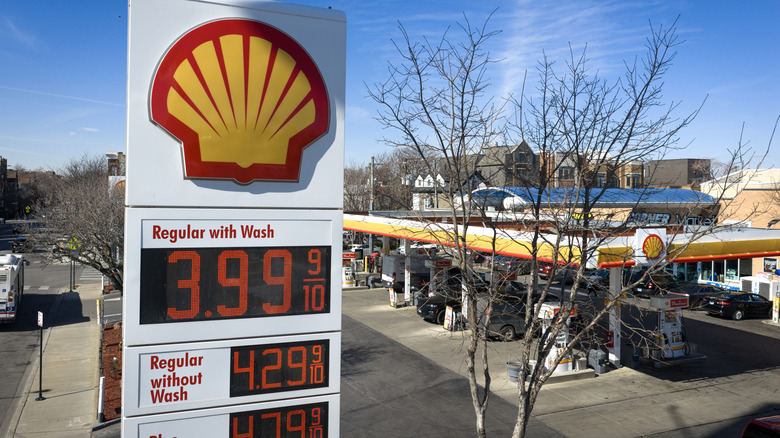
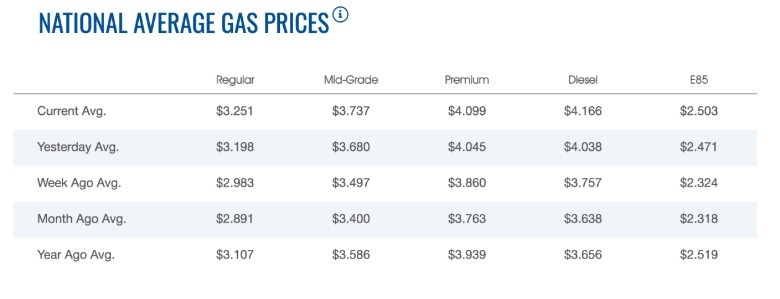
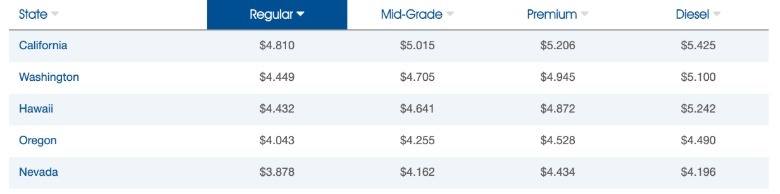
We're adding a new section to TMS, as the U.S.-Israeli war with Iran is causing gas prices to spike in ways we've not seen in quite a while. Each day, we'll take a look at national average prices compared with what they were the day before, the week before, the month before and the year before. We'll also check out what states have the highest and lowest prices at the pump, all thanks to AAA's gas price tracker.
Here's where national prices stand on the sixth day of this conflict, which started on February 28 Right off the bat, we can see the average price for a gallon of regular is up six cents from yesterday alone, and it's up 27 cents in just a week. Brutal.
 AAA
AAA
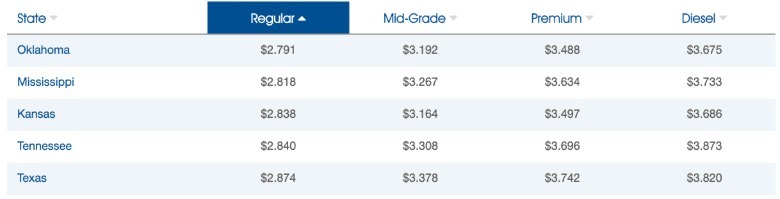
These five states have the cheapest gas in the country:
 AAA
AAA
These five states have the most expensive gas in the country:
 AAA
AAA
On the radio: REM - 'It's The End Of The World As We Know It (And I Feel Fine)'
Things are so chill, guys. Everything is just going great, and there's nothing to worry about at all. Literally, why would anyone be stressed about the current state of the world right now? Like, it's totally cool and sick and vibey.