

NASA Slows Down To Speed Up Moon Landing Plans, Will Now Actually Test Lunar Landers Before Using Them
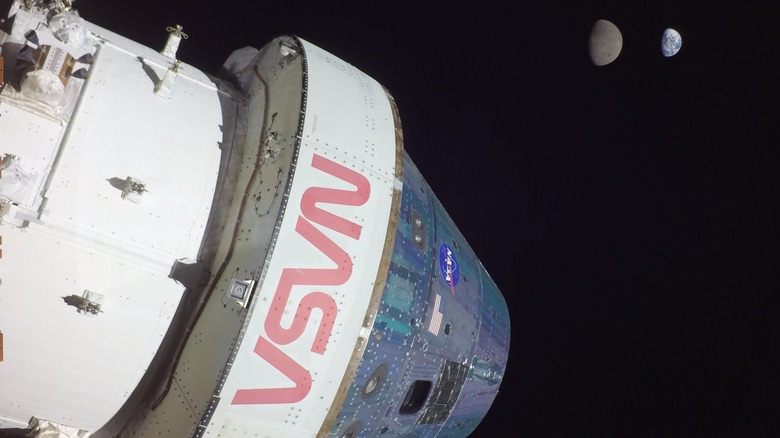
In a press conference on Friday morning, NASA Administrator Jared Isaacman and other senior agency leaders announced major changes to the Artemis missions that aim to return astronauts to the Moon. The big takeaway is that Artemis III will no longer attempt a crewed lunar landing, but instead will become a test flight in low-Earth orbit for the actual spacecraft that will put humans onto the Moon's surface in later flights. While this pushes the first planned landing attempt to Artemis IV, it is also intended to increase the flight cadence of the program from one launch every three years to one per year, and possibly even two in 2028.
There's a lot to unpack here, but in broad terms, this is NASA waking up to reality. The original plan was for Artemis II, which will hopefully launch in the next few weeks, to demonstrate that the Space Launch System (SLS) rocket could propel four astronauts in the Orion spacecraft all the way to the Moon and back, without touching down. Then, years later, the Artemis III mission would attempt the landing! No tests of the lunar lander, no tests of spacecraft docking, no tests of the astronauts transferring from the Orion to the lander — just straight to the surface. And this is when we don't even know which lunar lander we'll be using! What could possibly go wrong?
Uh, lots, actually, which NASA leadership and anyone even half paying attention were getting very nervous about. So the changes announced today are very welcome news and put the agency in a much better position to successfully land without killing any astronauts. If all goes well, Artemis III will now demonstrate NASA's capacity to use the lander (whichever one it ends up being) before it actually tries to use it on another celestial body. And if that demonstration fails? It's a lot easier to return the astronauts to Earth from the planet's own orbit than from the Moon's.
Slowing down, speeding up
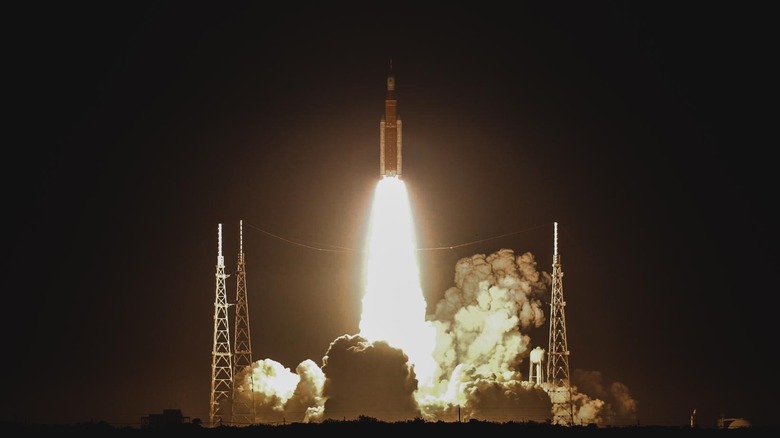
So in one sense, by turning Artemis III into a test flight, NASA is slowing down. But in another, it's speeding up. Isaacman wants to increase the flight cadence to at least once per year. Remember that Artemis I, an uncrewed test flight, flew all the way back in 2022. We're only just getting to Artemis II now. By contrast, in the 1960s NASA was flying multiple Apollo missions per year. Isaacman worries that the mission crews will lose "muscle memory" in that timeframe. And while he doesn't outright say it, America would also lose the Moon race with China.
To hurry things up, he proposed two big changes. First, standardizing the SLS rocket, which means canceling planned upgrades. That way, crews can become experts in the rocket as it is, rather than having to learn all the new stuff from scratch during every mission. Second, hiring more personnel for NASA. What an idea! NASA has, of course, been suffering successive rounds of layoffs, plus building closures during a time of looming budget cuts. Without pointing any fingers at which particular administration has been the cause of that, Isaacman is politely saying that more employees is better, actually.
Fortunately, Isaacman has the political winds at his back here. Congress recently rejected the Trump administration's proposed cuts to NASA and funded the agency with its biggest budget in decades. As with the original space race, competition from a communist competitor has spurred interest in America's space program. And in terms of these specific changes to Artemis, Isaacman stated that both Congress and industry partners had been fully briefed and were aligned with the new objectives. All systems go, sounds like.