

10 Iconic Harley-Davidson Motorcycles That Made History
Harley-Davidson didn't become a cultural shorthand by accident — it built a reputation one mechanical turning point at a time with new engine layouts and design innovations. Some of those bikes became famous after appearing on the big screen, but this list follows 10 motorcycles that marked genuine pivots for the company, from the earliest surviving machine to a modern electric rethink.
You'll notice the timeline isn't perfectly smooth. Harley-Davidson's story jumps when the technology jumps. The company's engine families are a good shorthand for those leaps, from early singles to the V-twin eras that became the brand's backbone, and then into the modern age where electronics and emissions rules changed what performance even means.
The order, at least, is simple: oldest to newest. Each motorcycle here is a mini-history of what made that bike a hinge point, and we'll discuss the features and historical context for each. If you want the short version, this is how Harley-Davidson went from a small experiment to a company selling nostalgia, touring comfort, and, eventually, silent speed all under the same bar-and-shield logo.
1903 Harley-Davidson Serial Number One
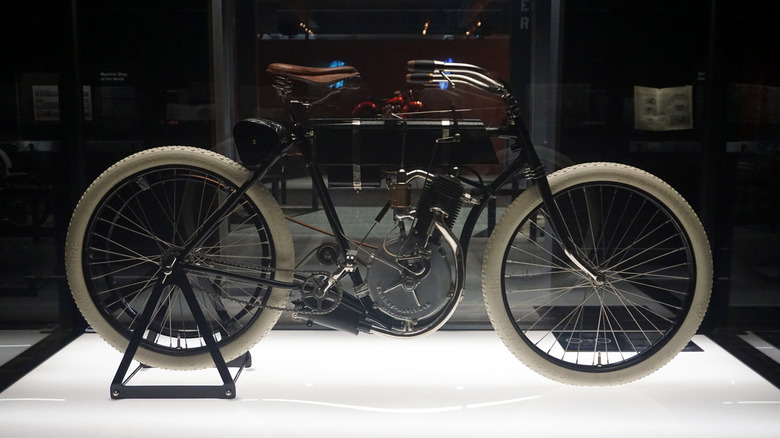
Understanding Harley-Davidson's origin story starts with a prototype that still exists. That prototype was Serial Number One, and it is described by the Harley-Davidson Museum as the oldest known Harley remaining.
Harley-Davidson isn't the oldest motorcycle brand in America, but its early history is famously humble. A small group of partners, an attempt at powered bicycles with a single-cylinder 116cc engine in 1903, and goals of moving from experiment to production. Serial Number One is one of these initial powered motorcycles, and this model was an early example of what would become Harley-Davidson's first production-ready bikes. It was a platform prototype geared toward the development that started Harley-Davidson's production motorcycles.
Harley-Davidson's turning points often arrived when the company committed to a new approaches and innovation. In the early years, that meant moving beyond prototypes and building motorcycles people could actually rely on every day. Serial Number One is iconic because it's proof of the production start line.
1936 Harley-Davidson EL Knucklehead
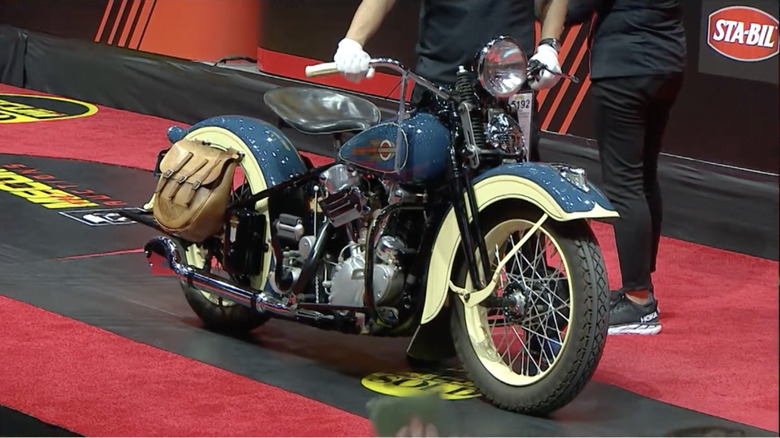
The 1936 EL Knucklehead is the moment Harley-Davidson's Big Twin story snaps into focus. It is the first overhead-valve Big Twin, and that change is what makes it iconic. It set the template for the V-twin identity that would carry the brand for decades.
The nickname comes from the look of the rocker-box covers, but the real significance comes from the overhead valves that helped the Knucklehead deliver stronger performance , and the company treated that architecture as the future. The EL Knucklehead, a higher compression version of the E, debuted with a 40-horsepower 61-cubic-inch engine and later grew to 74 cubic inches during its production run, which shows how quickly Harley refined the recipe once it had the layout it wanted.
What the EL Knucklehead did culturally is just as important as what it did technically. It gave riders a Harley that felt like a serious performance machine for its era, and this bike was built as a response to the company's competition with Indian. It didn't start without it's own troubles, but later iterations ironed out issues and Harley continued to improve the Knucklehead in the years that followed.
1942 Harley-Davidson WLA Liberator
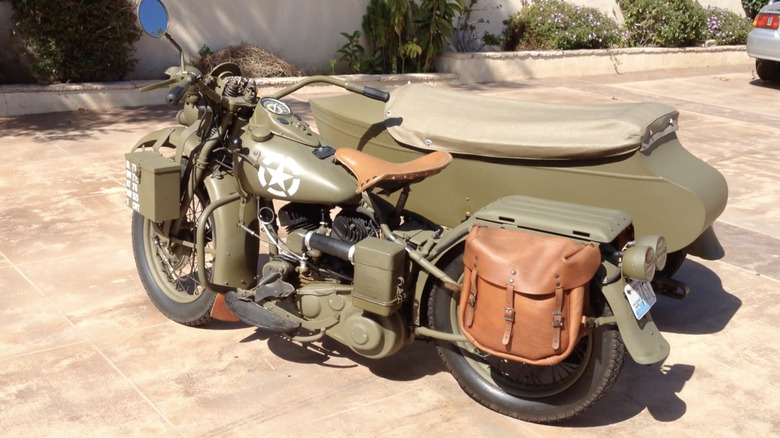
Harley-Davidson built more than 88,000 motorcycles for WWII military service and Flathead engines powered those bikes. The 1942 WLA Liberator is the most famous face of that era.
The WLA was designed to keep moving with basic maintenance, carry gear, and do the unspectacular work of getting people and information from point A to point B when roads were rough or missing. That practical usefulness is why photos and accounts treat Jeep and Harley as part of the same visual vocabulary of the Allied push, even when the missions were different.
The Liberator was used for motorcycle escorts — including Patton's 2nd Armored "Hell on Wheels" Division — and often led convoys into occupied territory. Reconnaissance riders were frequently the first Allied soldiers to enter occupied towns. The Army-spec WLA's flathead V-twin, functional simplicity, equipment accessories, and gun scabbard mounted to the forks fit that mission. After the war, returning soldiers wanted similar bikes, and surviving originals became scarce. They were altered for civilian use or customized into personal choppers.
1948 Harley-Davidson FL Panhead
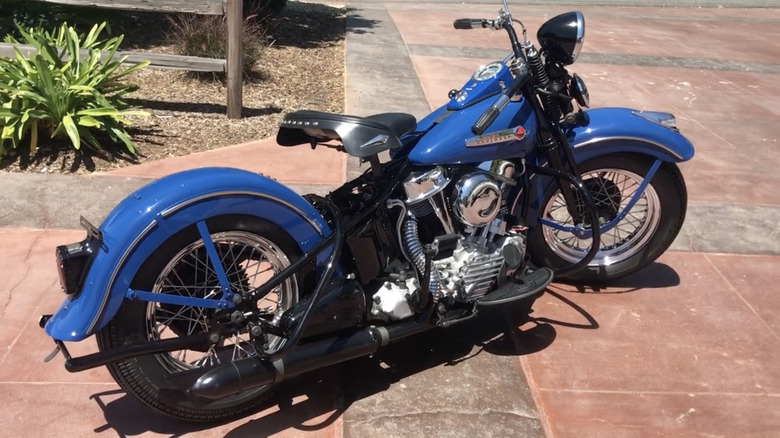
The 1948 FL Panhead is one of those Harleys that's famous for a name, but legendary for what was underneath. The Panhead was the next big step after the Knucklehead, and it came with specific upgrades such as aluminum cylinder heads, hydraulic lifters, improved oiling, and roller bearings on the crank pin.
Hydraulic lifters reduced the constant valve-train fiddling that older designs demanded, while the lighter, updated top end helped the Big Twin evolve from fast and finicky toward fast and reliable. The Panhead was also roughly 8 pounds lighter than the Knucklehead it replaced. For the bike itself, even though the engine changed, 1948 was the last year Harley used the springer fork design. Since this was a single-year design, this bike is very desirable. In 1949, Harley moved to using a hydraulic fork design.
The Panhead era also helped lock in a Harley image that still sells today. It had a big, torquey V-twin built for miles. Museums and collectors love the 1948 FL because it sits right at the time when postwar riders wanted two wheels of fun, and this motorcycle was the next step in Harley's engineering. It's the beginning of a modern Big Twin line that would feed touring culture and customization.
1957 Harley-Davidson XL Sportster
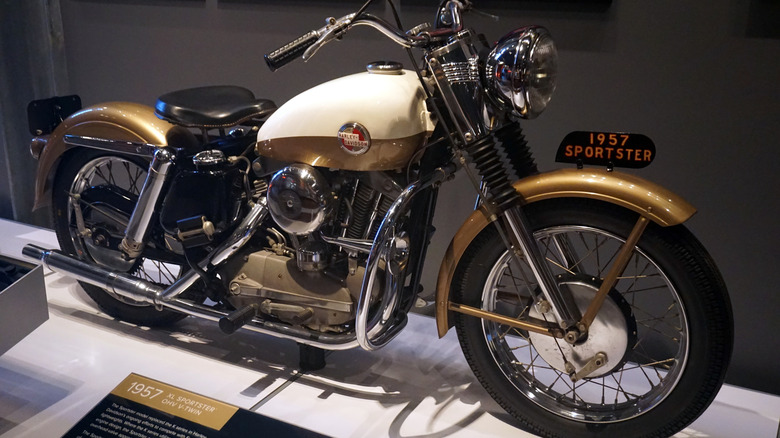
The XL Sportster's 1957 launch was a major milestone. The original Sportster engine a 55-cubic-inch overhead-valve V-twin with aluminum pistons, hemispheric combustion chambers, and a unit-construction layout that put the transmission in the same case as the engine. In other words, it was a modern, compact performance package aimed at riders who wanted something quicker and more aggressive than the heavyweight touring ideal.
The timing was perfect. Riders were comparing performance and style across other brands, such as sporty British motorcycles, and the Sportster gave Harley a smaller platform with a sharper edge. The model's identity was about contrast with a lighter feel, more direct attitude, and enough performance credibility to carry the Harley badge without simply copying the Big Twin formula.
What makes the '57 XL iconic is that it created a second Harley-Davidson tradition. The company now had long-haul machines for the open road and a stripped, sporty platform that invited customization and speed — an shift that still shapes Harley-Davidson's lineup and fanbase today.
1965 Harley-Davidson FLH Electra Glide
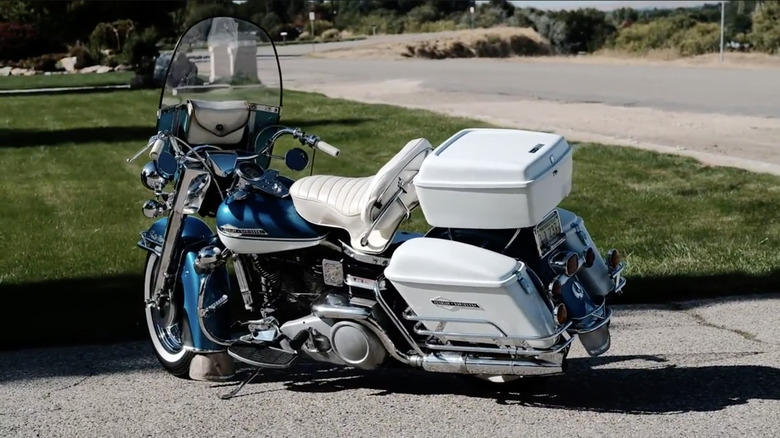
The 1965 FLH Electra Glide is among the motorcycles with the longest production runs, and its seemingly permanent position in the Harley-Davidson lineup kicked off with some important innovations. The Electra Glide brought electric starting to Harley-Davidson's big touring lineup, a convenience feature that sounds basic now but was pivotal at the time. The 1965 model also introduced a 12-volt electrical system. These features and other optional additions like saddlebags, windshields, springy single seats, and more gave the touring platform more power and everyday usability.
The 1965 FLH Electra Glide isn't iconic just because of the starter motor. It helped define what an American touring motorcycle should be. It helped create what we see in today's great touring motorcycles for long-distance riding. It was big, comfortable, and built for distance without asking the rider to treat every stop like a ritual. It's also a reminder that Harley's identity has always included quiet, practical upgrades that keep riders on the road.
1971 Harley-Davidson FX Super Glide
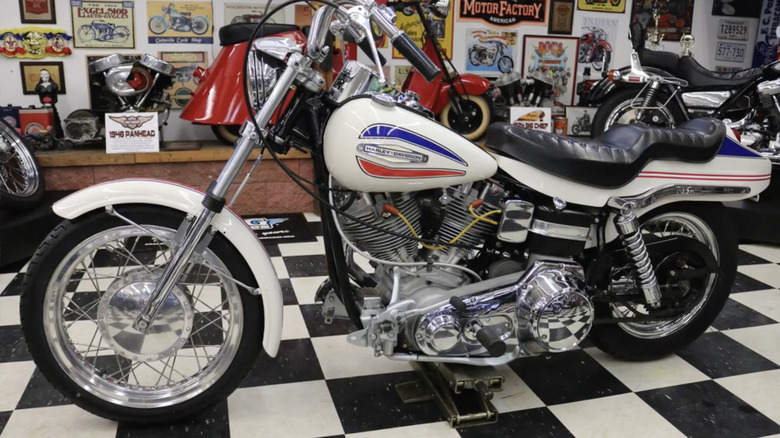
The 1971 FX Super Glide is Harley-Davidson admitting the custom scene had become too influential to ignore. The Super Glide was a factory-built blend of existing Harley parts with an intentional mix meant to capture the stripped, hot-rodded look riders were building on their own.
The Super Glide's importance is that it made factory custom a real concept. Rather than selling one fixed idea of what a Harley should look like, Harley-Davidson built the 1971 FX Super Glide to feel like a curated garage project with a lighter visual attitude, sportier stance with much of the front weight removed, and it utilized the 1200cc Shovelhead seen on the Electra Glide, but without the electric start. The formula takes recognizable Harley pieces, rearranges them with intent, and sells this stripped custom vibe with a warranty.
The Super Glide wasn't pitched as a pure touring rig, and it wasn't a race replica. It was a style-led performance machine meant for riders who wanted something more aggressive than a full dresser without leaving Harley's ecosystem.
1984 Harley-Davidson FXST Softail
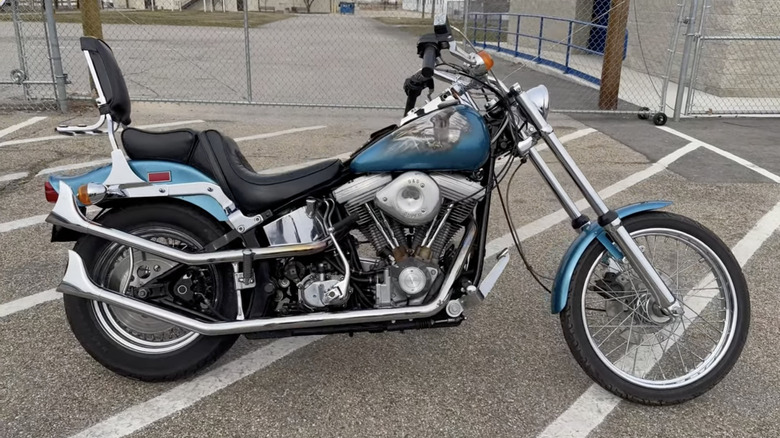
After Harley-Davidson started using rubber-mounted engines, the 1984 FXST Softail was the design trick that became a whole Harley-Davidson dynasty. While riders loved the classic hardtail look, they didn't always love the punishment. The Softail's solution was to hide rear suspension in a way that preserved the classic silhouette while giving the bike a more modern ride.
The Softail is a motorcycle built around the idea that tradition can be a carefully engineered illusion. Harley-Davidson's engine timeline helps place the FXST in a bigger context, too, because 1984 is also the start of the Big Twin Evolution era. The Evolution motor was a major redesign focused on improved performance and reliability, which paired perfectly with a chassis concept aimed at everyday usability.
The Softail soon became a platform for variety. Once Harley nailed the hidden-suspension formula, it could spin different personalities from the same core with stripped customs, flashy icons, and bikes that looked vintage but behaved like something built for modern roads.
1990 Harley-Davidson FLSTF Fat Boy
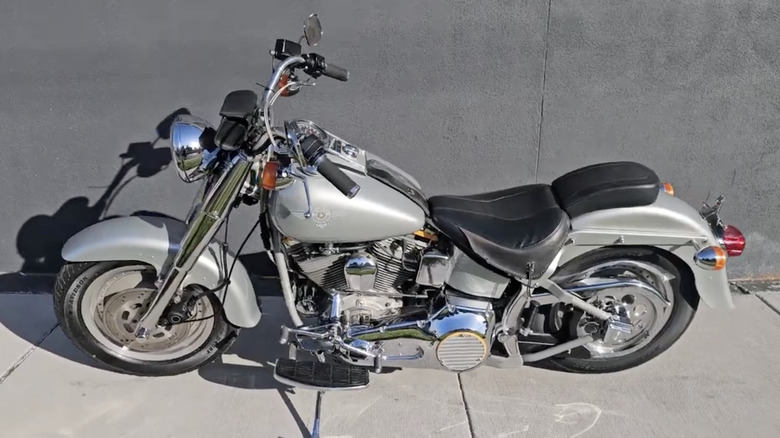
The 1990 FLSTF Fat Boy is the Harley that became a symbol before most people could tell you what the letters stood for. This was a bike designed around solid wheels, heavy presence, and an aggressive stance. Harley-Davidson's own Fat Boy history notes that the model was built to stand apart inside the Softail family by presenting a bold, unmistakable silhouette.
Part of the magic is that the Fat Boy doesn't try to look fast, which is part of why it worked as a cultural icon. You could spot it instantly, even if you didn't know Harleys. The design cues, chunky proportions, minimalist bodywork, and an industrial feel made it the kind of motorcycle people remember from posters, movies, and roadside sightings.
The Fat Boy is still rooted in the same Softail idea with classic lines and a more civilized ride than a rigid-frame look would suggest. If the Softail proved Harley could modernize quietly, the Fat Boy proved it could turn that quiet engineering into loud cultural presence.
2019 Harley-Davidson LiveWire
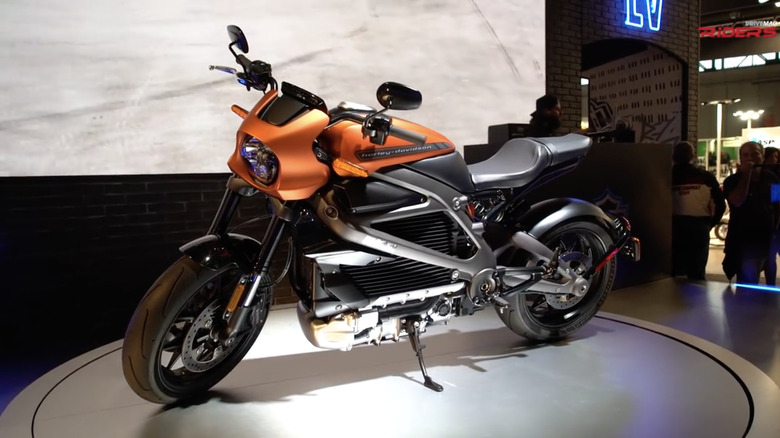
Harley-Davidson made upgrades along the way, such as using 6-speed transmissions, but the 2019 LiveWire is Harley-Davidson doing the unthinkable by building something that doesn't revolve around an internal-combustion V-twin.
The LiveWire's details are enough to pique the interest of motorcycle enthusiasts, showing immediate torque, modern electronics, and performance that's designed to feel effortless. Road tests by Cycle World offer perspective on how the power delivery changes the rhythm of riding, how the chassis and braking work to match the instant acceleration, and how different the experience feels compared with the sound and shake people expect from the brand.
The LiveWire asked buyers to redefine what counts as a Harley in the first place — although in the following years, Harley-Davidson decided to adjust and make the LiveWire division a completely separate company while retaining 74% ownership. Either way, the LiveWire marks a pivot point where Harley-Davidson has acknowledged that the future of performance and identity may include silent speed.