

When Did Harley-Davidson Start Using 6-Speed Transmissions?
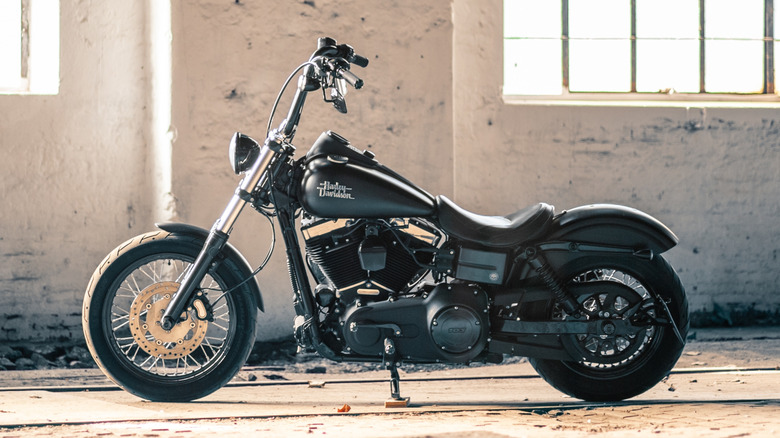
In 2006, Harley-Davidson (H-D) made one of its most pivotal mechanical updates in years. It was a shift (pun intended) that saw H-D move from a five-speed to a six-speed transmission, introduced with the Dyna family of motorcycles. Dubbed the "Cruise Drive," this new transmission was Harley's quiet revolution to offer a gearbox that promised smoother highway miles and better roll-on performance while retaining the brand's signature rumble. A year later, for the 2007 model lineup, the six-speed gearbox was rolled out across nearly all Big Twin motorcycles (barring the Sportster and the V-Rod).
The timing was no accident — the transmission arrived to complement the then-new Twin Cam 96 engine. This was a powerplant boasting higher torque and mid-range performance, with a torque output that was 11 lb-ft higher than the Twin Cam 88 that it replaced. The added power wasn't the main reason for a new gearbox, but the Cruise Drive transmission's extra cog dropped highway revs by 11% at highway speeds, making long-distance cruising smoother and quieter.
For riders used to the familiar five-speed hum, that added sixth gear now promised to transform the freeway experience. Suddenly, Harley's highway manners matched its muscle, and riders could stretch the miles without stretching the revs. Models like the Pan America 1250 adventure-tourer – like all modern Harleys — also feature a six-speed transmission.
The Cruise Drive difference
The six-speed H-D transmission actually dates back further than most people realize. Harley-Davidson first offered an optional six-speed transmission in 1999 alongside the Twin Cam 88 engine. Riders could also order the setup as part of a performance upgrade through accessory kits for some 1998-2000 models.
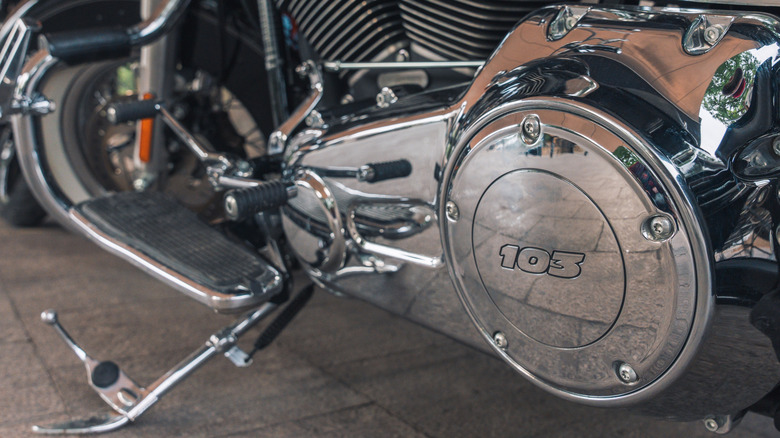
That early gearbox was engineered for smoother power delivery on high-torque builds, and later evolved into the Screamin' Eagle Six-Speed Gearset — Harley's own aftermarket bolt-on upgrade for the Twin Cam 88 engine. The assembly was completely re-engineered for strength and smoother operation. It featured a thicker chrome billet side door, which not only housed the added gear but also reinforced the transmission case without forcing riders to change exhaust layouts.
Inside, the gearset retained the stock ratios for first through fifth but introduced a true overdrive sixth with a ratio of 0.89:1, which helped drop engine speed by roughly 250 rpm at 70 mph — roughly an 11% reduction. On the highway, it meant noticeably less vibration, reduced mechanical stress, and a quieter, more composed ride.
That early taste of a sixth gear set the stage for Harley's real leap forward in 2006-2007, when the company made the Cruise Drive six-speed transmission standard across its Big Twin lineup, paired with the Twin Cam 96. It featured helical-cut gears with gear ratios that were optimized for the new engine. The core benefit remained thanks to the sixth gear that dropped engine speed. The result was a lighter clutch pull and smoother clutch engagement which benefitted the motorcycle's operability in traffic as well.
Why the big shift to six

By the early 2000s, Harley riders were traveling farther and faster than ever before. The move to a six-speed gearbox was the company's effort to refine the riding experience without watering down its character. The Cruise Drive transmission brought genuine engineering improvements to back that up. It featured new gears, bearings, and internal oil passages, along with dog rings instead of moving gears. The use of dog rings allowed quicker, more precise gear changes with less lever throw.
On the Touring and Dyna models, the transmission's new sealed oil passages eliminated external oil lines, reducing leaks and simplifying maintenance, while Softail models retained their classic external routing. To make it easier on the riders, Harley added a ball-and-ramp clutch mechanism that reduced lever effort and made stop-and-go traffic far less punishing.
As the design evolved, Harley engineers continued with subtle improvements. A redesigned shift drum with optimized neutral-pocket geometry made it easier to find neutral in the Milwaukee-Eight VVT 121 engine-powered Harley's Custom Vehicle Operations (CVO) models. And while the overdrive sixth gear already reduced engine speed at highway pace, Harley tuned later versions of the Cruise Drive to run even smoother at sustained speeds. Lower rpms not only meant better fuel economy and less noise, but also reduced the vibrations Harleys are infamous for and improved long-distance comfort.
Still, the Cruise Drive hasn't been entirely trouble-free. Early production runs suffered from gear whine, bearing wear, and the occasional neutral-finding issue – quirks familiar to anyone who's spent time in Harley's mechanical lineage. But those teething issues aside, the six-speed gearbox cemented H-D's move into the modern era, becoming the new standard.