

These Are The 9 Quickest Pickup Trucks Ever Built
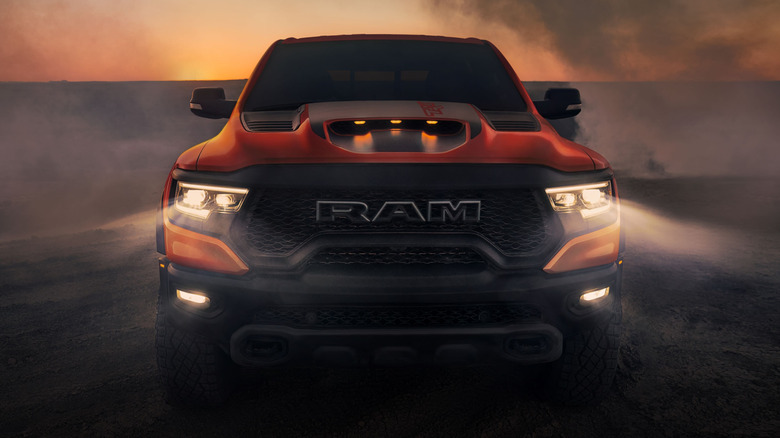
Have you seen the videos of folks who stuff CBR or Hayabusa motorcycle engines into golf carts? It's fantastic — taking the vehicle of choice of an old, rich guy from Boca Raton and mutating it for straight-line speed. As it just so happens, the same shenanigans have been occurring in the production truck market, with manufacturers modifying purpose-built utility platforms and stuffing them with unbridled performance. That's exactly how we arrived at this point in the modern age, where pickup trucks (plural) can hit 60 mph quicker than a BMW M3.
But why? Why create a ridiculously capable truck that costs as much as a Porsche 911, but doesn't drive nearly as well? We think it's less about the "why" and more about the "why not." It's a game of finding out just how far your team of engineers can push a platform that was never supposed to be this fast ... and then making it go even faster. Like you, we asked the only logical follow-up question to this idea: "Which ones are the fastest?" So, here's how we've compiled this list: using just one credible publication's testing data (Car and Driver), 0-60 mph times only, and excluding any third-party tuners (Hennessey, Roush, etc.), these are the quickest pickups in human history (so far).
8th place: 2024 Chevrolet Silverado EV RST - 4.1 seconds
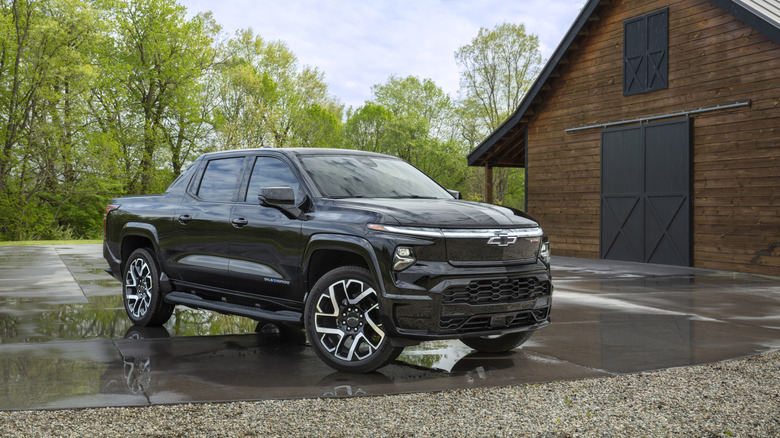
Chevy has some fine trucks to choose from, but we wouldn't say it has a true Raptor or TRX competitor. Its closest item, the Silverado ZR2, is certainly capable off-road, but doesn't pack the same gas-powered fury. So what do you do if you're strictly a Chevy truck person and want to keep up with the top trim Fords and Dodges? Well, you may not like this, but you'll have to buy one of Chevy's already-forgotten trucks, the all-electric Silverado EV RST.
This nearly 9,000-pound, dual-motor, all-wheel drive pickup generates a monstrous maximum of 754 horsepower and 785 pound-feet of torque, coupled with up to 440 miles of range thanks to the 205-kWh battery that it borrows from the GMC Hummer EV. The EV RST, however, doesn't make 754 horsepower at all times. Those output numbers are only seen while in what Chevy calls "Wide Open Watts" or WOW mode — essentially an overboost mode that temporarily increases power for acceleration runs or highway passes. In WOW mode, the pickup can accelerate to 60 mph from a dig in 4.1 seconds, and plow through the quarter-mile in 12.6 seconds at 111 mph.
Otherwise, the Silverado EV RST is a perfectly normal daily driver, with GM's nifty Multi-Flex Midgate (one of the coolest truck bed features ever), a comfy interior, and a decent 10,000-pound tow rating. If you're reading this and suddenly feel the urge to buy one, unfortunately, the RST variant of the Silverado EV was discontinued at the end of the 2025 model year, so you'll have to do some used-truck digging or find an unsold example in a dealer's inventory.
7th place: 2022 Ford F-150 Lightning Platinum Extended Range - 4.0 seconds
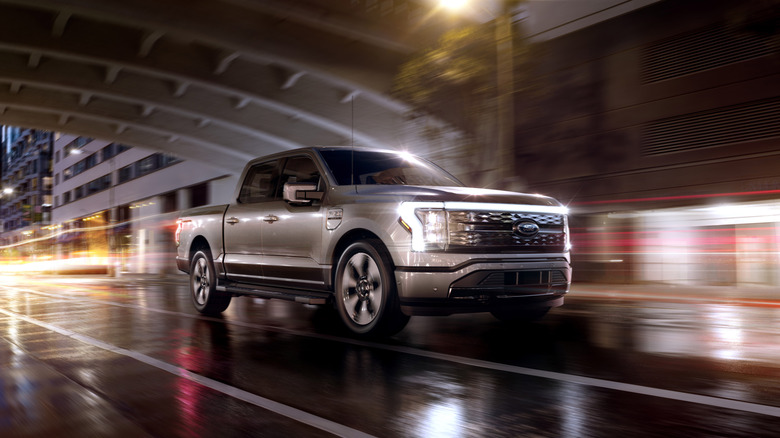
Politics and financial struggles aside, the most recent generation Ford F-150 Lightning was an impressive truck. It debuted in 2021 with Ford's revolutionary Pro Power Onboard, outlet system, a spacious interior cabin, a drag coefficient 4% better than the gas-powered F-150 (uses 10% less power to cruise at 75 mph), and a ride nearly just as quiet as a Mercedes S-Class of the same era. The real headline, though, was how it moves.
Even though all Lightnings came with a dual-motor setup (one for each axle), customers got to choose between a smaller 98-kWh battery pack or the larger Extended Range 132-kWh unit. This decision influences charging times, range, and most importantly, power. The smaller pack delivers a certainly sufficient 452 horsepower, while the larger battery provides 580 ponies. That upgrade allows for a 0-60 mph time of 4.0 seconds in the Lightning Extended Range, which continues through the quarter-mile in 12.6 seconds.
The four-second 0-60 mph club is nothing to shrug at. With those kinds of figures, the 2022 Lightning joins beloved sports cars such as the Toyota GR Supra and Chevy C7 Corvette Stingray. If you want to really get cute, you could also say that the Lightning is quicker to 60 mph than a Ferrari F40, which usually ran about a 4.2-second run (it's true). Now, speaking of those financial struggles we mentioned earlier — despite receiving hundreds of thousands of orders for the Lightning upon release, the doubling-down on EVs didn't pay off, as in late 2025, Ford announced that it would end the pure EV F-150 Lightning. A replacement called the EREV (propelled by electric motors, helped by a gas generator), is reportedly in the works.
6th place: 2021 RAM 1500 TRX - 3.7 seconds
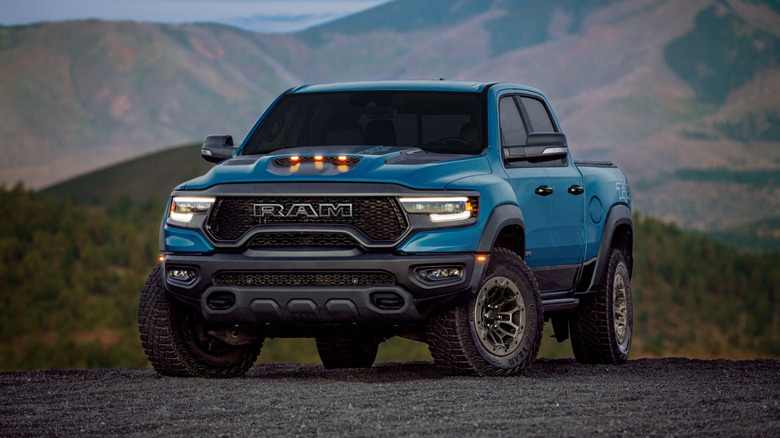
The Ram TRX is one of those names that carries so much weight in the modern truck world that you may have forgotten it is among the vehicles with a remarkably short production run of just four years between 2021 and 2024. But from the very beginning, the TRX's impact was immediate and apparent, selling out the 702 individual Launch Edition examples within just a few hours and getting everybody hooked with one of Dodge's favorite activities — putting Hellcat engines in cars that aren't Hellcats.
Simply, the TRX was familiar, yet fresh, sporting a swath of upgrades that decisively set it apart from any old regular Ram 1500. The TRX got a reinforced steel frame and upgraded suspension components, Bilstein remote-reservoir dampers, 15-inch brakes, 35-inch Goodyear Wrangler Territory all-terrain tires, an electronically-locking rear differential, and much more. The crown jewel of the TRX, though, is none other than the Hellcat motor — a supercharged 6.2-liter V8 that produced 702 in TRX trim.
Sure, it may be more than 3 inches taller, almost 6 inches wider, and over 1,000 pounds heavier than a stock crew cab 1500, but take all of its new goodies together, and you've got a truck that can hit 60 mph in 3.7 seconds and make a quarter-mile pass in 12.3. Also, there's some happy news for you Mopar people, as Stellantis has confirmed it will bring back the Ram TRX for the 2027 model year, this time with even crazier performance figures.
5th place: 2023 Ford F-150 Raptor R - 3.6 seconds
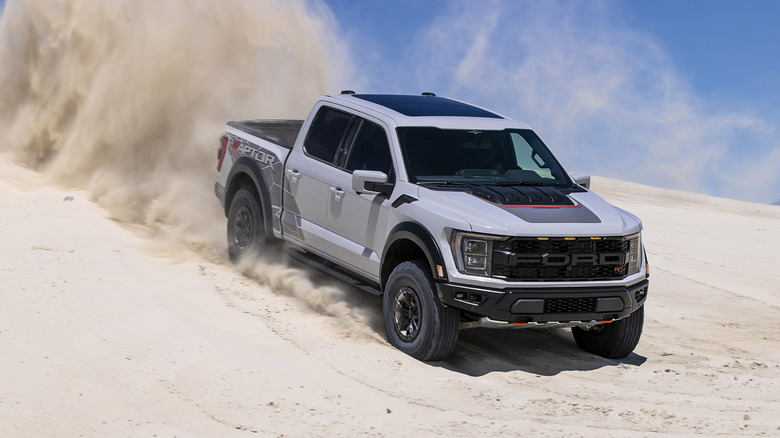
At the time of testing, the aforementioned Ram TRX was the quickest pickup Car and Driver had ever tested, and in America, those things don't tend to go over well amongst competition. Presumably, Ford took a look at their existing F-150 Raptor and knew it wasn't enough to compete with Ram's behemoth, so they went to work. Lo and behold, a few years later, out comes Ford's biggest and baddest truck ever, the Raptor R.
The valley between the regular Raptor and Raptor R isn't massive, but Ford made each of the new additions count. The most obvious change arrived under the Raptor R's hood, where the twin-turbocharged 3.5-liter EcoBoost V6 was gone, and replaced by Ford's supercharged 5.2-liter V8, the same engine found in the track-ready Shelby GT500. Just like that, power was increased from 450 horsepower and 510 pound-feet of torque to 700 horsepower and 640 pound-feet of torque (the Raptor R uses a slightly different tune than the GT500). With all that juice, the Raptor went from 0-60 mph in 3.6 seconds, or about 0.1 seconds quicker than the TRX. It also outpaces the Ram in the quarter-mile, posting a 12.0-second run (0.3 seconds quicker than TRX).
Other small changes included stiffer spring rates at the front to cope with the heavier engine, additional rear-end frame bracing, and the regular Raptor's biggest tire, a 37-inch set of all-terrains. The Raptor R's 4WD system is also fairly neat, allowing for high, low, and auto four-wheel drive modes, as well as a rear-wheel drive setting. Of course, this truck is most suited for multi-terrain adventures, but that sweet, sweet horsepower will have you challenging Hellcats and Aston Martins at the streetlights... and winning.
4th place: 2023 Rivian R1T Dual-Motor Performance - 3.4 seconds
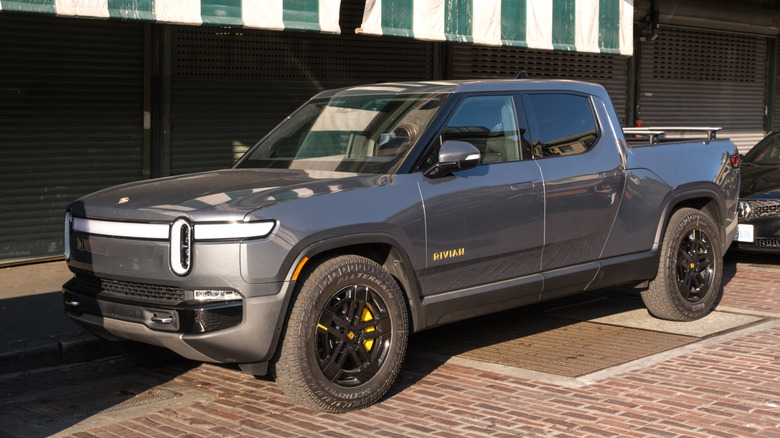
As we arrive at the second (and faster) half of our trucks, the all-mighty electric motor starts to take over. Despite still being the new kid on the Silicon Valley block, Rivian has made a name for itself through means of minimalistic design, practicality, and nowadays, unrelenting electric acceleration. A great example of that sentiment is the 2023 Rivian R1T Dual-Motor Performance, which kicks off our final five entries.
In 2023, Rivian debuted the Dual-Motor variant, balancing out its formerly singular Quad-Motor offering. Using just one motor for each axle instead of two, the Dual-Motor still delivered a 533-horsepower punch in base form. But our car, the Dual-Motor Performance, is the result of a $5,000 performance package that bumped the already hefty figure to a whopping 665 horses (and 829 pound-feet of torque on top of that). With all four wheels clawing for traction, the Dual-Motor Performance achieves 60 mph in a very swift 3.4 seconds, and the quarter-mile in 12.0 seconds flat.
For some perspective, 3.4 seconds to 60 mph places the Dual-Motor Performance ahead of cars like the Cadillac CT5-V Blackwing (3.5 seconds), Lucid Air Pure (3.5 seconds), Shelby GT350R (3.8 seconds), and many more performance cars. Only, with the Rivian, you can do it with all your stuff in the bed and a snowboard in the Gear Tunnel.
3rd place: 2022 GMC Hummer EV Edition 1 - 3.3 seconds
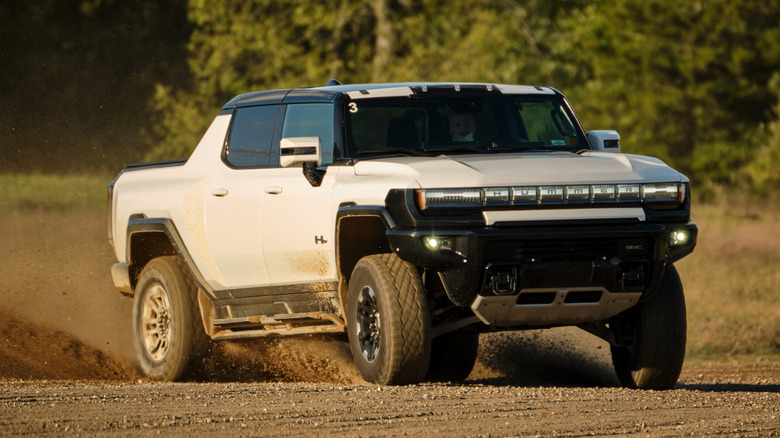
It may not make any noise, but otherwise, the GMC Hummer EV Edition 1 pickup is a brute in every sense of the word. It looks like a tank, weighs nearly 10,000 pounds, and accelerates like a bat out of hell. Powered by its 205-kWh battery pack, the Hummer's three electric motors (two rear, one front) send an even 1,000 horsepower (and 1,200 pound-feet of torque) to all four wheels. From a dig, the colossal vehicle is catapulted to 60 mph in 3.3 seconds, a figure impressive at any weight, but at 9,640 pounds, a low 3s result is a genuine engineering feat. It continues through the quarter-mile, finding the finish line in 11.9 seconds. In a similar vein to the Silverado EV RST from earlier, the Hummer's insane performance figures are only available in a specific mode. In the GMC, the special spell is called "WTF" mode, standing for "Watts to Freedom." Doesn't get more American than that.
While it can easily pace the same hypothetical competition as the Rivian above, it suffers in other departments. In Car and Driver's testing, the heavyweight took 211 feet to stop from 70 mph, and 504 feet to brake from 100 mph. Also, we don't need to tell you this, but the Hummer had some cornering issues. Its weight and high center of gravity only allow for 0.73 g on the 300-foot skidpad test — about .08 worse than a Kia Sportage. But hey, you don't buy a Hummer to out-grip compact SUVs, you buy it because you can.
2nd place: 2025 Rivian R1T Tri-Motor Max - 2.7 Seconds
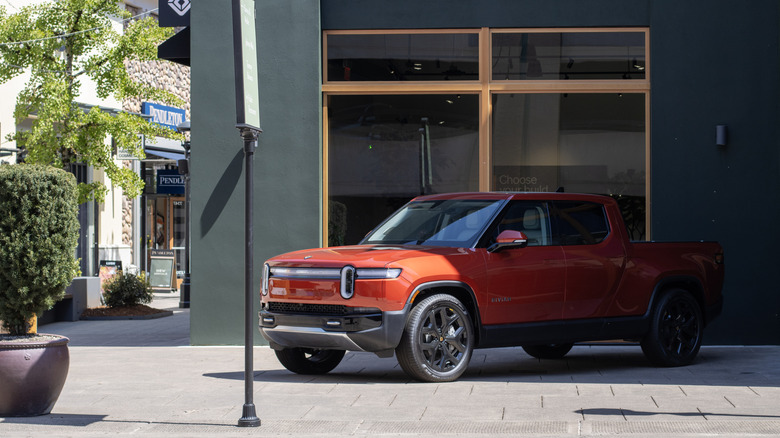
It's hard to imagine a 2.7-second 0-60 time finishing anywhere but first in a battle of trucks, but in today's world, there always seems to be a bigger fish. The Tri-Motor Max variant of the R1T was, at the time, the most recent major addition to the lineup. Following the Dual and Quad-Motor trims, Rivian split the difference with the three-motor R1T, which used the Quad's two electric motors at the rear and the Dual's single motor up front, all combining for a final output of 850 horsepower and 1,103 pound-feet of torque.New for 2025 were a few minor changes to the suspension bushings and mounts, as well as upgrades to the Standard and Max battery packs that lightened and simplified the units. The rest is all of the same goodness — a quality interior, bundles of cargo space, and decent range (EPA est. 420 miles maximum).
It's almost difficult to expand upon the Tri-Motor Max, considering it's just a slightly more powerful version of the all-around EV pickup that Southern Californians use to go and purchase their watered-down matcha we've come to know and enjoy over the last several years. What we can do is tell you which cars it's quicker than. That's fun. In no particular order, the Tri-Motor Max is quicker to 60 mph than the 2025 BMW M5 (3.0 seconds), 2025 Bentley Continental GT Speed (2.8 seconds), 2022 Porsche 911 GT3 (2.8 seconds), 2023 Lamborghini Urus Performante (3.0 seconds), and the 2021 McLaren 675LT (2.7 seconds). Do with that what you will.
Tied for 1st place: 2024 Tesla Cybertruck Beast - 2.6 seconds
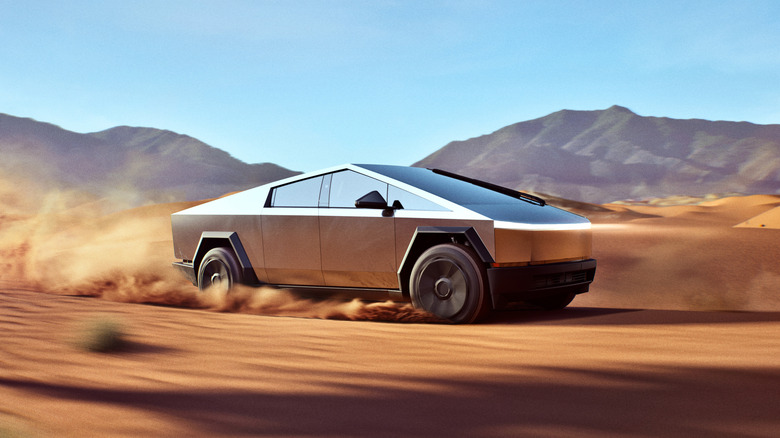
The Cybertruck makes only best friends or bitter enemies. No in between. And so, it seems that almost out of pure spite, Tesla sacrificed its truck abilities for being the fastest in the world and pulling one over on the naysayers who (rightfully) pointed out its many negative traits. But performance is performance, and the fact is, the Cybertruck is a fascinating piece of automotive history we won't soon omit from memory. And as difficult as it may be to give such an attention-seeking car any accolades, it's still in the current 'quickest truck of all time' conversation.
Now, for one second, forget that you don't like the Cybertruck and pretend you aren't happy that it's sales were cut in half in 2025, because it also has some innovative tech, like its 48-volt platform architecture that improves the vehicle's electronics operations, a progressive steer-by-wire system that includes an interesting-looking square steering wheel (as well as a dual-motor failsafe system), and that special concoction of metals that create the ultra-strong skin of the extraterrestrial pickup. Overall, the Cybertruck is an engineering (and cultural) case study for Tesla that could do it some good in terms of its future automobiles.
In Beast trim, the Cybertruck puts its money where its mouth is and delivers the performance figures worthy of headlines. Using the same basic layout as the Tri-Motor Rivian (two motors in back, one up front), the Cybertruck Beast provides 834 horsepower and 740 pound-feet of torque. It can reach 60 mph in just 2.6 measly seconds, becoming the first within our co-champion ranking to claim first place.
Tied for 1st place: 2026 Rivian R1T Quad Motor - 2.6 seconds
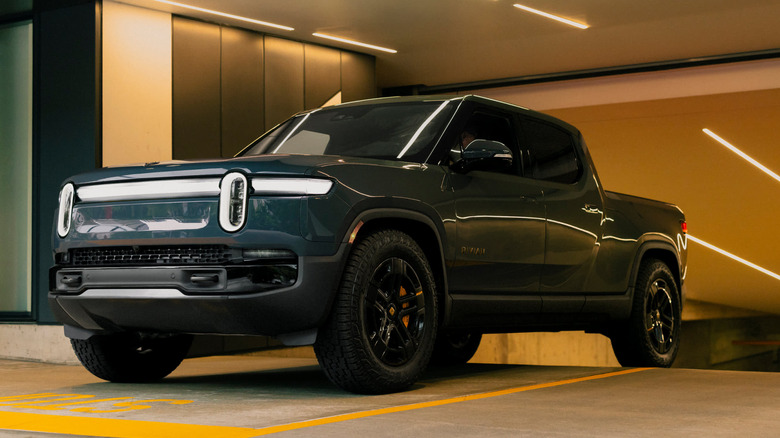
Introducing the Godzilla to the Cybertuck's Kong: the Rivian R1T Quad-Motor. For 2026, this top-trim Rivian gained 190 horsepower from its old form, giving all four individual electric motors a grand total of 1,025 horsepower. The question of "is it enough?" seems to be a rhetorical question at this point. Nobody needs 1,025 horses under their right foot, and if we're being honest, we could've stopped at about 500 horsepower a decade ago, and everyone would be more than satisfied.
But here we are. And if nothing else, the Quad Motor's radical performance specs can provide some over-the-top entertainment for the time being. Anyways, the Rivian houses some new goodies for 2026 aside from the extra power that are worth knowing. The charging port has now been changed over to a North American Charging Standard (NACS) charger, which means it can now use Tesla's network of stations directly. It also utilizes what Rivian calls the RAD tuner, a feature that allows for a multitude of adjustments, including suspension stiffness, ride height, brake regeneration, and many more settings that can be changed with up to 10 levels of customization.
As far as our rankings go, there is a small caveat. Our finishing order will stay the same, with the Cybertruck and Rivian R1T tied at 2.6 seconds apiece, but because this is for the crown, one could look to the quarter-mile times for a cheely tie-breaker. If one were to indulge, they would find that the Rivian beats the Tesla to the beam by 0.4 seconds. So, give the gold medal to whichever truck tickles your fancy, but in the real world, the Quad Motor would end up ahead of the Cybertruck after a city block of racing.