

5 Signs Your Timing Is Off (And What It Does To Your Engine)
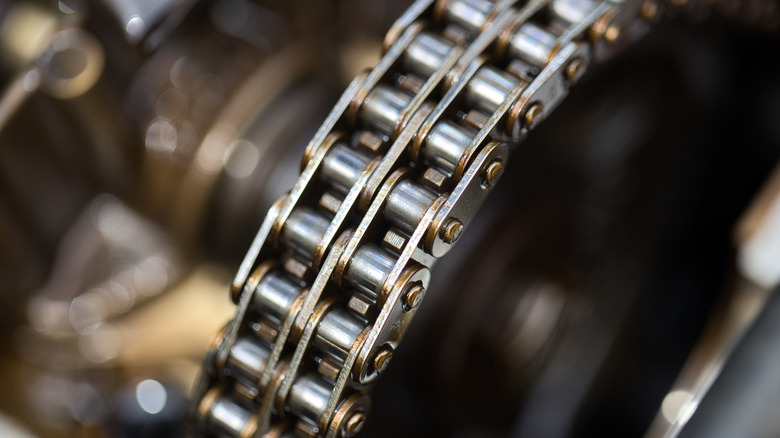
An engine's health depends on several key measures and functions. For example, air and fuel need to be present in the correct quantities, coolant is required to keep the engine operating at a safe temperature, and the timing of its internal components must be spot on. If the timing of an engine goes out the window completely, then catastrophic failure may be on the cards.
Pistons meet valves, and before you know it, that usually smooth-sounding V6 under the hood will sound like an old washing machine with a handful of wrenches in it. In other words, you'll have a big workshop bill on the horizon. The timing of an engine is typically controlled via a belt or chain. The belt/chain links the crankshaft and camshaft, ensuring the engine's valves operate at the correct times during the intake and exhaust strokes. It plays a pretty big role then, and thankfully, it also gives a fair few warning signs when things do start to go bad.
While bad timing can result in engine failure, if your timing is only out a small fraction, it will continue to operate, just not as efficiently as it should. It's at this point that you should act and have the problem addressed, but if you don't know what to look out for, that's easier said than done. So, here are five of the main symptoms to look out for.
Reduced performance

A loss of power, often accompanied by a misfire, is a very common sign that your engine's timing needs attention. However, and this rule applies to all of the signs and symptoms covered within this article, reduced performance and/or misfires do not conclusively mean that your timing is out. Any number of things could lead to a misfire, including bad fuel, faulty injectors, or it could just be that your spark plugs are due for a change.
Back to timing, though. As a car ages and accumulates more miles, the timing chains can stretch slightly and put the engine's timing off by a fraction. With the internal components not running in perfect sync with each other, misfires occur, and performance takes a hit. This could be immediately noticeable, or it could be very slight, but it will only worsen over time as the chain continues to stretch, or worse, fail.
It's never good news to learn that your timing chain needs replacing, but it will sort out any related misfires and be a darn sight cheaper than rebuilding or replacing the engine. The best advice is always to have your car inspected as soon as you suspect something is up, because continuing to drive when something is wrong will almost always make things worse.
An illuminated check engine light
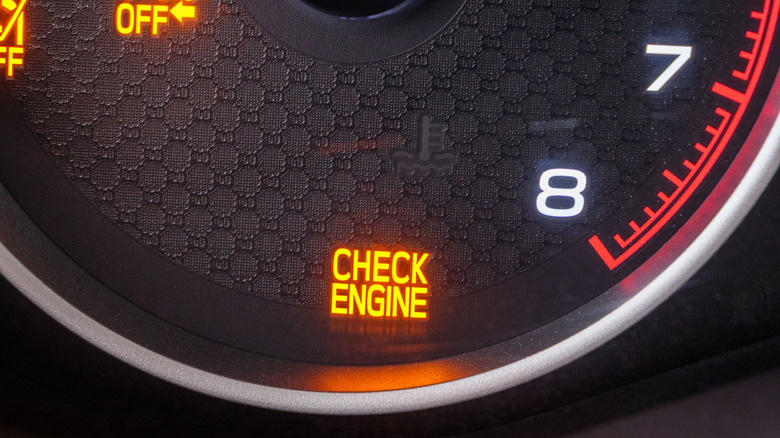
This one is pretty obvious — if your engine is about to crash into itself, then the chances are a check engine light will be on the dashboard. The problem with check engine lights, though, is that they give absolutely zero indication as to what the actual problem is.
We have warning lights for low oil and warning lights for anti-lock braking systems, but nothing specific for the engine's timing gear. The check engine light is a 'catch-all' light. If you had a warning symbol for each potential issue, you'd need a dash like Merc's Hyperscreen just to house them all. Plus, learning what each symbol meant would likely be akin to becoming fluent in ancient hieroglyphics.
Fortunately, though, a cheap OBD-II reader can pluck the code related to the check engine light, and this will help you to establish whether it is timing-related or not. For example, P0016 means the camshaft and crankshaft positions are no longer in sync, and therefore, your timing needs some tweaking.
Your oil may be contaminated with fine metal shavings

Keeping on top of vehicle maintenance can be tricky at times, especially if you're low on funds. Belts, plugs, fluids, and filters can take up a decent chunk of cash, and sticking to the manufacturer's guidelines sometimes just isn't an option, especially if you're riding around in an older stopgap car. While the cabin filter or spark plugs might be OK to overlook for a short while, one aspect of vehicle maintenance you should always pay attention to is your oil service.
Healthy oil makes for a healthy engine, or rather, unhealthy oil can lead to an unhealthy engine. Whether you're changing the oil yourself at home or paying a garage to do it, there are a few things you should check for when the oil's drained. Glittery oil is a clear sign that something isn't quite right, as that glitter is actually thousands of fine metal shavings, and those shavings have been plucked from your engine's innards. Sometimes the shavings are larger and easily identified, but if you're unsure what you're looking at, simply put a magnet in the oil and see if anything sticks to it.
This glitter could easily be a sign that your timing is off. It could be parts of the actual chain itself, if that's degrading, or the shavings could be minuscule parts of your valves, or other cylinder head components. This isn't a sign to ignore; be sure to diagnose it further, or you could be facing a full engine rebuild or replacement fairly soon down the road.
Listen out for a rattling engine
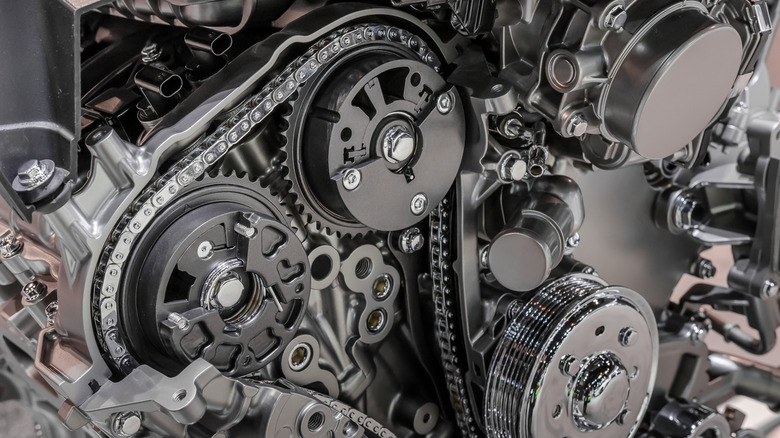
Nobody wants to hear anything other than a silky smooth engine sound from underneath the hood, so if a rattle, clunk, or bang is audible, it naturally sends your head spinning with worry. There are heaps of reasons why your engine might be noisy, including simple problems like a loose under-tray, but there are plenty of wallet-busting problems that could be the cause, too.
First of all, don't just turn the radio up and ignore the issue. Instead, have your car inspected – that rattling sound might be your timing chain clinging on for dear life and begging for help. Typically, a loose or stretched chain will rattle on idle, and we've already covered how much trouble a stretched chain can be.
Owners of belt-driven engines won't get this warning, but cam belts are at least always designed with safe service intervals, whereas many timing chains are sold as being lifetime items. Change your cam belt within the automaker's guidelines and you should be fine, but still don't ignore the other signs we've covered, as there's no guarantee the last owner didn't use cheap, sub-standard parts when servicing.
As for timing chain owners, just because the automaker says it should last for the lifetime of the car, that doesn't mean it can't go wrong. If previous owners have skipped oil changes or used poor-quality oil, your chain's lifespan could easily suffer, so get that rattle checked out sooner rather than later.
Failure to start

Uh-oh. There is nothing worse than jumping in your car in the morning, turning the key, and finding that the engine isn't firing into life. Perhaps you left the lights on and the battery is drained? Annoying, sure, but it could be a lot worse — it might not be starting because your timing chain or belt has failed.
This isn't so much a sign that it's failing, but an indicator that it may have already failed. If your belt or chains snaps, your engine simply will not start. If these items fail when driving, your pistons and valves will meet, hundreds of times before even the quickest-reacting driver can shut off the engine. If your belt snaps, the flailing remains could cause damage to numerous other moving parts, and within moments, nothing will be moving under that hood at all.
It might be cost-effective to repair, it might be better to write the vehicle off and start again with something else. If this happens to you, take it as a lesson learned to never overlook timing maintenance.