

Consider These Pros And Cons Before Buying A German Car
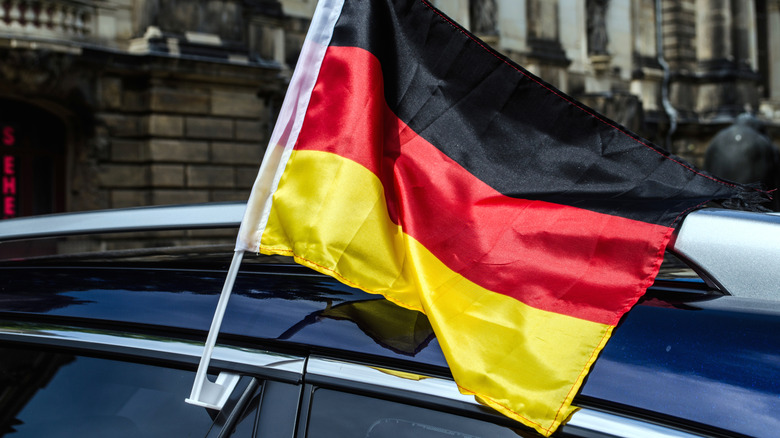
BMW, Mercedes-Benz, and Volkswagen all build vehicles in the United States, and the same brands (plus Audi) build U.S.-bound cars in Mexico. At the same time, BMW owns British brands like Mini and Rolls-Royce, while Volkswagen Group includes Lamborghini and Bentley among its non-German makes. Basically, the concept of a German vehicle isn't as straightforward as it used to be.
But if we separate out only the brands originally born in Germany — regardless of where they now build their vehicles — there's a fair amount of factual data to draw some basic conclusions. First off, our criteria narrows choices down to Audi (founded in Zwickau in 1909), BMW (Munich, 1916), Mercedes-Benz (Stuttgart, 1926), Porsche (Stuttgart, 1931), and Volkswagen (Berlin, 1937). Also, we realize some of your favorite German cars are from the likes of Borgward, Hoffmann, and Wiesmann, and that the latter is trying to work an EV comeback, but we're sticking with brands that have cars in production today.
As an example of what we're talking about, one drawback to German cars is that they tend to be more expensive than typical rides — if only because four of those names are luxury brands that demand higher MSRPs. Additionally, many of the pros and cons of German cars are connected. Their deluxe nature means that even though you're paying more for their cars, you're often getting more, too.
Con: German cars cost more to buy than average vehicles
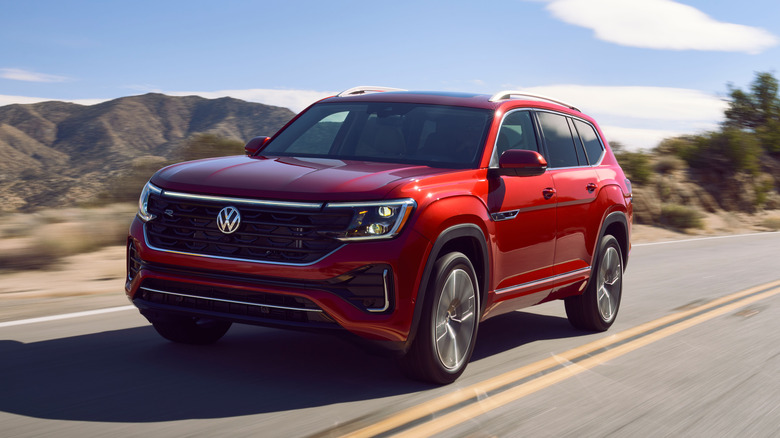
Cherry-picking data from across the web gives plenty of evidence of how much German cars can cost compared to the competition. CarEdge, for one, analyzed average vehicle transaction prices in 2025 and found that Porsche had an average transaction price of $121,678, putting it in the top 10 for most expensive brands. That same year, Cox Automotive — which broke the numbers down by automaker group, not brand — reported an average transaction price for BMW Group at $69,924. For the Mercedes-Benz group, the average transaction price was $75,700.
As for Audi, Cox wrapped this brand's pricing in with the Volkswagen Group, and it didn't appear in the CarEdge ranking. But the Volkswagen brand itself did, checking in with the ninth-lowest average transaction price in the study at $39,570. Less expensive brands included Subaru, Nissan, Mitsubishi, Honda, and even Buick. Audi no doubt had a higher average transaction price; today, only a handful of Audi models are priced under $50,000.
The industry's average transaction price has been noted as being a bit below $50,000 today. Considering the higher costs of these brands, we're comfortable in listing their relative expensiveness as a disadvantage of buying a new German car. If that's something that concerns you, then you might want to buy a used luxury car instead.
Con: German cars cost too much to maintain and repair
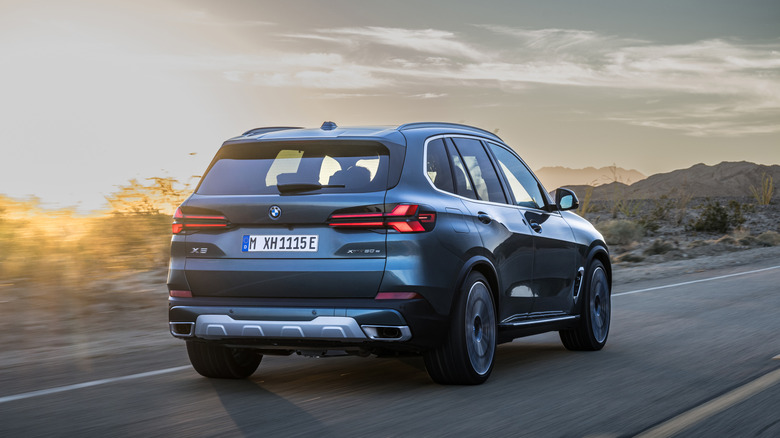
The financial drawbacks to German cars can extend to how costly they are to keep on the road. Just look at the 2025 Consumer Reports (CR) study of which brands have the highest maintenance costs over time. Sure, Land Rover was at the very bottom of the barrel, but Porsche, Mercedes-Benz, Audi, and BMW claimed the next four spots, with Porsche owners typically paying $17,900 in maintenance and repair costs over 10 years. The others grouped between $11,000 and $12,630. Expenses for Volkswagen owners for the same period were much lower, at $7,545, but this still left VW ranking 17th out of the 29 brands that qualified for the list.
The situation doesn't change much even if we cut back to a more realistic five years of ownership. Mercedes-Benz ($3,330) and Porsche ($4,950) still end up trailing only the last-place Land Rover ($5,560) in this measure. Audi was one of only two other brands (Mitsubishi and Subaru) with five-year maintenance/repair costs above $2,000.
Predicted five-year costs for Volkswagen were $1,650, which was on par with mainstream brands like GMC, Mazda, and Mini, as well as BMW. Indeed, despite how much it costs to maintain and repair BMWs for the full 10-year period, the brand kept expenses down pretty well for the first five years. Separately, it was ranked fifth overall for CR reliability.
Pro: German cars can offer premium performance
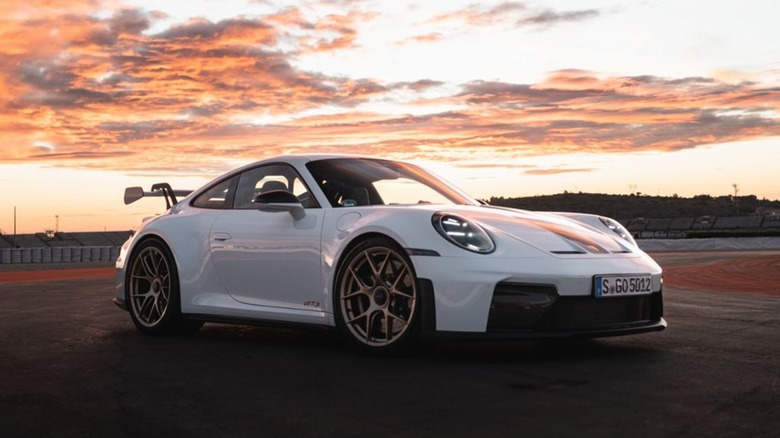
German cars may be on the pricey side, but you can certainly get plenty of bang for your buck with these machines. All five of the mentioned brands can point to impressive victories in major motorsports events around the world, and all five have brought a taste of that success to the street. That even applies to VW, although it dropped its support for factory racing in 2020 — but that was only after multiple World Rally Championship wins in the previous decade.
The other four all remain closely connected with racing both on and off of the track, supported by their own dedicated performance divisions such as Audi Sport, BMW's M, and the Porsche GT team, while Mercedes-Benz has a dedicated subsidiary known as Mercedes-AMG. Want to form your own racing team? The latter three brands sell actual race cars to help you get started.
Now, not everyone is down with the sport-ification of German automakers, but it's hard to argue with the results on display. Once you come up with north of $270,000 to get into a Porsche 911 Turbo S, you're in control of a precision performer capable of hitting 200 mph on the track and leaping from 0 to 60 mph in 2.4 seconds (with help from the Sport Chrono Package). That's just one example of thrillers like the Audi RS 6 Avant speed wagon, the 523 horsepower BMW M4 Competition xDrive Coupe, and the Mercedes-AMG S E Performance coupe that can put down more than 1,000 pound-feet of torque.
Pro: German cars have terrific luxuries
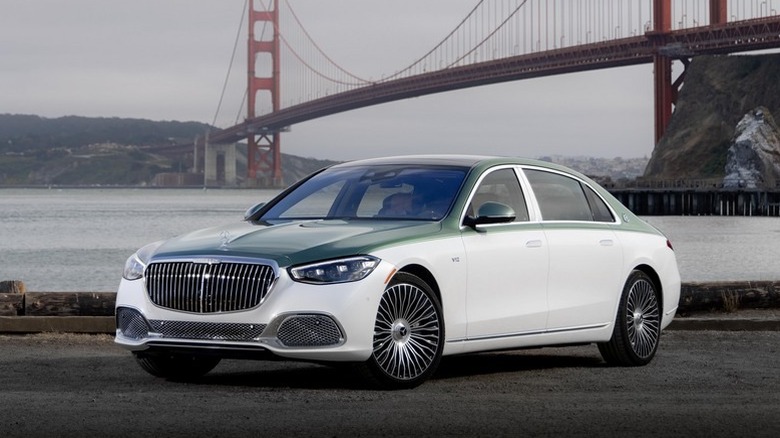
Audi, BMW, Mercedes-Benz, and Porsche are literally considered luxury brands, and they live up to that reputation by kitting out their cars with an extensive array of creature comforts and high-tech innovations. Mercedes-Benz, though, might best exemplify these brands' approach to excellence. On the technology front, it's the first brand from any country to offer certified SAE Level 3 driving assistance, allowing drivers to take their eyes off of the road. Even though its cars have been promised as self-driving for over a decade, Tesla only sells vehicles with Level 2 tech, which requires drivers to maintain their attention on driving at all times.
When it comes to other luxurious features, Mercedes-Benz has the help of Maybach, a specific group committed to "defining the world's most elegant vehicle brand." Here you can find hand-built engines, as in AMG models, as well as handcrafted cabins that customers can design in partnership with the Manufaktur studio. That way, they can enjoy one-of-a-kind details. In terms of the previously-mentioned bang-for-your-buck factor, some Maybachs are actually kind of a bargain considering just how fancy these mobile mansions can be.
Volkswagen proves even mainstream German brands can deliver a premium ownership experience. The VW Atlas and Tiguan SUVs are a fine example of this, since each can be ordered with amenities such as heated and ventilated massaging front seats.
Pro and Con: German-car depreciation is a mixed-bag
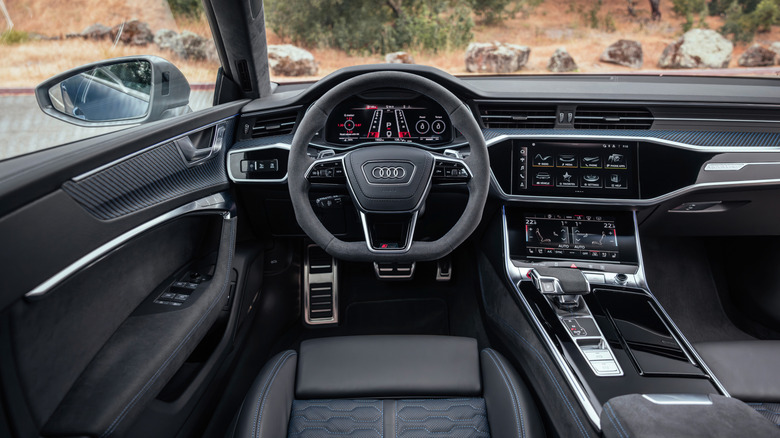
If you've been looking at used car listings recently, you might have noticed that some used luxury cars are so cheap that they can cost less than a mainstream compact. You can chalk that up to premium cars depreciating much more quickly than their counterparts, which creates a situation that might not seem to bode well for the upscale German brands. But while those fabulous five names have their clunkers (some of which can be found on our list of 10 luxury vehicles with terrible resale value), they do have some models that can hold onto their value the way they hold onto the track.
Porsche's 911 and 718 Cayman finished first and second, respectively, for lowest five-year depreciation rates in the industry in a recent iSeeCars analysis; the 718 Boxster also ranked ninth. To be exact, the 911 only lost 19.5% of its value after five years, while the 718 siblings had depreciation rates of 21.8% and 29.6%. Mercedes-Benz, Audi, and BMW were among the luxury leaders for retained value according to CarEdge; they rated 2nd, 4th, and 6th, in that order, and each held onto more than half its value during that period. VW also did the same, though that was only good enough for it to be ranked 12th out of 19 non-luxury brands.