

The Pros & Cons Of Liquid Cooled & Air Cooled Motorcycle Engines
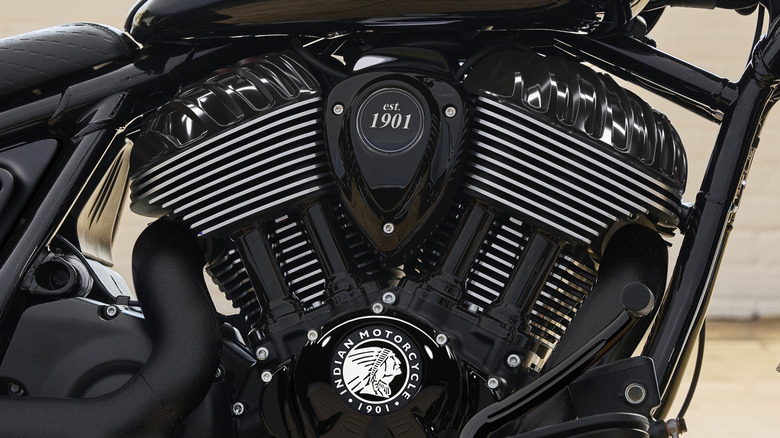
Cooling fins are an iconic feature of motorcycle design. These blades made their mark early, with their parallel lines encircling the cylinders of classic bikes from day one. Whether on the striking V-shaped engines of American cruisers, the upright twins of vintage British bikes, the outstretched arms of a BMW boxer, or the transverse wings of a flying Moto-Guzzi, cooling fins have seared themselves into our collective consciousness. You can trick out your bike with fancy decals, but nothing says "motorcycle" like a cool set of fins.
Sometimes lazily referred to as "water-cooled", liquid-cooled motorcycles have a radiator, usually at the front of the frame. An air-cooled motorcycle doesn't, and it needs none of the pumps and plumbing of a liquid-cooled bike. But its rough-hewn simplicity is increasingly being outpaced by the reliability, economy, and power of liquid-cooled alternatives. The Japanese Big Four – Honda, Kawasaki, Suzuki, and Yamaha — led the charge, particularly in the 1980s, when they found they could more easily keep engine temperatures steady with thermostat-controlled liquid cooling.
Coolant is pumped around the cylinder jackets, cooled in the radiator, and recirculated. So those cooling fins are no longer needed — although some manufacturers simulate their hallmark look by putting decorative stripes on their modern, liquid-cooled engine blocks and heads. Yes, we're looking at you, Triumph Bonneville. Styling considerations aside, what are the pros and cons of liquid versus air cooling? And does it boil down to a choice between running cool or looking cool?
Liquid cooling: going with the flow
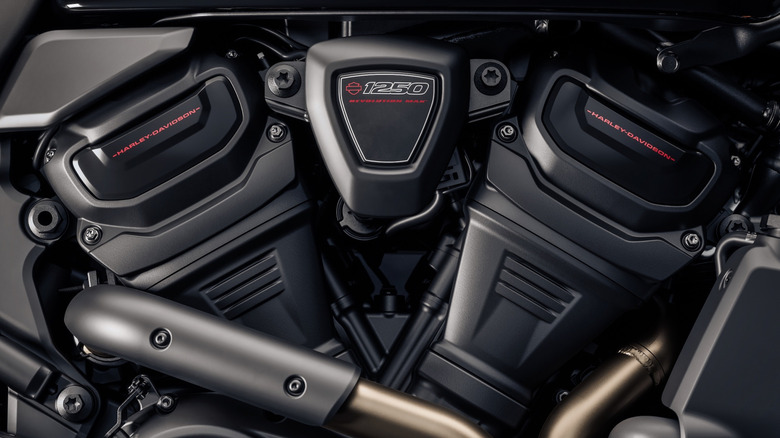
Liquid cooling keeps the engine at a steady operating temperature, allowing for higher compression, closer tolerances, and higher revs. The more engine revolutions per minute, the more opportunities for an engineer to eke out maximum performance at a minimum risk of overheating. Suzuki set the benchmark for liquid cooling in the 1970s, and the advantages of this approach are illustrated in its subsequent successes, not least by the phenomenal longevity of the Gixxer series.
Well-controlled engine temps mean predictable fuel-air ratios, better fuel efficiency, and lower emissions — plus, having cooling jackets around the combustion chambers also helps stifle noise. Whether owning a quiet, smooth-running motorcycle is a pro or a con depends on your point of view, but less engine clatter means the exhaust note is more prominent, and it can be tuned to a satisfying degree without annoying every neighbor within a 10-mile radius.
Air cooling purists argue liquid cooling adds more things to go wrong, with pumps, hoses, coolant, and radiators needing ongoing attention and occasional replacement, with the added risk of leaks and corrosion. Yes, liquid cooling needs more maintenance than air cooling – but engine design has come a long way since your grandpa's 1970s ride. Today's liquid-cooled bikes can go thousands more miles between valve inspections than air-cooled, albeit with frequent checks on the cooling system. So it depends which kind of maintenance you prefer: replacing the coolant and checking hoses every couple of years, or adjusting the valve train and changing oil way more often.
Cooling fins aren't finished yet
When it comes to keeping engine size and weight to a minimum, air cooling takes the checkered flag. Without the added bulk of a cooling system, air-cooled engines are usually lighter and more compact than liquid-cooled. This bare-bones simplicity makes air cooling ideal for scramblers, off-road bikes, and even aircraft. But an airplane has the cooling effect of airflow even while stationary via propellers or turbines — while an air-cooled motorcycle can overheat when stuck in traffic.
Further complications arise with the longitudinal air-cooled V-twins of Harley-Davidson and Ducati motorcycles. Here, the front cylinder gets more airflow than the one behind it, which limits how far engine performance can be pushed before the rear cylinder turns into barbecue grill on your behind. Moto-Guzzi gets around this by mounting its V-twin transversely across the frame, with the cooling fins splayed wide in the wind.
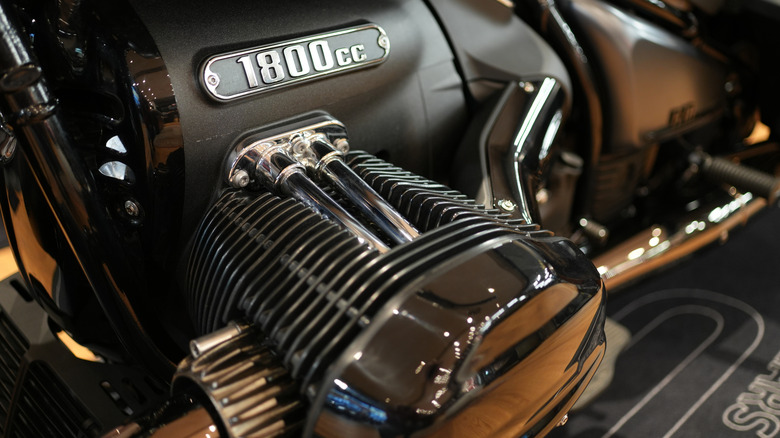
BMW goes even further, achieving even-sided airflow by laying its horizontally-opposed, air-cooled boxer engine flat. This evergreen design was voted by our readers as one of the best engines of all time – not just motorcycle engines. The air-cooled boxer is still going strong today in models like the vintage-inspired BMW R 12 G/S, albeit with an oil cooling ace up its sleeve. Hybrid air/oil-cooled designs can dissipate more heat than air cooling alone, though they fall short of dedicated liquid cooling because oil has less heat capacity than coolant.
The numbers don't lie: liquid-cooled bikes go hard
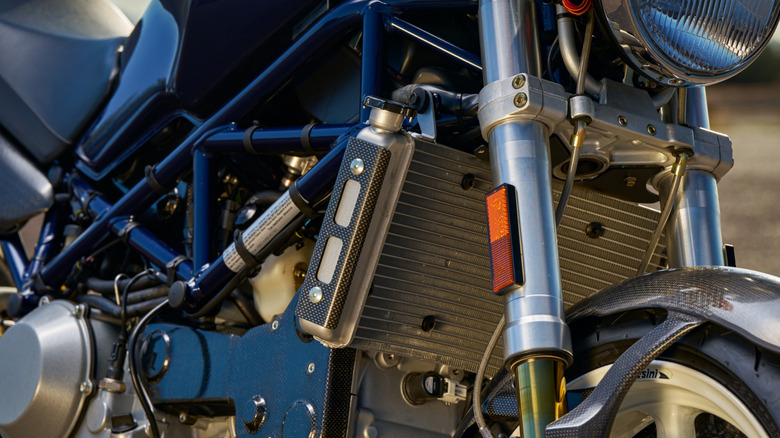
BMW, Moto-Guzzi, Ducati, and even fin fans like Indian and Harley-Davidson are replacing their signature silver ribs with the smooth black jackets of liquid cooling. Why? Because liquid-cooled engines are becoming increasingly more economical to manufacture, offering way more bang for the buck. Take, for example, the Ducati Monster, which scorched its way across our silver screens in "The Matrix Reloaded". Originally air-cooled when it launched in 1993, the Monster has since morphed into a liquid-cooled beast, although air-cooled versions are still available.
In 2012, an air-cooled Monster 1100S at a displacement of 1,078 cc made 95 hp at the crank. Not bad, huh? Well, not so fast. Its liquid-cooled successor, the 1,198 cc Monster 1200 R of 2015, made 150 hp — and the 2026 model year has a similar tale to tell. Today's air-cooled, 803 cc Monster 797 makes 73 hp at the chain, while its 890 cc liquid-cooled stablemate outputs 111 hp.That's a gain of over 50% in power from little more than a 10% increase in engine size. It's no contest; liquid-cooled Ducati Monster engines rev higher while producing more horsepower and more torque than their air-cooled counterparts.
That's not to say you can't get bags of torque from an air-cooled engine. Of course you can, as any rusted-on Harley-Davidson diehard will truthfully attest. It's not just American V-twins, either. The 1,802 cc BMW R 18 boxer engine has torque for days. If you aren't chasing high-revving power, an air-cooled motorcycle may be all you need.
Yes, you can still buy an air-cooled motorcycle today
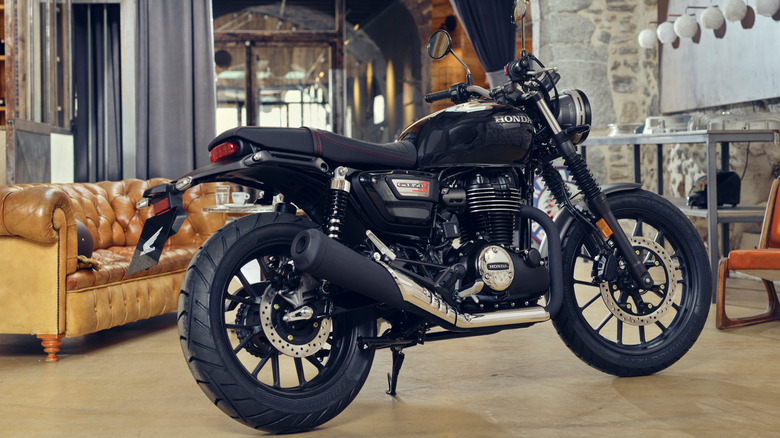
While air-cooled motorcycles have not yet been completely relegated to anachronistic, steampunk time machines, seeing their vintage innards repurposed as espresso machines does point the finger in that direction. Yet despite nail after nail being driven into their air-cooled coffins, fresh takes on these cool classics are still being manufactured today. Along with the Monster 797, Ducati has a tasty little 803 cc Scrambler, while BMW offers air-cooled bikes in its R 12 and R 18 families, including the R 12 nineT and the R 12 G/S Enduro. Moto-Guzzi also offers an air-cooled Enduro in the contemporary-styled V85 TT.
But the most current air-cooled creations are aimed at the retro market. Yamaha didn't have to try too hard with its TW200, given this go-anywhere lightweight has been in production virtually unchanged since 1987, while Honda hits a mark squarely between this Tdub and the heavy-hitting Beemers and Guzzis with its XR650L. Honda also recently released a GB350 Special Edition, seemingly in an effort to make something even more vintage than vintage.
In a surprising move, Royal Enfield has gone to liquid cooling for its 450 cc Himalayan model, but everything else from this classic manufacturer is still air-cooled, including its gorgeous 650 cc Continental GT. Indian and Harley-Davidson have an array of both air- and liquid-cooled motorcycles, with the latter even having a bet each way with its "Twin-Cooled" Milwaukee-Eight engines in some touring models. While trying to hide the radiators in the fairings, these twin-cooled power plants use liquid cooling for the cylinder heads while keeping the block air-cooled and finned.