

You Probably Didn't Realize These Cars Are All Made In Mexico
Think you know cars? Like, if you buy a BMW or Audi, it will surely come from Germany, right? How about Ford? Of course, its cars have American blood in their veins. Oh, and a Toyota car is surely made in Japan or the U.S. But cars that you often associate with German, American, and Japanese engineering are often born south of the Rio Grande.
Even with the ever-looming U.S. tariffs, the Mexican auto industry is booming lately, setting new records in auto production. And we are not just talking about cheap economy cars. SUVs. EVs. High-performance vehicles. You name it, and such a model is made in Mexico. Yup, you might even be driving a Mexican car without knowing it. Heck, you can even go check right now; if your car's VIN starts with a 3, then it's 100% manufactured in Mexico.
This, of course, isn't reason to think your car is somehow inferior. Cars made in Mexico should be no different in terms of quality and reliability. And if they are, it's not because of the country but because automakers didn't implement their production practices well. So, with that out of the way, here are some Mexican-made cars that might surprise you!
2026 BMW M2
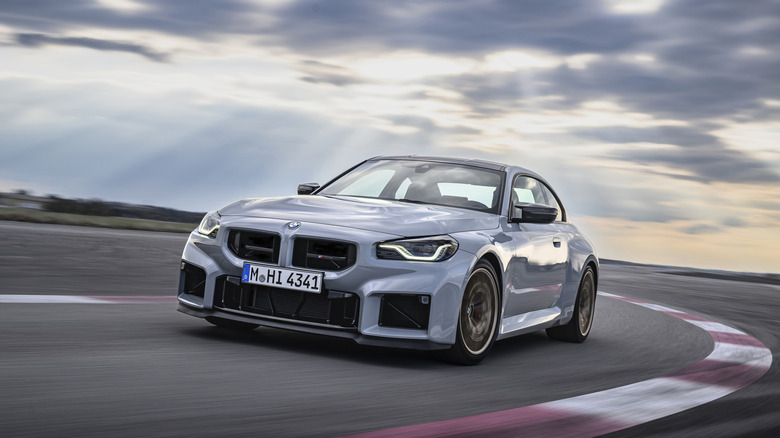
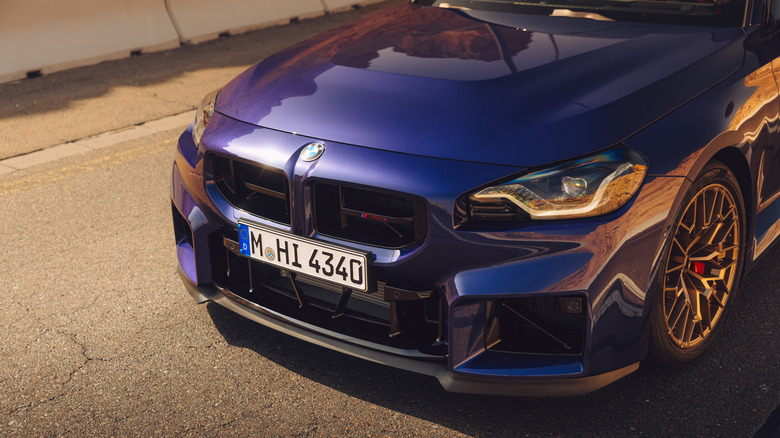
Surprised already? BMW's baby M car is manufactured in Mexico at the Plant San Luis Potosí. This includes the 2026 BMW M2 CS, which has more power, more wing, and less weight. In fact, an M2 CS was the 500,000th BMW built in Mexico. With a 523-hp tune of the 3.0-liter S58 twin-turbo engine, the M2 CS has enough grunt for a brisk 0-60 time of 3.7 seconds. Top speed: 188 mph (302 km/h) with the M Driver's Package.
Baby M car? More like Speedy Gonzalez, if you ask us. It should also be better to drive, thanks to an overall weight reduction of 97 pounds (44 kg). To achieve this, BMW's M Division utilized carbon fiber for the roof, trunk lid, rear diffuser, mirror caps, and seats. The suspension has also been lowered by 0.2 inches using unique springs and dampers. For high-speed stability, BMW also equipped the M2 CS with a cool ducktail spoiler in the back.
Don't mistake the M2 CS for a spartan sports car, though. Yes, it's "Made in Mexico," but it comes with a high-quality cabin equipped as standard with a Harman Kardon surround-sound system, head-up display, and two massive screens (12.3 by 14.9 inches) stacked next to each other.
Then again, the M2 CS starts at an eye-watering $99,775. This makes the regular M2 a far better deal, which starts at $69,375. Yes, it's heavier and makes 473 hp, but it still manages to distill the M4's sports car chops down to an affordable package. You can even have it with a six-speed manual, whereas the M2 CS only comes with an eight-speed automatic.
2026 Audi Q5 & SQ5
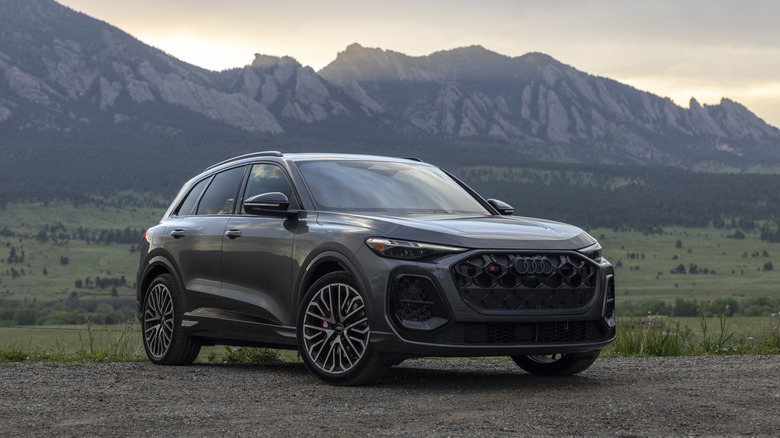
In September 2016, Audi opened its Mexico plant, where it exclusively builds the Q5 and SQ5, including the Sportback variants. The premium SUV is Audi's best-selling vehicle in the U.S., which makes the San José Chiapa plant an important strategic location for the automaker.
The Q5 and SQ5, which were redesigned in 2025, are actually pretty good. They both look classy, provide ample room for passengers and cargo, and have more than enough performance to keep up with traffic. The base Q5 is equipped with a 2.0-liter turbo-four, good for 268 hp. It comes standard with a dual-clutch automatic and Quattro AWD, and sprints to 60 in 5.8 seconds. Top speed: 130 mph. Combined mpg: 25.
If the thought of having just four cylinders in your premium SUV makes you weep, the SQ5 comes with a 3.0-liter turbocharged V6, good for 362 hp. The performance model sprints to 60 in 4.6 seconds and has a top speed of 155 mph. It also rides on a Sport adaptive air suspension for sharper handling and comes standard with a seven-speed dual-clutch automatic and Quattro AWD. Combined mpg: 22.
Still, we found that the quick-shifting dual-clutch auto makes more sense in the SQ5. Otherwise, its clunky operation takes away from the SUV's premium credentials, particularly at slower speeds. Also, the Q5 is firm over broken pavement, even with the optional air suspension. Again, the firmness helps in the SQ5 but feels unnecessary on the base model.
2026 GMC Terrain
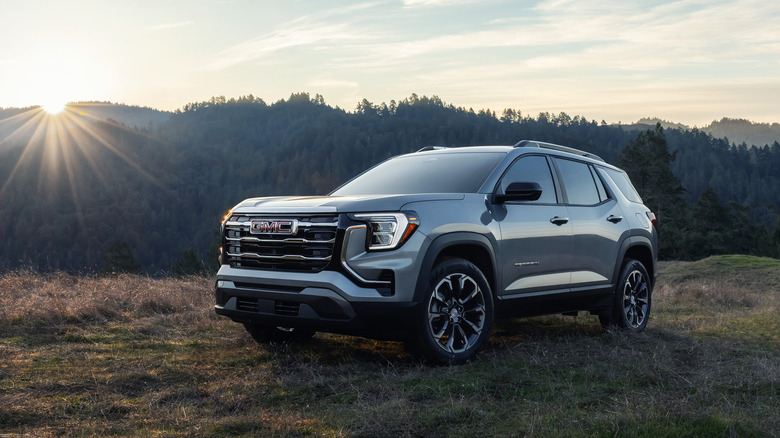
GMC has been synonymous with American manufacturing for over a century now, and indeed, most of its models are manufactured in the U.S. However, the company's compact SUV — the Terrain — is exclusively built in GM's San Luis Potosí plant in Mexico. The Chevrolet Equinox is also built on the same production line, which should surprise no one because they share the same mechanical bits.
The GMC Terrain is the more upscale variant of the two, which, for some people, might make the "Made in Mexico" pill harder to swallow. Either way, the GMC Terrain boasts a spacious cabin with comfortable seating for adults in both rows. The rear bench also slides to make more space for cargo, and the cabin looks nice overall. It even comes with a standard 15.0-inch portrait-oriented infotainment touchscreen with Google's OS, which still supports Apple CarPlay and Android Auto.
GMC offers one engine option on the Terrain — a 1.5-liter turbo-four. The small powerplant produces just 175 hp and feels super slow, with a 0 to 60 time in the 9-second range. The Terrain comes standard with front-wheel drive and a CVT, but opting for all-wheel drive brings an eight-speed automatic to the mix. The FWD CVT model is more economical with a 27-mpg combined rating, while the AWD Terrain is good for 25-mpg combined.
The GMC Terrain is available in four trims — FWD Elevation, AWD Elevation, AWD AT4, and AWD Denali. Our preferred trim would be the Elevation, which starts at $31,895, with AWD adding $2,000. The Elevation is very well equipped and makes the jump to the AT4 ($41,095) and Denali ($43,595) unnecessary.
2026 Volkswagen Tiguan
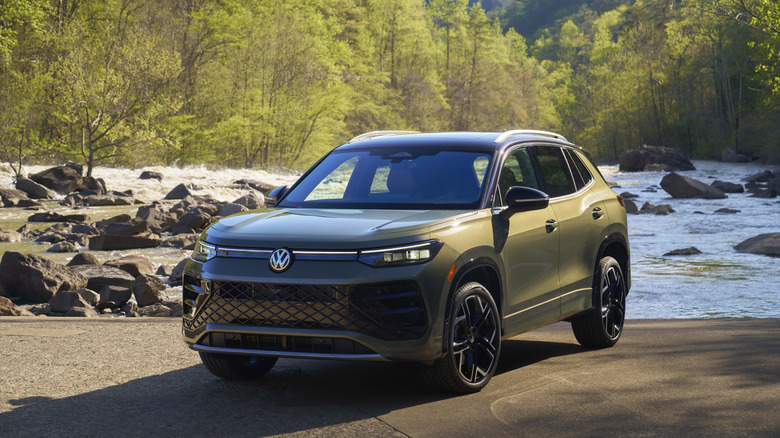
Volkswagen of America is having a tough 2025 in terms of sales, and that's particularly true for its compact SUV. The 2025 Volkswagen Tiguan might be the best VW in a long time, but sales are stagnating; in Q2 of 2025, there was a 45.4% decline compared to the same period last year.
Could it be that the Tiguan is made in VW's Puebla plant in Mexico? Not necessarily. The Tiguan is all new for 2025, so it could be a case of clearing older stock. Besides, the Tiguan has been manufactured in Mexico since 2017. Sales should stabilize soon. The 2026 Tiguan is equipped with a 268-hp 2.0-liter turbocharged four-cylinder engine. The more potent powertrain propels the SUV to 60 in less than 7 seconds and comes standard with AWD.
Even with the regular, 201-hp tune of the engine, we found a lot to like on the Tiguan. It's surprisingly good to drive while also being very comfortable over bumps. The engine is also refined for a four-cylinder, and the same can be said about the eight-speed automatic transmission.
Step inside and the material quality will show you that "Made in Mexico" and low quality don't belong in the same sentence. Heck, it feels almost like a Q5, despite starting at just $32,280. The Tiguan is very spacious, too, with ample passenger space on both rows. If VW offered a more efficient hybrid down the line, it would have a winner in its hands, tough at 29-mpg combined, the base engine with FWD isn't too thirsty.
2026 Ford Bronco Sport
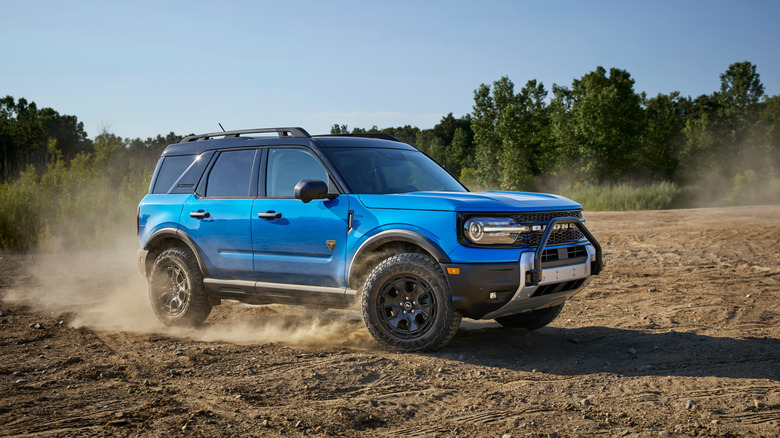
The full-fat, body-on-frame Bronco is the off-roader of our dreams. It's mega capable off the beaten path, drives well on paved roads, looks cool, and is manufactured at Ford's Michigan Truck Assembly Plant. The Bronco Sport, meanwhile, is a normal compact SUV with cool, rugged looks. It's based on the same C2 unibody platform as the Ford Escape and is exclusively manufactured at the Hermosillo Stamping and Assembly factory in Sonora, Mexico.
Does all this matter? Well, the unibody chassis surely makes the Bronco Sport a less capable off-roader. It's still better than most of its compact SUV rivals, particularly if you opt for the Sasquatch package, but you won't be going on Moab adventures anytime soon. At the same time, with 27-mpg combined from its base 1.5-liter, 180-hp turbocharged three-cylinder engine with the standard AWD, the Bronco Sport is a more efficient take on the off-road SUV. Want more oomph? The Bronco Sport is also available with a 2.0-liter turbo-four with 250 hp, which sprints to 60 in the 6-second range. It's also rated at a solid 23-mpg combined and comes with standard AWD.
Inside, the Bronco Sport feels perhaps even more rugged, with big switchgear and sturdy materials. Don't expect luxury, though — the cabin is spartan in comparison to other compact SUV rivals. At least the Bronco Sport has some nice additions, like an opening rear glass, which makes the spacious cargo area even more practical.
2026 BMW 3 Series
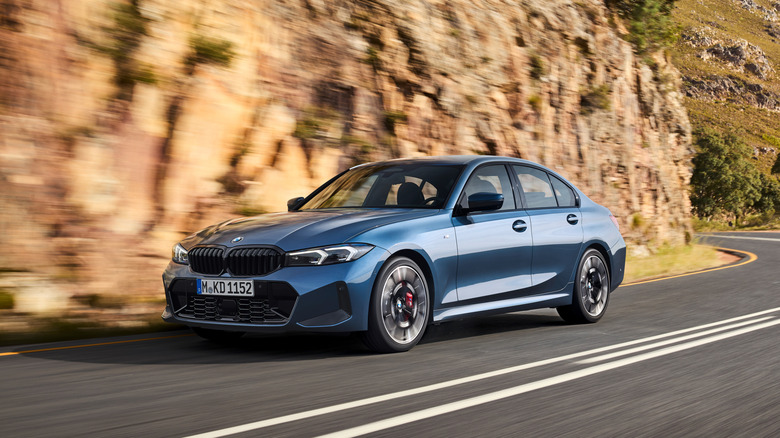
That same BMW Mexico plant that produces the M2 also spews out the 3 Series. Yup, BMW's most popular sedan isn't made in Germany, but you wouldn't be able to tell by just peaking inside. Premium materials, good fit-and-finish, and massive 12.3-by-14.9-inch curved displays give the latest 3 Series a clear edge over its rivals. The cabin is reasonably spacious, too, with enough space for adult passengers in both rows.
Performance is also at the level you'd expect from a BMW. The base BMW 330i is equipped with a 2.0-liter turbo-four with a 48-volt mild-hybrid system and produces 255 hp. It comes exclusively with an eight-speed automatic, with an xDrive AWD system offered as an option. Although it has only four cylinders at its disposal, the 330i sprints to 60 in just 5.6 seconds, with the xDrive model shaving off an additional 0.2 seconds.
Still, the M340i is significantly quicker. It packs a 3.0-liter turbocharged inline-6 with a 48-volt mild-hybrid system, which produces 386 hp and propels the Bavarian sedan to 60 in 4.4 seconds (RWD) and 4.1 seconds (AWD). Like the smaller engine, the M340i comes exclusively with an eight-speed automatic.
Of course, buyers who want the ultimate 3 Series will opt for the M3 Competition. The high-performance model produces 503 hp with RWD and 523 hp with AWD, with the 0-60 times being 3.8 seconds and 3.4 seconds, respectively. It's also manufactured in BMW's plant in Munich, and the price reflects that — the M3 competition costs almost $18K more than the M340i.
2026 Ford Mustang Mach-E
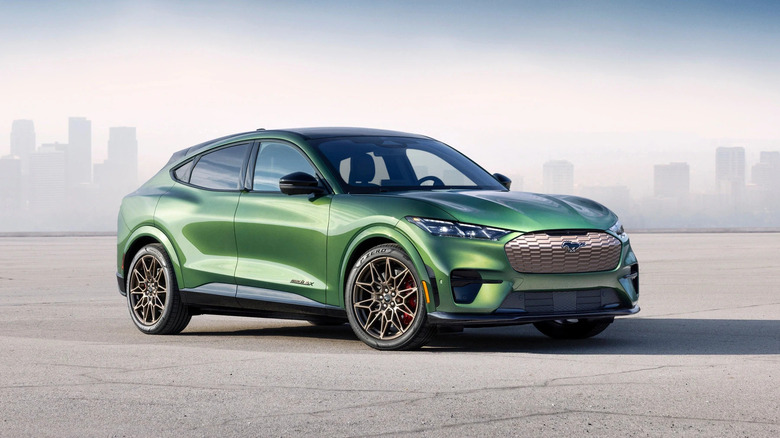
Remember when EVs were the next big thing and Ford launched the Mustang Mach-E to great fanfare in 2020? Well, in November 2025, the regular, gas-powered Mustang outsold the eponymous crossover; heck, it outsold all Ford EVs, combined. But don't let that fool you into thinking EVs are rushing toward the exit door — EV sales are still growing, but at a much slower rate. Oh, and year-to-year, Ford EVs are beating the pony car two to one. The looming tariff on our southern neighbor could change that, though. The Mustang Mach-E is manufactured at Ford's Cuautitlán Assembly plant in Mexico.
But regardless of sales, the Mustang Mach-E is a good EV. Available in rear-wheel drive or all-wheel drive form, Ford's EV provides excellent performance and a relatively long range. The base Mach-E has a 264-hp motor on the rear axle and a 70-kWh battery, enough for a solid 260-mile range. Opting for the extended range, 91-kWh battery bumps the range to 320 miles, turning the Mach-E into an excellent long-distance cruiser.
The real "Mustang magic" is available only when you opt for the 480-hp Mach-E GT with AWD. The motors also produce truck-like 600 lb-ft of torque, or up to 700 lb-ft of torque in the GT Performance and Rally variants. The latter sprints to 60 in just 3.4 seconds and doesn't shy away from attacking gravel and dirt roads at speed thanks to the special MagneRide dampers with a 1-inch lift and all-terrain tires.
2026 Chevrolet Blazer EV
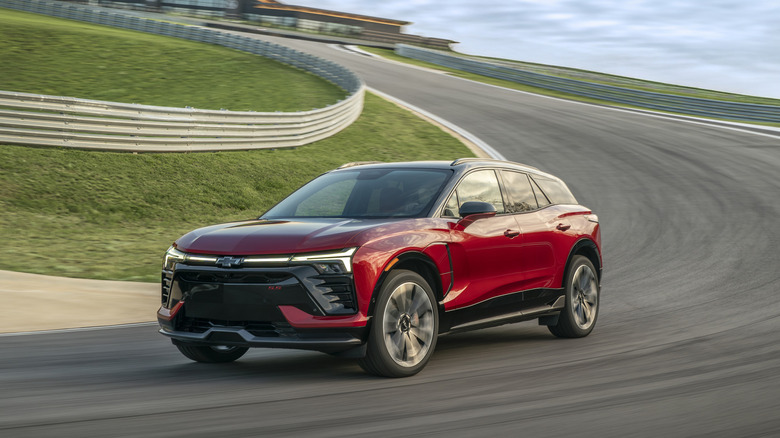
One of Mustang Mach-E's rivals, the Chevrolet Blazer EV, is also manufactured in Mexico at GM's plant in Ramos Arizpe. Looking at the price list, the Blazer EV is more expensive than its Ford rival but also has a significantly larger footprint. Think of it as a midsize electric SUV, not a compact one. As such, the Blazer EV has a truly expansive cabin with excellent passenger space in both rows. Curiously, though, the cargo volume is smaller with all seats in place, and there is no frunk on the Blazer EV.
As for powertrain options, the Blazer EV is available in front-wheel drive or all-wheel drive form. The entry-level FWD model has a 220-hp electric motor and an 85-kWh battery pack as standard. As a result, it can travel an outstanding 312 miles on a charge, or 279 miles if you opt for the 300-hp AWD model. For those who want supercar speed, Chevy offers the Blazer EV SS. The high-performance model packs a 615-hp dual-motor powertrain and sprints to 60 in just 3.4 seconds. It also comes with a sizable 102-kWh battery pack, which enables an excellent 302-mile range.
The Blazer EV SS is a great example of how to do performance EVs right. Chevy nailed the gas pedal control and gave the SUV good cornering abilities without damaging its cruising credentials. Notably, the cabin stays quiet at speed, and the SS even comes standard with Super Cruise, GM's hands-free driving feature that works on select freeways.
2026 Honda HR-V
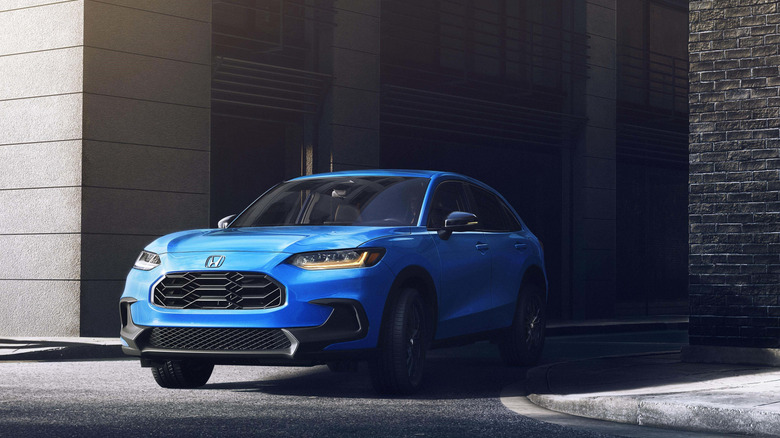
Honda has split the current-gen HR-V into two models. North America gets the gas-only variant manufactured at Honda's plant in Celaya, Guanajuato, Mexico. Meanwhile, the rest of the world gets a hybrid-only variant with a sleeker design, but also the ZR-V, which is the same model as the American HR-V, but with a hybrid drivetrain.
So, in a sense, North America gets the worst variant. The latest Honda HR-V looks like it's trying with its sporty design, but it comes equipped with Honda's dated 2.0-liter four-cylinder engine. The naturally aspirated unit produces just 158 hp and is paired exclusively with a CVT. It's rated at 28-mpg combined (front-wheel drive), which is okay for a vehicle of this size. Honda didn't even care to put in the excellent 1.5-liter turbocharged engine from the Civic, which would've made the HR-V a significantly more interesting car to drive. Fortunately, Honda offers an AWD option for customers who encounter harsh wintry conditions.
The cabin also looks like the one in the Civic, with a smart-looking dashboard, good materials, and excellent ergonomics. All HR-V models are equipped with a 9.0-inch infotainment system with wireless Apple CarPlay and Android Auto. A wireless phone charger, automatic climate control, and the Honda Sensing Suite are also included as standard. The cabin is also spacious given the HR-V's dimensions, and as always, Honda's small crossover is good to drive.
2026 Mazda 3
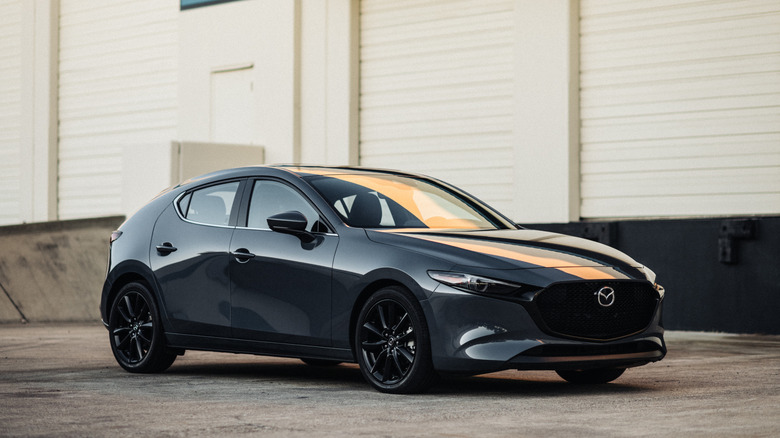
The Mazda 3 is a unique offering in the compact car range. It looks super sharp, particularly the hatchback variant, which might be one of the most handsome cars on sale, period. It also has a premium interior that looks out of place in an economy car — particularly one manufactured in Mexico — in the best way possible. The Mazda 3 is also offered with two relatively powerful engines; the base 2.5-liter naturally aspirated variant produces 185 hp, while the turbocharged option bumps the output to an excellent 250 hp.
Heck, there is even an AWD option on the base engine, while the Turbo gets it as standard. So, is it a GR Corolla competitor? The Mazda 3 Turbo is nice, but sorry — it's no hot hatch. It's more of a fast, good-looking, premium hatchback, rather than a performance one. The Mazda 3 Turbo drives well but isn't as agile as its hot-hatch rivals. It's also only available with a six-speed auto; a six-speed manual is optional only on the base front-wheel-drive model.
What the Mazda 3 Turbo does great, though, is generate Audi A3 vibes at a discount. It feels robust on the road, like a premium German car would, with excellent refinement and good stability in the corners. A stiffer suspension would've added sharpness to the handling but also taken away from the Mazda 3's smooth ride. That said, we would've liked more space for passengers and cargo — the Mazda 3 isn't as practical as you'd expect from a hatchback.
2026 Toyota Tacoma
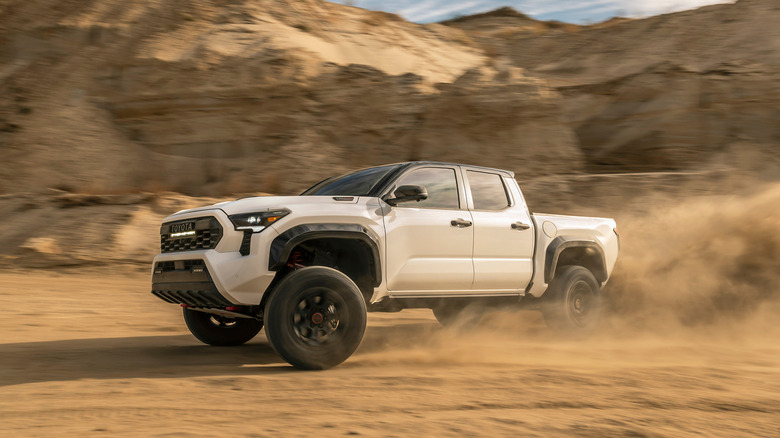
The Tacoma has long been a favorite among buyers of midsize trucks in the U.S. The combination of excellent off-road capability and Toyota's traditionally reliable V6 engines gave it an edge over the competition. You could only imagine, then, how Taco purists welcomed the latest generation, which lost the popular V6 option. In its place is a more complex turbocharged four-cylinder engine in regular or hybrid form.
Call it sacrilege all you want, but the Toyota Tacoma Hybrid blows away every truck in its segment, including the old V6. The electrified 2.4-liter turbo-four produces 326 hp and a whopping 465 lb-ft of torque, an increase of 48 hp and 200 lb-ft over its predecessor's V6. Oh, and this is not your usual, CVT-equipped Toyota hybrid. Instead, it features a 48-hp motor sandwiched between the engine and a regular eight-speed auto, which is then connected to a part-time 4WD system. Thanks to this heavy-duty design, the Tacoma hybrid is standard on the most rugged TRD Pro and Trailhunter trims, which turn the Tacoma into a highly capable off-road rig.
Want a simpler truck? The Mexico-built Tacoma is also available with a non-electrified 2.4-liter turbo, available in 228-hp and 278-hp tunes with an eight-speed automatic. Purists might also want to check the six-speed-manual Tacoma, which has the same engine and packs 270 hp. All these engines can tow between 6,400 and 6,500 pounds, while the hybrid variant is rated at up to 6,000 pounds. Impressed already? Wait until you hear that the 2.4-liter turbo might also be a very reliable engine, on par with the V6 predecessor.