

Full Frame Vs. Unibody: Which Truck Is Right For Your Needs?
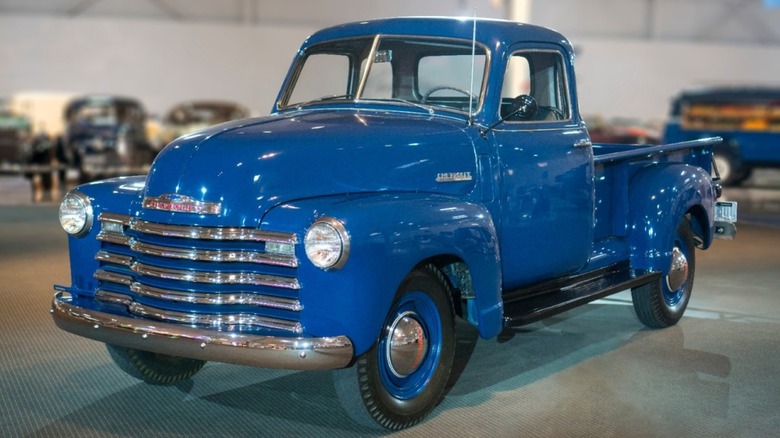
Consumer Reports has said some of the most satisfying pickup trucks to own have unibody construction, sometimes referred to as unitized or unit body. While unibody pickups may be satisfying, full frame, also known as body-on-frame, pickup trucks have some advantages (and disadvantages) of their own.
Except a few 1960s-era Fords, modern pickup trucks were constructed using a full frame underneath the cab and truck bed until 2005. That's when Honda introduced the 2006 Ridgeline. It reintroduced unibody construction for pickups, although the technology had been around since the early days of automotive history. Unibody construction didn't become popular until the latter part of the 20th century as materials and processes improved to make it a viable production technique. More recently, Ford and Hyundai introduced unibody pickups (Maverick and Santa Cruz respectively).
People may think of heavy-duty pickups, like the Ford Super Duty or HD pickups from GM and Ram, whey they consider full-frame trucks. While those pickups are examples of body-on-frame construction, some less formidable examples exist as well. Full frame truck models include the Ford Ranger, Chevrolet Colorado, Toyota Tacoma, Nissan Frontier, Jeep Gladiator, and GMC Canyon pickups, and Rivian gave us the electrified R1T with its unique body-on-frame architecture.
Deciding whether a full frame or unibody pickup is right for your needs involves examining the strengths and weaknesses of both types of trucks. From there, it's a matter of which strengths are most important to you, and which weaknesses you can live with.
Unibody trucks offer a more car-like driving experience
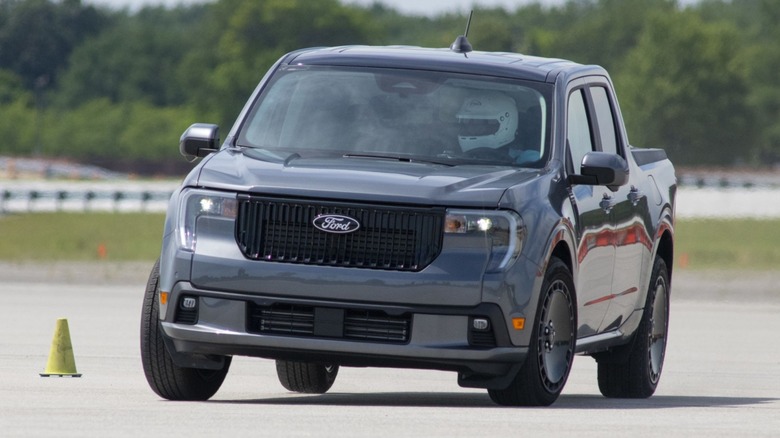
Over the last several decades, unibody cars have largely replaced body-on-frame ones on America's roadways. In fact, if you've driven a car produced in this century — other than a large SUV, pickup truck, or something like the Ford Crown Victoria — it has more than likely featured unibody construction, or it was a classic car of some sort. That familiarity is one of the strongest factors influencing peoples' opinions in favor of unibody trucks.
Unibody pickup trucks, like other unibody automobiles, derive strength from connecting the body panels that make up the roof, fenders, quarter panels, and floor. The panels are held together with a combination of industrial-strength adhesives and welded joints to deliver the smooth, quiet ride we've come to expect from today's vehicles.
Advanced construction techniques associated with unibody trucks may be safer than traditional body-on-frame models. A study published in the National Library of Medicine indicates that crashes involving compact unibody SUVs are less likely to result in fatalities than those involving compact full frame SUVs. A correlation between SUVs and pickups could occur as they often share platforms and construction techniques.
Jalopnik's Andy Kalmowitz says the Ford Maverick is almost the perfect truck, other than one particularly agonizing detail with its shifter. While the unibody Ford Maverick might be almost perfect for Andy and people that want a car-like vehicle to do lightweight truck tasks, it won't be the right truck for anyone that needs to do heavy-duty work.
Body-on-frame trucks are better for heavy payloads

Trucks with the largest beds offer the most cargo space and are only available, at least for now, with body-on-frame construction. In addition to the sheer volume of cargo space provided by long-bed pickups, the full frame design is also stronger than unibody construction for carrying heavy cargo and towing heavily laden trailers.
To make it fair, we'll compare payload specs from the midsize pickup trucks, like the Honda Ridgeline unibody, and full frame models including Nissan Frontier, Toyota Tacoma, Ford Ranger, and Chevy Colorado. Honda lists the 2025 Ridgeline Sport's "Total Payload Capacity" at 1,583 pounds.
That's comparable to the 2025 Nissan Frontier with up to 1,590 pounds and within 100 pounds of the 2026 Toyota Tacoma with 1,680 pounds of maximum payload. However, it falls behind the 2025 Ford Ranger (with 1,788 pounds of payload capacity), 2025 Chevy Colorado (with its 2,046-pound maximum payload rating), and the Gen 2 Rivian R1T, situated in size between mid and full (according to MotorTrend's analysis of the Gen 1 model with 1,764 pounds of payload capacity) equipped with the "Large" battery pack has a payload capacity of up to 2,172 pounds. The compact Ford Maverick unibody truck has an available maximum payload capacity of 1,500 pounds.
Of course, they all pale in comparison to the payload capacity of heavy-duty trucks. The full frame 2026 Ford F-350 Super Duty, for example, has a maximum available payload capacity of 8,000 pounds.
Full frame pickups offer the highest tow ratings
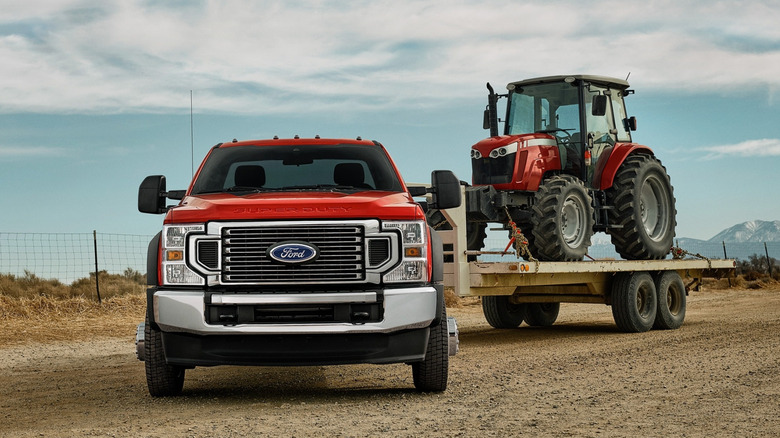
Another significant gap between work-related characteristics of unibody and full frame pickups is their maximum tow ratings. Of course, there's no unibody truck that can touch the best dually trucks when it comes to heavy-duty jobs. The Ford F-350, if we may use it as our example again, has a maximum available tow rating of 40,000 pounds.
For comparison, the base Hyundai Santa Cruz is rated to tow up to 3,500 pounds, although that figure increases to 5,000 pounds when equipped with the available turbocharged engine. The Ford Maverick can tow up to 4,000 pounds, and the Honda Ridgeline has a maximum towing capacity of 5,000 pounds.
Midsize full frame trucks have higher maximum towing capacities than their unibody competitors. The 2025 Toyota Tacoma can tow up to 6,500 pounds, the Nissan Frontier up to 7,150 pounds, the Ford Ranger up to 7,500 pounds, and the Chevy Colorado has a maximum available tow rating of 7,700 pounds.
Maximum tow ratings for full frame or unibody trucks are only achievable with proper equipment. Some, like the Santa Cruz, require specific engine and drivetrain combinations, while others may need added tow package options or additional equipment.
Which type of truck is cheaper to own?
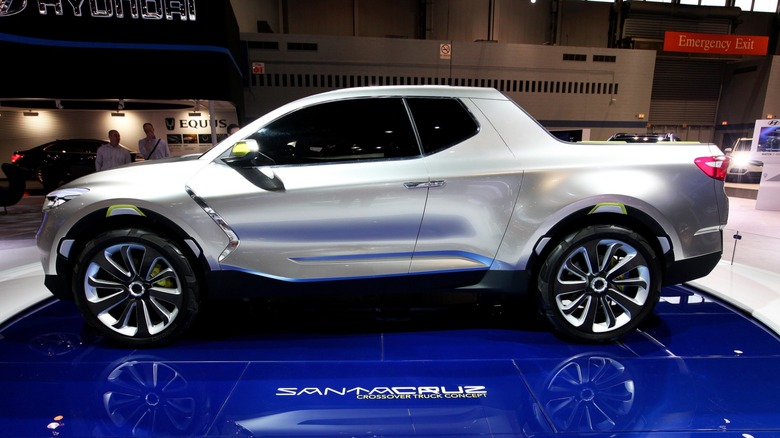
Unibody trucks, like the Ford Maverick and Hyundai Santa Cruz topped our list of cheapest new pickup trucks you could buy in 2025. Both of those came in under $31,000 while the full frame Toyota Tacoma and other midsize trucks exceeded $33,000 for the initial cost of purchase. The suggested price for full-size heavy-duty pickups can easily double, or even triple, these amounts.
Purchase price isn't the only factor to consider for cost of ownership. In a comparison of 2023 model year pickup trucks, Kelley Blue Book reports the compact Ford Maverick has a projected five-year ownership cost of $31,416. Compare that to the midsize 2023 Ford Ranger at $40,626 and the full-size Toyota Tundra at $48,254. The 2025 Honda Ridgeline has an even higher ownership cost, projected to be $52,219 over a five-year span, according to Kelley Blue Book. (All of these figures are based on a search done in Oklahoma; your figures may vary.) The Ridgeline's terrible five-year depreciation is one factor that affects its high cost of ownership.
Factors that contribute to cost of ownership include the purchase price, maintenance and fuel costs, and depreciation. According to estimates from the Environmental Protection Agency, the compact unibody Ford Maverick returns the best combined mpg ratings for new trucks with 38 mpg. In the midsize segment, the Toyota Tacoma and Ford Ranger have the best combined fuel economy of the class with 23 mpg, while the EPA ranks the Honda Ridgeline near the bottom with a 21 mpg combined rating.
The best truck for the job
Most people who need a truck use it to haul items that won't fit, or shouldn't be, inside a car or SUV. Others simply like the aesthetic of driving a pickup truck. Heavy payload and towing require the use of full frame pickup trucks rated for the intended job. However, they're expensive to own, use more fuel, and less comfortable to drive.
If your truck needs are limited to smaller payloads and towing lightweight trailers, a compact unibody truck is less expensive, safer, and easier to park in the typical parking space. Midsize truck needs are best suited by the full frame models. They offer more payload and towing capacity, get better fuel economy, and have a lower cost of ownership than the Honda Ridgeline, the only midsize unibody truck so far. For some, the Ridgeline's shortcomings won't outweigh its comfortable car-like characteristics and safety.
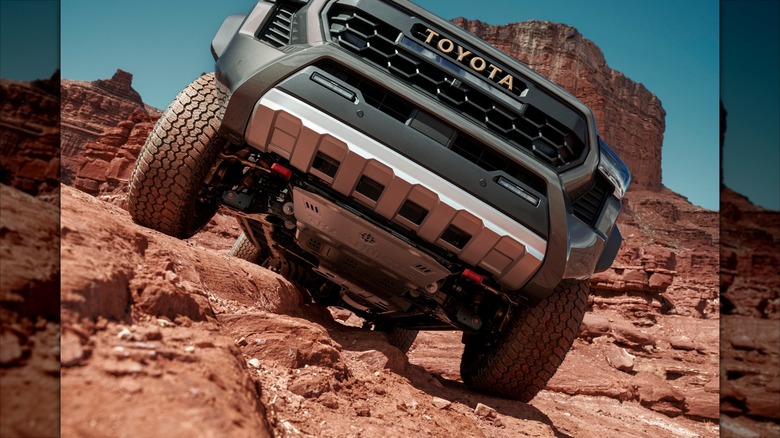
Lastly, those adventurous drivers looking for the best truck to take off road will want to look toward the full frame truck segment. Unibody trucks (and the Rivian R1T), with their truck beds connected to the cab, are less flexible than body-on-frame models. Flex is important when navigating off-road obstacles to keep all four tires planted on terra firma as often as possible. Plus, twisting a unibody can cause damage quicker than the same stress applied to a full frame truck.