

Why We As Enthusiasts Accept The Risk Of Driving Old, Unsafe Cars
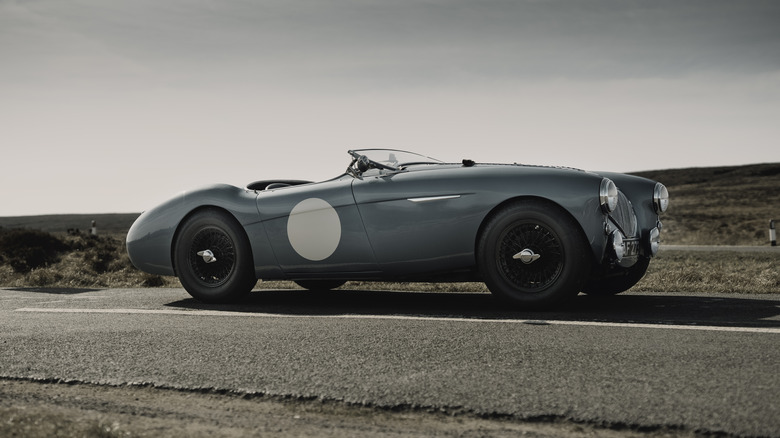
They just don't make them like they used to. That old saw is true of many things, but perhaps it applies most to cars. Modern cars are empirically better in practically every measure of statistics. Not only are modern SUVs quicker, faster, and more powerful than pretty much any sports car from decades gone by, but they're safer, quieter, and more comfortable. Old cars can't touch a modern car when it comes to convenience features, incredible audio, or efficiency. It's hard to find a metric by which anyone would want an old car over something new.
Old cars don't have the safety systems, crash structures, or even airbags that are mandatory these days. Driving an old car in today's traffic requires a leap of faith and a stroke of luck, because it's simply more dangerous than driving a newfangled computer-controlled crash contraption. Self-induced crashes are more likely in an old car, and you're much less likely to survive that crash in an old car. A Department of Transportation study found that crashes in vehicles over 20 years old were about 80% more likely to be fatal than similar crashes in new vehicles.
Why do we drive them if they're more dangerous? There are so many reasons that humans do anything with old cars. We're going to examine two of the primary reasons why we keep old cars around. There are more secondary and tertiary reasons like nostalgia, design, finances, tradition, heritage, and craftsmanship, but I think chances are you drive a vintage automobile simply because you're seeking a thrill or you want to be part of an in-crowd group. I posit almost all of vintage car culture boils down to these two motivating factors.
Sensation seeking
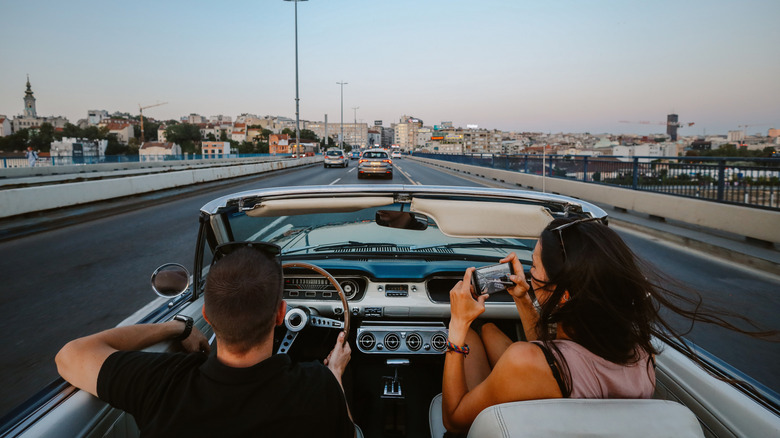
Vintage cars have a certain feel that can't be matched. When you attune to an old car, you get a level of connectedness and an airy laissaiz-faire flow that hasn't been available with new cars for at least thirty years. Many enthusiasts enjoy the process of building rapport with their vintage automobile. Compared to a modern car, even a modern sports car, something with an anachronistic touch just adds a level of artful emotionality that practically nothing built in the digital era can match.
There is certainly a level of thrill seeker to the vintage car enthusiast, not driven by the danger but "sensation-seeking" behavior. The danger is part of the fun, but not the driving force. Psychologist Marvin Zuckerman summarized sensation seeking as, "a personality trait defined by the search for experiences and feelings that are varied, novel, complex, and intense, and by the readiness to take physical, social, legal, and financial risks for the sake of such experiences." Driving an old car is certainly novel and intense, and typically involves physical (and sometimes financial) risk.
Nobody gets out of life alive, and there's a level of risk inherent with a life well-lived, so we take the danger into account every time we drive, and we do it anyway. There are so many things beyond your control that contribute to the danger of daily life. There's a non-zero chance you could meet your proverbial maker catching the plague or take a digger tripping on the stairs, but it's irrational to let that fear prevent you from ever going outside or participating in society. Throw caution to the wind and take the old car to work today.
Camaraderie
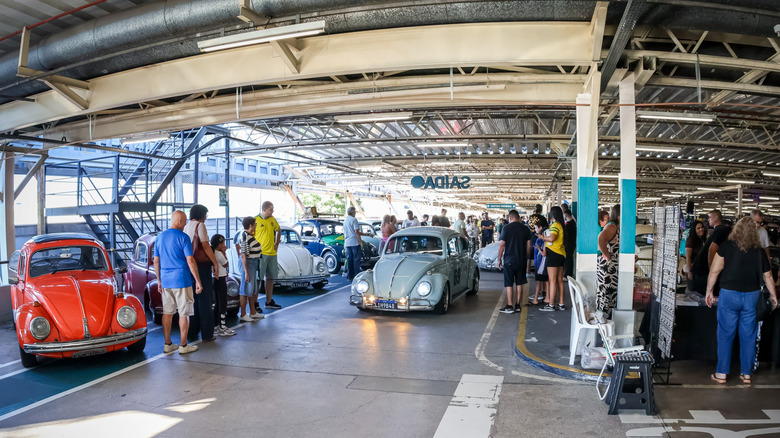
Many old-car enthusiasts view themselves as uniquely non-conformist. It's easy to go sign a loan for whatever new car you want to drive, but it takes a cultured individual to learn the ins and outs of an old car, find the right example, fix it, and keep it alive. There's a sense of pride in piloting an old car. While the normie NPCs drive around in new Camrys, we're bopping to the grocery store in Triumph Spitfires or Shelby Mustangs. An often-overlooked facet of vintage ownership, however, is being part of the group.
Joining a car club or ownership group (or the web forums of internet days gone by) is an extension of the self, helping determine your identity. I am happy to admit that I was influenced, at least in part, to buy my 1976 Porsche 912E because I'd participated in 912 Registry events and found the people therein to be as lovely as their cars. I was already leaning toward buying the car when it came up, but was pushed over the edge because the 912 people I met seemed like the group of people with which I wanted to associate. I like old Mustangs because my dad likes old Mustangs.
Beyond a specific make or model group, driving an old car comes with a non-verbal validation from other old car drivers. You're not alone in your passion. You're part of a group of acolytes, and your collective passion is the driving force. Society is a collection of tribes, and human nature is developed around finding your tribes and working together toward common appreciation. You're not alone in the great big world — your car club is there with you.