

Tesla Missed Profit Targets In Q3, But A SpaceX Merger Will Surely Help That
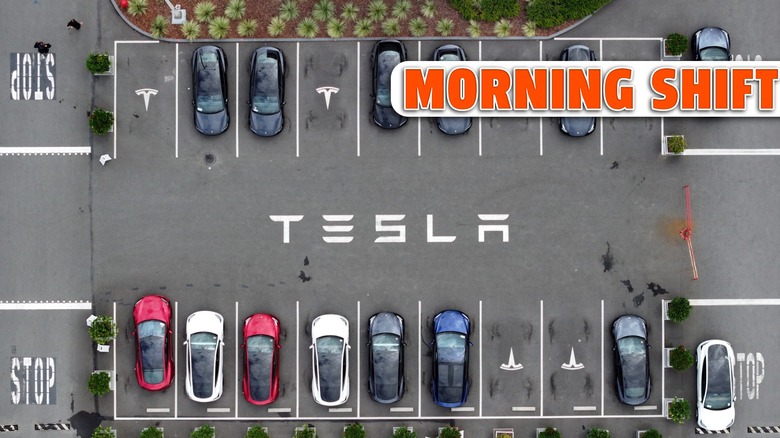
Good morning! It's Friday, October 23, 2026, and this is The Morning Shift, your daily roundup of the top automotive headlines from around the world, in one place. This is where you'll find the most important stories that are shaping the way Americans drive and get around.
In this morning's edition, Tesla's third quarter was one to forget when it comes to profits, Volvo is cutting 2,500 jobs in a cost-saving effort, BYDs are banned from a U.S. air base in Japan, and Lexus is killing a plug-in hybrid.
If you'd like a recap of the latest auto news sent to your inbox each weekday, you can sign up for Jalopnik's free Morning Shift newsletter here.
1st Gear: Tesla's third quarter results were uneven at best
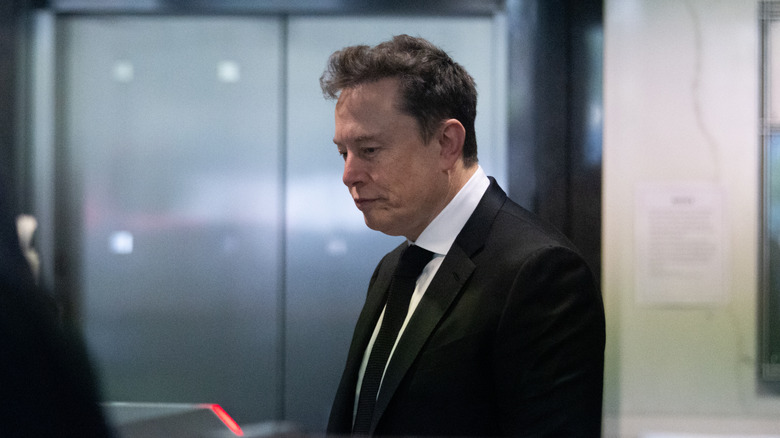
Tesla had a strange third quarter, all things considered. The Austin, Texas-based automaker reported better-than-expected Q3 results, but automotive revenue was markedly down. It caps off a brutal run for Tesla's stock, which is down nearly 15% year-to-date. Clearly, in an effort to pump those numbers up, CEO Elon Musk floated the idea of a merger between Tesla and his other company, SpaceX — calling it a "good idea" during that company's earnings call the day prior. From CNBC:
"I feel like I'm tap dancing through a minefield," Musk said on the call, responding to a question about a potential merger.
Musk addressed the matter in his opening comments on the Tesla call, but didn't provide any additional information.
"I think I said everything that should be said yesterday," he said.
Tesla's revenue was down slightly from a year earlier, when the company generated $28.24 billion. Its core automotive business, though, saw revenue decline 3% year-over-year to $20.56 billion in the quarter. Energy revenue also fell 16% to $2.88 billion. On the flipside, Tesla's services and other revenues saw a 33% gain to $4.61 billion.
Tesla blamed its lackluster automotive revenue and profits on lower average sales prices for its cars during the quarter, and trouble securing battery supplies to make enough vehicles to fulfill a backlog of orders.
Net income attributable to common share holders plummeted 29% to $787 million, or 22 cents a share, from $1.11 billion, or 32 cents a share, a year earlier, Tesla said.
The drop in profitability reflects a surge in spending on Optimus humanoid robots and other artificial intelligence initiatives. Capital expenditures more than doubled from a year earlier to $3.73 billion. Free cash flow plunged by 62% year over year to $1.53 billion, after Tesla turned free cash flow negative in the second quarter.
Tesla said uptake of its FSD (Supervised), a partially automated driving system the company sells for $99 per month in the U.S., grew by 20 percentage points from the second quarter. Active FSD subscriptions increased 67% from a year earlier to 1.74 million.
[...]
Ashok Elluswamy, Tesla's vice president of Autopilot, said on the earnings call that the company plans to give some customer cars access to its forthcoming FSD (Unsupervised) systems around the second quarter of next year.
[...]
Barring regulatory intervention and protectionism, Musk predicted that Tesla "will end up doing a majority of all passenger miles on Earth in any country where it is allowed to operate freely."
Tesla said its auto sales in Canada, Japan, Taiwan and Australia hit new records during the quarter. However, the company has gotten meager growth out of its core market of late as Chinese EV makers such as BYD and Xiaomi gained popularity in Asia and Europe with affordable and innovative EVs. Tesla was also hit last year by the end of a federal EV tax credit.
Earlier this month, Tesla said vehicle sales in Q3 hit 486,532 units, which is about 2% below where they were last year. And the new (new) Tesla Roadster may not deliver the uplift the automaker hopes for, at least if Jalopnik readers' takes are anything to go by.
Things are weird over in Austin, and not in the sort of quirky, fun, endearing way the locals were hoping to maintain.
2nd Gear: Volvo slashing thousands of jobs
Volvo is cutting a further 2,500 jobs — about 6% of its workforce — as part of an expanded turnaround plan it has mounted to deal with the misery that has befallen it, thanks in part to continued weakness in China. The Swedish automaker, which is majority-owned by China's Geely, said its operating environment remains tough, with strong external challenges. Despite the fact that its long-term strategy is still in view, more needs to be done in the short term, and that's where these reductions come in.
Volvo is aiming to cut costs by about $504.4 million on top of earlier savings measures through job cuts. 2,000 of them are based in Sweden — mostly through ending existing consultant contracts, natural attrition and targeting exit packages for employees. The automaker finished up a $1.82 billion cost-saving plan last year that included 3,000 job cuts, and earlier this year it said it made further cost savings under a separate $504.5 million cost-cutting plan, so clearly, Volvo is still searching for answers. From The Wall Street Journal:
"With severely challenged volumes, we need to reinforce our turnaround plan with additional decisive actions, lowering our break-even point and improving cash flows to make us more resilient," Chief Executive Officer Hakan Samuelsson said Friday.
The plans also include increasing the use of shared suppliers with Geely and developing a more efficient production structure by focusing on five dedicated Volvo plants globally. Together with Geely, the company is exploring the possibility of producing other brands at its factories in Chengdu and Ghent.
The full financial effects of these measures will be realized by the end of 2027, when the company's overall indirect spending will be almost 25% below 2024 levels, it added.
The company earlier this month scrapped its full-year guidance after warning that challenges in its key Chinese and U.S. markets led to lower-than-expected third-quarter sales and a weaker outlook.
Manufacturers are grappling with a difficult Chinese auto market at the same time as model launches by domestic brands in the country have surged and a prolonged price war has intensified competition further.
"In China, the market for legacy premium brands is in severe decline," Samuelsson said. "This has resulted in our revenues in China falling by almost 50% compared to last year."
The company said China would remain tough over the next two years, so further cost-efficiency measures are needed to weather the storm.
A marked recovery in the U.S. has also remained elusive, hampered by tariffs and the end of government incentives for new electric and hybrid vehicles. Consumer sentiment also remains weak, and there is increasing competitive pressure in the SUV segment.
"The weak performance in the U.S. and China means that half our business was not contributing to profitability," Samuelsson added.
Volvo does have some big things on the horizon. It recently laid out some plans to drive growth, including 13 new model launches by the end of the decade that are aimed at doubling market share. The company also said this week it is working quickly on a plan that will see a tailored portfolio of new cars for Europe, the U.S. and China, and more localized production.
3rd Gear: U.S. bans BYD vehicles from airbase in Japan
Do you think you're paranoid? Well, you haven't met the U.S. armed forces. It just banned vehicles made by China's BYD from an air base in Japan because of security concerns. The move comes after Washington put the automaker on a list of companies believed to be aiding China's military.
The concerns stem from the use of cameras and sensors mounted on the vehicles that the U.S. believes could be collecting data and leaking sensative security related information from the base. I'm not so sure, man. I'm not so sure. From Reuters:
The Kadena Air Base in Okinawa will turn around BYD cars starting on Monday, Yonhap said. Vehicles used by base personnel, contractors, commercial entities and taxis will be affected without exception, Yonhap said.
In June, the US added BYD along with e-commerce company Alibaba, internet company Baiduand automaker NIO to a list of companies it believes are aiding China's military.
Alibaba has since sued the US government.
Unsurprisingly, China's foreign ministry has protested the list, calling it discriminatory and unreasonable. If I were a servicemember working on the base who owned a BYD, and now I couldn't drive it, you best believe I'd be miffed.
4th Gear: Lexus kills PHEV TX
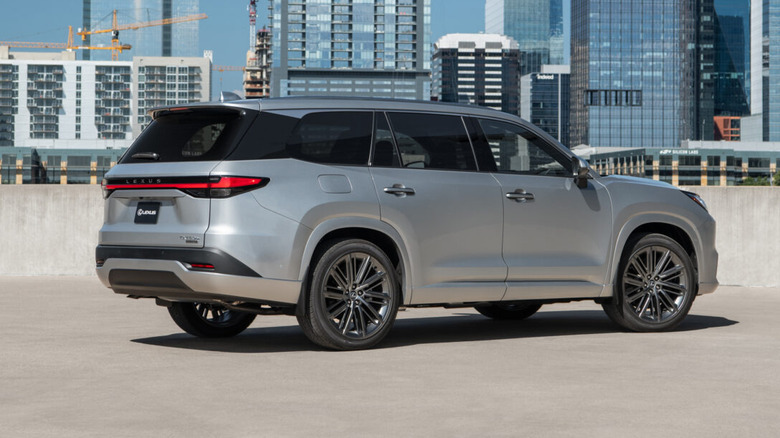
At one point, it really seemed like plug-in hybrids were going to be the answer. Now, not so much. They're dropping like flies, and the latest victim is the PHEV Lexus TX550h+. The three-row crossover is being discontinued for the 2027 model year as part of a minor refresh, and I suppose it makes sense. The plug-in version of the TX accounted for just 2% of its sales this year. Now, the TX will soldier on with just a normal ICE version and a conventional hybrid. From Automotive News:
U.S. deliveries of the plug-in hybrid TX tallied 953 through September, up 38 percent from a year earlier, while deliveries of the hybrid TX rose 20 percent to 8,787 from a year earlier.
A spokesman declined to give a specific reason for the decision, instead giving Automotive News this statement: "Lexus continually evaluates its powertrain offerings to best meet customer needs, regulatory requirements, and future product plans."
For 2027, both the gasoline-powered and hybrid versions will continue to be propelled by the brand's 2.4-liter turbocharged inline-four engine, producing 275 hp, with the hybrid supplemented by an electric motor and e-axles to provide up to 366 hp, Lexus said.
The refreshed TX will receive a new front fascia as well as improved steering dynamics, while the brand's Lexus Safety System+ 3.0 will come standard across the lineup.
There are still going to be a whopping seven trims to choose from, with front-wheel drive and all-wheel-drive options available. Prices are slated to start at $58,890, including destination, which is a $400 increase over the 2026 model.
Reverse: 1,000 songs in your pocket
 History.com
The aging hipster in me really wants Apple to release a new version of the iPod Classic. The pragmatist in me knows that's a dumb idea and it would be a catastrophic flop — one I probably wouldn't even buy. Still, it's nice to dream and remember how great that scroll wheel was. Anyway, if you want to learn more about the first iPod, head over to History.com.
The Fuel Up
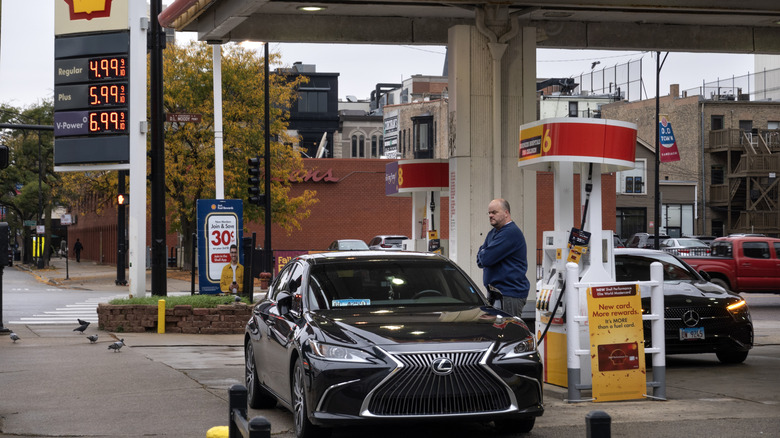
After a momentary dip, fuel prices are indeed headed back in the wrong direction, thanks in no small part to the fact WTI Crude Oil futures and Brent Crude prices are rising seemingly every day. Now, they're sitting at $103 and $116, respectively, at the time of publication.
Here's where national average prices stand right now, according to AAA:
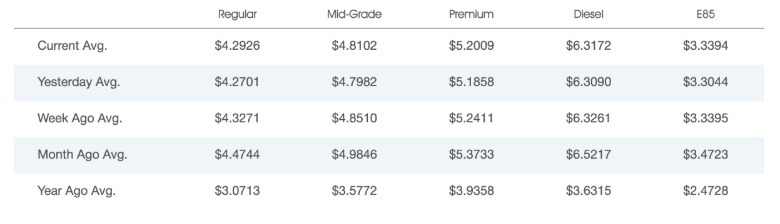 AAA
This all shakes out to the average price of a gallon of gas rising 2 cents overnight to $4.29, according to AAA. It's a similar story with diesel, which saw its average price rise a cent to $6.32. With oil prices elevated, I don't expect this new trend to change anytime soon.
On the radio: Mk.gee - ROCKMAN
I can't tell you why, but I think I've entered a very Mk.gee time in my life. Won't you join me on this journey? I promise it's a good place to spend your time.