

I Leased A Kia EV6 For $137 A Month, And I Still Went EV After Incentives Disappeared
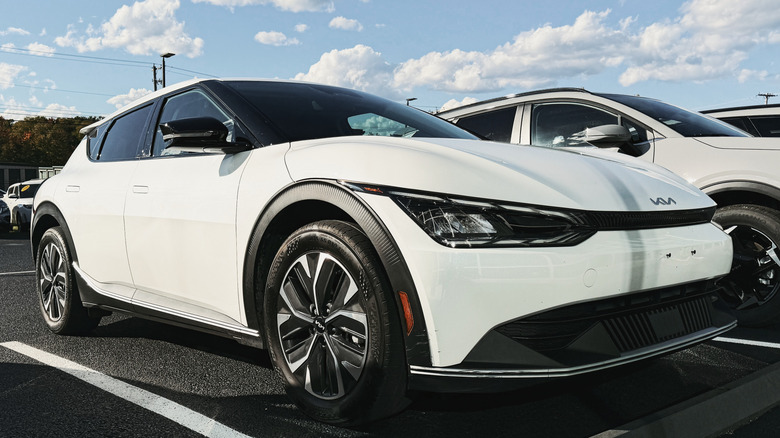
Back in 2024, long before the Trump White House murdered the $7,500 tax credit for EVs, my wife and I locked in an insanely good deal on a lease. We put down about $4,000 and leased a Kia EV6 for an astounding $137 a month. Our household cell phone bill runs that rate. That two-year lease was even extended for another six months, for a completely manageable $148 per month.
There were a few factors in our favor regarding that deal. First, there were, of course, the $7,500 Biden incentives. New York State added another $2,000 discount on top of that. Additionally, when we locked in this lease, carmakers had miscalculated market demand, with a glut that began in 2023. By September of 2024, dealers struggled to sell EVs fast enough, stuck with electric cars for an average of over three months compared to a somewhat healthier 79 days for gas cars. Dealers finance their inventories; the longer they sit unsold, the deeper they go into the red. So even though our EV6 Light Long Range Wind stickered for $51,845, we got it (well, use of it) for dirt cheap.
That was then. As of this fall, with our lease expiring, I was eyeing new EVs, but not liking prices. Cox Automotive says the average sticker on a new electric whip in September hit an eye-watering $55,879. Still, have you seen gas prices? We wanted to stay electric. Fortunately, used EV prices are much lower. At the time of my research, I saw CarGurus' price tracking showed the 2023 Chevy Bolt selling at an average tab of $20,518; the 2024 EV6 at $27,846; and the 2023 Hyundai Ioniq 5 at $27,436.
Why you can't spend too much more to drive electric
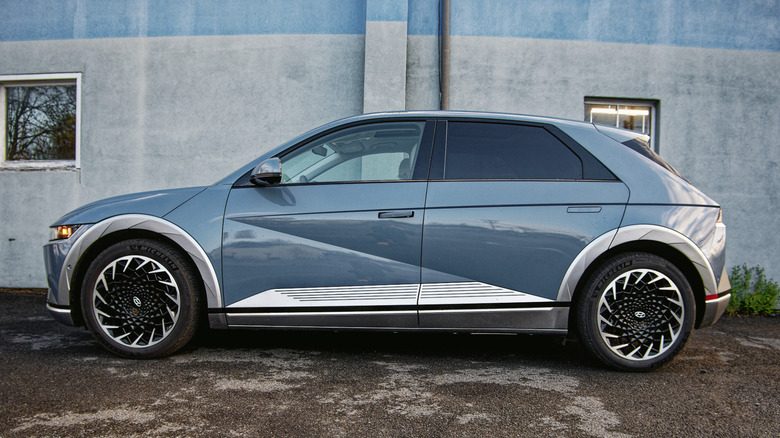
My goal was to find the right used Ioniq 5. That was the car I wanted back in 2024, but there were better deals on the EV6. No shade to the Kia; we've loved it. But we dug the Ioniq 5's retro-futuristic styling more, and it's a little bit shorter, so it fits better in our very cramped garage.
The rub? We didn't want to spend more than we would've on a used Honda Civic, which CarGurus showed running at $23,967 for a 2023 at the time of my analysis. With the 2023 Ioniq 5 averaging $27,436, that's a $3,469 average premium over the Honda. The 2023 Bolt is already cheaper than the Civic, but we liked the bigger Ioniq 5 and its all-wheel-drive availability.
Maybe you're less price-sensitive. But on most folks' budgets, if you're buying a used or new EV, you really have to get close to price parity with the gas car for the costs to pencil out. I recently wrote that energy costs still matter more than falling EV prices. The point of that story is that even though gas prices have shown increases exceeding 30% in a year while home electricity rates have only risen by about 5%, if you're paying thousands more on an EV, it's going to take years to recoup the higher outlay.
I didn't want to go into the hole on financing a more expensive car only to get pennies back per mile on the relatively cheaper cost of fueling an EV. Here's just a little bit of the math of this, because it's important to understand the cost burden of a more expensive electric car, even if it's cheaper to fuel.
EVs are cheaper to fuel -- but you need to do some real math

The easiest way to see the apples-to-apples comparison of fueling costs, and, in turn, the payback time for spending more on an EV, is to measure that tab over 100 miles. On the gas car, that's 100 divided by the MPG of the car in question, multiplied by the price of a gallon of gas. This calculation gives you how many gallons you'll burn and the cost to purchase them. For EVs, you need the kilowatt-hour-per-100-mile rating of the EV you're shopping for, which you can find on fueleconomy.gov. Multiply that number by the kWh price where you live, which gives you something like the fueling-equivalent cost to drive that EV 100 miles versus the gas-car price.
The all-wheel-drive 2023 Hyundai Ioniq 5 needs 34 kWh to go 100 miles, which runs $6.22, using the national average kWh price of electricity of 18.3 cents. The 2023 Civic burns 2.9 gallons per 100 miles, which, at the current national average price of $4.33 a gallon, results in $12.55. So it's roughly twice as expensive to fuel the Civic versus the Ioniq 5. That's $622 for 10,000 miles of Ioniq 5 fueling vs. $1,255 for the Civic. But even saving $633 per 10,000 miles would take over 54,000 miles to pay back the $3,469 higher tab of the Ioniq 5.
This might tell you exactly why Americans still aren't buying EVs despite higher gas prices. Another factor is far more expensive public charging. When we got our EV6, we spent about $600 to install a home charger. Yes, that's an added expense, and I know we are privileged to even own a home. But this is a critical step for any would-be EV purchaser.
This math only works if you charge at home
Let's take a closer look at why the math only works in your favor if you charge at home. According to Kelley Blue Book (KBB), fast charging averages closer to 55 cents per kWh versus 18.34 cents for home kilowatts. That pencils out to charging costing about three times as much for DC fast charging. If public sites are how you plan to charge an EV, it's hard to justify any added initial purchase price of that electric car.
There's another factor: If you're financing a pricier car, you're spending more money over the financing period. Even when spending less on fueling, those savings are obviously getting a haircut with every month's fatter loan payment.
To put this in stark terms: credit reporting agency Experian says the average buyer of a new car is tagged with a 6.35% interest rate — and it's a whopping 11.19% for used cars. New car buyers are financing a frightening average of $43,610 for 69.5 months.
Even on used cars, the average purchaser is forking over an average $542 monthly payment. We didn't want to take on that kind of debt or those kinds of terms. I wanted to finance as little as we had to and not be burdened with a large monthly payment. Additionally, because we were getting out of a lease, we didn't have a used car to trade in; the down payment would have to come from savings.
Used EV sales are ticking up
As our lease approached its expiration, I started to get nervous. The war in Iran and consequent higher gas prices have been forcing Americans to reconsider EVs. According to CarGurus, new EV sales have plummeted by 48% versus this time last year, but used EV sales have been trending up at a 19% clip. We all know about supply and demand. More demand for used EVs is causing slower depreciation and even an increase in prices. Manheim's Used Vehicle Value Index, which tracks the prices of cars sold at auction, showed a pop of 4.3% for used EVs in September alone.
That pattern was evident in CarGurus' numbers at the time of my research. The 2024 Ioniq 5 has gotten more expensive in the past 30 days by a modest half percent. Far more dramatically, the average price of a 2023 Tesla Model 3 has inflated 8% so far this year and 1.76% in the past month alone.
As I felt pressure from my expiring lease and a concern that used EV prices were rising, I searched pretty much daily using cars.com — because they use battery-health data from an outfit called Recurrent. (I'm well aware that modern EV batteries last way longer than EV skeptics want you to think, but I didn't want to end up with a lemon).
Next, I cast a 500-mile net. It's fair to say I was willing to travel relatively far for the best price. I searched for Ioniq 5s between 2022-24. One thing we like about the interiors of this range is that they have physical inputs for lots of controls, such as an actual volume knob and a climate interface not buried in the main touch panel.
You can find used EVs at good prices if you're diligent
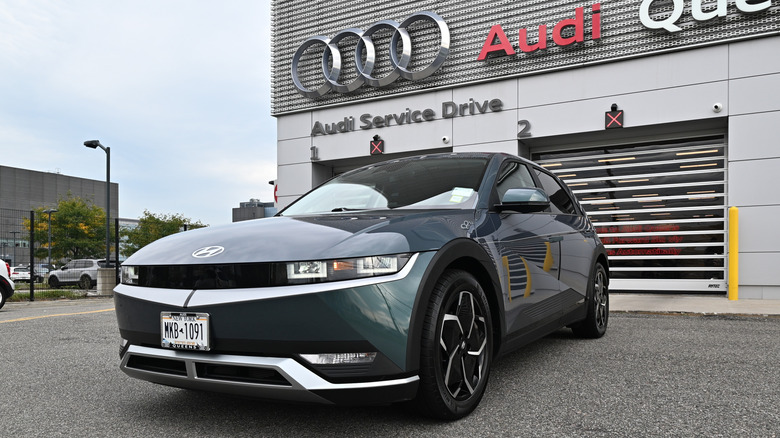
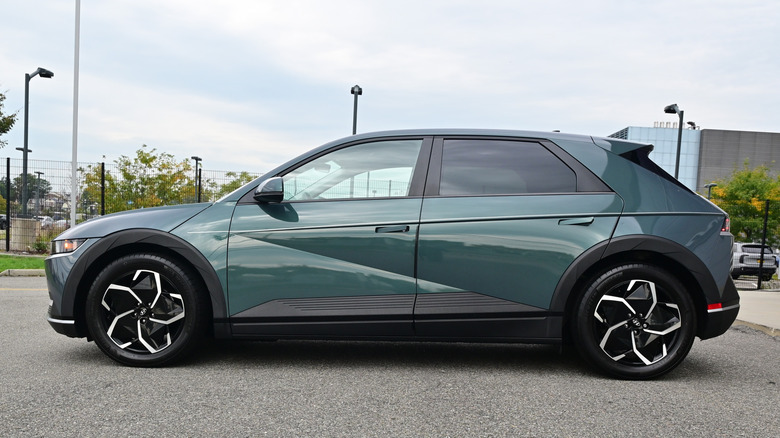
The Ioniq 5 SE I found ran $21,900. Not bad for a car that sold for $49,255 originally. We still have to finance $360 a month at 7.69%, more than 2.6 times the paltry $137-a-month Kia lease. However, it's a manageable toll on a car we'll own. Hyundai's 100,000-mile/10-year warranty on the battery transferred to us, and there's still a year left on the new vehicle warranty.
I should mention that we managed to find this Ioniq 5 around CarGurus' $21,831 average price, partly due to a glut of leased EVs helping mitigate increasing used EV costs. Earlier this year, Jalopnik reported that depreciated leased EVs could kick off a financing crisis for automakers. The Biden tax breaks and overproduction meant so many people – like us with our Kia — leased EVs a few years back. By next summer, up to 19% of all off-lease cars are projected to be EVs. The off-lease EV wave is expected to peak in 2028, with nearly 800,000 cars heading back to dealers. Even with current upward cost pressure, if you look, you can likely find a good deal.
Now, do I think our new-to-us Ioniq 5 SE is perfect? Nope. It's just more perfect than a 2024 Fiat 500e, in my view. Still, it has 36,000 miles on it and is two years older than the Kia we returned with a mere 15,000 miles. It needs an alignment, too, probably because I bought the car in Queens, an area that's not particularly easy on suspensions. But hey, we're finally getting the EV we always wanted, just a few years after the fact.