

Shooting A Rocket Into Space Now Cheaper Than Hiring An Oil Tanker, And It's Not Because Space Travel Got Less Expensive
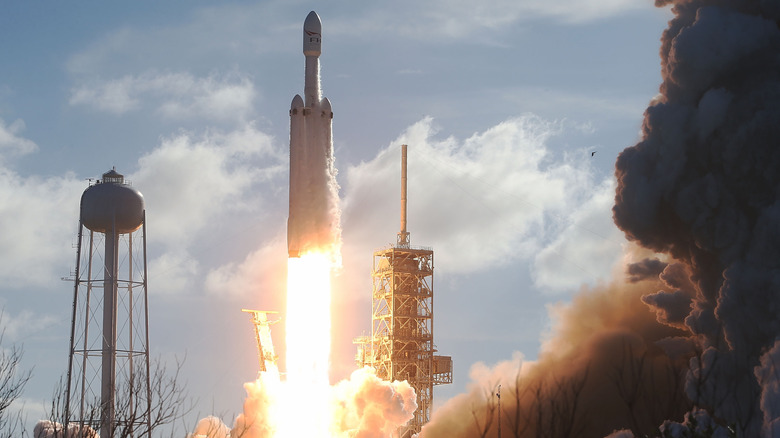
Seven months into Republicans' senseless war with Iran, you've probably read more than your fair share of articles about how pricey gas and diesel have gotten, and just as many explaining why this thing or that thing is making oil expensive. But the economic effects of this war go far beyond fuel prices. The shipping industry is also experiencing an oil tanker shortage, and as a result, shipping costs have absolutely exploded. According to Bloomberg, if you want to hire a tanker to go from the U.S. to China, it now costs more than it would to shoot a rocket into space.
That may be hard to imagine since space is so far away, but here's how Bloomberg explained it:
That journey costs about $80 million, compared with $74 million for a standard SpaceX Falcon 9 launch, shipbroker Gibson said this week. The same amount of money could have bought a near-identical tanker outright earlier this year.
The eye-watering prices are the result of a global tanker shortage that is getting worse with every additional barrel of oil flowing through the Strait of Hormuz. For weeks now, supertanker markets have been in the middle of a boom the likes of which industry veterans have never seen. Brokerage SSY says that, even after adjusting for inflation, rates are now the highest since the first supertankers hit the world's oceans in the 1960s — surpassing the tanker wars of the 1980s, when Iran and Iraq attacked commercial shipping in the Persian Gulf.
Indeed, $80 million is more than $74 million, but as eye-catching as that is in a headline, the much more concerning part is that next sentence, where Bloomberg says it now costs as much to rent a tanker as buying one outright did earlier this year. Not pre-Covid or a couple of decades ago. Just this year. Imagine walking up to the airport rental counter six months from now and finding out a Sentra costs $24,000. Not good.
Let's also not miss the next paragraph emphasizing that, even if you adjust for inflation, commercial shipping rates are the highest they've been since supertankers were first invented. And when it's more expensive than ever to move oil around the world, that only pushes oil (and therefore fuel) prices higher than they'd be otherwise.
Oil tanker shortage
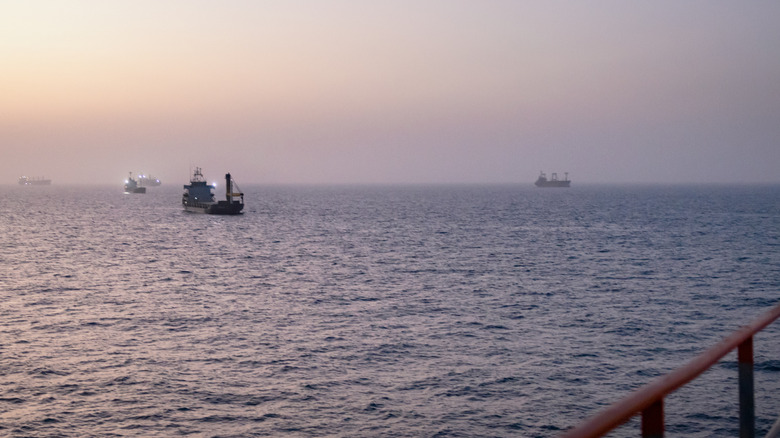
As oil trader Vitol Group CEO Russell Hardy told Bloomberg, "There's really not quite enough shipping to go around. We've had pretty parabolic pricing." That's certainly one way to put it. How did we get here? Has the war taken out too many tankers or something? Not exactly, but the war and the tanker shortage are inextricably linked. From Bloomberg:
At the heart of the boom is a simple problem: There aren't enough tankers to efficiently carry all the barrels that need transporting. Middle Eastern producers have been increasingly reliant on shuttling oil out of Hormuz onto other ships as the Iran war rewires the region's trade flows. Those journeys are at times adding about a week to each voyage, stretching out the global fleet. Their impact has grown as shipments through Hormuz recover to about 80% of pre-war levels, according to industry executives.
The stop-start nature of those trade flows has made the shortage even more acute. When traffic through Hormuz collapsed, tankers spent weeks sailing empty from the Middle East to other parts of the world in search of business. Now that Gulf shipments are recovering, vessels have to reposition again — a process that can take weeks. The effective pause in Iranian exports to China has added to the strain, forcing Chinese buyers to source more crude elsewhere and increasing demand for tankers operating in the mainstream market.
Basically, the ship-to-ship transfers that have made it possible to get as much oil through Hormuz as we have require a lot of ships. Add in world events that increase demand for tankers in other parts of the world, and you have a recipe for some scarily expensive boat rentals. That doesn't mean we haven't seen any negative impacts from Iran and the Houthis' attacks. The damage those ships have sustained has required pulling many of them out of service for extensive repairs, reducing the number of ships that can be used.
Additionally, tankers attempting to avoid Iranian and Houthi missiles are taking routes that add thousands of miles to each trip. Longer routes mean slower-moving oil, but that also reduces the number of round-trip journeys each ship can take in a month. And that means transport costs that used to average $4.50 a barrel have now risen to $41. As Bloomberg points out, that's roughly 45% of the cost of a barrel of West Texas Intermediate.
We pay, they rake in the cash
Of course, because this is America, the only people actually being hurt by the tanker shortage and higher fuel prices are regular Americans. Higher fuel prices have already cost us more than $100 billion, while oil and gas companies have been earning billions of dollars in windfall profits. And while normal people struggle to afford to fill up their cars, the shipping companies are raking in the cash. As Bloomberg explained:
For tanker owners, those soaring freight costs are translating into a windfall. The rally is making millions for the narrow cadre of often-secretive shipowners who dominate the market, including an enigmatic South Korean tycoon as well as a pool of Greek families and Norwegian magnates. When rates hit new heights earlier this month, the mood in the tanker market was that there was little end in sight to the rally. Many owners are still bullish over the short term, and up to now, those who bet against them have been wrong.
"With little additional capacity available, freight becomes increasingly dependent on what charterers can afford to pay," Clarksons Securities analysts wrote.
So that's nice. Illegal tariffs raised prices for everyone, and only the corporations got refunds. Burgers are priced like steaks now, but the oil industry's having a blast, and these windfall shipping profits are enriching "an enigmatic South Korean tycoon as well as a pool of Greek families and Norwegian magnates." Enigmatic tycoons and shipping magnates? What is this, the 1920s? I mean, it does seem like Art Deco's back, so we shouldn't be surprised. I'm just not sure I like what it says about the direction we're headed. I'm no historian, of course, but didn't the 1920s end with a giant stock market crash and a pretty bad depression?