

World's Oil Reserves 'Scarily Thin' As Houthi, Hormuz Attacks Push Oil Back Over $100 A Barrel
Oil has definitely gotten more expensive since Republicans started their senseless war with Iran. But even if we're already paying over $6 a gallon for diesel, oil prices haven't risen nearly as much as they would have if countries around the world hadn't been pulling every lever at their disposal to keep prices in check, including releasing their petroleum stockpiles. That's given oil markets more of a cushion, but that may be about to change. According to Reuters, "industry executives," told an economic forum in London that global stockpiles are dwindling, raising the risk that fuel prices may soon rise even further.
We've known for a while that the U.S. doesn't have much oil left in its strategic reserve. In addition to being close to the practical floor, frequently draining and refilling the caverns as previous administrations have done means continuing to release oil from the reserves risks irreparably damaging the caverns the oil is stored in. According to Yahoo Finance, however, that hasn't stopped Trump from announcing plans to release another 40 million barrels in the coming months. Apparently, the rest of the world isn't doing much better, either.
Speaking at this year's Energy Intelligence Forum in London, Saudi Aramco CEO Amin Nasser said, "Less than 6 billion barrels of commercial inventories remain today, with the vast majority not practically available, so the system is already straining." Unfortunately for all of us, the bad news doesn't stop there. As Reuters put it:
More than 1 billion barrels of oil have been released mainly from onshore commercial inventories since the start of this year's Middle East crisis, which was the last major tool in the box, Nasser said.
The International Energy Agency, the West's oil watchdog and coordinator of its strategic oil reserves, is preparing to release 100 million barrels of crude and diesel to help alleviate soaring diesel prices, but it is not clear if some of that total will include volumes from its record first 400 million barrel release in March that hadn't hit the market yet.
"It took a lot of negotiations, but it is 100 million," Nasser said of the IEA decision. "Inventories are reaching a stress level. Only 10% or less is available, that's why they struggle with 100 million barrels."
World oil demand is about 102 million barrels per day, according to the IEA.
A bloodbath
Releasing more oil from global reserves may keep price increases in check, but only temporarily. Once countries hit their practical floors, they'll be done. When that will happen exactly and how it would play out are still impossible to predict, but as countries around the world lose access to their main source of control over oil prices, the only direction left for them to go is up.
Nasser wasn't the only executive sounding the alarm about global oil reserves, either. Chevron CEO Mike Wirth told the forum that dwindling reserves threaten the stability of oil markets and set a higher price floor per barrel. Multiple speakers reportedly said they expect the volatility in the market to continue through 2027. They also said they believe it will be several years before global oil inventories finally reach pre-war levels again.
We aren't just burning through our oil stockpiles, either. Global natural gas reserves are also dwindling, and as Reuters wrote, "[a] bad winter could bring about a 'bloodbath' in the gas market in the first quarter of 2027 if storage hits minimal levels." So that's not great news. Sometimes witnessing a bloodbath is enjoyable, like that time Georgia beat TCU 65-7 in the 2023 men's college football national championship, but I don't get the feeling we'll have nearly as much fun if we're using "bloodbath" to describe the natural gas market.
Of course, we could all get back on the road to oil and gas market recovery a lot faster if the White House could just find a way to end the war. For months now, Republicans have been telling us Iran is desperate to make a deal, but no lasting peace deal has ever materialized. At least Trump's unelected son-in-law managed to line up some lucrative deals for himself. I mean, what's the point of starting a war if you can't enrich your family at the expense of everyone else in the country you run?
Not looking good
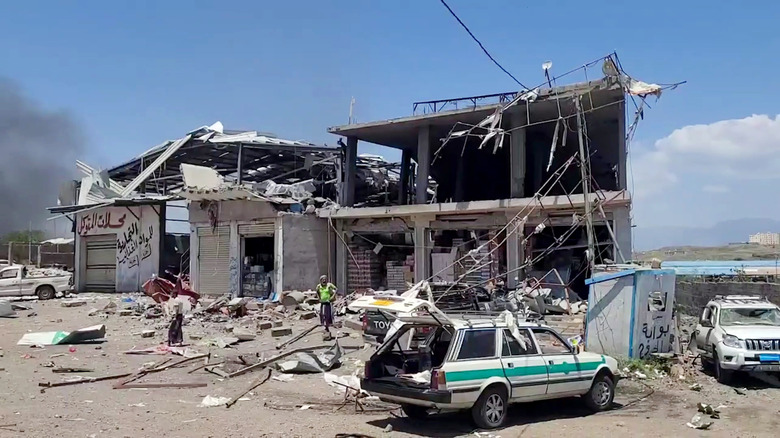
As you can probably imagine, talk like that hasn't been good for cheap oil. CNBC reports that Brent Crude is back over $100 a barrel after brief drop, while West Texas Intermediate is sitting just under $90 a barrel. And while Saudi Energy Minister Prince Abdulaziz bin Salman recently claimed repairs to its East-West pipeline have allowed the Gulf nation to begin moving 5.8 million barrels, they still haven't managed to stop attacks from Houthi rebels, and despite the U.S. military's best efforts, Iran continues to attack tankers traveling through the Strait of Hormuz. From CNBC:
However, concerns that there may be further supply disruptions in the Middle East weighed on sentiment. The Saudi aviation authority reportedly said Tuesday that the country's airports in Jazan and Najran were targeted in two attacks, amid growing hostilities between Yemen's Iran-backed Houthis and the kingdom.
Iran's move to step up attacks on tankers which are transiting through the Strait of Hormuz has also led to renewed worries over oil supplies among traders, as it threatens to disrupt the fragile rebound in oil exports through the crucial waterway.
CNBC also spoke with Zaye Capital Markets CIO Naeem Aslam, who said the oil industry ""caught between improving physical supply and persistent geopolitical risk." Meanwhile, Samer Hasn, a senior market analyst at XS.com (a forex trading platform) told the news outlet, "The sustained ability of the Houthis in Yemen to target oil facilities hundreds of kilometers from the border keeps the risks of a renewed large-scale crude supply disruption present and high, and these risks could worsen if the Houthis feel the need to apply more pressure as a result of losing more territory."
Today, NBC News reports the Houthis continued their attacks, with their spokesperson, Brig. Gen. Yahya Saree, claiming to have successfully hit Riyadh's King Khalid International Airport again. Saree didn't provide evidence to support that claim, but tracking data provided by Flightradar24 did show that flights were temporarily impacted. The Houthis also claim to have hit another airport, two Saudi military bases and an air base, and Yemen's port city of Aden, with a ballistic missile strike near the city's airport already confirmed.
The Saudi military, backed by allied in Yemen, has responded with both air and ground attacks in an attempt to loosen the Houthis' control on the Bab el-Mandeb Strait. How successful they've been, however, still remains to be seen. Saudi officials have claimed to have taken back several key areas, but CBS News reports the Houthis dispute that claim. Whatever's going on, it sure doesn't sound like gas will get much cheaper anytime soon.