

6 Old-School Pony Cars That Aren't The Ford Mustang
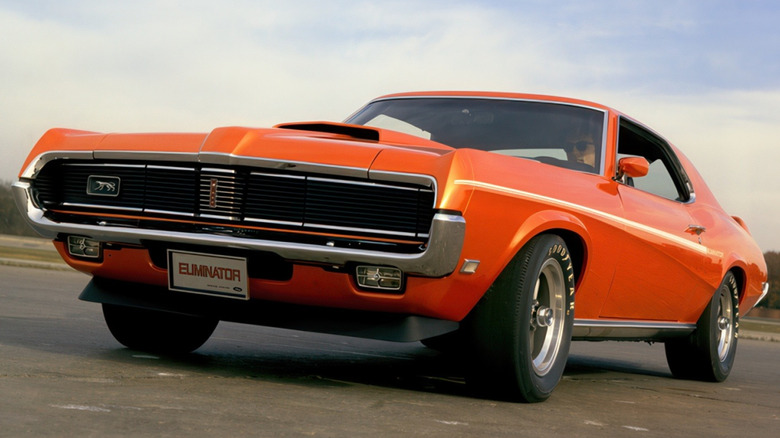
The Mustang is one of the most recognized nameplates in the automotive industry, and undeniably the face of the pony car breed, despite not being first to market. Launched for the 1964 model year, the first-gen model was designed as a low-cost performance car for younger buyers. It proved incredibly popular, with Ford selling a whopping 400,000 during its first year. Crucially, though, the Mustang provoked an answer from its rivals.
It didn't take long before they responded — in the next few years, every big American car brand had a pony car in its lineup. Like the Mustang, these models were affordable, but they also started an arms race of unhinged big-block displacement capacities. Soon, this high-horsepower contagion encompassed the whole segment and gave us icons like the Plymouth Hemi 'Cuda, Chevrolet Camaro ZL1, and Pontiac Firebird Trans Am.
In this piece, we'll have a closer look at these models, plus other early-era pony cars — not just the high-performance variants, but also the base models and mid-range V8 options. Please note: We'll list gross instead of net horsepower ratings, as they were relevant for the time. In today's horsepower currency, these figures would be much lower. With that sorted out, let's dig into the thrifty sixes, sweet-spot small blocks, and homologated big-block screamers that shaped the pony-car segment.
1967 to 1973 Mercury Cougar
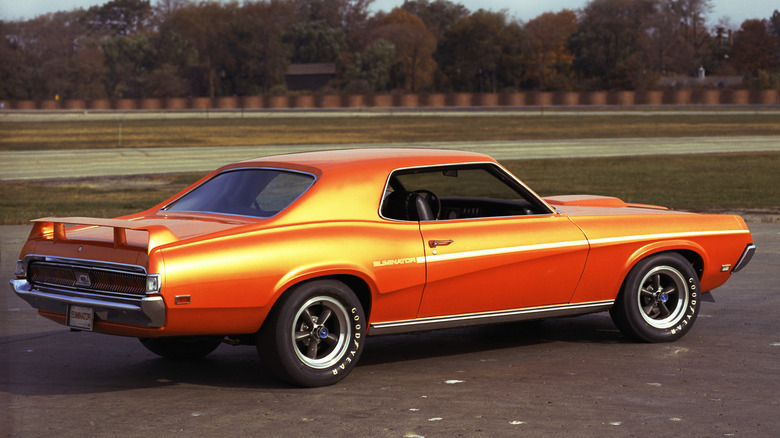
In an alternate reality, Ford Motor Company's first pony car would've been Mercury-badged. Although it's remembered as Mustang's posh sibling, the Cougar was on the drawing board first. In the end, however, Mercury's team continued working on the project only after the Mustang was launched.
Unsurprisingly, Ford's premium arm used Mustang's platform, but added 3 inches to Cougar's wheelbase and equipped it with a softer-riding suspension and more sound deadening. As a result, the Cougar was more comfortable to sit and ride in, with the higher-quality interior creating a more upscale ambiance. The Cougar looked the part, too, with a striking full-width grille, hidden headlights, and wide slotted taillights.
The Cougar might've been comfort-oriented, but it didn't miss on Mustang's high-performance V8 engines. Initially it came with the 289-cubic-inch small block V8 that produced up to 225 horsepower with a four-barrel carburetor, and a 390-cubic-inch big-block V8s with as much as 325 hp. A year later, the Cougar GT-E secured the legendary 427-cubic-inch V8, which wasn't available in the Mustang, making 390 hp. The 428-cubic-inch Cobra Jet V8 engine was also available, though it was rated at lower 340 hp. In 1969, Mercury gave customers another option with the 351-cubic-inch Windsor V8 (290 hp), and later threw the 351-cubic-inch Cleveland, Boss 302, and 429 CJ engines into the fray.
Buyers could choose most of these power trains with the optional XR-7G package, which improved on the Cougar's looks with new wheels, hood scoop/pins, and an upmarket interior. Still, it's the Cougar GT-E that's the most performance-oriented, as it was also equipped with better suspension and brakes. Unfortunately, while manual transmissions were available, most Cougars were sold with automatics.
1964 to 1974 Plymouth Barracuda / 'Cuda
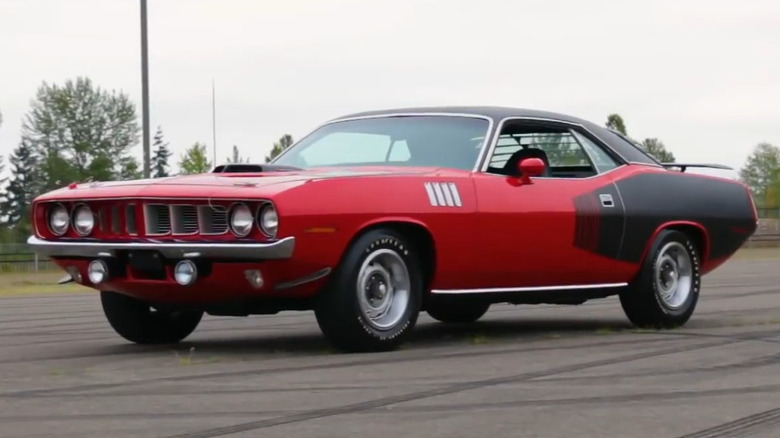
The Mustang is considered the pony car pioneer, but the Plymouth Barracuda beat it to the punch by 16 days. Still, Plymouth's competitor was based on an economy car (the Valiant), so it wasn't nearly as successful as the Mustang. Yes, it had some highlights, like a 273-cubic-inch V8 with 180 horsepower and later a 225-cubic-inch slant-6 with 235 hp, but it wasn't until the second generation arrived that the Barracuda truly took off.
Launched for the 1967 model year, the second-gen Barracuda was again based on the Valiant, but had a brand-new design and more engine options. Plymouth added a 383-cubic-inch V8 with 280 hpupgraded to 300 hp for 1968 in the Super Commando variant. Plymouth also replaced the 273-cubic-inch engine with a larger 318-cubic-inch V8 variant and added a 340-cubic-inch V8 to the mix.
The Barracuda finally parted ways with its compact-car roots for the third generation (1970 to 1974), based on Chrysler's E-body platform rather than the earlier models' A-body. This let Plymouth shoehorn in Chrysler's big-block V8s — the 440-cubic-inch Magnum V8 and 426-cubic-inch Hemi (385 and 425 hp respectively). Plymouth reserved them strictly for the high-performance 'Cuda models, also equipped with an upgraded suspension, wider treads, shaker hood scoop, "Slap-Stick" floor shift manual gearbox, and optional racing mirrors. These were some of the rarest pony cars, particularly the Hemi variants, of which only 652 were sold.
Due to the stricter emission regulations, the legendary big-block V8s were replaced with the 340-cubic-inch V8 (240 hp) in 1972 and then the 360-cubic-inch V8 (245 hp) in 1973. The Plymouth Barracuda was last sold for 1974 and never resurrected again.
1970 to 1974 Dodge Challenger
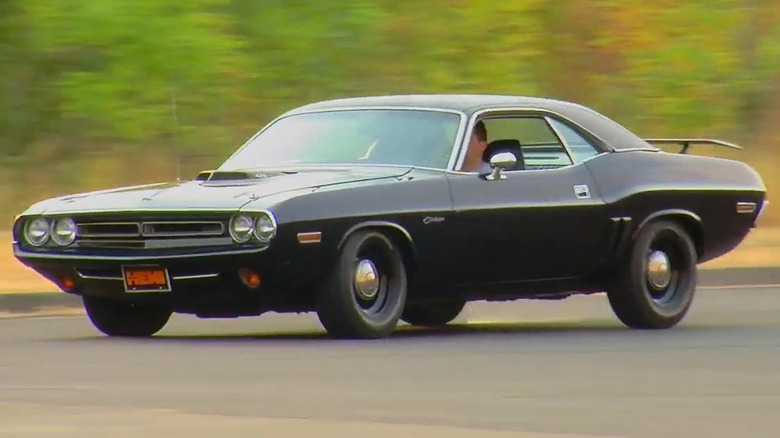
Dodge wasted no time delivering its version of the Plymouth Barracuda, the Dodge Challenger. It was based on the same E-body platform, but with a 2-inch-longer wheelbase and 1.5-inch-wider body. Penned by designer Carl Cameron, the Challenger looked modern and aggressive, though internally it was largely similar to the third-gen Barracuda.
Consequently, the Challenger shared the base 225-cubic-inch slant-6 with 145 horsepower, alongside the 318-cubic-inch V8 with 230 hp and the 340-cubic-inch V8 with 275 to 290 hp. Dodge also offered the same three-speed/four-speed manual transmissions and a three-speed automatic. Of course, it's the big-block variants that did the Challenger's keen design justice. The 383-cubic-inch variant was the standard engine option in the performance-tuned Challenger R/T model, producing 335 hp and 425 pound-feet of torque. The 440-cubic-inch Six Pack V8 and 426-cubic-inch Hemi engines were available as an upgrade, though only with the R/T trim.
To cope with the added power, the Challenger R/T was also equipped with a performance-tuned "Rallye" suspension with heavy-duty sway bars and brakes, dual exhaust, performance hood, and side stripes with the R/T moniker. These were necessary upgrades, as the first-gen Challenger had a very basic suspension layout and wasn't particularly good in the corners.
Like its competitors, the first-gen Challenger was hampered by the era's stricter emission regulations and higher insurance rates. So Dodge discontinued the 383-, 440-, and 426-cubic-inch Hemi V8s, leaving the 340-cubic-inch V8 with only 240 hp as the top choice. A year later, Dodge also axed the inline-6 option, and for 1974 replaced the 340-cubic-inch engine with the newer 360-cubic-inch V8 with 245 hp.
1967 to 1969 Chevrolet Camaro
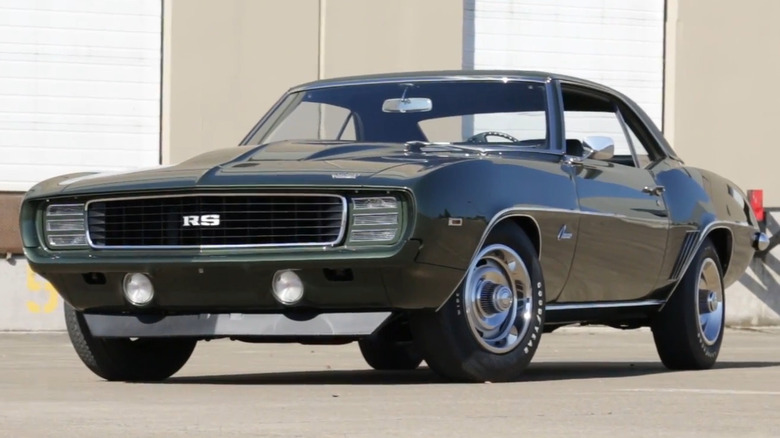
A case can be made that Chevrolet, not Ford, pioneered the junior muscle car segment with the turbocharged rear-engine Corvair Monza in 1960. It proved surprisingly popular, so much so that it triggered the original Mustang's launch. Ford's pony car essentially deleted the Corvair Monza out of existence, forcing GM to rethink the formula and launch its own V8-powered pony car — the 1967 Camaro.
Developed on a frantic schedule, the first-gen Camaro wasn't a purpose-built sports car, piggybacking on the Nova's F-body platform. Still, it had the engine range necessary to compete with the Mustang, launching with eight different power trains. With up to 155 horsepower, the entry-level inline-6 variants weren't particularly potent, but the 327-cubic-inch (210 to 275 hp), 350-cubic-inch (295 hp), and 396-cubic-inch (325 to 375 hp) V8s more than made up for that.
The pick of the range, though, was the high-revving 302-cubic-inch V8 inside the rare Camaro Z/28. The small-block V8 was officially rated at only 290 hp, but the real figure was probably closer to 400. Built for Sports Car Club of America (SCCA) Trans-Am homologation purposes, the Camaro Z/28 also featured a performance-tuned suspension, front disc brakes, and four-speed manual transmission.
On the other end of the performance spectrum were the Central Office Production Order (COPO) variants, which unlocked factory installation of the 427-cubic-inch big-block V8 that pumped out 425 hp and 460 lb-ft. Perhaps the wildest COPO Camaro is the ZL1, produced at the request of the Fred Gibb Chevrolet dealership of La Harpe, Illinois. Equipped with a lighter aluminum-block version of the 427-cubic-inch engine borrowed from Chevy's Can-Am race cars, it had a monstrous 500 hp on tap.
1967 to 1969 Pontiac Firebird / Trans Am
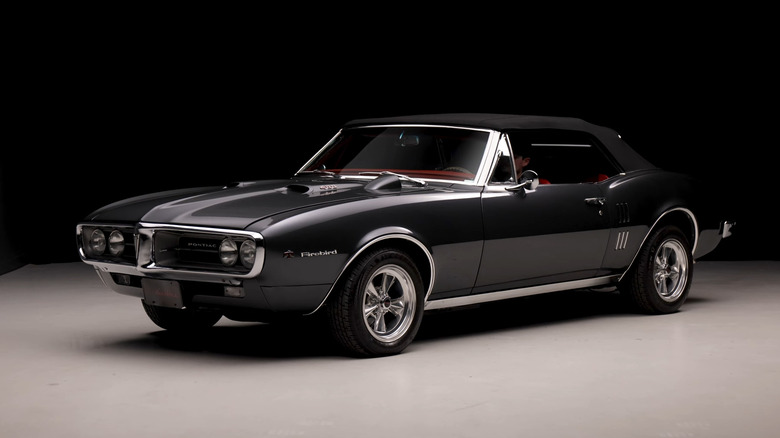
While Ford enjoyed success with the Mustang and Chevrolet was busy developing the Camaro, Pontiac, under general manager John Z. DeLorean, was working on the Banshee — a radical two-seater sports car. It never materialized, but as a consolation prize, GM let Pontiac build its own version of Chevy's Camaro based on the same F-body platform: the Firebird.
DeLorean didn't want to be outdone by his in-house rival, so he went in a different direction. The Firebird was a more focused driver's car, equipped with stiffer suspension and more potent overhead-camshaft inline-6 engines. The base 230-cubic-inch unit produced 215 horsepower with the four-barrel carburetor — 75 hp more than the 230-cubic-inch Camaro. In 1968 it was replaced with a larger 250-cubic-inch unit that also made 215 hp. At the opposite end of the spectrum, Pontiac employed the big-block 400-cubic-inch V8. Available in several power outputs, the massive V8 offered 325 to 340 hp in the regular Firebirds and 335 to 345 hp with the Trans Am package.
Although the name suggests that Trans Am-equipped cars were homologation specials, their engines were actually too big to qualify for the championship. Instead, Pontiac bought the naming rights from the SCCA, creating one of the most renowned pony-car nameplates. The Trans Am package also carried cachet, as it brought cosmetic and aerodynamic improvements, like a big rear spoiler and ram air induction ducts. The Ride and Handling package was also included, featuring a heavy-duty suspension with hydraulic dampers, variable-ratio power steering, and front disc brakes.
1968 to 1974 AMC Javelin
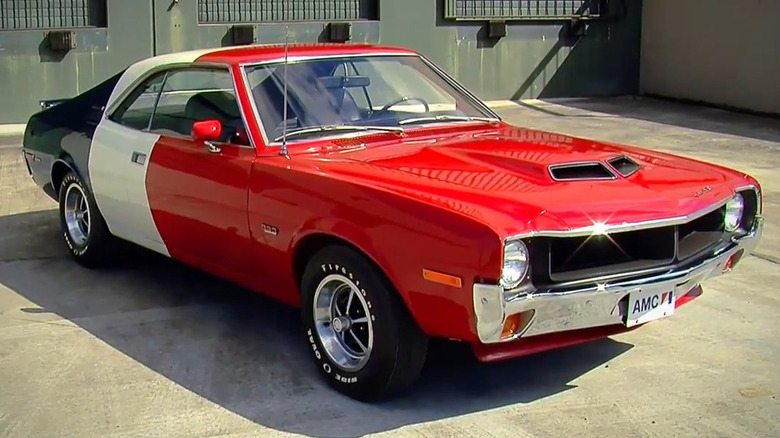
The pony-car craze was so infectious during the 1960s that it even spread to American Motors Corporation, perhaps the most conservative automaker of the time. But there was nothing conservative about the Javelin, AMC's first pony car. Yes, it was based on the Rambler American, but unlike its rivals, it was built with lightness and agile handling in mind. Heck, AMC even launched a lighter AMX model with a 12-inch-shorter wheelbase and two seats, aimed at driving enthusiasts.
Initially, the Javelin was offered with 258-cubic-inch (225 hp) and 343-cubic-inch (235 hp) V8s, but AMC later offered a larger 390-cubic-inch (315 hp) V8 with the performance-oriented Go Package. For second-gen model, which arrived for 1971, AMC went a step further and introduced an even larger 401-cubic-inch V8 with 330 hp. This brought the Javelin closer to its rivals' high-performance variants, though the Javelin was also heavier than before. The AMX variant now had four instead of two seats, but it was still a V8-only affair. Buyers who wanted tidier handling could again opt for the Go Package, which included a Twin-Grip limited-slip differential, cowl induction, dual exhaust, front disc brakes, fiberglass-belted wide-tread tires, and mag-style wheels.
The second-gen Javelin AMX also brought AMC success at Trans-Am, capturing seven of the 10 races during the 1971 season to capture the manufacturer's championship, and then repeating as champ in 1972. Still, from 1972, like each of its rivals, AMC detuned Javelin's engines to comply with the stricter emission regulations, with the Javelin discontinued after the 1974 model year.