

10 Super Rare Pony Cars And What They're Worth Today
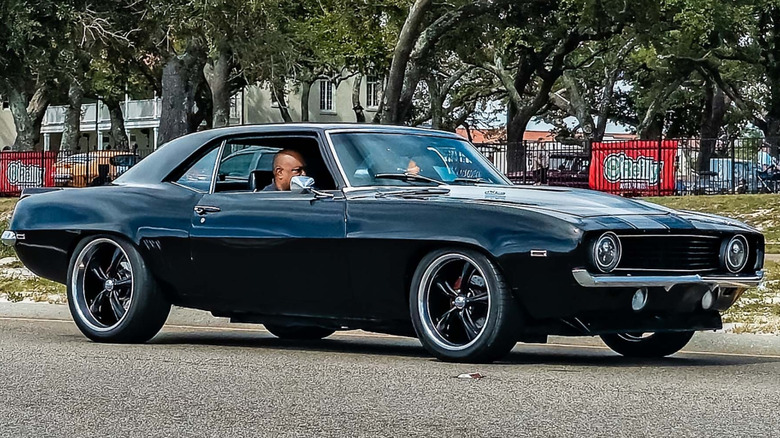
The 1960s are among the most celebrated decades for automotive enthusiasts, particularly in America. The reason is simple. The pony/muscle car era democratized speed, bringing massive, potent V8 engines into the hands of the common human. Soon, these cars were everywhere. Famously, Ford sold a whopping 2.7 million Mustangs from 1964 to 1971, turning this pony car into one of the company's most successful nameplates.
While pony car is often used interchangeably with muscle car, they are not the same thing. Muscle cars were based on mid-size platforms and were larger and heavier, but were also equipped with big-block V8s, which made them perfect for drag racing. Meanwhile, pony cars were smaller and lighter, which aided handling and agility, and came with either small-block or big-block V8s.
With millions sold during such a short period, you'd imagine that '60s pony cars are still common and affordable. That's largely true, but only if you want a run-of-the-mill pony car that sold in the tens of thousands. Highly specific models, like high-performance versions and factory specials, command massive prices today.
And then there are the unicorns — pony cars so rare, you'll probably never spot one in the wild. Most models we list here are scarcer than a Ferrari 250 GTO (just 39 built) and several have commanded seven-figure sums at recent auctions. So from convertibles packing race-bred engines to experimental high-tech machines, here are 10 super rare pony cars and the prices they fetch today.
1967 Shelby GT500 Super Snake (1 built | $2.2 million)
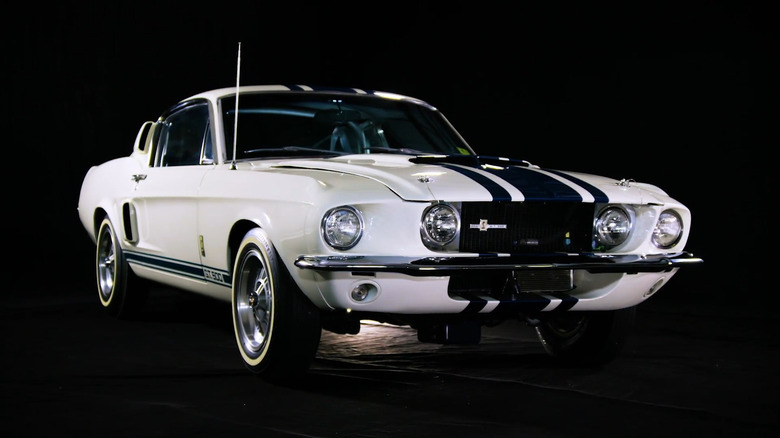
Easily one of the coolest Carroll Shelby cars ever made, the 1967 Shelby GT500 Super Snake showed what's possible when you implement race car tech in a regular pony car. And not just any race car; the "Super Snake" borrowed the 427-cubic-inch (7.0-liter) V8 behemoth from the Le Mans-winning Ford GT40 Mk II, which, thanks to its upgraded components, produced 600 horsepower. For perspective, a 1968 Mustang 428 Cobra Jet made "only" 335 hp.
As you'd expect from a Shelby build, the GT500 Super Snake also had a stiffer performance suspension and an external oil cooler to keep the race motor's heat in check. The kicker? A set of narrow Goodyear Thunderbolt economy tires. That wasn't an oversight — the GT500 Super Snake was specifically built to show the capability of Goodyear's new tire line.
In the test run, Shelby reached a top speed of 170 mph, which seems scary even on modern economy tires, let alone ones developed in the 1960s. And Fred Goodell, the engineer Shelby had tasked with building this machine, later that day drove it 500 miles with an average speed of 142 mph. Pure, unadulterated madness.
That '67 GT500 Super Snake was the only one ever produced. Shelby American sales manager Don McCain had wanted a limited 50-model production, but the car was way too expensive. That remains true today; in 2019, the GT500 Super Snake one-off was sold for a whopping $2.2 million at Mecum Auctions. But Shelby American built 10 more in 2018, each costing $249,995.
1968 Shelby EXP 500 Green Hornet (1 built | $1.8 million)
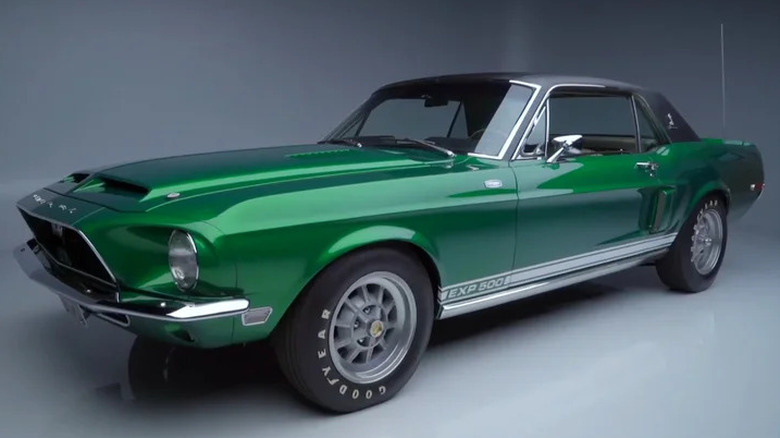
A year later, Carroll Shelby created one of the era's most advanced vehicles, the 1968 Shelby EXP 500, also known as the Green Hornet. A one-off prototype, this pumped-up Mustang featured fuel injection and independent rear suspension nearly 60 years ago. For reference, fuel injection didn't arrive in the Mustang until the 1980s, and it had to wait until 2015 for independent rear suspension.
Showcasing these era-altering technologies was Shelby's primary motivation for creating the EXP 500 Green Hornet, especially given the oncoming more stringent emissions regulations. But, of course, this pony car was also about performance; Shelby replaced the 390-cubic-inch V8 that was installed in the Lime Gold Mustang Ford sent him with the 428 Cobra Jet engine. However, instead of the four-barrel carburetor, it featured Conelec electronic fuel injection, designed to reduce tailpipe emissions. Along with the independent rear suspension, the EXP 500 Green Hornet had rear disc brakes and a heavy-duty C6 automatic taken from an F-350 truck. The car reached 60 in a brisk 5.7 seconds. Top speed: 157 mph.
Like other experimental prototypes, the EXP 500 Green Hornet was slated for the crusher. Instead, it went to an auction resale lot, where it was stripped of all the modern tech pieces, including the fuel injection system and rear independent axle. Fortunately, a restoration attempt brought the Green Hornet back to its original form, with the Conelec system replaced by a Holley one. The restored model last hit the auction block at Barrett-Jackson in 2013, where it failed to meet the $1.9 million reserve price. Today, it resides in the private collection of Barrett-Jackson CEO Craig Jackson.
1968 Chevrolet Camaro Z/28 Convertible (1 built | $1 million)
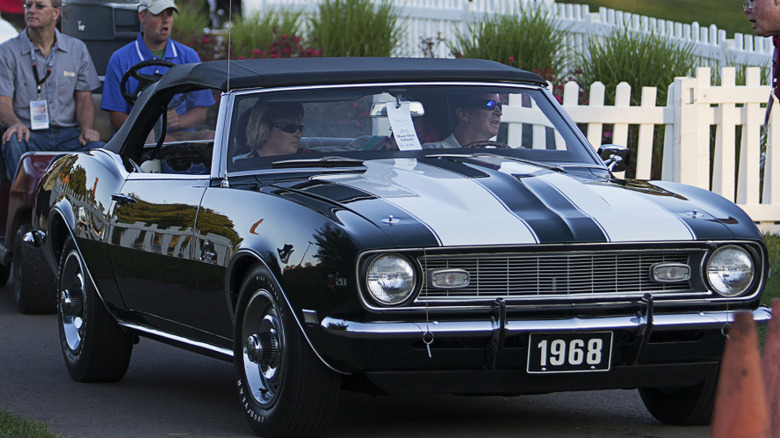
The original Chevrolet Camaro Z/28 was a road-going homologation weapon engineered to race at the Sports Car Club of America's Trans-Am series under the FIA Group 2 Touring Car rules. Equipped with a high-revving 302-cubic-inch (5.0-liter) V8 that produced 290 hp, high-performance suspension, and wider tires, the Z/28 was a menace on road and track.
While homologation required only 1,000 cars, Chevy built 7,199 Z/28s. All but one were coupes. The lone exception was a one-off convertible built for Chevrolet's general manager at the time, Elliott "Pete" Estes. However, it was not his idea. Vince Piggins, Chevrolet's manager of product performance, built the convertible to convince Estes that the Camaro Z/28 deserves a street-legal version. The reason? Estes only drove convertibles. Crucially, Estes greenlighted the project, giving us a whole lineage of Z/28-branded Camaros.
Estes' special Camaro Z/28 Convertible was painted in Fathom Green and featured a special 1969 prototype fiberglass hood. Inside, it had folding rear seats, custom seat belts, and auxiliary instruments on the console, alongside upmarket features like power windows, blue-light stereo, and remote outside mirrors. The soft-top Z/28 was equipped with the same performance suspension as the hard-top model. However, it also had discs on all four wheels, whereas the regular Z/28 came standard only with front disc brakes.
The 1968 Camaro Z/28 Convertible was sold in 1991 for $172,000, a new record for a pony car at the time. In 2024, owner Al Maynard unsuccessfully tried to sell it at an auction for $1 million and later sold it to auto auctioneer Dana Mecum for an undisclosed price. Today, experts estimate the Z/28 Convertible is worth around $1 million.
1969 Pontiac Firebird Trans Am Convertible (8 built | $660,000 to 1.35 million)
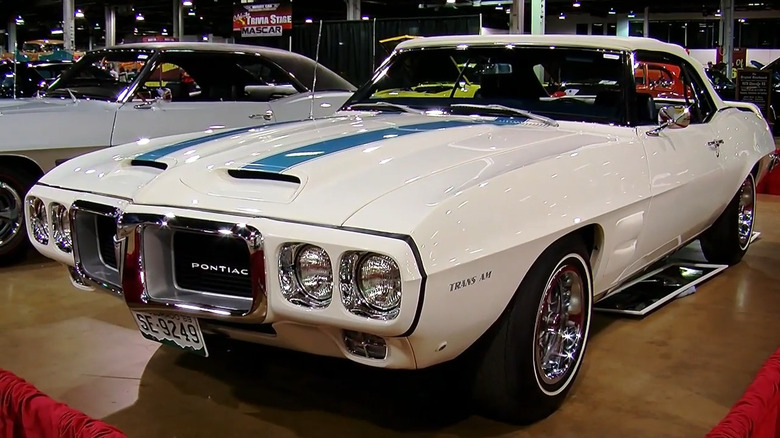
How do you out-corner the Camaro Z/28, a car purpose-built for the twisties? John Z. Delorean, the flamboyant engineer and executive whom you know as the creator of the futuristic DeLorean DMC-12, took inspiration from the lighter, more agile European sports cars of the time.
In the late 1960s, then Pontiac's performance division general manager, DeLorean made it his mission to turn the Firebird into a genuine corner carver. So he tasked Herb Adams, an engineer from the brand's Advanced Design division, to cook up a package that would turn the Firebird into a better-handling car. Herb's team then built the Pontiac Firebird Sprint Turismo development mule, testing a new front suspension that would later be offered with the Trans Am package.
The mule was equipped with a rev-happy 250-cubic-inch (4.1-liter) inline-6 — remember, DeLorean was a fan of lighter sports cars. But after pressure from GM's top brass, the production Firebird 400 was equipped with a 400-cubic-inch (6.6-liter) V8 that produced 335 hp. The Trans Am handling package included a thicker 1-inch front anti-roll bar and urethane instead of rubber bushings, reducing body roll and making the front end significantly more responsive.
Ultimately, Pontiac convinced only 689 buyers to choose Trans Am package, which only eight buyers combined with a convertible top. The eight convertibles were split evenly: four four-speed manuals and four automatics. This makes the 1969 Firebird Trans Am Convertible one of America's rarest and most sought-after pony cars. According to Hagerty's market insights, the 1969 Pontiac Firebird Trans Am Convertible is valued between $662,000 for a fair-condition example to $1.35 million for a concours-level one.
1969 Chevrolet Camaro ZL1 (69 built | $1 million-plus)
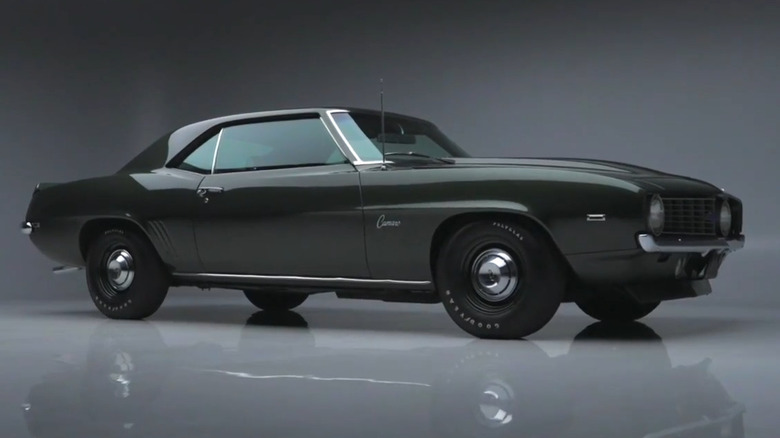
Big-block V8s are great if you want to win drag races, but they're kind of heavy and spoil a car's handling. So how do you get the best of both worlds? Instead of cast iron, you make the engine block from lightweight aluminum.
That's pretty much what Chevy did with the ultra-rare Camaro ZL1. Well, the truth is, producing the ZL1 was never Chevy's intention. Instead, it was the brainchild of Chevy dealers Fred Gibb and Don Yenko, who used Chevy's Central Office Production Order (COPO) system, intended for fleet vehicles like police cars, to order one of the wildest Camaros ever made.
In this case, however, we're glad some rules were broken. See, under the hood, the 1969 Camaro ZL1 packs a 427-cubic-inch (7.0-liter) V8 with aluminum block and head, borrowed directly from Chevy's Can-Am racers. The standout feature of this engine is that it weighed 100 pounds less than its iron-block counterpart, giving the ZL1 a weight distribution similar to a small-block Camaro.
The all-aluminum V8 was a powerhouse. It featured a massive Holley 850 cubic-foot-per-minute (cfm) carburetor, forged internals, and a high 12.0:1 compression ratio, resulting in a 430-hp output, though experts at the time said this was underrated and the real figure was closer to 500 hp. The proof, as always, was in a quarter-mile time in the 11-second range, considered quick even today. Alas, the all-aluminum 427 cost more than the Camaro it was in, adding over $4,000 to the initial $3,200 price. So Chevy produced only 69 Camaro ZL1s, which today reach $700,000 to nearly $1.1 million at auction.
1970 Dodge Challenger R/T Hemi Convertible (9 built | $1.65 million)
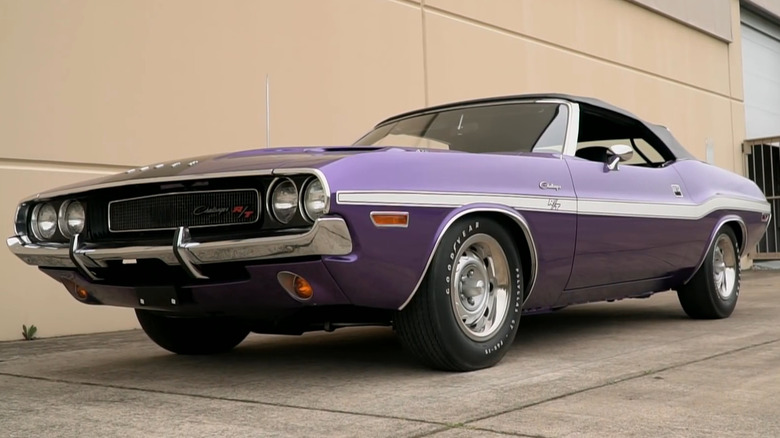
The 1970 Challenger R/T Hemi was the ultimate Mopar pony car at the time. It came with the race-bred 426-cubic-inch Hemi V8, Dana 60 limited-slip diff, front anti-roll bar, and performance suspension and brakes, with bucket seats and Rallye gauges inside. With 425 hp and 490 pound-feet of torque on tap, the Challenger R/T Hemi was a quick beast, reaching 60 in just 5.8 seconds when equipped with the three-speed automatic (per Car and Driver). Dodge offered the R/T plus Hemi combo for two years, though the convertible was only available in 1970.
Like most high-performance convertibles of the time, this one is incredibly rare, with only nine examples built. The other engine options in the Challenger R/T Convertible were a bit more popular, though. In particular, 163 buyers chose the 440-cubic-inch (7.2-liter) V8, and 99 went for the six-pack. The 426 Hemi was the most expensive, exotic option, hence its scarcity. As for transmissions, the R/T (Road and Track) package was offered with either a four-speed manual (five cars) or a three-speed automatic (four cars).
As you'd expect from such a rare car, the 1970 Challenger R/T Hemi Convertible commands seven-figure prices today. In 2016, one sold for $1.65 million at Mecum Auctions (via the ClassicCars.com Journal).
1971 Plymouth Hemi 'Cuda Convertible (11 built | $1 million to $3.5 million)
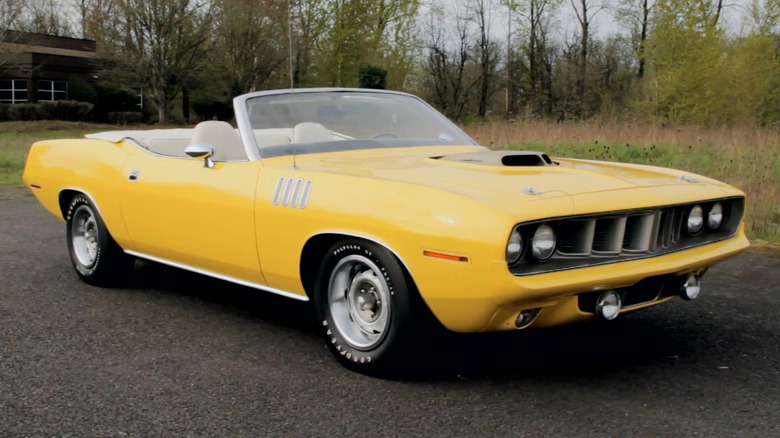
The 1971 Plymouth Hemi 'Cuda is an ultra-rare pony car icon launched right before stricter emissions mandates came into power and the oil crisis struck, thus serving as one of the muscle car era's defiant last laughs.
And what a laugh it was. Under the hood, the Hemi 'Cuda packed a big-block 426-cubic-inch (7.0-liter) Hemi V8 that produced 425 hp and a meaty 490 lb-ft paired with a four-speed manual or three-speed automatic transmission. According to a 1969 Car and Driver review (via Hemmings), this was enough for a quarter-mile time of 14.0 seconds, with an exit speed of 102 mph. The Hemi 'Cuda was also equipped with power steering, power brakes, and a Dana limited-slip diff at the rear. It's not just the Hemi power that makes this 'Cuda special. The 1971 'Cuda is the only one with the unique front fender "fish" gills, which give the front end a keener look.
Not many people chose the big-block V8, however. Plymouth ended up selling only 119 Hemi 'Cudas, of which only 11 were convertibles. That makes the drop-top version particularly sought-after today, often trading hands for seven figure sums. Most notably, chassis number BS27R1B315367 reached a price of $3.5 million in 2014 at Mecum Auctions (via AutoWeek), though other examples had previously sold for $1.32 million and $2.42 million. The four-speed manual convertibles are particularly valuable, as only two were made (though the Audrain Auto Museum says there were seven).
1970 AMC Javelin SST Trans-Am Edition (100 built | $115,000-plus)
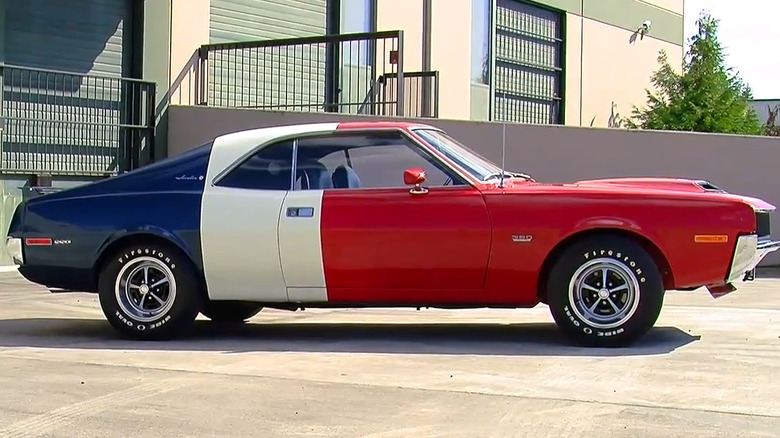
Race car for the road. It's a term that's never entirely true, sure, and in that sense, it fits the 1970 AMC Javelin SST Trans-Am Edition perfectly. This was a car designed to finally put American Motors Corporation at the top of the SCCA Trans-Am podium after the company had struggled for two years. It looked exactly like the race car, too, featuring dual-venturi front grille, divided hood scoop, rear spoiler, and red, white, and blue livery.
However, the Javelin SST Trans-Am Edition wasn't a homologation special in the true sense of the word. Yes, it looked like the race car, but it was also equipped with AMC's run-of-the-mill 390-cubic-inch (6.4-liter) V8, with its power increased from 315 to 325 hp by using different cylinder heads. It was a great engine, equipped with forged-steel crankshaft and connecting rods, but not a racing engine.
What's more, AMC built only 100 vehicles, certainly not enough to reach the required 2,500 homologation units. So how did the Javelin SST even compete? AMC produced 2,501 Mark Donohue Edition Javelin SSTs, which served as homologation examples. These were essentially the same cars as the Trans-Ams, just under a different name.
So, yes, the Javelin SST Trans-Am was more a marketing exercise than a real homologation special. Still, it was a good pony car. Apart from the potent engine, it came with standard four-speed manual, Handling Package, Go Package, and enhanced cooling system. Today, you should expect to pay from $75,000 to $125,000 for a Javelin SST Trans-Am, depending on the condition.
1992 Pontiac Firebird SLP Firehawk (25 built | $38,900 to $108,000)
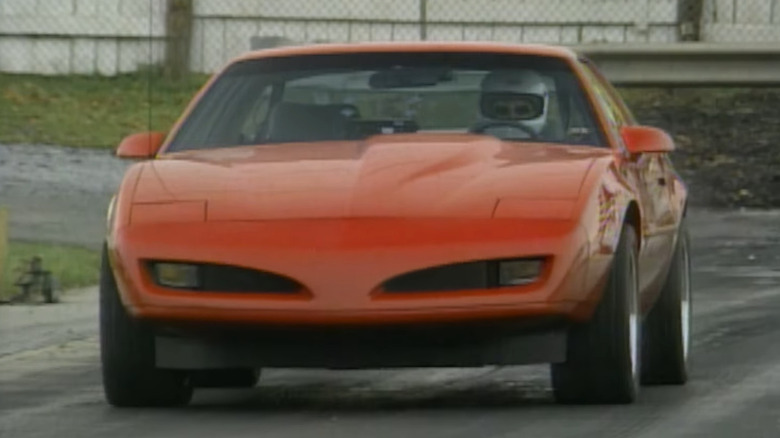
The Corvette has long been the standard for supercar performance on a budget. However, for 1992, Pontiac tried to steal that crown from its General Motors stablemate with the Firebird SLP (Street Legal Performance) Firehawk. Not from the regular Corvette, mind you, but the ZR-1, which at that time came with GM's 5.7-liter V8 with 375 hp. That same engine featured in the SLP Firehawk, albeit producing a lower 350 hp. However, the SLP Firehawk was also lighter at 3,448 pounds (ZR-1: 3,519 pounds), so it accelerated as well as its rival, reaching 60 in just 4.6 seconds (via Car and Driver).
The Corvette-sourced engine wasn't the only impressive part of the SLP Firehawk. This budget supercar also featured a six-speed manual transmission with a carbon fiber clutch, Dana 44 rear axle with a limited-slip differential, and, as part of the Competition package, massive 13-inch Brembo front rotors (same as in the Ferrari F40), roll cage, stiffer rear bushings, and an aluminum hood. In fact, to reduce weight, Pontiac also equipped the car with an aluminum driveshaft. The Firebird SLP Firehawk looked the part, too, with a keen, wedge-like profile.
The problem was, Car and Driver didn't like how the SLP Firehawk handled street duties, saying it was nervous at speed and stating the cheaper Nissan 300ZX Turbo and Corvette L98 were better drivers' cars. In the end, Pontiac never built the planned 250 SLP Firehawks, producing only 25. Despite their rarity, values range from $38,900 in fair condition up to $108,000 for concours cars, per Hagerty.
1970 Chevrolet Camaro Baldwin Motion Phase III (handful of custom orders | $200,000)
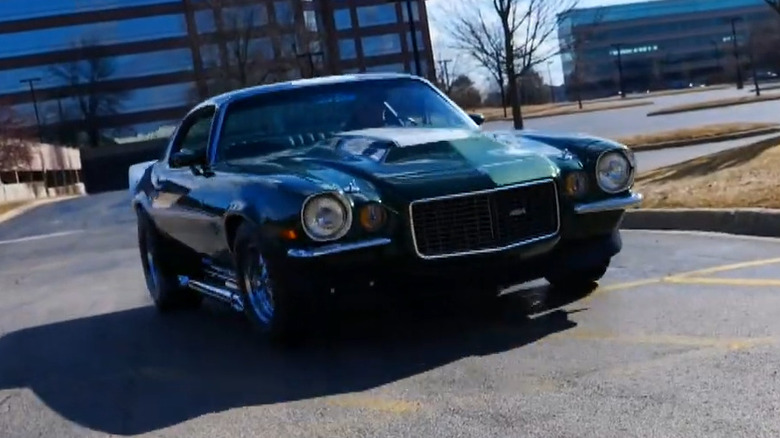
Every new car comes with a warranty that covers repairs free of charge. Custom car builder Baldwin Motion, however, guaranteed that its Camaro Phase III street cars would run the quarter mile in 11.5 seconds, with an exit speed of 120 mph. And it wasn't just marketing — if the car didn't achieve those figures on a sanctioned strip with an approved driver, Baldwin Motion would refund every cent.
To be sure this didn't happen, the custom vehicle builder installed Chevy's massive 454-cubic-inch (7.4-liter) V8, worked some magic on it, and bumped it to a whopping 525 hp. The upgrades included a Holley 850 cfm double pumper carburetor; Phase III valve cover, retainers and chrome oil pan; and COPO aluminum intake with an ultra-flow air cleaner.
To put the power down effectively, Baldwin Motion implemented a 12-bolt Positraction rear diff with 4.10 gears. Furthermore, the four-speed manual with a Hurst Competition Plus linkage ensured quick gear changes (automatics were slower at the time, though some manual cars still outrun their automatic siblings), while the Super Bite suspension provided stability. Baldwin Motion's Phase III Camaros looked the part, too. Each featured turbine-like Cragar SS wheels, COPO 9796 rear spoiler, split front bumper, side-mounted exhaust pipes, and the customary motion stripes.
Although we couldn't find exact production numbers, Baldwin Motion's Phase III Editions are its rarest cars, so it's safe to assume only a handful of these Camaros were produced. However, prices remain grounded. At Kissimmee 2021, a pristine example was sold for $198,000 (via Mecum Auctions) — not much considering how rare and radical these Camaros are.