

Rolls-Royce Please Let Me Be The One To Slam The Nightingale's Trunk Shut 15,000 Times
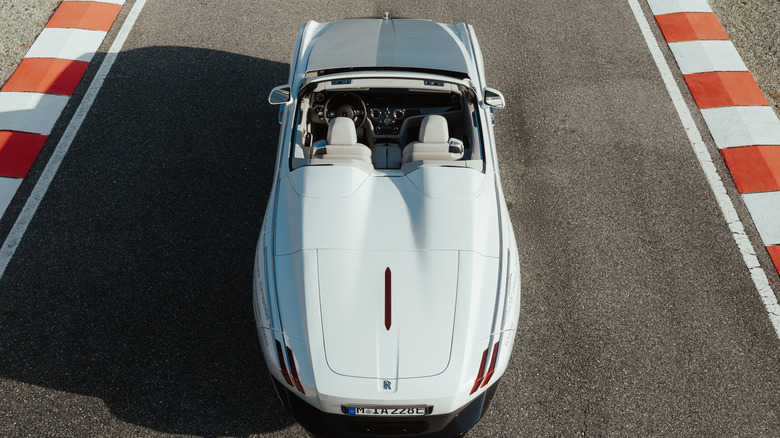
One of the most exciting developments in this century of the automotive industry is how automakers promote upcoming new cars throughout their development cycle, from early test mules to camouflaged prototypes and the final production model. Before a car actually goes on sale, prototypes have typically driven millions of miles in testing, both real and virtual, and the cars have been extensively torture-tested. I love that car companies share a lot more details on this process these days, especially when it comes to really high-end vehicles with complicated engineering.
When Rolls-Royce unveiled Project Nightingale back in April, it had only just started building the first prototypes of the giant electric convertible, but now the project's development is in full swing. The automaker says its going to spend 350 collective weeks testing the Nightingale, because the 100 customers Rolls-Royce is selling them to have been clear that they want to actually drive their cars in all sorts of locales around the world.
 Rolls-Royce
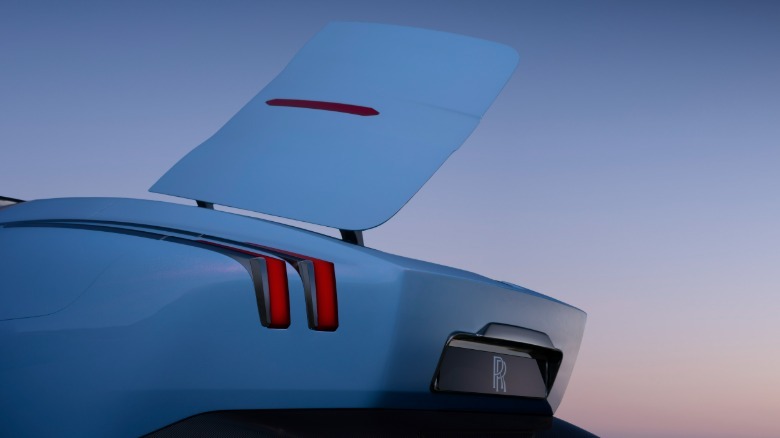
There is one part of the Nightingale's testing that I'm particularly jealous of: Rolls-Royce says its Piano Boot trunk lid is going to be open and shut 15,000 times. Instead of having a robot do it (in fact, I'm almost certain the panel is powered anyway), I think Rolls-Royce should let me be the one to slam it shut 15,000 times. That would be a great arm workout, and really relieve some stress.
Don't worry, the top can withstand 176 degrees Fahrenheit
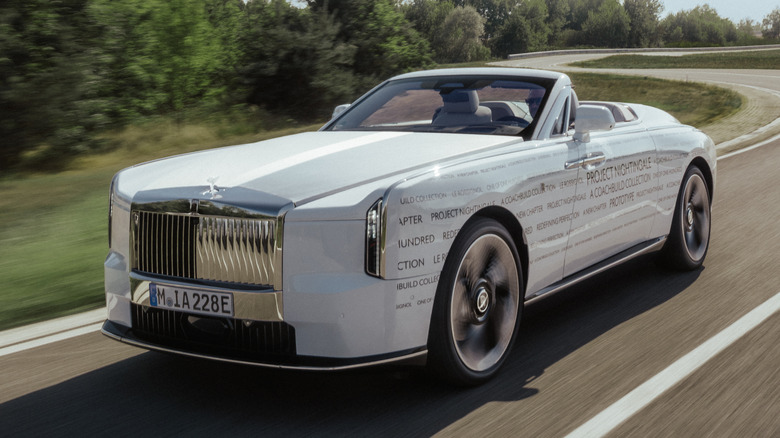
The Piano Boot is something Rolls-Royce has never done before. (The Boat Tail has a really absurd trunk setup that even has its own parasol, but the trunk lid itself opens normally.) It opens sideways on a cantilever, thus the Piano Boot name, and Rolls-Royce says "it will be subjected to up to 15,000 cycles of opening and closing, ensuring repeated use never interrupts the perfect theatre and effortless operation of this hallmark gesture for generations to come." I'm assuming they've created a rig that makes the power open/closing mechanism cycle 15,000 times automatically, but I really do think it would be better if I slammed it manually.
A lot of time is being dedicated to the roof, too. It's lined with a newly developed sound deadening material made from cashmere, fabric and some sort of "high-performance" composite, and as part of its 10 different stress tests, Rolls-Royce will make sure it can withstand temperatures of up to 176 degrees Fahrenheit. The company also designed a new electric wind deflector that will be tested for its heat retention, and to keep interior turbulence to a minimum.
Development started almost three years ago
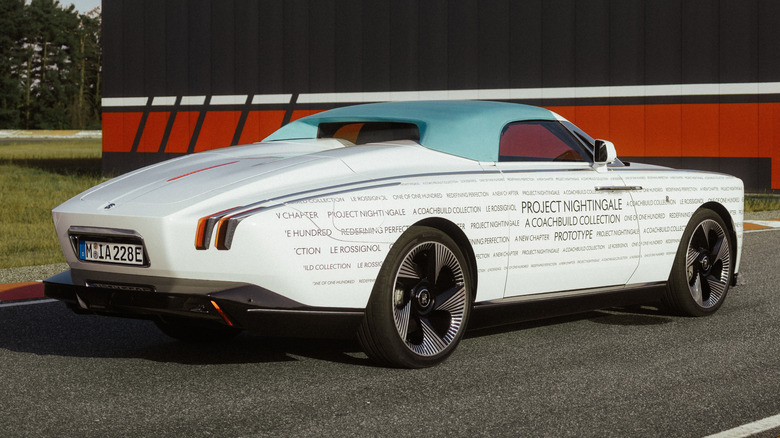
Rolls-Royce says Nightingale prototypes will be driven in the Arctic Circle, the Arabian Peninsula and the Mediterranean, reaching altitudes of over 9,000 feet and experiencing extreme temperatures. At a high-speed test facility, the convertible will reach its 155-mph top speed as engineers make sure wind noise is "barely perceptible." We know the Nightingale uses the same powertrain as the Spectre, so there shouldn't be too much new stuff to be tested on that front. The on-road testing started in Southern Europe, at Henry Royce's Le Rossignol villa on the French Riviera that the Nightingale takes its name from. In the early 20th century, Rolls-Royce engineers would do "relentless speed and durability testing" between London and Monte Carlo, using that estate as the home base.
On-road testing may have just begun, but development of the Nightingale started almost three years ago, and static models have already gone through 1,430 hours of aerodynamic testing in wind tunnels and digital sims. All this data and testing may be well and good, but the company says "it is the judgement and instinct of Rolls-Royce's most experienced engineers that ultimately determine whether a motor car has achieved the serenity and authority for which Rolls-Royce is renowned."