

Canada's Dempster Highway Is A 460-Mile Dirt Road Stretching Across One Of The Harshest Places On Earth
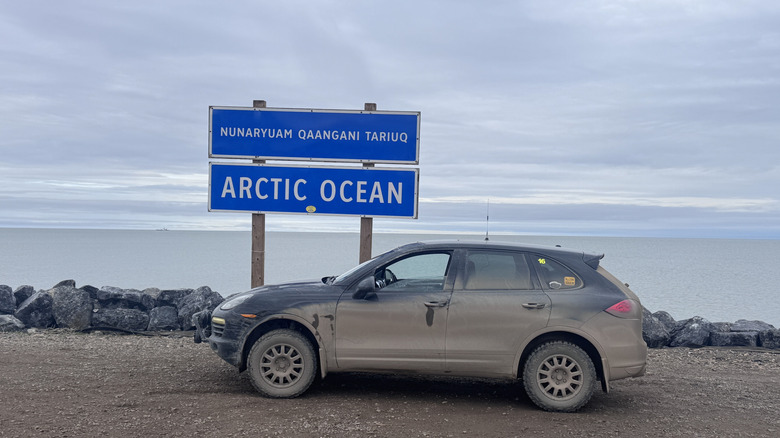
When an opportunity came up to run an enthusiast rally to the Arctic Ocean, it took me about twenty seconds to jump on it. I had no idea what I was in for, but the draw of the Great White North was too strong, and I ended up driving along what is perhaps the most picturesque road on the face of this earth. While driving the incredible Dempster Highway north to Inuvik, and for the last decade with an extension that takes you all the way to Tuktoyaktuk, I was blown away by the mountain vistas, colors I didn't think were possible in nature, and untouched landscape as far as the eye can see. Sometimes it's nice to be reminded of what this planet looks like without wide swathes of human intervention.
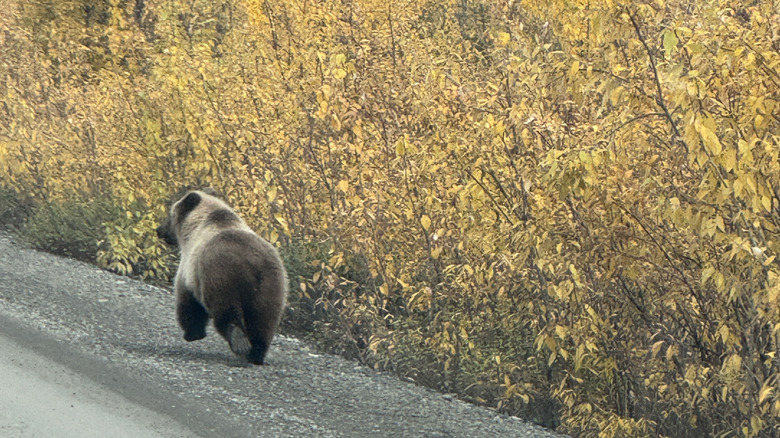
There aren't enough words in humanity to describe the gorgeous vistas you'll experience driving the span of the Dempster. Our trip took us there in early fall, so the trees of the southern expanse were all shades of crimson and gold, while the northern segments of permafrost were coated in a blanket of blood red flora. Each of the hundreds of pristine lakes were a glassy mirror finish reflecting the towering snow-capped mountain peaks. Nature was all around, with sights of bear, bison, fox, ptarmigan, raven, porcupine, bald eagle, and moose along the drive.
 Bradley Brownell/Jalopnik
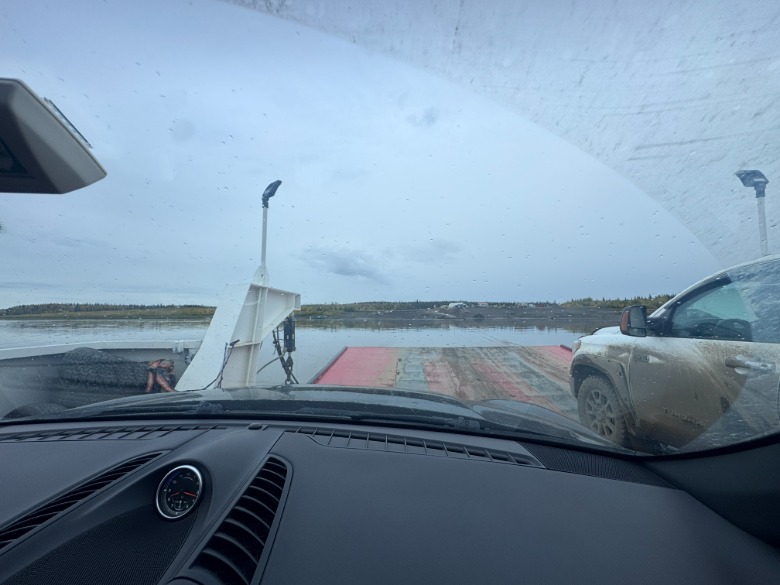
Beginning just east of Dawson City, a town that's near the eastern border of Alaska, the Dempster traverses 460-ish miles of wide open wilderness, crossing over two different mountain ranges and the Peel and Mackenzie rivers (requiring ferry service) as it heads north. The Dempster features no major intersections along its route, so once you're on this ride, you can't get off until the end. There is one stop along the route for fuel, a hot meal, lodgings, and libations: the Eagle Plains Hotel. Press on and there are adventures to be had.
Why and how does this road exist?
This is a road that probably shouldn't exist. For decades it was a sled dog route between Dawson and Fort McPherson (population 647), though the route expanded its presence through the Klondike gold rush of the 1890s, which brought an estimated 100,000 prospectors to the region.
It was another type of prospecting, oil exploration, that saw investment in road infrastructure for the length of the Dempster in the 60s and 70s. When oil was uncovered in the Eagle Plains area, the Canadian government invested in building a road to that point. Construction stopped in 1962, however, as the oil dried up. It wasn't until the 1968 discovery of oil in Alaska's Prudhoe Bay that Canada determined to finish the road north to stake its claim on the land. The road was finally finished in 1979 as the only direct connection between the Canadian road system and the Arctic Ocean.
 Bradley Brownell/Jalopnik
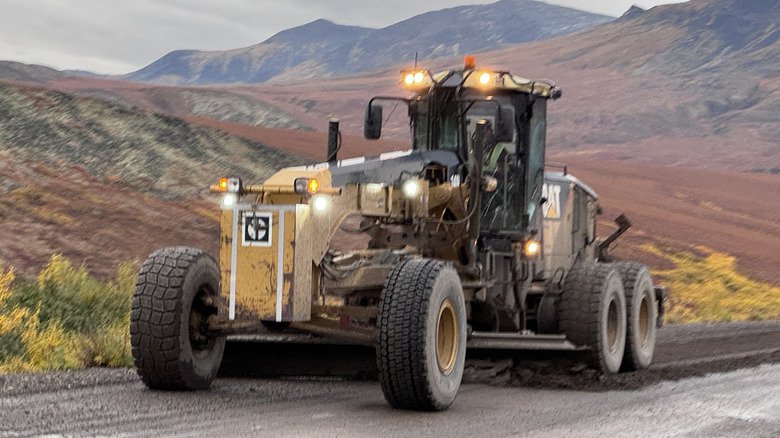
That this road continues to exist in the condition it does is nothing short of an engineering marvel. The road graders are constantly trying to keep the dirt road and its myriad potholes in check. I like to imagine that grading the Dempster is much like painting the Golden Gate Bridge; by the time you get to the end, it's time to turn around and start grading it again. This is a road with an extremely wide and stable base, allowing for long sections of smooth almost-pavement-like driving. While the speed limit is theoretically 70 kilometers per hour, it was quite easy to spend much of our driving time above 100, and the locals would regularly pass us in their work trucks doing at least 140 kph.
In some sections of the road, however, particularly in the typically wet altitude of Eagle Plains, the road devolves into a pockmarked hellscape. They are relatively few and far between, but you need to be keenly aware of your surroundings while skating across them.
To make things a little more exciting, there are two points along the Dempster where there is signage warning drivers that the road becomes an emergency landing strip for several hundred meters. We didn't run into any low-altitude aircraft, but it's certainly worth slowing down and scanning the skies for an incoming Mayday.
What do you need to succeed?
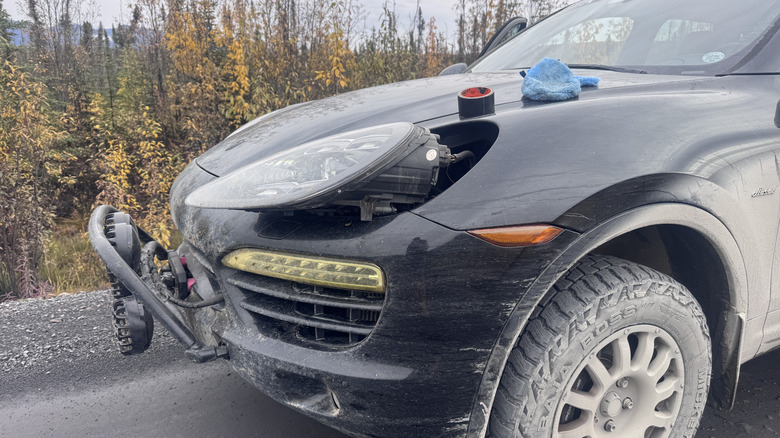
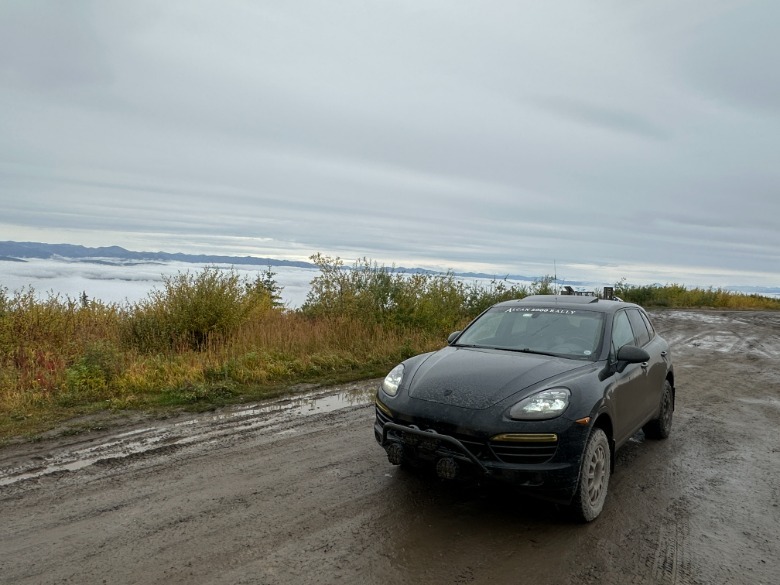
Having now done the Dempster up and back, I can pretty confidently tell you that almost anything can make the trip, so long as you have enough ground clearance and a decent tire. But even then, you're likely to suffer some costly damage to your vehicle that will need repair. As I write this, the 2013 Porsche Cayenne that we took on the journey is at a wheel shop getting out-of-round wheels repaired, and the windshield has four brand new rock chips in it that weren't there when we crossed the border into Canada. The incredible level of bumps and crashing suspension moments also cracked both of the car's headlight retaining brackets, and we had to resort to holding both sides in with duct tape. These are all things that can be relatively easily repaired, but they remain minor annoyances.
The group that I went with on the 2026 Alcan 5000 made it through the two days of Dempster relatively unscathed. Two cars suffered tire blowouts, one car slid off the road and had to be recovered by a semi truck, and an old Subaru suffered a gashed fuel tank and had to be towed over 100 miles to Fort McPherson, where it was expertly repaired. Nobody was left behind, and no cars had permanent damage, but preparation was key.
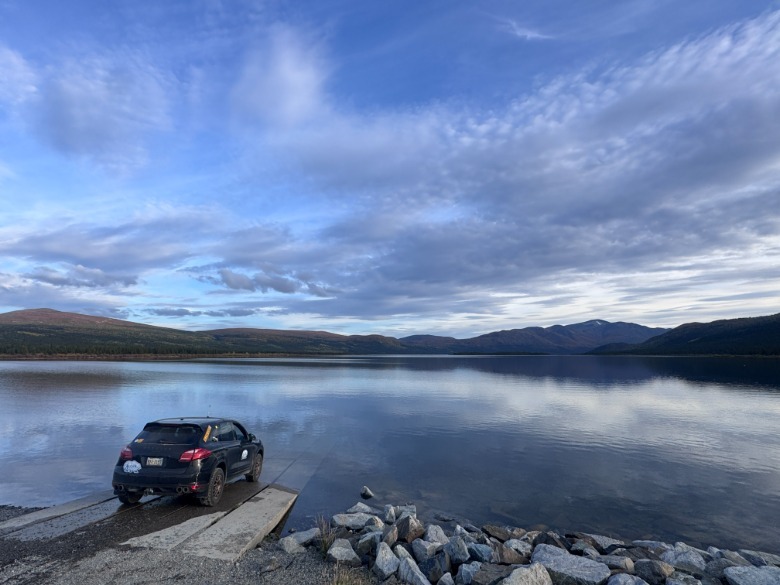 Bradley Brownell/Jalopnik
Here's a small summary of what I packed for the trip: For the car, I put a full-sized spare, an off-road jack, a mess of tools, a portable battery-powered inflator, a fire extinguisher, road flares, a set of recovery boards, and a tow strap in the back hatch. For the people inside, I packed bug spray, bear mace, a five-gallon bag of clean water, and as many high-protein snacks as I could find, just in case we found ourselves stranded for a while. There are only about four places on the drive to stop for a washroom break, but they're remote, so we figured it would be worthwhile to bring our own toilet roll as well.
If I were to make the trek again, I would have packed a comfy pair of slippers, because the Eagle Plains restaurant and bar won't let you walk around the premises with your outside shoes on. Because it's always so muddy up there at the hotel, the rugs would be absolutely wrecked if they let a few hundred people traipse all over them in boots. As it was, I had to wear socks into the tile-floored men's room, which was easily my least favorite part of the trip. You should also bring plenty of money, because a liter of diesel on the Dempster cost me 3.30 CAD, which translates to about $8.86 per gallon at current exchange rates (slightly less than I paid in California, by the way).
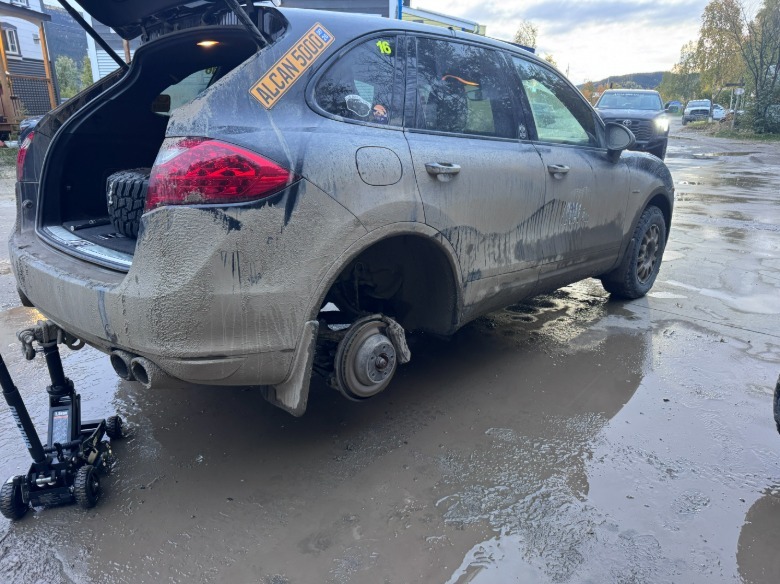
A word of warning that may help prevent wheel and brake issues on Dempster Highway: if the weather is wet, you'll want to get somewhere you can remove your wheels and pressure wash them out (there are a few car washes specifically for this in Dawson City). The caked on dirt in the wheel barrels of my Cayenne caused three different issues. The first was simply an issue of wheel balance, as the rocks formed lop-sidedly and the car suddenly had a high-speed shake. That same layer of dirt actually wore through the rear brake pad wear sensor electric lead, causing the car to throw a brake wear fault. And finally, we noticed the rear brake calipers were getting quite scratched themselves, and being aluminum Brembo units, if left alone long enough, they could have worn through the surface of the caliper altogether, causing an actual brake failure. After over 1,000 miles on the Dempster and the highway to Tuktoyaktuk, the wheels needed a proper wash.
 Bradley Brownell/Jalopnik
We took our trip north at perhaps the perfect time—costly diesel aside—for a Dempster run, as it came before the first big snowfall of the year, and late enough that most of the bugs had settled down. I was warned that summer north of the 60th parallel was a bug-filled mess, but on our trip the bug spray (and the bear spray) went unused. I even had one of those hats with a net over your face, and I didn't get to wear it once. With the leaves turning, it was just a spectacular sight, to boot.
Why is it so memorable?
There are so few opportunities in the world where you can say you drove all the way to the Arctic Ocean. There are only four roads in the world leading this far north: the Dempster and Dalton Highways in North America, the Nordkapp in Norway, and a route in Russia. It's not only about driving this far north, either, but it was about the chance to take a nice cold dip in the Arctic Ocean, which I absolutely didn't pass on. While the journey is a long one, with each passing of the Dempster taking most of a day of driving, it's something that I won't soon forget.
This was one of those "Type 2 fun" trips that I so deeply enjoy, playing up to my Midwestern do-it-the-hard-way sensibilities. I've been to many far-flung corners of this earth, and I've never seen any landscape quite like that of Canada's Yukon and Northwest Territories. There is a level of serenity here that simply doesn't exist anywhere in the U.S. I've never before been on a nearly 500-mile stretch of road without an intersection, without a billboard, without traffic or noise before this. It was truly spectacular, and if you get the chance to do it, you should.
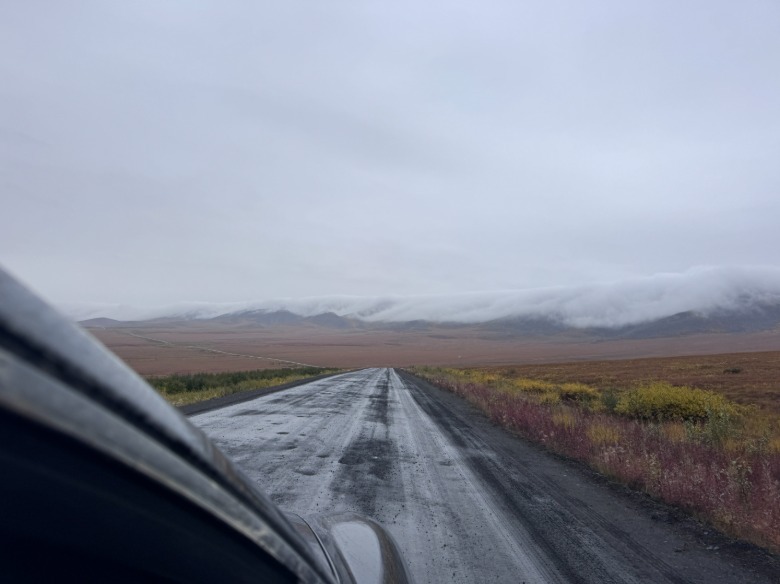
As humanity spreads its icky little fingers deeper into the wilderness, razing forests to grow corn, this remains one of the last few unsullied vistas you can get to by car. Aside from the magnificent road itself, there's hardly anything belying the existence of humanity. If you ever wanted to get in tune with nature and see some rare sights, the Dempster has got it for you. One of the rudimentary rest area pullouts (below) saw us stopped at high altitude above a cold fog that had rolled in, and it was so incredibly beautiful.
 Bradley Brownell/Jalopnik
Canada is an incredible place to visit, and everyone I met was properly kind and decent. Regardless of whatever bonkers trade war the White House is committing against our continent-mates, we were still afforded a warm welcome everywhere we went. Canadians and Americans aren't so different, despite the monarchs on their money, affinity for syrup, higher minimum wage, and access to affordable healthcare. Pack accordingly, drive safely, make sure you have the vehicle to handle it, and the budget to repair it when you get back. Go out for a rip. You'll have an absolute blast.