

California's Car Culture Is Codified With Passing Of Leno's Law And New Lowrider License Plate Design
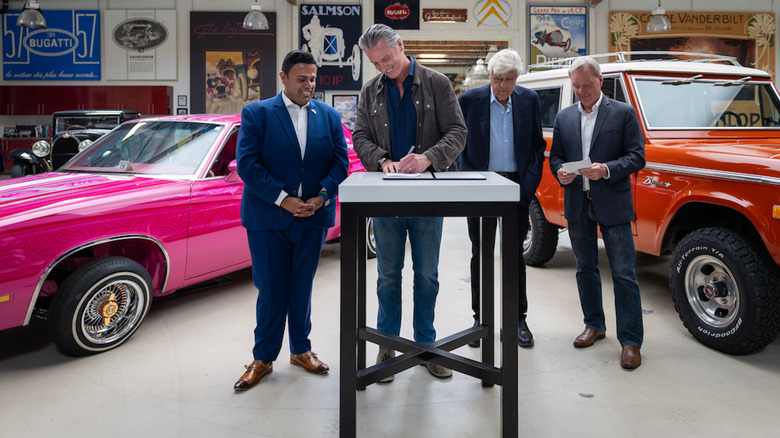
California Governor Gavin Newsom signed three important pieces of automotive legislation into law today that celebrate The Golden State's vibrant car culture: SB 1392, more commonly known as Jay Leno's Law; AB 2541; and SB 1069. Leno's Law slackens smog regulations on qualifying collector cars built between 1976 and 1985 to "protect a treasured part of California's culture," while AB 2541 establishes a lowrider specialized license plate design to celebrate the Chicano culture that's so important to California, with proceeds going to a newly created Lowrider Arts and Culture Fund. Newsom also signed SB 1069, a SEMA-backed bill that makes it easier for aftermarket emissions-related products to be sold in the state.
The state of California is well known for its car culture, from being the home of the first modern freeway in the U.S. to one of the most iconic coastal stretches of road in the world, not to mention the notoriously car-dependent city of Los Angeles. It's also home to some of the strictest emissions regulations in the country thanks to the California Air Resources Board (CARB), which is good for the lungs of Californians, but has also made it difficult to keep non-smog-exempt classic cars road-legal. These new legislations aim to make it easier for car culture to flourish in the state, without darkening California's famously sunny skies with smog that was once so bad, locals thought it was chemical warfare.
This is a modified, stricter version of the original Leno's Law
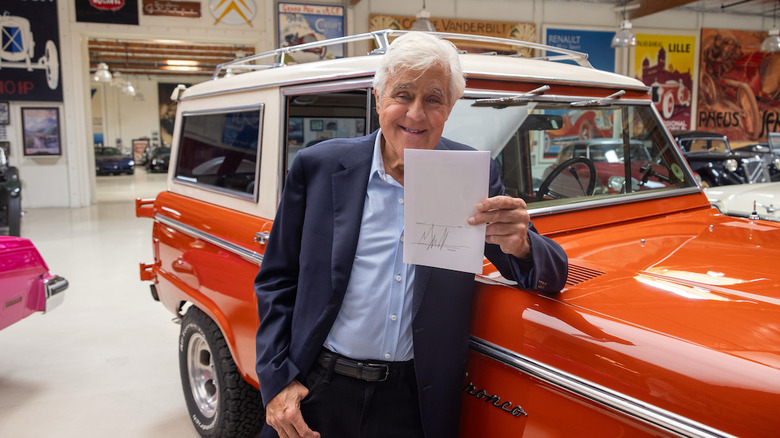
The concept of Leno's Law has around for a while now, but its first draft, officially labeled SB 712, got shot down in committee in August of 2025. Tweaks were made and it was reintroduced as SB 1392, which got signed into law today. The exemption was narrowed with the new iteration of the law, so it now only applies to vehicles from model years 1976 to 1985 that are insured as collector vehicles or driven less than 1,000 miles per year. The earlier version of the proposed law aimed to exempt any 35-plus-year-old motor vehicle registered and insured as a collector car from California's biennial smog tests, without any mention of annual mileage limits.
Gasoline-powered cars from 1975 or earlier have always been completely exempt from California's smog checks, and California-registered diesel vehicles that are from 1997 or earlier have always been completely exempt from smog checks, as well. A statement released by California Governor Gavin Newsom's office said, "By limiting Jay Leno's Law to a small class of qualifying collector vehicles that are driven only sparingly, California can keep its foot on the accelerator toward a clean transportation future while maintaining our status as the cultural epicenter for America's classic car heritage."
You can't talk about California's car culture without talking about lowriders
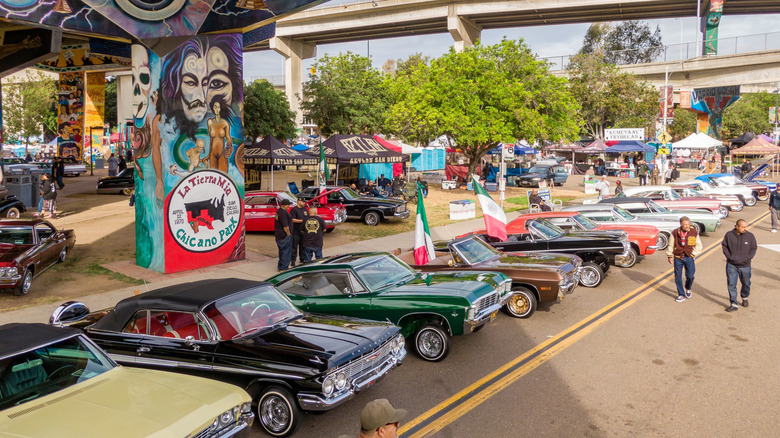
California passed AB 436 in late 2023, which legalized cruising, a largely harmless automotive tradition originally popularized by Chicano Americans that was previously outlawed in many California cities in the early 1980s. I wrote a celebratory blog about the legalization of this important cultural tradition, and was surprised to see several comments criticizing my choice of wording in calling lowriders and cruising important cultural traditions. Particularly in the Chicano communities in California, lowriders are passed down through generations of proud Mexican-American families, whose entire circle of community is brought together by celebrating these rolling pieces of automotive artwork.
Newsom's office acknowledged the discriminatory nature of cruising bans and state restrictions on lowered vehicles that particularly targeted the Latino lowrider community, saying they "criminalized cultural expression and attempted to suppress a movement rooted in identity, creativity, and community pride."
Assemblymember Mark González, who represents California's 54th District (composed of Los Angeles, Commerce, Montebello, and Vernon), penned AB 2541, also known as the Lowrider License Plate Bill. González said, "AB 2541 says that Chicano history is California history, that our cultura belongs on California's roads, and that we should invest in the artists, organizations, and youth programs carrying this legacy forward for the next generation."
Beyond requiring the DMV to design a license plate that reflects lowrider culture and heritage in consultation with the Arts Council, it also establishes the Lowrider License Plate Program once the DMV receives at least 7,500 paid applications by January 1, 2032. The program deposits revenue in the new Lowrider Arts and Culture Fund, which will be used to fund lowrider arts and cultural preservation efforts statewide.
A SEMA-backed bill designed to speed aftermarket products to market, was also passed today
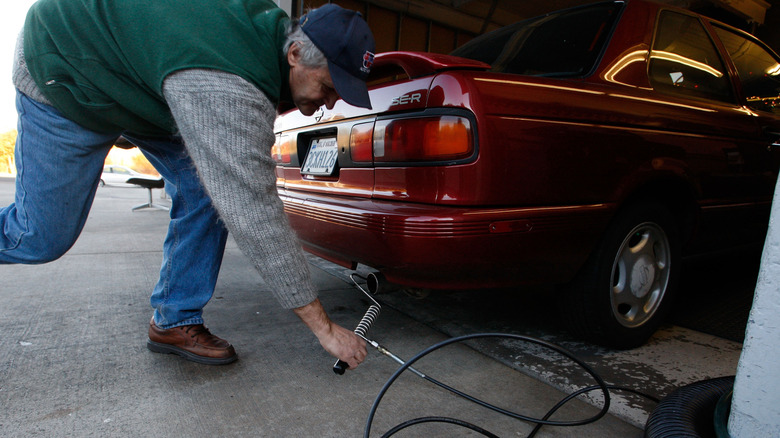
Newsom also signed SB 1069 today, which establishes a new conditional approval process allowing qualifying emissions-related aftermarket products to be sold under the SEMA Certified Emissions Program while CARB completes its final review. Prior to the passing of this bill, emissions-related automotive aftermarket products required a CARB Executive Order before they could legally be sold, advertised, or installed in California. CARB retains its authority to ultimately approve or deny the executive order, and California's existing emissions standards remain unchanged by this bill.
In a statement, SEMA CEO Mike Spagnola said, "SB 1069 will give manufacturers that have invested in emissions testing and compliance a meaningful pathway to get qualifying products to market faster in California, and enable new products to reach consumers, provide small businesses with certainty to invest, and keep American companies competitive."
These new laws will make it easier for car enthusiasts in California to celebrate their passions, and share them with generations to come.