

13 Motorcycles With Top-Tier Resale Value
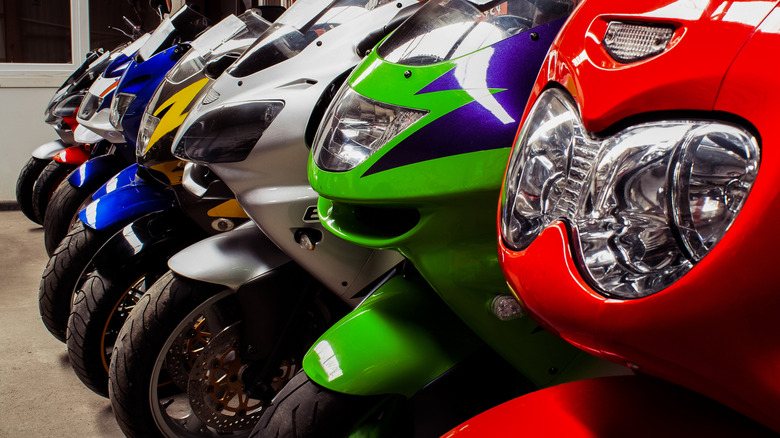
We write pretty often around here about vehicles with unusually low resale value. Part of it is the human urge to rubberneck at the misfortune of others, and part of it is to point out some awesome performance bargains available through the magic of depreciation. Today we're talking about the other side of that coin, where we look at some genuinely exciting bikes that hold their value almost shockingly well. Think Honda CBR1000RR-R Fireblade, Kawasaki Z900RS, and even a BMW you might not see coming.
Now, resale value is a moving target, so rather than mixing bikes of different ages and trying to declare one eternal champion, we gave everything here the same five-year runway. We started with 2021 motorcycles and compared their original U.S. manufacturer's suggested retail price with J.D. Power's current average retail value for the same model and year. For example, J.D. Power currently puts the value of a 2021 Honda CBR1000RR-R Fireblade SP at $26,280 against a $28,500 original MSRP, meaning that five years after rolling out of the showroom it still retains more than 90% of its new-bike value.
A few of these have even crossed the depreciation Rubicon and found themselves with a five-years-later resale value that's higher than what they cost new. Nobody has ever mistaken us for financial advisers, but just to be clear, we're not taking that to mean we found a bunch of two-wheeled appreciating assets that also happen to be obscenely fast. It just means some bikes appear to be holding their value extraordinarily well, and riders who bought and sold well might have gotten away with an extraordinarily low cost of ownership.
BMW M 1000 RR
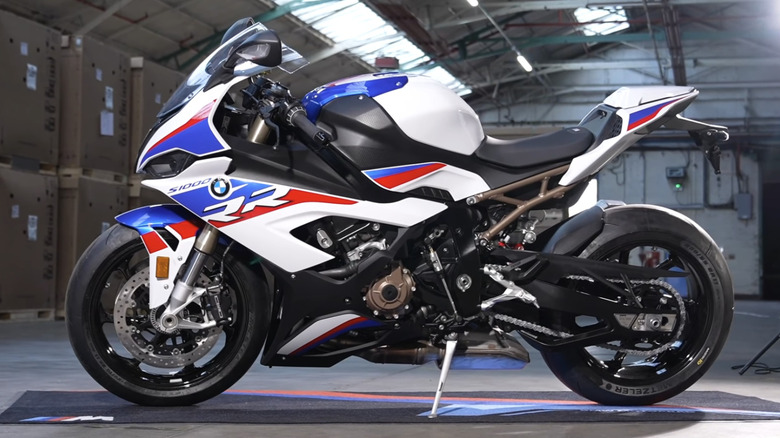
It's been more than a decade since BMW really went down the path of putting its iconic M badge in places it has no business being, but 2021 marked the first time that BMW Motorrad got in on the action. The BMW M 1000 RR is a genuine M bike, and we don't mean "genuine M bike" in the way someone might argue that the M235i xDrive Gran Coupe is a "genuine M car". They took the already-serious S 1000 RR and turned it into a homologation machine aimed squarely at World Superbike competition. That alone gives this one a little more provenance than your neighbor's M Sport crossover, but we can reasonably guess that some combination of being a genuinely good bike coupled with the if-you-care-you-care M badge novelty has proven a formula for preserving resale value.
The 2021 M 1000 RR sold for a $32,495 original MSRP and has a current average retail value of $29,515, putting it in roughly the 91% range for five-year value retention. Not a bad deal for something that went on to win the 2024 WorldSBK riders' championship. By the way, BMW built a limited-edition carbon-packed $60,000 version to celebrate its WSBK Championship win. And considering there are only 54 of them, we're guessing they might hold their value a little, too.
Honda CBR1000RR-R Fireblade SP
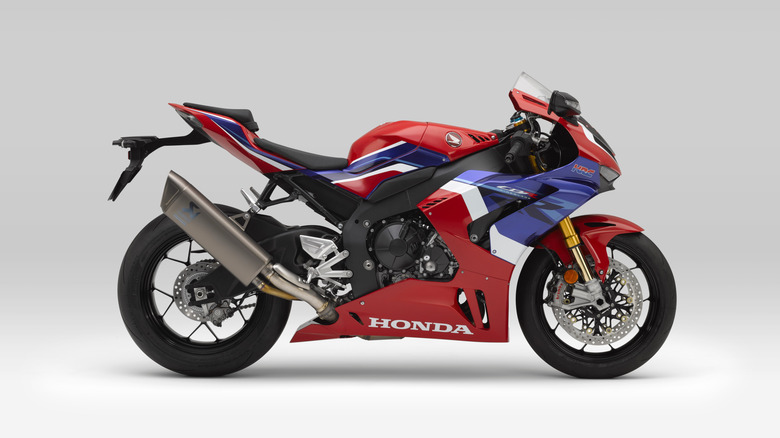
If you're going to spend the kind of money it takes to get one of the quickest sportbikes on the market, it's nice if you aren't leaving your resale value in the dust along with your riding buddies. The 2021 Honda CBR1000RR-R Fireblade SP started at $28,500 when new, and J.D. Power currently pegs its average retail value at $26,280. In other words, five years later it's still hanging onto about 92% of its original sticker price.
It appears that the zeal of Honda acolytes has intersected with an objectively impressive performance machine that the broader market can't ignore to create enthusiast sentiment that translates into a financial edge. The 2021 model year that we used for our depreciation metric here happened to be an all-new redesign of a bike that had been iterating pretty conservatively since 2008. That helps explain why the Fireblade SP still feels special. It was expensive from Day One, built as a serious halo bike, and remains exotic enough that depreciation hasn't exactly mauled it. If you bought one new in 2021, the resale market has been unusually kind.
Kawasaki Z900RS
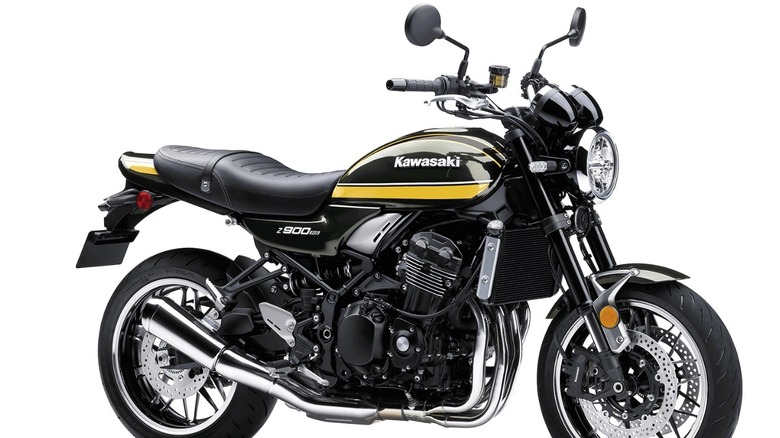
A bike that looks like an old one but costs as much as a new one? That seems like a terrible deal. Or does it? Because here is proof that retro styling can meet modern sensibilities without inheriting the modern depreciation curve. Not only does the Kawasaki Z900RS do retro right, but it does it while maintaining about 93% of its original MSRP of $11,299 after five years of you looking cool on the back of it.
J.D. Power currently estimates average retail value at $10,480, and honestly the appeal is pretty easy to understand. You get the visual language of a classic Kawasaki without carburetors, 1970s brakes, or the other charming little reminders that old motorcycles were built in another century. The Z900RS has managed to turn nostalgia into something people still want to pay real money for, and that makes it one of the more convincing examples on this list of retro design doing more than just looking backward through rose-colored helmet visors.
Suzuki GSX-R600
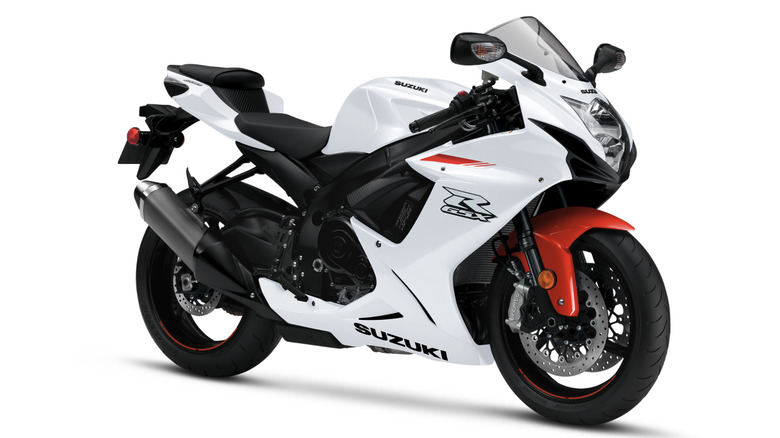
As Suzuki's iconic gixxer celebrated 40 years of speed last year, the GSX-R600 was out there zipping along and leaving not a whole lot of money in its wake. 2021 wasn't exactly a revolutionary year for the bike, with no major changes since 2011. Sometimes that can create some downward pressure on resale, but the market appears to have decided that Suzuki got enough right in the first place.
Suzuki listed the 2021 GSX-R600 at $11,449, while J.D. Power currently puts average retail value at $10,740. That works out to roughly 93% of its original sticker price still hanging around five years later. Real-world asking prices point in the same general direction, with recent Cycle Trader listings for 2021 GSX-R600s hovering around $11,000.
Part of the explanation may simply be that Suzuki has kept giving riders essentially the same thing because plenty of them still want it. The GSX-R600 is a 599-cubic-centimeter inline-4 supersport that's great in corners and not too heavy, built around the kind of high-revving middleweight formula that used to define an entire category. Five years on, buyers appear to still want exactly that, and the GSX-R600's strong resale value suggests there's something to be said for sticking with a formula that works.
Suzuki GSX-R1000
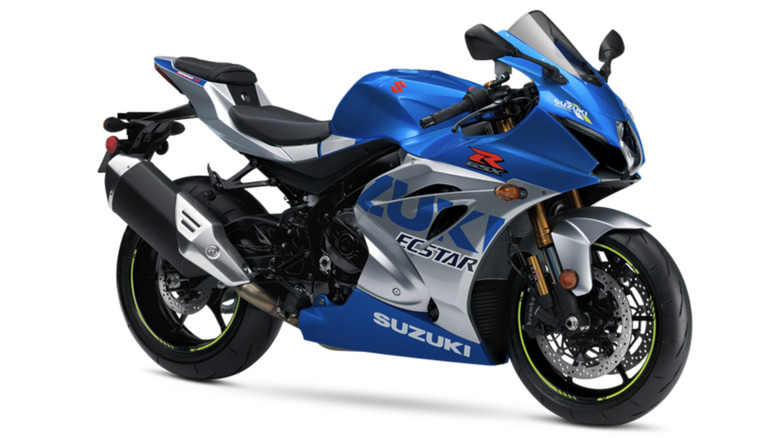
If the GSX-R600 proved Suzuki could hang onto resale value without changing much, the GSX-R1000 makes the same case with a whole lot more motor. Suzuki listed the 2021 GSX-R1000 at $15,799, and J.D. Power currently estimates average retail value at $14,895. So, five years later, the liter-bike Gixxer is still hanging onto around 94% range of its original sticker price.
That makes a little more sense when you remember what this thing is. The GSX-R1000 is the flagship version of one of the most iconic superbikes of all time, and in 2021 Suzuki wasn't so much reinventing the segment as continuing to refine a design with results that have become pretty hard to argue with.
Real-world prices don't make the J.D. Power figure look completely outlandish, either. One current Cycle Trader listing has a 2021 GSX-R1000 with just over 4,000 miles asking $15,999, essentially back at original MSRP. That doesn't mean every used example is secretly appreciating, but it does suggest buyers still shell out serious money when even a pretty old Gixxer is still faster than the most advanced superbikes on the track.
Kawasaki Ninja 650
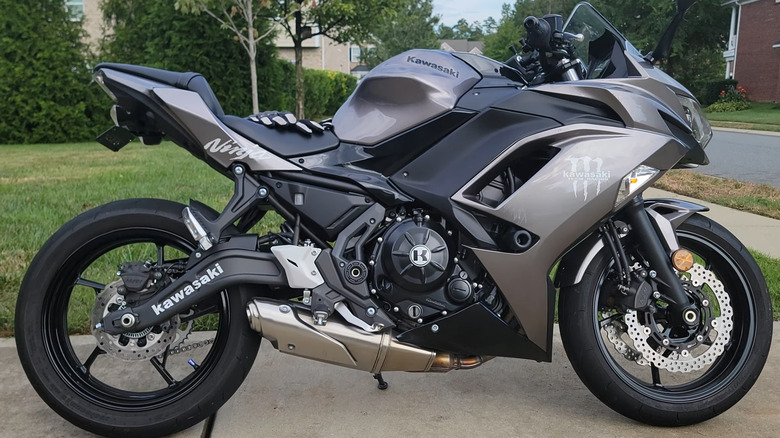
The Ninja 650 is a good reminder that strong resale value isn't reserved for exotic homologation specials and nostalgic collector bait. Nor do you have to spend big to hold value. The 2021 model started at $7,599, and five years later it's still sitting pretty with an average retail value of $7,180 per J.D. Power. That means that the base Ninja 650 is still worth somewhere in the neighborhood of 94% of its original MSRP. Current asking prices are a little messier, as they always are, but still point to a healthy used market: MotoHunt shows 2021 examples asking roughly $7,000 to $8,500 depending on mileage and equipment.
There's probably no great mystery behind the appeal. It's a rad bike with creature comforts and a curb weight just over 420 pounds, making it a genuinely usable middleweight rather than something that demands a racetrack to justify itself. Apparently practicality can preserve resale value too, provided you put enough Ninja stickers on it.
Kawasaki Ninja 400
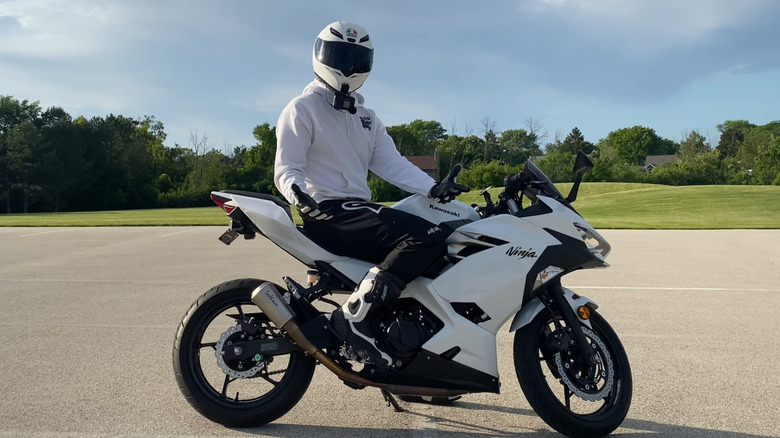
The Kawasaki Ninja 400 is one of the best new motorcycles for beginners in the U.S. market, but what if you look ahead to a few years later when you inevitably start thinking wistfully about that 650 we just covered (or the ZX-6R we'll get to in a minute)? Well, it turns out newly overconfident riders can trade up without taking much of a financial beating, as the 400 started at $4,999 and is now thriving on resale at a $4,765 estimate from J.D. Power. That leaves it hanging onto roughly 95% of its original sticker price after five years.
That kind of retention makes a little more sense when you look at what Ninja 400s offer for the money. Current asking prices back up the idea that buyers still want them, with 2021 examples on Cycle Trader clustering around the mid-$4,000s to mid-$5,000s. So while the Ninja 650 showed that practicality can hold value, the 400 makes an even simpler case: Being affordable in the first place doesn't mean you have to get crushed when it's time to sell. And it doesn't hurt that the next Kawasaki in line, and the one after that, have similar stories to tell.
Kawasaki Ninja ZX-6R
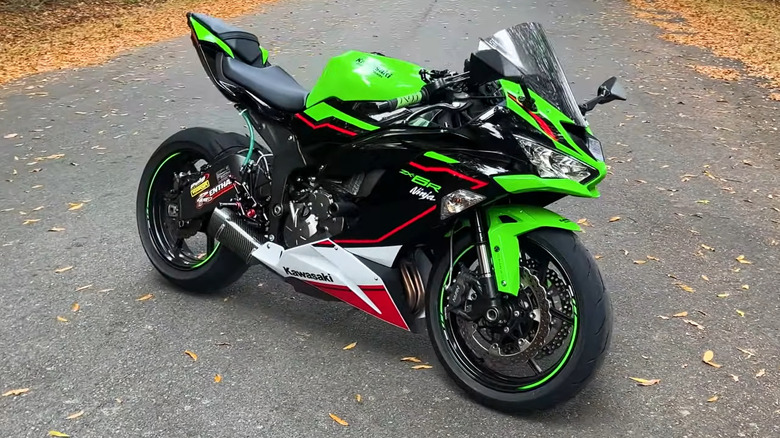
Look, just buy a Kawasaki, apparently. A slow one, a ridiculously fast one — it doesn't even matter. The Ninja 400 makes a great first sportbike, the 650 gives you more room to grow, and the ZX-6R is where the family tree gets serious. The 2021 model started at $10,199 and J.D. Power currently estimates average retail value at $9,785, so it's still hanging onto about 96% of its original MSRP five years later, just a wee bit stronger than the other two Kawasakis we just covered.
Motorcyclist called it "the bargain performance deal" in the middleweight sportbike class, with the "best performance-per-dollar" among peers. That's the kind of bike math that makes great sense even if it's going to follow the usual depreciation trends. But holding something like 96% of its value after five years? Now you're inching toward no-brainer territory. Still, buying too much bike for your skill level is one of the unfortunate mistakes new motorcycle riders make, so just remember that you've got a Goldilocks-worthy spread of Kawasaki options when you're shopping with resale in mind.
Honda CBR1000RR
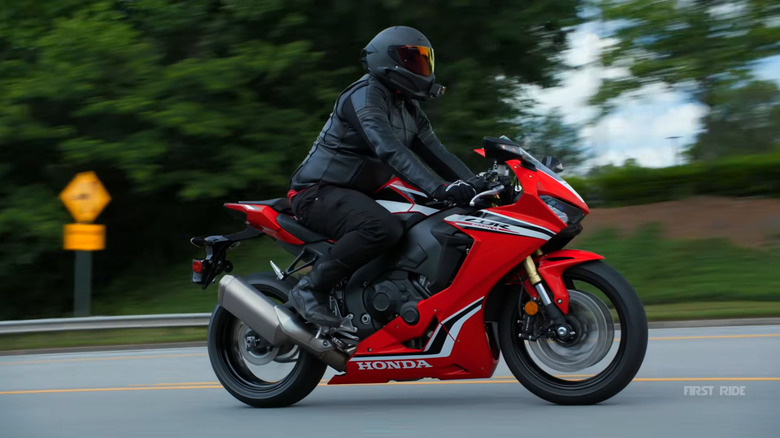
Spoiler alert: After that little Kawasaki parade, Honda gets one more crack at the list before Yamaha starts taking over the room. The standard CBR1000RR is a very different proposition from the Fireblade SP above, but somehow it has done an even better job of hanging onto its value. J.D. Power currently puts the 2021 CBR1000RR at $15,985 against an original MSRP of $16,499, which means it's sitting around 97%. Current listings aren't wildly out of step with that, either, with 2021 examples on MotoHunt commonly asking in the mid-$13,000s to around $16,000.
The appeal here is pretty straightforward. It's a proper liter-class superbike without the stratospheric price tag of the RR-R SP Fireblade, and apparently buyers still see enough value in that formula to keep used prices remarkably strong. That makes the CBR1000RR a nice palate cleanser before things get weirdly Yamaha-heavy. From here on out, the Yamaha name that shows up on grand pianos with the same casual credibility as on superbikes is going to own the leaderboard. We're not sure what the resale market looks like for grand pianos, but Yamaha motorcycles apparently do just fine.
Yamaha XSR700
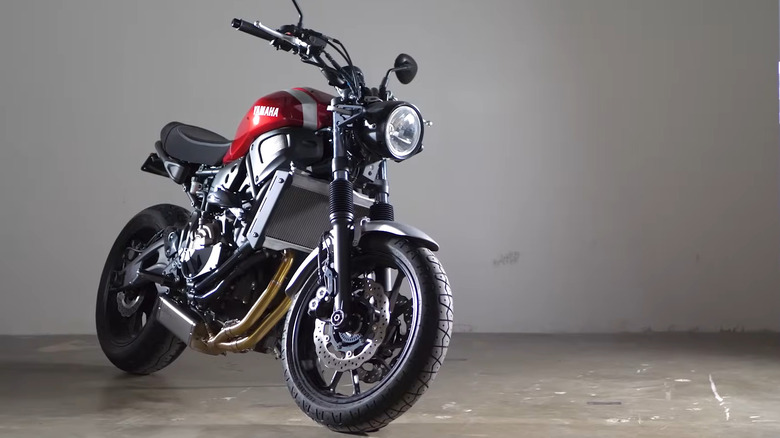
And now Yamaha takes over. The first of four straight bikes from the tuning-fork company is the XSR700, which is basically the throwback-flavored sibling of the MT-07. It's an ethos that feels a lot like another great holder of value, the Kawasaki Z900RS we talked about before, but this time in a Yamaha wrapper. Your preference might have a lot to do with what was on the poster in your bedroom when you were 12.
Regardless, J.D. Power lists the 2021 XSR700 at an original MSRP of $8,499 and a current average retail value of $8,685. That technically puts it a little above 102% by our five-year comparison, but this is exactly where we don't want to pretend a valuation guide has discovered a secret investment strategy. Better to say the XSR700 has essentially held onto all of its original sticker price, which is already remarkable enough.
Actual listings are naturally more varied. MotoHunt recently showed a low-mileage 2021 XSR700 asking $6,899, so nobody should assume every 5-year-old example is selling for more than it cost new. Still, the broader point stands: the XSR700 is holding value unusually well, and it's about to look less like a one-off once we get to the next three.
Yamaha YZF-R1
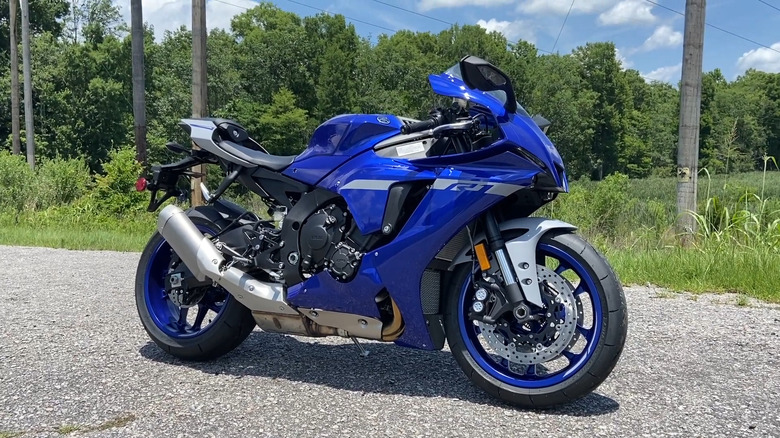
The Yamaha YZF-R1 has the kind of reputation that makes strong resale value feel less surprising than it probably should. It doesn't take the number one spot on our list today, but that's because we're talking about motorcycles with top-tier resale value and not Yamaha's 11 fastest motorcycles ranked by top speed.
The 2021 R1 started at $17,399, while J.D. Power currently estimates average retail value at $18,225. On paper, that puts it at roughly 105% of its original sticker price five years later. However you want to characterize that, it's hard to describe a bike that has effectively refused to depreciate as anything other than an exceptional holder of value.
Current listings reinforce the broader point without pretending every example is worth more than new. MotoHunt currently shows 2021 R1s asking roughly $15,000 to $18,500, depending on mileage and condition. That's still an awfully strong market for a 5-year-old superbike, especially one buyers presumably didn't purchase because they woke up feeling financially prudent but couldn't figure out how to buy savings bonds.
Yamaha MT-09
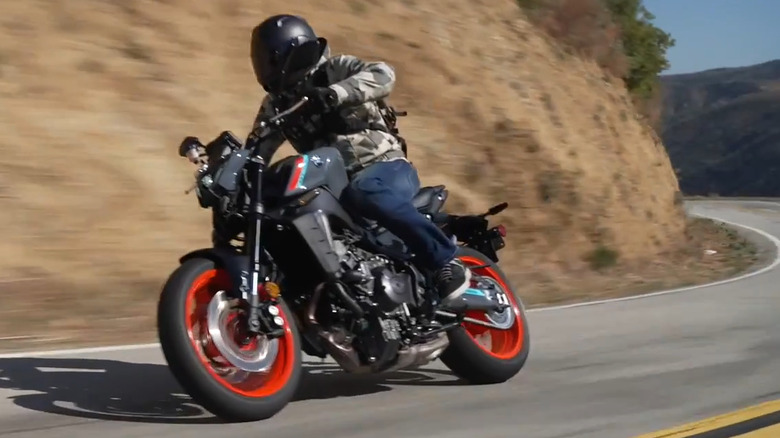
The MT-09 has always been a bit of a value proposition, so perhaps it's fitting that it also turned out to be pretty good at preserving that value. The 2021 model started at $9,399, while J.D. Power currently estimates average retail value at $9,880. That puts it slightly above 105% of its sticker price on paper, though at this point we know better than to start recommending motorcycles as an alternative to a 401(k).
It probably helps that 2021 was a particularly meaningful year for the MT-09. Yamaha gave it an overhaul that included pretty much anything you'd want and increased the price only a hair for all that work. That meant buyers weren't just getting another model-year refresh for their $9,399, and apparently that's been the gift that keeps on giving.
The real-world market is less dramatic than J.D. Power's valuation but still impressively healthy. MotoHunt currently shows 2021 MT-09s asking mostly around $8,000 to $10,000, depending on mileage and condition. It's pretty hard to argue with the broader result: This is a relatively attainable performance bike that has given depreciation remarkably little room to do its thing.
Yamaha YZF-R3
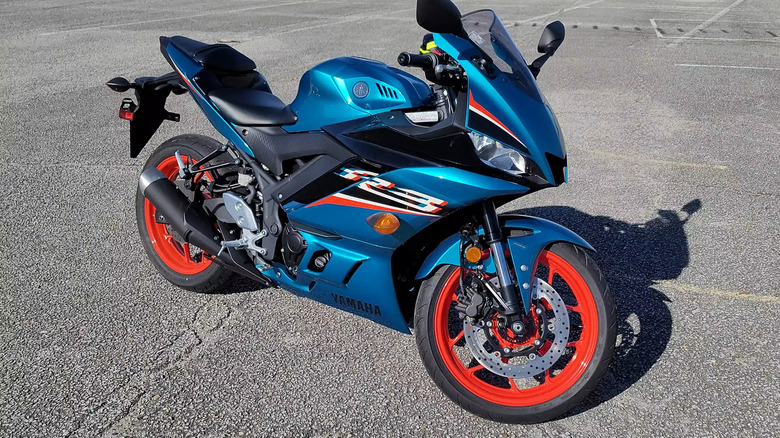
Yep. It's the Yamaha YZF-R3, the bike that serious riders and Reddit poseurs alike will resoundingly endorse as the first sportbike of choice for pretty much anybody. J.D. Power lists the 2021 YZF-R3 at a $5,299 original MSRP and a current average retail value of $5,635, or about 106% of sticker, meaning you can cut your teeth without losing your shirt when you inevitably decide that you're invincible and need a YZF-R1. MotoHunt puts the average listing price for a used 2021 R3 at about $5,062, with plenty of individual examples still asking around five grand or more.
Why do you think that is? Is it the entry-level speed with beginner-friendly agility? Maybe. Or maybe it's just that the coolest paint in motorcycling is only available on the Yamaha R3 for some reason. Whatever is going on here, it's nice to see that the go-to beginner enthusiast bike of record is likely to hold its value better than a Toyota Corolla. Honestly, you'd be kind of irresponsible not to buy one, no?