

8 Of The Least Reliable Years For The Ford F-150
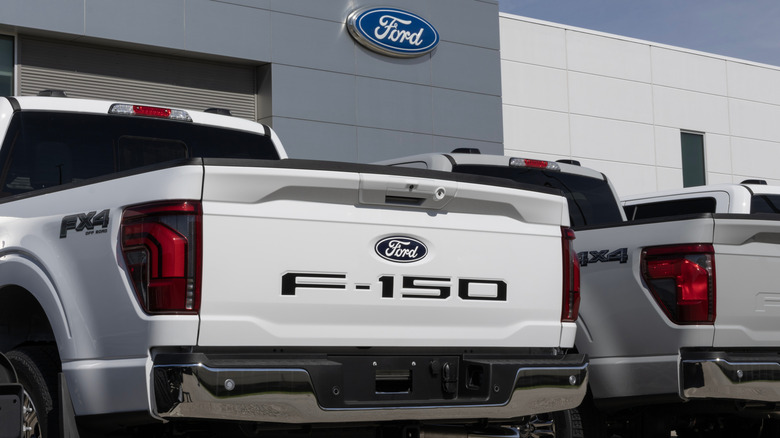
Trying to name the least reliable Ford F-150s ever gets messy in a hurry, mostly because the truck has been around long enough to outlive several different eras of automotive record-keeping. A bad F-150 from 2018 can leave behind owner surveys, complaint databases, service bulletins, recall records, forum threads, and years of searchable reporting. A bad one from the 1970s or 1980s may leave us with little more than recall paperwork, defect investigations, and the residual bitterness that turned your crankiest uncle into a Chevy guy four decades ago.
That doesn't mean the older trucks get a free pass. It just means we have to judge them a little differently. For recent model years, reliability surveys and complaint patterns can show when one year clearly stands out from the pack. For older F-150s, the stronger evidence tends to come from serious recalls, NHTSA investigations, repeated mechanical defects, and problems that were notable relative to other trucks of the same era.
That distinction matters because the F-150 nameplate dates back to 1975, as Ford began the transition from the F-100 to the now-ubiquitous F-150. This gives us more than 50 model years to sort through. Rather than pretending all of those years can be scored on one neat reliability scale, we're looking for the ones with the strongest case against them using the best evidence available from their time. Here they are. Tell your uncle we're sorry if we left his off.
1979 Ford F-150
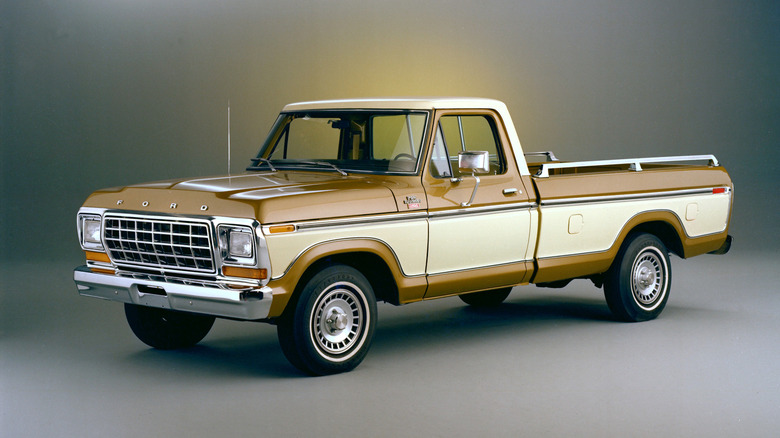
The 1979 F-150 predates anything resembling a modern reliability score, so its case has to be built from the paper trail Ford left with federal regulators. Fortunately (or unfortunately?), there is quite a lot of paper to go around. NHTSA records available on Justia show 10 separate recall campaigns for the 1979 F-150, and the troubling part is how many different parts of the truck were involved. Oh, and the other troubling part is the logistics of figuring out how to check if your car has a recall in a pre-internet era. We believe pigeons were involved.
One campaign covered improperly heat-treated brake-pedal retaining pins that could allow the pedal to separate from the pushrod, leaving the driver without the service brakes. Another dealt with poorly manufactured steering-arm knuckles that could crack and potentially let the tie rod separate, which is one of those failures where "pull over when convenient" is less than useful advice. Even parking the thing could become an issue. Certain automatics had parking pawls that weren't properly heat-treated, allowing them to deform or wear until the transmission could no longer hold the truck in Park. Other campaigns involved wheels, fuel-system components, and another transmission defect.
None of that tells us how often a random 1979 F-150 left its owner stranded. That sort of historical data simply isn't available. But repeated safety defects involving the brakes, steering, transmission, wheels, and fuel system make the 1979 model year unusually iffy. So if you happen to be shopping for a 40-plus-year-old F-150, remember to check the town bulletin board to see if those steering knuckles were sorted or not.
1986 Ford F-150
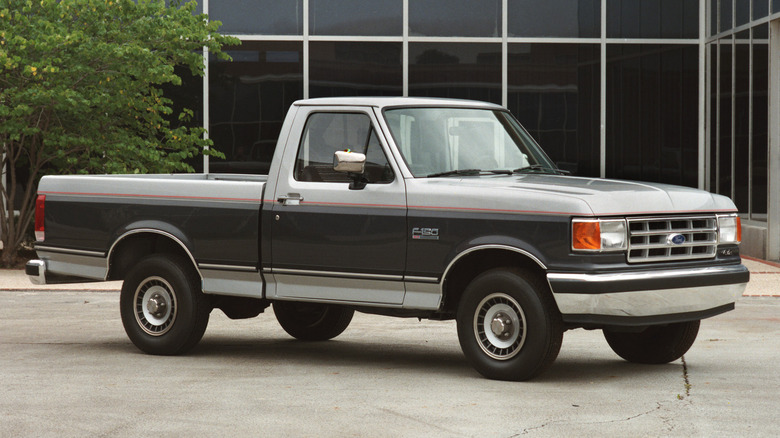
If 1979 was a story about a lot of different things going wrong, 1986 was more of a focused theme — and that theme was fire. As documented by CarComplaints.com, the model year drew nine federal defect investigations, including separate inquiries into under-dash fires, fuel-tank fires, defective wiring, engine-compartment fires, fuel leaks and fires, and fires in the heater and air-conditioning plenum. Not every investigation resulted in a recall, but one of the fuel-system cases certainly did.
The problem involved Ford's spring-lock fuel-line couplings. Investigators found that improperly engaged or damaged couplings could separate under fuel pressure, vibration, or engine movement, spilling fuel and creating a risk of an engine-compartment fire. Ford ultimately agreed to recall 3.6 million passenger cars and light trucks from the 1986 through 1988 model years equipped with certain electronic or central fuel-injection systems so that retaining clips could be installed over the couplings.
That recall wasn't limited to the F-150, and nine investigations don't necessarily mean nine proven defects. Still, a model year that repeatedly attracted federal attention for fires, fuel leaks, wiring, and related problems is hard to wave away, particularly when one investigation culminated in a recall covering millions of Ford vehicles. For a truck old enough that modern reliability data barely exists, 1986 left behind a surprisingly smoky paper trail. But hey, Ford recalled 1.4 million F-150s this year alone, so these things are relative.
1997 Ford F-150
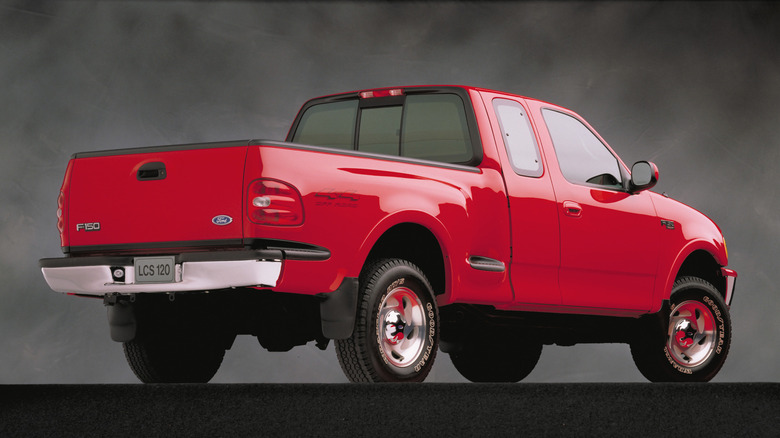
The 1997 F-150 was a genuinely big deal. It was completely redesigned and reengineered, and its biggest sin should have been that it wasn't a production version of the Ford Triton Concept, the raddest F-150 of all time, revealed a couple of years prior. Unfortunately, there were other sins to be had, especially considering how used to heartbreak we've all become when it comes to concept cars that will never be. Anyway, the first year of that new generation accumulated an impressively ugly record: roughly 3,000 combined complaints, 26 recalls, and 19 federal defect investigations. First-year teething problems are one thing. Needing a federal paperwork annex is another.
Some of the defects were substantial. A recall covering more than 171,000 vehicles addressed 1997 F-150s whose intermediate steering-shaft yoke could separate from the steering gear, potentially disconnecting the steering system altogether. Another campaign covered more than 670,000 1997 F-150s and F-250s because the front fuel line could rub through and leak gasoline, bringing the possibility of an engine-compartment fire into the ownership experience.
Then there were the engines. The redesigned truck introduced Ford's new modular V8 family to the F-150, and those engines later became part of a federal review into spark plugs ejecting from 1997 through 2004 Triton V8 and V10 engines. Old-timers will say that this is what you get when you step away from pushrods.
2004 Ford F-150
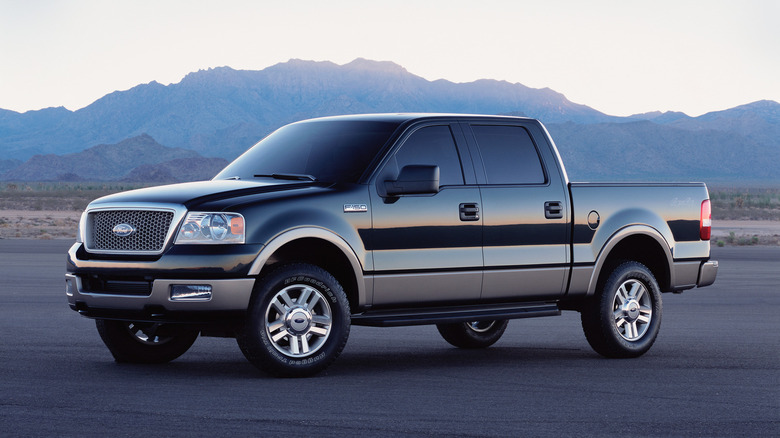
The 2004 model year comes with an asterisk, and we don't mean one of those Mark McGwire asterisks you get for being too awesome and also on steroids. This one is because Ford sold two different F-150s at once in 2004. The previous-generation truck stuck around as the F-150 Heritage, while the regular 2004 F-150 was redesigned almost from scratch. The new truck got a box-section frame, revised suspension, rack-and-pinion steering, and larger four-wheel disc brakes, while the available 5.4-liter V8 gained new three-valve cylinder heads and variable cam timing. It was an ambitious do-over, is what we're saying. It also turned into one of those redesign years that makes keeping the Heritage edition in the mix seem prescient.
Consumer Reports rates the 2004 truck as less reliable than other vehicles from the same model year. Engine complaints include failures, knocking, bad cam phasers, and spark plugs breaking off in the cylinder head. The latter became particularly notorious, with dozens of reports of plugs breaking during removal. And then there are the windows. The 2004 truck accumulated hundreds of window and windshield complaints, including regulators that could leave the glass stuck down or suddenly drop it into the door. So yes, the new F-150 was more sophisticated. Sometimes sophistication means variable cam timing. Sometimes it means discovering that your truck has found a new way to turn a spark-plug change into a three-beer, two-headache repair.
2005 Ford F-150
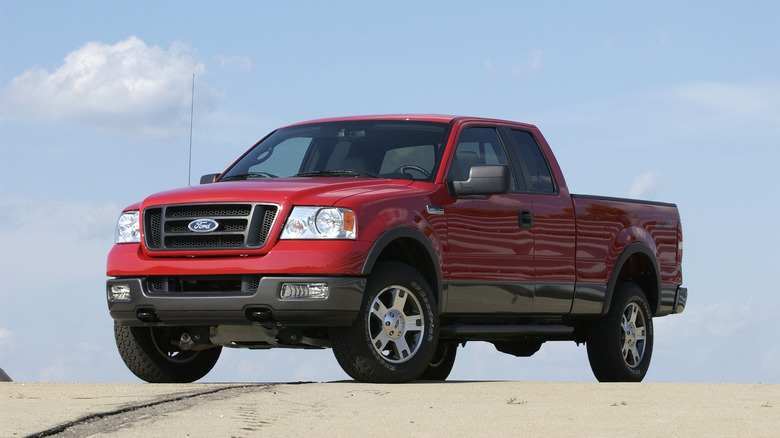
By 2005, Ford could no longer hide behind the universal first-year-redesign shrug. The new F-150 had been on the road for a year, and the evidence was starting to look less like teething trouble and more like a truck settling into some bad habits. Consumer Reports documents the trend with its survey history, including trouble in major engine and transmission categories. Meanwhile, the model year accumulated roughly 2,000 complaints, with especially heavy totals involving the engine, windows, drivetrain, brakes, and transmission.
One problem got serious enough to bring federal investigators knocking. On F-150s equipped with the 5.4-liter three-valve V8, the brake-booster vacuum hose could swell and lose its grip on the intake-manifold fitting, allowing it to disconnect. Losing that vacuum connection could reduce or eliminate power brake assist, meaning that substantially greater pedal effort would be required to stop the truck. By the time regulators closed the investigation, the record included 324 complaints, 14 crashes, and 4,465 warranty claims. Ford ultimately recalled roughly 605,000 2005 to 2006 F-150s and Lincoln Mark LTs equipped with the 5.4-liter three-valve engine.
So 2005 earns its spot for a slightly different reason than 2004. The weird Heritage edition overlap that began the year prior might have been a sign of a stutter-step in the new design, but it turns out that, had Ford delayed its next-gen F-150 by another year, it might not have gone any better.
2006 Ford F-150
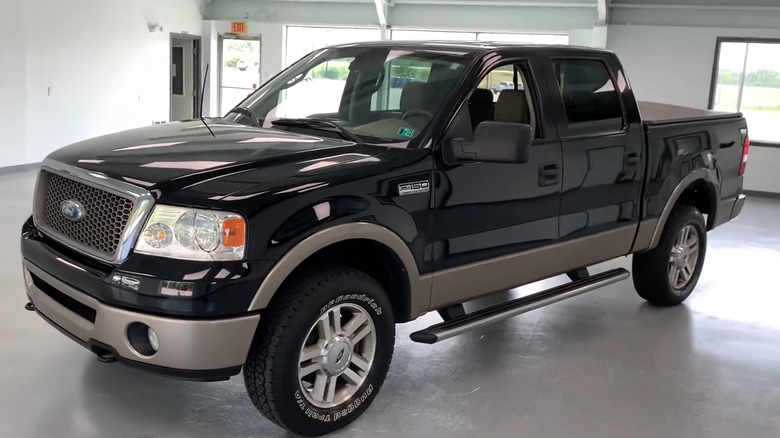
The 2006 F-150 was... wow, really? 2004, 2005, 2006? Yikes, Ford. Apparently, for a minute there in the early 21st century, if you were Ford CEO for a day, one thing you might prioritize is making a kind of crappy F-150. Anyway, the real point here is that this was no longer a fresh redesign. It was year three of the same basic truck, which makes the run from 2004 through 2006 harder to dismiss as a couple of isolated bad model years. Consumer Reports again flags trouble in the truck's reliability history, and the complaint record remained substantial, with 989 complaints overall and engine problems leading the way. If 2004 introduced the trouble and 2005 proved some of it was sticking around, 2006 is where the pattern starts to look pretty well established.
The 5.4-liter three-valve V8 is a big reason why. Owners reported spark plugs breaking off in the cylinder head, plugs blowing out, cam-phaser problems, low oil pressure at hot idle, and outright engine failures. The broken-plug issue became concrete enough that Ford later acknowledged some 2004 to 2008 F-150s with the 5.4-liter three-valve engine could suffer spark-plug damage during removal and leave part of the plug stuck in the cylinder head. It's enough to make you consider blaming somebody in Dearborn with a very large office. We're just not sure who.
2013 Ford F-150
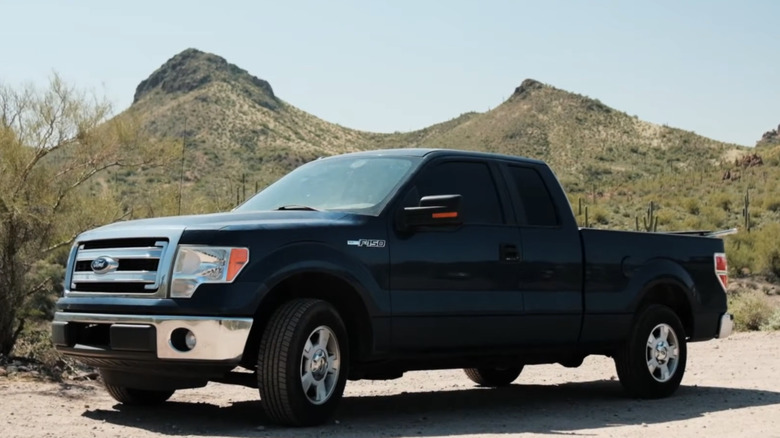
The 2013 F-150 has a particularly nasty party trick: under the wrong circumstances, its six-speed automatic could unexpectedly downshift into first gear at speed, proof that, despite some neat engineering, an automatic transmission doesn't always know when to shift gears. Its broader gripe record is substantial too, with roughly 4,000 combined complaints. Transmission issues include erratic shifting, loss of power while shifting, trucks getting stuck in first, and unceremonious drops into first gear.
The scarier part eventually became a federal safety recall. On certain 2011 to 2013 F-150s with the 6R80 transmission, an intermittent output-shaft-speed sensor failure could trigger an unintended downshift into first gear. Depending on road speed, that could abruptly slow or lock the rear wheels and cause a loss of control. Ford's fix was a powertrain-control-module software update.
Just to keep things fresh, Ford later announced a different recall on more than 100,000 2013 F-150s with the 5.0- or 6.2-liter engines because some trucks that had already received the first recall repair didn't actually get the software needed to prevent the downshift problem. That is an impressively specific way to land on this list: not just a dangerous transmission defect, but a recall fix that itself needed another recall.
2018 Ford F-150
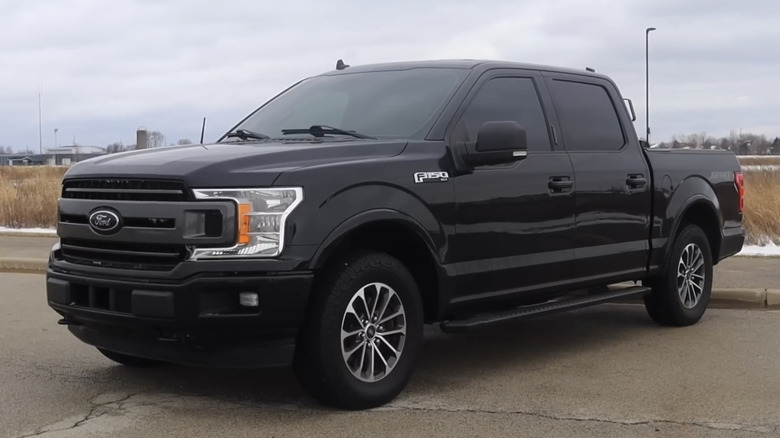
After digging through decades-old, pre-internet recall paperwork and defect investigations to figure out whether a given model year of F-150 was unusually bad for its time, digging into something as recent as 2018 feels almost luxurious. There is data everywhere, and it suggests 2018 was the worst F-150 model year overall. The 2018 truck itself has accumulated roughly 2,000 combined complaints and well over a dozen recalls, with engine problems accounting for a particularly large share of the federal complaints.
The transmission supplied another headache. Ford issued a technical service bulletin covering certain 2018 F-150s with the 10R80 automatic because they could experience harsh or bumpy upshifts, downshifts, and gear engagements. A separate recall covered approximately 250,000 2018 F-150s whose gear-shift cable clip could allow the transmission to be in a different gear than the shifter indicated, including trucks that could appear to be in Park when they actually weren't. Another smaller 10R80 campaign involved a potentially missing park-pawl guide roll pin that could eventually cause the transmission to lose Park function even while the shifter and dashboard indicated otherwise. And certain 3.5-liter trucks were recalled because inadequate high-pressure fuel-pump welds could fracture and cause an oil or fuel leak.
And thus, a 2018 F-150 gives us surveys, complaints, TSBs, recalls, and years of searchable evidence, whereas a 1979 truck gives us whatever paperwork survived the Carter administration and made its way to the internet. The evidence changes enormously across 50 years, but the assessment stays the same: the storied F-Series might perennially be among the best-selling vehicles in the United States, but the saga doesn't continue without the occasional speed bump.