

1978 Vs. Today: Here's What Gas Prices Miss About The Real Cost Of Driving
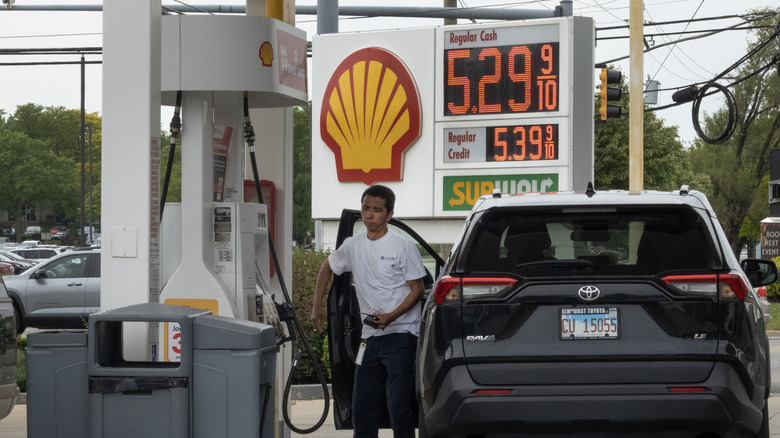
Current gas prices are so high, they're spiking inflation. And, okay, adjusted for said inflation, gas prices are technically "better" today than they were back in the late 1970s and early 1980s. But also, that single metric is a lame way to measure the real cost of driving, which is why for funsies we'll also look at car insurance, car parts (and maintenance), and, yes, the actual price of cars themselves.
First, there's gas. As of this writing, according to AAA, the national average price for a gallon of gasoline is $4.10. Back in 1978, according to the Federal Reserve of St. Louis, which tracks cost of living metrics, the price of a gallon of gas in 1978 was roughly 63 cents. A year later, it was 69 cents. By January, 1980, it had soared to $1.11. That's a 76% increase in just two years. By comparison, gas was $3.35 at the start of 2024. It actually fell to $3.10 in January of this year, but by May, it hit $4.79. Going from $3.10 to $4.79 is a 54.5% jump, which isn't as bad as in the O.G. days the last time a president sent the military into Iran — and failed miserably – but still feels plenty brutal.
Now, adjusting for inflation, those 63 cents in January 1978 are equal to $3.37 in today's bucks. That's definitely less than the $4.10 national average gas price today (a whole 24.5% less). However, $1.11 in 1980 equals $4.76 in today's cash, which your eyes will tell you is dang near the $4.79 we felt in May. It's also 16% higher than the national average price for a gallon of gasoline as of this writing.
The cost of car insurance is skyrocketing.
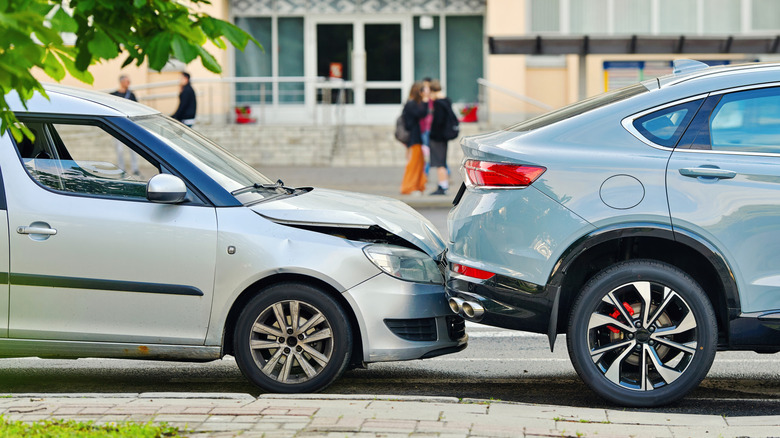
Let's start with the good news before we get to the grim bulletin on car insurance. According to Insurify, which tracks over 250 million policies, last year car insurance rates actually fell in 39 states. Sadly, they predict that they're due to climb again, and if you compare the average rate at the end of 2021, $1,567, with the average rate today of $2,237 you'll see a remarkably unpleasant increase of 43%. The Bureau of Labor Statistics says that the climb has been even steeper when measured from 2022 to today, rocketing up 56%. Which, yes, explains why some drivers are dropping comprehensive coverage.
And of course it gets worse. The ten most expensive places to insure a car are literally all over the map — but mostly on the eastern side of the U.S. There's Washington, D.C., at a whopping $3,880 annually (actually down 7% so far this year), Maryland at $3,646, Rhode Island at $3,611, Michigan at $3,229, Georgia at $3,109, Delaware at $3,100, South Carolina at $3,075, and Nevada at $3,039.
Just below that miserable $3,000 mark is New Jersey, at $2,923. Don't get excited, all you Real Housewives. You're still spending $700 more than the national average for full-coverage in the Garden State. But Jerseyites and drivers in the Empire State ($2,840) each saw their rates fall 5% in early 2026. New Hampshire, the only state that doesn't require auto insurance, remains dirt cheap (especially relative to D.C.), with an annual rate of $1,019.
Why the sharp rise? Quotefii, an insurance marketplace aggregator, blames a combination of forces, including, naturally, inflation (an expensive car costs more to replace), rising repair costs driven by the aforementioned inflation, and more extreme severe weather events, among other factors.
Keeping your old whip running is also getting way more expensive.
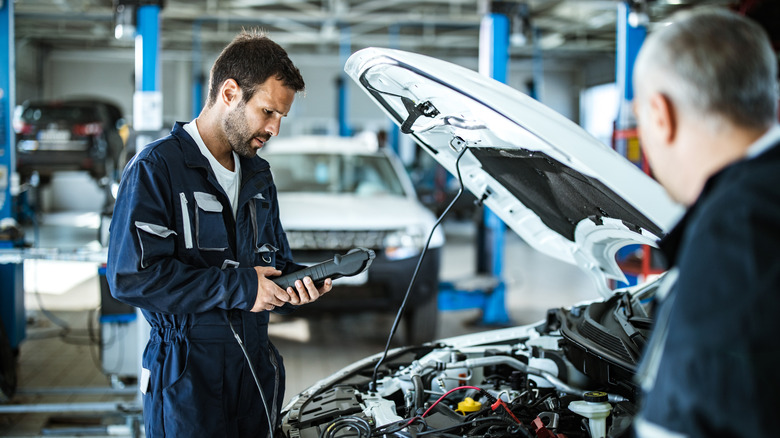
Even if you can afford gas, keeping an increasingly old car running is getting more expensive. And the average age of an American car is a whopping 12.8 years old. (Your car is so ancient, it was dancing to Macklemore's "Thrift Shop" when it was new.)
That means when a car does need to be repaired it can be very expensive, according to CarMD's annual vehicle health index. That survey tracks repairs based on what's uploaded from cars' OBD-II sensors and shows the leading causes of having that check-engine light come on. Unfortunately, they're showing the average repair triggered by that glow at $554 in 2026, a skyrocketing 33% year-over-year increase.
Partly, that's because the number one cause of that dash beacon's evil stare is needing a new catalytic converter, with the cost of repair running $1,510. CarMD shows the double-whammy of both parts and labor costs pushing up prices. They also blame increasingly high tech cars (which we'll get to, shortly) and in turn, that requires fancier diagnostic gear and more time to suss out problems.
The number of parts needed for repairs has gone up, too, and then there's the fact a lot of sensors and components are manufactured abroad, and are subject to tariffs. All this means lots of Americans are faced with borrowing money in order to afford a fix, according to a May LendingTree survey of automotive affordability.
Cars are too high tech, and getting more so.
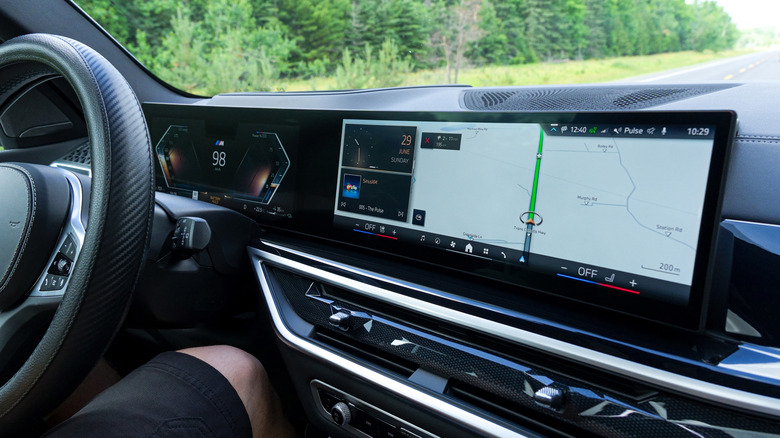
You might have noticed there's an AI boom going on. Beyond the huge toll on energy consumption that's causing, it's also leading to increasing competition for memory chips, likely leading to a new chip shortage that will affect auto manufacturing. This has been dubbed the "RAMpocalypse" by tech and auto industry analysts. That's partly because chips going into cars are becoming more complex and pricier. In 2023 a researcher at Micron wrote that the average car would go from needing about 90GB of RAM that year to between 278GB and 2TB today and 4TB by 2030.
This all comes as carmakers are in a race to offer in-car AI, with manufacturers like GM touting moving to centralized computing for everything from how the car operates, to allowing exponentially more frequent over-the-air updating.
But all that extra processing is expensive and has caused increased competition to corner the market on limited supply. Ford recently told shareholders the carmaker expects a $1 billion increase on the cost of chips in 2026. Recent reporting in The Atlantic notes that while most of the cars we drive right now have hundreds of separate ECUs, which at the time of their production added 5-10% to the vehicle's cost, centralizing computing could double the electronics portion of the tab everyone has to pay on a new car. Even ahead of its announced computing centralization, GM told investors they're expecting a half-percent increase in vehicle pricing this year, in part caused by rising chip costs.
Cars themselves are too expensive — and borrowing debt is escalating.

Way back in early March, before the Iran war, Reuters mentioned one reason why cars are so expensive: carmakers are basically quitting making budget models. It pegged the average price of a new car at $47,000. It's now $49,855, which is actually slightly lower than earlier this year when prices crested $51,000.
It's more shocking to compare the 2015 new-car price of $34,428 to today's sticker and realize that's a massive, 45% jump. Yes, everything is more expensive now, but, relatively speaking, the cost of a car is higher than the 41% overall climb in inflation since 2015.
Plus today there's the added groin kick of very high car loan interest rates. Experian shows the average new-car loan at 6.39%, but if you're shopping used that's nearly double, at 11.43%. LendingTree says the average American with a car loan is spending 15% of their income carrying the cost of car ownership — and one in every five Americans with a car loan is dropping $1,000 or more per month to service that debt. This comes in combination with the aforementioned rising cost of car insurance, which has far outpaced wage growth.
So even if, okay, gas inflation was yet more staggering in the late 1970s and early 1980s, the overall cost of having a car is truly out of hand. And it's no wonder a lot of people now say car ownership is so expensive, it's become a luxury.