

11 Vehicles You Can Reasonably Count On To Last 300,000 Miles
Getting a car deep into six-figure mileage multiple times over is a lot like pitching a no-hitter. Sometimes a genuinely excellent player just never gets there despite looking great on paper, and other times some pitcher with a middling career ERA will have a transcendent afternoon and get it done, like a Kia Sportage clocking more than 600,000 miles against all mechanical reason.
Today we're looking at vehicles with a reasonably well-documented history of high longevity, while acknowledging that the owner bears some responsibility for maintaining them well enough to go the distance to 300,000 miles. An iSeeCars study puts most of this list among vehicles they've identified as likely to exceed 250,000 miles, but that study isn't the basis of our selections. Its methodology relies on an opaque proprietary model, and some of its findings don't seem to be backed up by experience published anywhere else.
So instead, we looked for stronger real-world corroboration: documented examples at 300,000 miles and beyond, fleet or professional experience where available, and broader reliability evidence that suggests those odometer readings aren't just freak accidents and just might point to some high-mileage vehicles capable of going the distance. If you have high-odometer aspirations and are willing to apply the care and feeding necessary to get there, these are vehicles that have a real shot.
Honda Accord
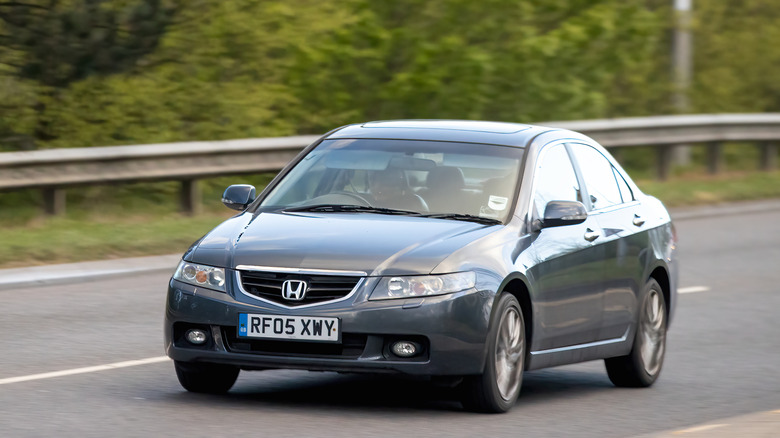
As The Drive reported, medical courier Justin Kilmer pushed his 2003 Honda Accord past a million miles on the original 3.0-liter engine. But we're not talking about Justin's million-mile Accord, which crossed into the seven-figure club with the help of a new transmission, several clutches, three radiators, and enough control arms, internal door hardware, and replacement accessories to open up a debate about the Accord of Sisyphus if not for the original engine still beating at the heart of the thing. Did we mention that Justin replaced the driver's seat?
In any case, the point here is that a million miles is a totally different animal. And while it's cool that a fairly ordinary car that's surprisingly fun to drive can make it that far, we're more interested in the less extreme cases that tell a less newsworthy story than a heroic courier car. An analysis by Dashboard Light draws on more than 111,000 inspected Accords and scores long-term quality using engine and transmission defects, mileage, and vehicle age. It notes that older Accords were hurt by transmission problems, but says the model has remained at or above the industry average for long-term reliability since its 2003 redesign.
Kilmer's car shows what's possible at the outer edge, while the larger dataset suggests there's something real underneath the Accord's longevity reputation. It still isn't a blanket endorsement of every Accord ever built, but with a well-maintained example and the willingness to stay ahead of age-related repairs, 300,000 miles is a much more reasonable target than a million, especially if you're willing to throw an occasional transmission at it.
Toyota Camry
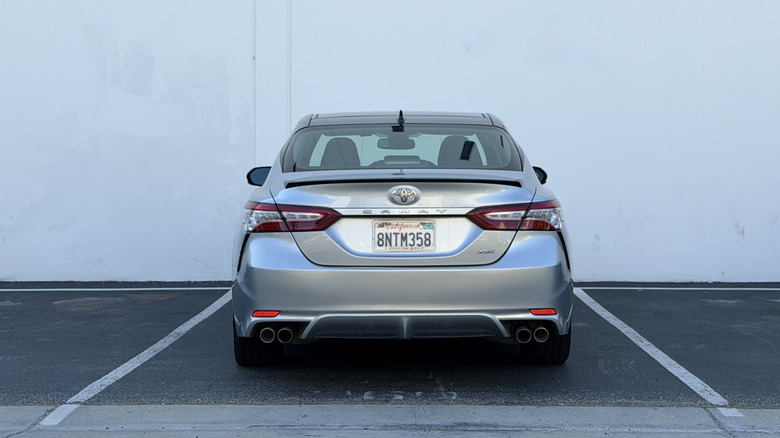
The Toyota Camry has such a reputation for reliability that you'll hear people talk about 300,000 miles with an air that borders on entitlement. That reputation isn't entirely folklore. Reliability data from Consumer Reports covers roughly the last quarter century, drawing on its subscriber surveys to track major and minor engine and transmission problems, cooling systems, electrical components, suspension, and other trouble spots. Multiple generations have turned in above-average reliability results along the way.
So what's going on under the hood, literally and figuratively? One 2009 Camry featured on The Car Care Nut YouTube channel made it to 305,000 miles before its 2.4-liter four-cylinder was torn down. It was burning plenty of oil by then, but the inspection found surprisingly little internal wear in parts of the bottom end, including clean crank journals and rod bearings that remained in respectable shape considering the mileage.
That feels more representative of what we mean by a 300,000-mile car. You shouldn't expect a Camry to arrive there needing nothing but gasoline and confidence, and not every generation or powertrain deserves exactly the same reputation. But decades of broad reliability data paired with abundant evidence that individual Camrys can cross the 300,000-mile line make the car's reputation considerably more than wishful thinking. Hopefully Toyota doesn't lose sight of reliability as the modern Camry pursues sportier aspirations.
Toyota Prius
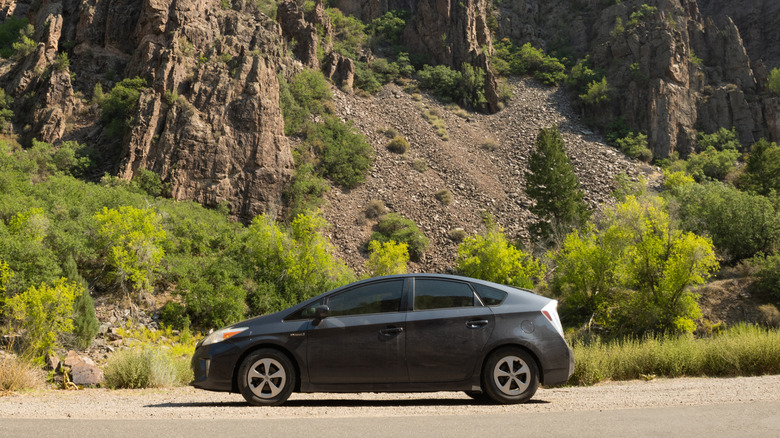
The Prius makes a stronger case for extreme longevity than most cars because it has spent years proving itself in one of the least forgiving jobs a passenger car can have: taxi duty. Earthling Automotive – a San Francisco repair shop specializing in hybrids that ran an overnight shift dedicated to taxi repair — reported that the majority of Prius taxis it serviced were already over 200,000 miles, with many finally hanging it up for good at the 325,000-mile mark. These weren't pampered commuter cars, either. The shop described them as running nonstop in demanding urban service, which is about as good a torture test as you can ask for.
That doesn't mean the Prius gets to 300,000 miles without drama. The same shop saw failed transaxles, worn hybrid batteries, blown head gaskets, heavy oil consumption, electrical faults, and the usual suspension and cooling-system wear. These cars weren't indestructible. But they were repairable enough, durable enough, and economical enough to keep earning their keep deep into high mileage.
If taxis demonstrate the ultimate fleet scenario, Consumer Reports provides a consumer-level reliability check on the same basic formula. The lesson here isn't that hybrid hardware somehow escapes wear. It's that the Prius has accumulated a long enough real-world record, including brutal commercial use, to make 300,000 miles look like a credible target rather than hybrid-era wishful thinking. It's no wonder that, after all these years, some of us still consider the Toyota Prius to be hybrid perfection.
Toyota Tacoma
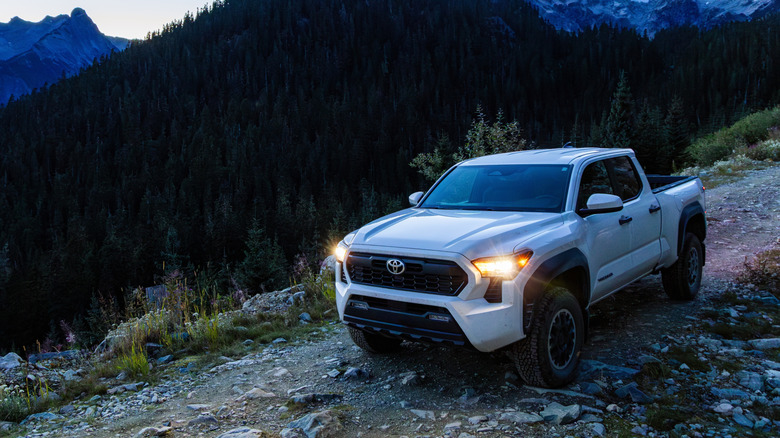
Before "TACO" was a cheeky jab at erratic American tariff policy, it was synonymous in automotive circles with one of the most durable pickups ever. One 2008 four-cylinder, five-speed manual Tacoma reached 1.1 million miles, with the same shop caring for it through roughly the last 700,000, according to The Drive. Its repair history was remarkably short for the mileage, including an alternator, a clutch, and timing-chain work, while regular 5,000-mile oil changes apparently did most of the heavy lifting.
That truck was also about as favorable a Tacoma setup as you could ask for. The naturally aspirated four-cylinder and manual transmission kept things mechanically straightforward, and life in Arizona meant it avoided the kind of corrosion that can kill an otherwise healthy older pickup long before the engine gives up. That matters because longevity is about the whole vehicle, not just preserving a functional engine block in a display case made of rust.
There's broader support behind the reputation, too. J.D. Power lists the Tacoma as a Dependability Award winner. The million-mile truck is an extreme outlier, but it's an outlier built on a formula that was already pretty favorable to long service life. Find a clean one, keep rust at bay, and 300,000 miles doesn't sound nearly as absurd. It's why nobody really argues about the greatness of Tacos, but rather quibbles over which Toyota Tacoma generation is best.
Toyota 4Runner
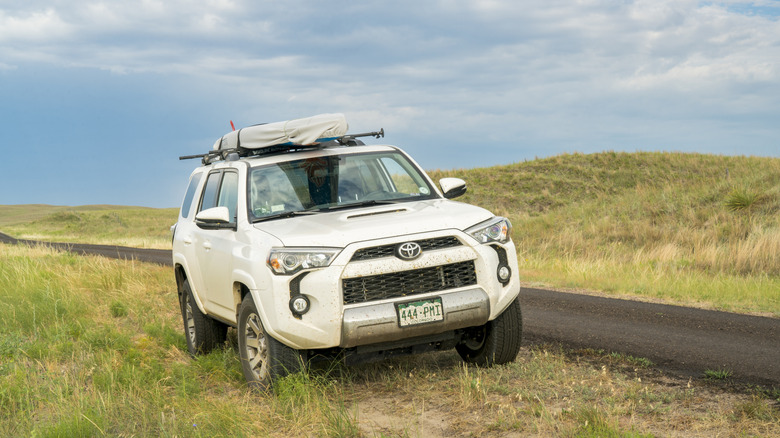
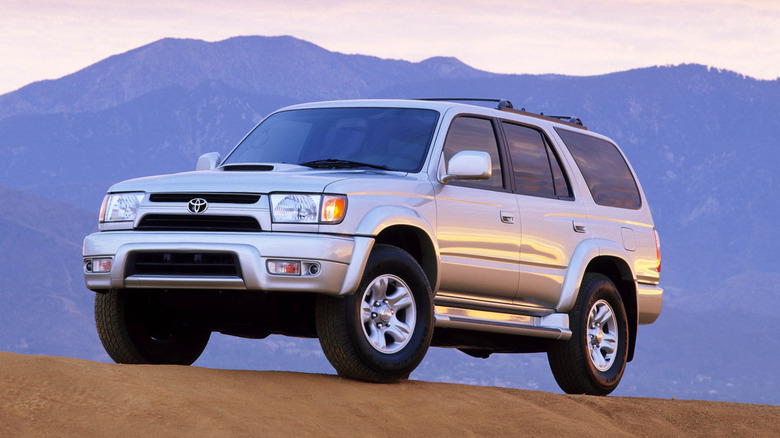
At this point, you may have noticed that Toyota is starting to take over the list. That isn't us getting lazy. A Consumer Reports analysis of long-term used-car reliability ranks Toyota second among 26 brands and says its vehicles tend to remain reliable as they age. The 4Runner fits comfortably into that pattern, especially the third-generation trucks built from 1996 through 2002.
Those trucks have earned a particularly strong longevity reputation. They've proven that a properly maintained third-generation example can still run smoothly with 400,000 miles on the odometer, which puts our 300,000-mile target comfortably inside the realm of possibility.
While these trucks can go very deep into six figures without requiring a miracle, that doesn't mean you can ignore age. Third-gen 4Runners can suffer from radiator failures that mix coolant and transmission fluid, worn lower ball joints, tired rear springs, brake issues, and the usual corrosion problems that come with decades of road salt and weather. But if you start with a clean example and stay ahead of those known weaknesses, the 4Runner is exactly the kind of old Toyota that makes 300,000 miles feel less like an achievement and more like a reasonable expectation.
Toyota Sequoia
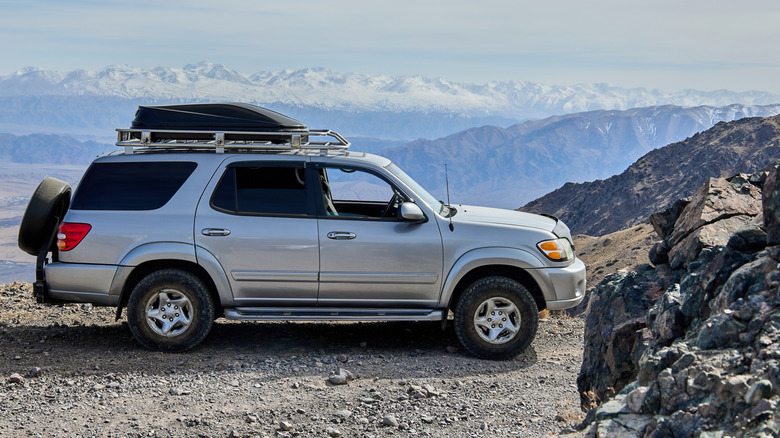
At this point we will acknowledge that the middle of this list has become a Toyota club parking lot, and yes, we understand that this may be as divisive to readers as the 2027 Sequoia's "more assertive" exterior. Still, you can't write about counterfeit luxury watches without hitting on a whole bunch of Rolexes, and this list was never going to unfold without a heavy dose of Toyota. The Sequoia earns its spot mostly through second-generation models built from 2008 through 2022, which paired full-size SUV bulk with the same basic truck-first philosophy that helped make the Tundra such a longevity favorite.
The heart of that generation was the 5.7-liter i-Force V8, rated at 381 horsepower, bolted into a body-on-frame SUV. In that configuration, 300,000 miles without a major overhaul is considered realistic, although secondary air-injection pumps are one known trouble spot.
The real tax on Sequoia longevity may be financial rather than mechanical. A 2022 example was rated by Consumer Reports at just 14 mpg combined, so reaching 300,000 miles means knocking back an awful lot of fuel along the way. But if you can tolerate the appetite and keep up with the inevitable age-related repairs, the second-gen Sequoia has the kind of proven heavy-duty foundation that makes 300,000 miles feel ambitious but not outrageous.
Toyota Tundra

If the Sequoia is the full-size SUV expression of Toyota durability, the Tundra supplies the gritty underpinnings. It's also no surprise that on a long enough timeline the Tundra and the Sequoia ended up looking almost the same.
As MotorTrend reported, one 2007 Tundra passed one million miles with its original engine and transmission after years of long-distance hauling. It even retained its factory paint. This wasn't a truck spending its retirement taking mulch home from Lowe's, either. The owner routinely hauled loads in the neighborhood of 2,000 pounds across the country. After Toyota bought the truck back and dismantled it, the 4.7-liter V8 proved to be the real showpiece. Cylinder-wall crosshatching was still visible and the crankshaft journals showed no visible wear. Even after earning that seven-figure odometer reading, the engine would have scored 99 out of 100 on Toyota's internal quality tests.
That truck is obviously an outlier, but it had also spent years doing actual truck work, including cross-country hauls carrying a ton or more in cargo. None of that turns every Tundra into a million-mile machine, but it does make 300,000 miles look considerably less far-fetched for a well-maintained example with a healthy frame. You might have to cross your fingers on the paint holding up.
Toyota Land Cruiser

We'll close the Toyota chapter of this story with the model that has arguably done more than any other to turn the brand's durability into legend. The Land Cruiser is an off-road icon for a reason, building a reputation as a durable, all-terrain vehicle that in the early sixties had become the company's only remaining U.S. model. That's a pretty solid origin story for a durability folk hero.
The reputation survived well beyond those early trucks. By the time the 60-series arrived, there was enough experience behind the platform that 300,000-plus-mile examples were considered entirely plausible when maintenance was kept up. Later generations added more complexity without shaking the basic longevity reputation.
None of that makes an old Land Cruiser maintenance-free. Age, rust, axle service, cooling-system upkeep, and the accumulated wear of decades still matter. But this is one of those rare vehicles where 300,000 miles doesn't sound like somebody won the mechanical lottery. It sounds like the sort of thing Land Cruisers have been quietly doing for generations, which is exactly why it feels right to let it shut the door on this parade of Toyotas and see if this roundup gets to an old diesel Mercedes.
Honda Civic
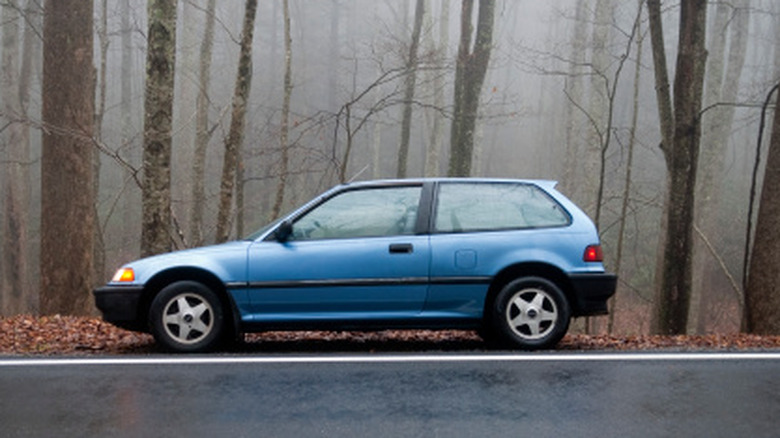
Ah, the humble Civic. Some might consider it the old diesel Mercedes of affordable Japanese compacts while others (a slightly greater number) would call the Civic the platonic ideal of economy cars. In either case, it got here by taking a very different route than the Land Cruiser: less trekking indestructibly across far-flung continents and more doing the profoundly unglamorous work of errand running and commuting while asking relatively little in return. A Consumer Reports reliability history covering Civic model years from 2000 through 2025 gives us a broad look at how successive generations have held up across engine, transmission, electrical, suspension, brakes, and other trouble areas.
Then there are the cars that stretch that reputation into something ridiculous. One 2011 Civic reached 500,000 miles, as documented in a YouTube video available on the Every day is like a field trip channel. The car was bought used and then piled on roughly 94,000 miles per year while using it primarily for delivery work. Regular coolant service and oil changes were apparently enough to keep the original powertrain in the game.
That particular Civic lived an unusually mileage-intensive life, but that may actually be the point. High annual mileage tends to expose weaknesses quickly, and this one spent years earning its keep instead of being preserved for posterity. Three hundred thousand miles is still a serious ask, but the Civic gives you plenty of evidence that ordinary transportation can have an extraordinary shelf life.
Lexus LS400
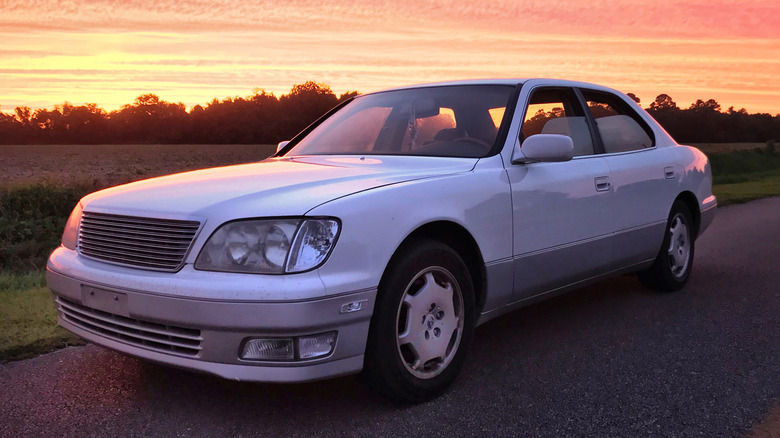
The LS400 is interesting here because for once Toyota wasn't trying to build a taxi, a farm truck, or an off-road cockroach. It was trying to take on the Mercedes-Benz S-Class. That skunkworks-fueled ambition led to Toyota's secret F1 project that cost a billion dollars, involving 60 designers, 1,400 engineers, 2,300 technicians, and roughly 450 prototypes. Lexus was chasing quiet, refinement, performance, and build quality. Somewhere along the way, it also created an old luxury sedan that developed a reputation for surviving mileage that would make plenty of newer luxury cars look nervously at their service histories.
That reputation eventually produced one of the internet's best-known high-mileage cars. A 1996 LS400 changed hands with 897,000 miles already accumulated by five previous owners, and an inspection found that its 1UZ V8 had never been cracked open. It later crossed the million-mile mark after another 100,000 miles of road trips, lending, repairs, and general abuse, culminating in a lovely article by Matt Farah for Road & Track. (Farah had custody of the million-mile Lexus when the odometer turned over.)
That's what makes the LS400 such a satisfying entry here. Extreme longevity wasn't the assignment when Lexus created it. Building an exceptionally good luxury car was. Durability instead became one of the LS400's defining traits over time, which feels less like a gimmick than a side effect of taking the original engineering brief a little too seriously.
Mercedes-Benz W123 300D
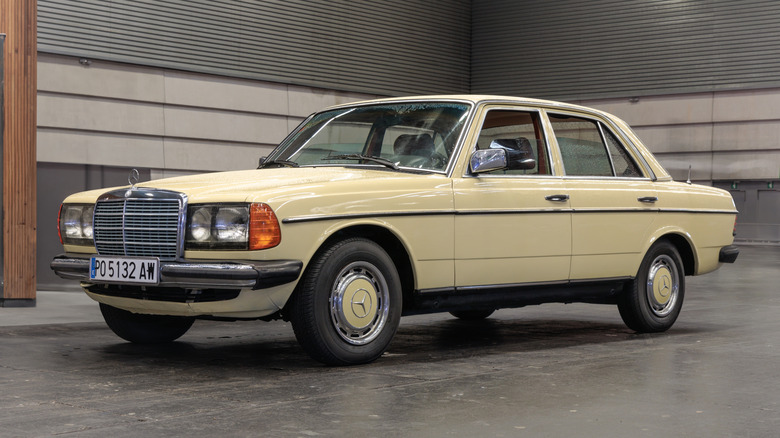
We promised you an old diesel Mercedes, and after ten entries of Japanese compacts, pickups, hybrids, luxury sedans, and enough Toyotas to trigger an antitrust hearing, here it is. The W123 300D is less an entry on a longevity list than the car against which longevity lists get calibrated. Examples routinely turn up deep into six figures, with some reaching seven, which is why we kept threatening to give it this place of honor at the end of our list.
The recipe wasn't especially glamorous. Depending on year, the W123 300D used naturally aspirated and later turbocharged five-cylinder diesels, and even enthusiast appreciation for the car came with the acknowledgment that speed was not really part of the appeal. What mattered was that the basic machinery could tolerate astonishing use. The things surrounding it were more likely to test your patience: air conditioning, window mechanisms, and vacuum-operated accessories.
And that's why this is the right place to leave you. The W123 isn't evidence that maintenance stops mattering or that age becomes irrelevant. It's proof that some cars start with enough mechanical margin that extraordinary mileage becomes part of their identity. If our no-hitter analogy still holds, the 300D isn't the mediocre pitcher having one magical afternoon. It's the grizzled veteran who takes the mound after everyone else has gone home.