

7 Common Mistakes That Could Be Damaging Your New Tires
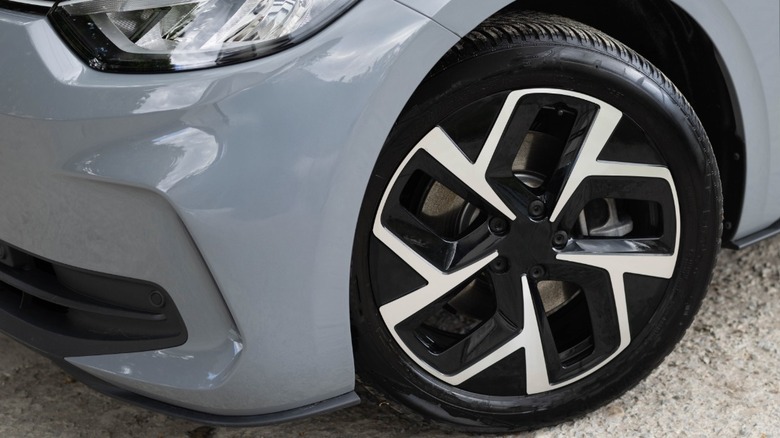
It's nice to have a set of shiny new tires, but not so nice to have to pay for them. That's something most of us would like to have to do as rarely as possible. Yet, many of us are making mistakes right now that could be shortening the lifespan of our new tires.
For example, maybe we bought a replacement tire that doesn't match the tires that are already on the car. Maybe we bought tires that weren't right for our vehicle or the season. Perhaps we've mismatched our tires and rims. If we're not paying attention, we could mount the tires so that they are facing the wrong way – we've even had professionals do that to us. Skipping alignment and balance on new tires is another common mistake.
Don't forget to check the air pressure regularly, even for new tires, making sure they are neither overinflated nor underinflated, to avoid blowouts and other problems. Don't drive too aggressively on your tires, especially when they're brand new. Avoid skipping regular rotation and make sure you maintain your shocks and struts. Beware of products you use, like tire shine solutions and emergency repair sealants. Don't try to fix a hole that's too big and don't over-torque your lug nuts. And finally, if you have to store tires, store them in the right environment and position.
Buying the wrong tires

It's best to replace all four tires at the same time. But sometimes a tire gets damaged beyond repair long before the end of its natural lifespan. That doesn't always happen when you're flush with cash, meaning you've only got the funds to replace one tire. This isn't the ideal scenario, but if you can only replace one tire, make sure it matches the other three tires in size, speed rating, load rating, seasonality, and tread pattern. It's also recommended to buy the same brand as your existing tires.
Some make the mistake of buying replacement tires that don't match the existing tires, and this can cause problems with traction, wear, and handling. Perhaps you can replace all four tires at once. But don't replace your old tires with a set that is smaller or rated for a lower load capacity. The manufacturer has matched tires to handle the weight of your vehicle and what it is expected to carry.
Another mistake people sometimes make when replacing their tires is using tires for the wrong season. Winter tires are not made to run in the summer and summer tires aren't made to run in the winter. You can use all-season tires, but all-season tires have their disadvantages.
Installing tires incorrectly
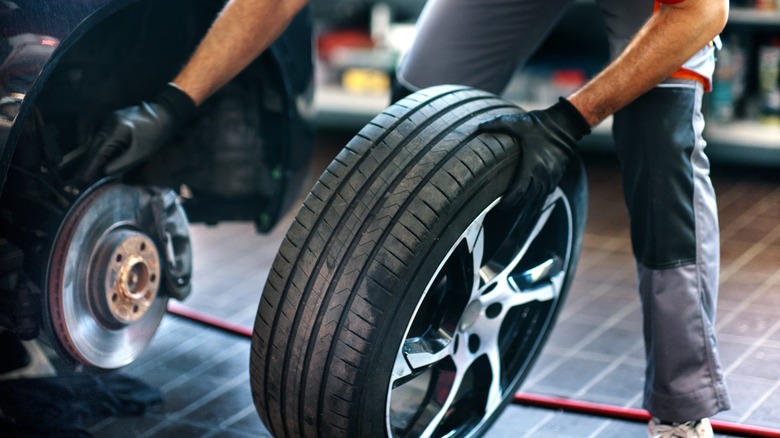
Continental Tires says that if you've discovered you've just mounted a tire on the wrong-size rim, don't even try to mount it on another rim, but scrap it instead. Along the same lines, if your old rims are bent, rusted, cracked, or otherwise damaged, it's time to replace the rims along with the tires.
Another mistake some make when installing tires is assuming it doesn't matter which way the tires are fitted or, in other words, which side of the tire faces the outside. A lot of tires are asymmetrical, meaning they are made so that a specific side is supposed to face the outside, while the other is supposed to face the inside. This is usually specified on the sidewall. Some tire treads are supposed to go in a specific direction. Turning them around makes the tire run backward, causing a loss in traction. The correct direction is usually indicated by an arrow on the sidewall. And don't even get us started on the differences between symmetrical, asymmetrical, and directional tires.
Remember, it's also important to have new tires balanced so that they handle correctly and don't wear prematurely, which is a maintenance job that should be left to professionals.
Improper inflation or neglecting it altogether
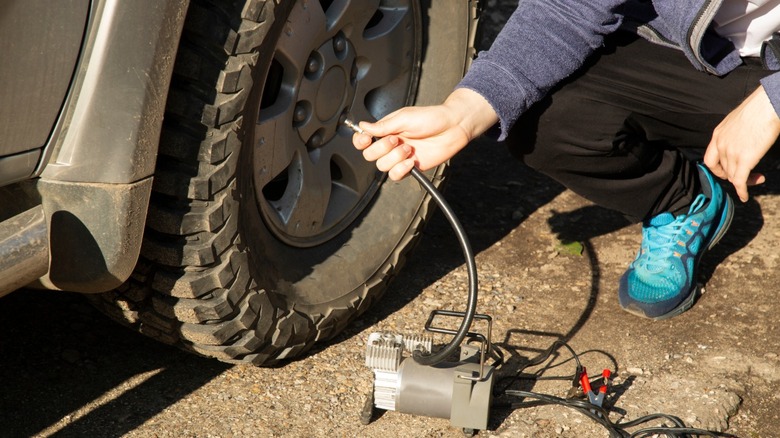
Some drivers make the mistake of thinking that the air pressure in new tires doesn't need to be checked very often. But it's not just old tires that lose air. Outside temperature has a lot to do with air pressure: hot temperatures will cause the air pressure inside your tires to go up, while cold weather will cause it to go down. It's a good idea to check at least once a month, using a tire gauge, which is one of the car maintenance skills every adult should know. It's best to check tires when they're cold, or have been parked for at least three hours.
All too often, drivers make the mistake of driving on overinflated or underinflated tires. There may be times when you might want to temporarily inflate the tires a little bit, or let some of the air out — soft-roaders often deflate their tires to a lower PSI to give their tires a wider profile on the dirt. But normally, you should keep your tires inflated to the correct PSI. Overinflated tires can get punctured more easily. Underinflating can cause tires to get even hotter than normal and cause internal damage.
A very common mistake we see is drivers inflating tires to the "max PSI" number on the sidewall of their tires. This is the maximum pressure the tire can handle, not the recommended pressure. The correct PSI can be found on the sticker on the door jamb of the driver's door.
Driving your car like you stole it

Many drivers are guilty of not allowing new tires to get "broken in." Some make the mistake of driving aggressively on their brand new tires. A lubricant is applied to tires during the curing process. This lubricant can decrease the traction of new tires until it wears off. So, for the first 500 miles, take it slow when accelerating, taking corners, and coming to a stop.
But even after tires have been broken in, it's best not to drive too aggressively. Some make the mistake of driving their car like they stole it — peeling out, doing doughnuts, stomping on the gas like they're trying to break a speed record. All of those things will grind your tires down. Likewise, try to avoid potholes, curbing your vehicle, or driving over speed bumps too quickly. If you happen to do any of that by accident, make sure to check your tires for damage shortly thereafter.
And don't overlook the speed and load ratings of your tires. You can find these ratings on the sidewall of your tire or on the door jamb sticker. It's usually a number followed by a single letter, for example, "91V." In that case, 91 would be the load rating and V would be the speed rating.
Skipping maintenance or using the wrong products

If you want your new tires to last, you will need to rotate them on a regular basis. Check to see what the manufacturer says to determine exactly how often you should do it, but generally, tires should be rotated every 5,000 to 8,000 miles. Failing to do this can cause uneven wear and even blowouts — skipping rotation is one of those maintenance mistakes that are keeping your mechanic rich.
You'll want to make sure to rotate your tires using the correct pattern for the type of drivetrain you have. You'll also want to avoid ignoring signs that your struts or shocks are wearing out. These are parts that will need to be replaced by the 100,000-mile mark. Lots of bad things can happen if you don't replace struts and shocks — your car won't brake as well, its handling can be impacted, and other parts of your suspension could degrade. But worn shocks and struts can also cause cupping or premature tire wear. In fact, if you think it's time to replace your tires because they look worn, that may also be a sign to replace your shocks or struts, too.
Everyone likes shiny tires. But check the ingredients of your tire shine product for solvents. Using tire shine products that contain solvents is a mistake that can also degrade your tires.
Damaging your tires by fixing them
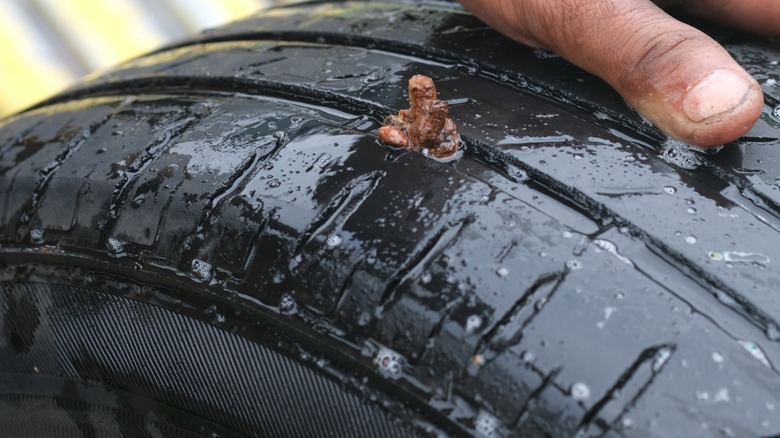
Fix-a-Flat and products like it seem to be pretty handy to have. If your tire goes flat due to a small hole, just empty a can of sealant in it, air the tire up all the way after driving it for a few miles, and you're good to go. But it would be a mistake to treat Fix-a-Flat like a permanent repair. The U.S. Tire Manufacturers Association doesn't even endorse it as a proper repair, and some manufacturers, such as Pirelli, say it will void the warranty of your tire. Instead, view it as a temporary repair meant to get you to the tire shop.
You also don't want to make the mistake of trying to repair a puncture that is too big. If a hole is larger than ¼-inch wide, it's time to replace the tire. The same goes for holes that are outside the tread, like on a sidewall. Holes in those locations should not be repaired.
There is one repair mistake that really annoys us, and it's one we've seen professional tire techs make all too often: overtightening lug nuts. Not only can that make it impossible to change the tire on the side of the road, but it can also warp your brake rotors and damage the wheel. A torque wrench, not an impact wrench, should be used to finish tightening the lug nuts. Then retorque them after driving about 30 miles.
Storing tires improperly
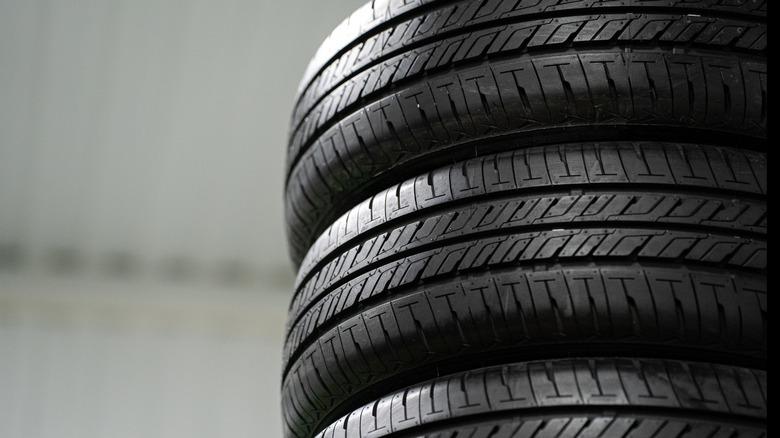
Maybe you've just bought a nice set of winter tires, except it's not winter yet. How you store those tires could have an impact on how long they last. Making the mistake of storing unmounted tires in the sun, in a wet area, or where they can be exposed to extreme temperatures or ozone can damage them and cause them to rot. So, make sure to store them off the floor in a dry, cool, well-ventilated place.
Where you store your tires is important, but so is how you store them. Unmounted tires should be stored sidewall to sidewall, which means they should either be stacked in a column or side-by-side on a rack. This helps them to keep their shape. Whitewalls should be stacked next to whitewalls to prevent staining. So, don't make the mistake of just storing your tires in a pile.
If you plan to park your car for months at a time, it would be a mistake to park a stored vehicle so that its full weight is resting on the same part of your tires for weeks on end. The best thing to do would be to store the car so that it is not resting on the tires. If this isn't possible, move the car every so often so that a different part of the tire is pressed against the floor or ground, and keep the tires inflated to the right pressure.