

The Most Common Causes Of Tire Blowouts Are Why You Shouldn't Sleep On Proper Pressure
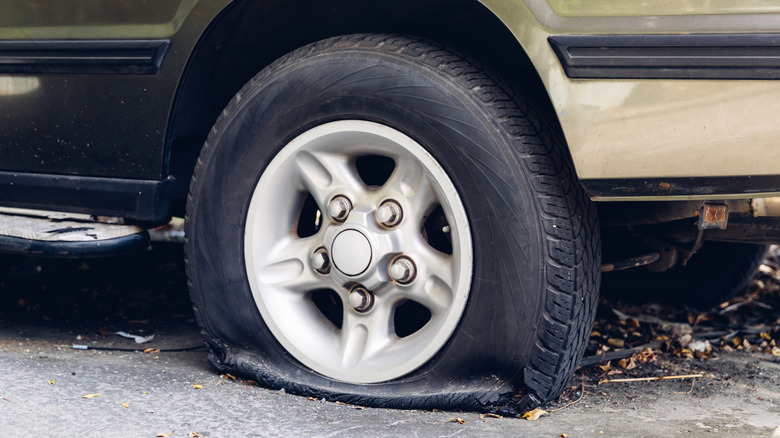
Tire blowouts are many drivers' worst nightmare. Apart from the perplexing explosion, vibrations, and shuddering that occur when a tire rapidly loses air pressure, a blowout can make any vehicle difficult to control, especially if the tire bursts while cruising at speed. A blowout can happen suddenly with little to no warning, but the truth is that most incidents are preventable, despite the unpredictable nature of road hazards and changing weather.
Blowouts can happen for many reasons. Aging tires with visible signs of dry rot are unable to hold air pressure and are prone to bursting, and worn tires on severely bent rims are ticking time bombs. However, studies by the National Transportation Safety Board (NTSB) show that over-deflection of a tire's tread surface, which happens when the tire is flat, overloaded, or underinflated, is the most common cause of tire blowouts, and it's not hard to see why.
An underinflated or overloaded tire has a wider-than-usual contact patch with the road surface. In that condition, the tire produces more friction and heat as it rolls, and too much heat is not good for any tire. Underinflation also puts unnecessary stress on the belt edges and the tire's shoulder. Too much heat and material fatigue will inevitably lead to blowouts, and this highlights the importance of maintaining the correct air pressure every time you hit the road.
Overinflated tires could also blow up

Too little air is bad for tires, but it turns out that too much of it can also do more harm than good. In a separate study published by the National Center for Biotechnology Information, overinflated rubber is just as susceptible to blowouts as underinflated tires. Too much air pressure puts undue stress on the tire's internal parts and will eventually weaken the structure, making it more likely to burst when provoked by potholes and road debris.
Moreover, too much air reduces the contact patch of the tire. This means it'll have less traction over the surface, which you don't want when the roads are icy, slippery, or wet. Overinflation also delivers a stiffer ride and causes irregular tread wear, and you'll notice it if the center treads are wearing faster than the shoulders. No matter the case, overinflated tires are dangerous, unsafe, and are just as prone to incurring damage from potholes and curbs as underinflated tires.
What to do if a tire blows out while driving
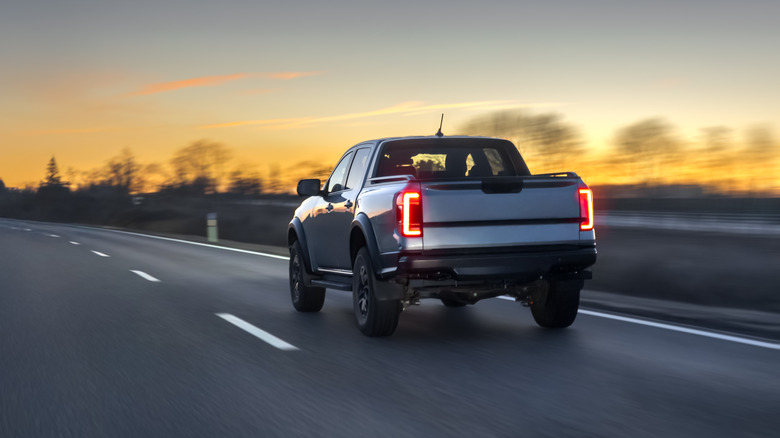
When a front tire explodes, you'll feel more vibrations in the steering wheel. On the other hand, you'll feel a rear tire blowout through the vehicle body. No matter which, the tips to surviving a blowout on the highway are the same, and it mainly has to do with not panicking and maintaining your cool to regain control of the car.
Place both hands on the steering wheel, and gradually lift your right foot off the accelerator pedal the moment you hear the tire burst. The trick is to reduce your speed while stabilizing the vehicle, keeping the nose pointed as straight as possible using gentle steering movements. At this point, avoid slamming on the brakes, as doing so may make the vehicle harder to control. The goal is to calmly steer the vehicle to the roadside when it's safe to do so.
After stopping the car, engage the hazard lights, call for help, or bring out the spare. Tire blowouts can happen to anyone, but a modicum of care and attention goes a long way toward preventing tire-related incidents. Check the air pressure weekly or before going on long trips. Have a technician inspect and rotate the tires every 5,000 to 7,000 miles. Finally, consider replacing the tires if the treads are worn down to the federally mandated minimum of 2/32 inches.