

8 Of The Most Reliable German Cars Ever Made
German cars have never had a simple relationship with reliability. The country's automakers have produced engines and chassis capable of extraordinary mileage, but they've also produced enough elaborate electronics, complicated cooling systems, and expensive proprietary parts to make "reliable if properly maintained" sound less like a cautionary disclaimer than a veiled threat. Long-term ownership data from Consumer Reports places European brands among the most expensive to maintain and repair, which should certainly weigh heavily on the minds of anyone considering the pros and cons of buying a German car.
Our selections today award no points merely because a car can survive indefinitely after enough parts and money have been fed into it. We'e focusing on specific generations, engines, and configurations that developed unusually strong records for dependability or longevity without treating every part more fragile than an engine block as a consumable. Some have statistical support, including a Porsche 911 that JD Power named the most dependable model overall in its 2022 Vehicle Dependability Study. Others made their cases through breakdown records, high-mileage commercial service, or decades of enthusiast experience. Now let's see if any of your favorite German cars made the cut.
Mercedes-Benz W123 300D
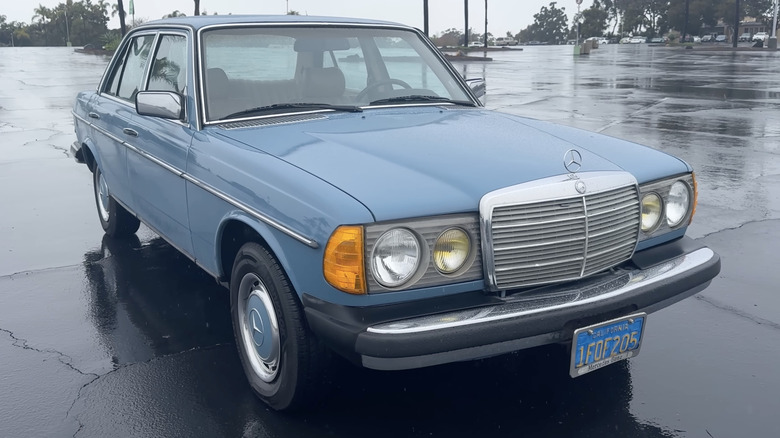
The W123 300D is what people picture when someone says Mercedes used to build cars like bank vaults. It's upright, formal, and almost aggressively sensible, with an appeal rooted less in excitement than in the feeling that every part was designed to survive a change of government. The diesel versions were never quick, although the North American turbocharged 300D cut the 0-60-mph slog from roughly 20 seconds to 12, which qualifies as a performance revolution if your starting point is continental drift. But considering that even when Mercedes-AMG tried performance-maxing a diesel it didn't go well, it's not surprising that enthusiasts value the W123 not just for how it drives but for what it represents: an era when Mercedes treated durability as part of the luxury proposition rather than an option package.
Its reliability case begins with the five-cylinder OM617 diesel. The turbocharged version used an iron block and head, a forged-steel crankshaft and connecting rods, premium bearings, and pistons with internal oil-cooling passages, an appropriately excessive foundation for an engine that became synonymous with extreme mileage. The wider W123 range also saw extensive commercial use, including long-wheelbase 240D and 300D models sold for taxi and hired-car service.
Rust is common around the wheel arches, jacking points, spare-wheel well, battery tray, and sunroof tray, while vacuum leaks can affect the central locking, and neglected suspension components are another common concern. But a sound 300D remains the rare old luxury car whose enormous odometer reading can feel more like a credential than a warning.
Volkswagen Golf Mk4 with the ALH TDI
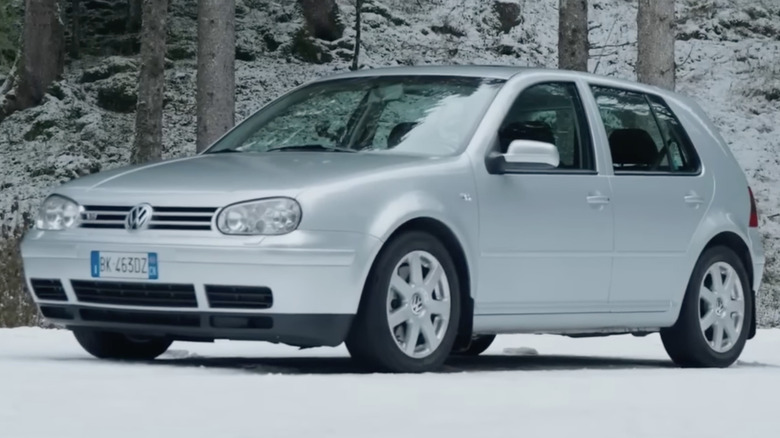
The fourth-generation Golf pushed Volkswagen's ordinary hatchback noticeably upmarket, with a quiet, comfy ride, generous cargo capacity, and a surprisingly long list of luxury features. The version we care about here paired that polished shell with Volkswagen's 1.9-liter ALH turbodiesel, producing a modest 90-horsepower motor that Jalopnik readers counted among the best production engines ever made.
Nobody bought one expecting GTI theatrics. What owners got was a compact hatchback that stretched a tank of diesel far enough to make fuel stops feel optional. The ALH Golf became the thinking enthusiast's commuter: slow, practical, tunable, and satisfying largely because it turned efficiency into its own kind of performance.
The ALH earned its reputation through relative mechanical simplicity and extreme longevity. It used a single-overhead-cam, eight-valve design, with mechanical injectors and a Bosch VP37 rotary injection pump, while multiple Mk4 TDIs have been documented beyond 500,000 miles. The five-speed manual is the configuration to seek because it proved much more durable than the failure-prone 01M four-speed automatic.
Reaching heroic mileage still requires regular timing-belt service, while turbo-actuator problems, vacuum-system faults, exhaust leaks, and oil leaks are familiar wear issues. The car around the engine may need continued attention, but the ALH Golf's defining trick is continuing to commute long after most inexpensive cars have begun contributing parts to other inexpensive cars.
2019 Porsche 911 (991.2)
It can be hard to choose a Porsche these days, considering that you uncool performative dorks have driven up the prices so much. But since so many performance-minded enthusiasts are destined to end up in a 911 one way or another, it's worth calling out a generation that might give you a break on reliability if nothing else.
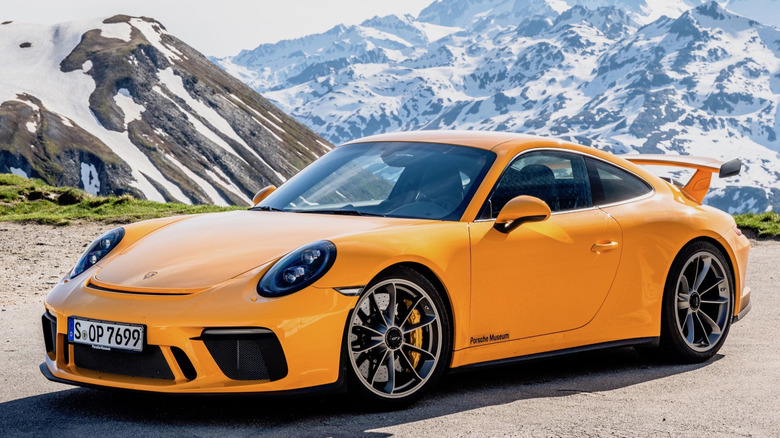
The 991.2 arrived at an awkward moment for Porsche traditionalists, replacing the Carreras' naturally aspirated engines with a twin-turbocharged 3.0-liter flat-6. That was a substantial philosophical change for the everyday 911, but it also produced startling performance. A Carrera S with PDK and Sport Chrono reached 60 mph in 3.1 seconds, while even the base Carrera with a manual transmission managed the sprint in four seconds. The 991.2 may not deliver quite the same naturally aspirated theater as its predecessor, but it remains an extraordinarily capable sports car that can make increasingly absurd speed feel almost routine.
The 2019 model makes this list because its reliability case is unusually concrete. JD Power's 2022 Vehicle Dependability Study measured problems reported by more than 80,000 verified owners of 3-year-old vehicles, meaning the study covered 2019 models. The Porsche 911 ranked as the most dependable individual vehicle in the study, earning its second consecutive overall victory and its third in four years. That result does not mean every 991.2 configuration will produce identical ownership costs, nor does it make Porsche parts inexpensive. It does, however, give the 2019 911 something many German performance cars lack: a reliability argument based on more than an owner insisting the car has been flawless aside from the small filing cabinet they've filled with service invoices.
Mercedes-Benz W124 diesels
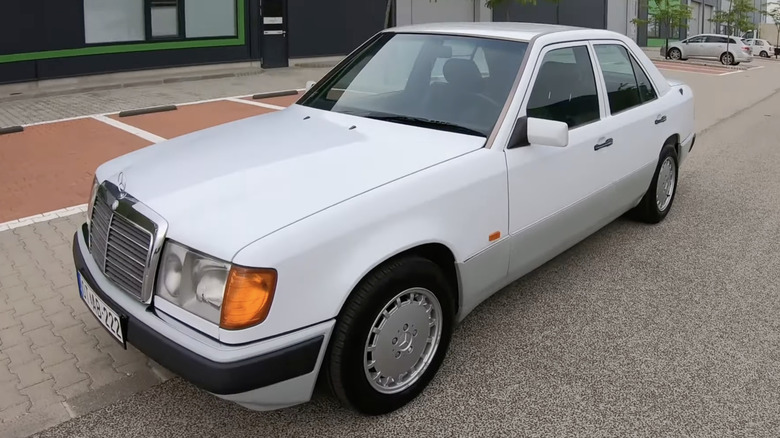
The W124 had big shoes to fill in replacing the W123, and it kind of pulled it off. This is the era when it felt like Mercedes was letting engineers run the company, as evidenced by the truly wild front suspension setup on the thing. Its restrained styling has aged into something close to automotive business casual, while the range expanded across sedans, wagons, coupes, and convertibles. It was broad enough to encompass workaday diesel models and the Porsche-assembled, V8-powered 500E, which is a fairly wide spectrum between "airport, please" and "I have something to prove on the autobahn."
We are concentrating on the diesels, though, where speed was rarely the point and longevity very much was. Unlike some older cars whose reliability reputations rest mainly on affectionate storytelling, W124 diesels have accumulated some unusually persuasive mileage records. One 1993 diesel sedan used as a taxi in Albania had covered 984,617 miles by 2022, and still retained its original engine.
The W124 range offered four-, five-, and six-cylinder diesel engines, but decades on the road have introduced concerns unrelated to their original engineering. Rust can affect the front wings, jacking points, rear subframe mounts, and areas around the windows, while later examples can suffer from deteriorating wiring insulation. Still, a healthy W124 diesel remains evidence that "old Mercedes reliability" was occasionally more than something uttered while approving another repair estimate.
Volkswagen Golf GTI Mk2 with the 1.8-liter 8-valve
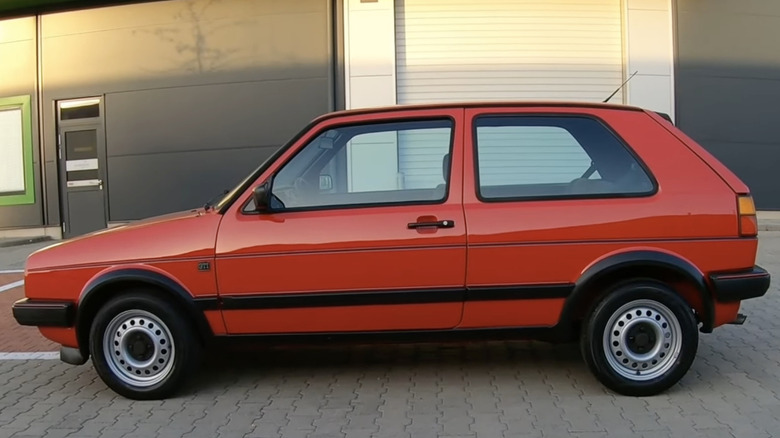
The Mk2 Golf GTI took the original formula and made it larger, more comfortable, and more modern without turning it into a bloated grand tourer. Its appeal was never about overwhelming power. The early car used a 1.8-liter eight-valve four-cylinder producing roughly 110 horsepower, while a more powerful 16-valve version arrived later. The eight-valve is the one we want here. It's less exotic, less frantic, and perhaps a little more faithful to the GTI idea that ordinary roads can be entertaining without requiring enough horsepower to frighten the local electrical grid. The Mk2 also remained a genuinely useful hatchback, which means enthusiasm did not require abandoning passengers, groceries, or every other sign of adult responsibility.
Its reliability case begins with an engine family regarded as long-lived when regularly serviced. The eight-valve motor is generally considered tough, although smoke can indicate worn valve seals, valve stems, or piston rings, while hesitation or stalling may point toward fuel-injection trouble. The greater threat is usually the rest of the aging car. Rust can appear around the sills, door bottoms, valances, windshield edges, bulkhead, fuel-filler surround, and wheel arches. Even so, the basic engine remains refreshingly difficult to intimidate, making the eight-valve Mk2 GTI a performance car whose mechanical durability is not dependent on pretending that every failure is simply part of the ownership experience.
BMW E30 325i
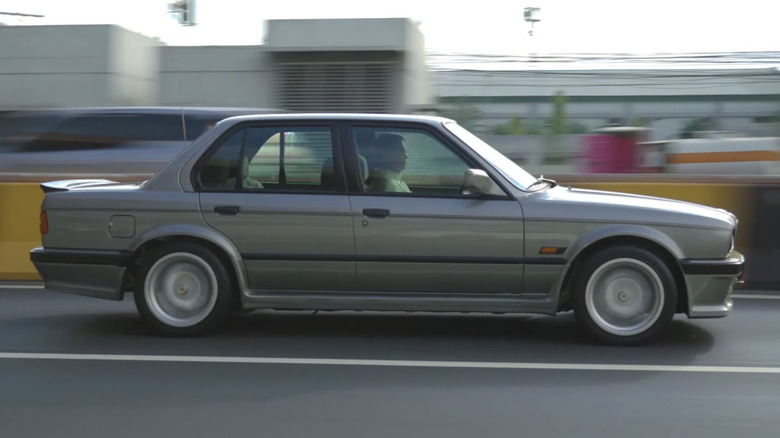
The E30 325i is one of those cars enthusiasts praise so unanimously that it can become difficult to separate the actual BMW from the mythology accumulating around it. Fortunately, the underlying machine gives them plenty to work with. Its 2.5-liter M20 inline-6 produced 168 horsepower and 164 pound-feet of torque, while a five-speed 325is could reach 60 mph in 7.4 seconds and continue to 128 mph. That is ordinary crossover performance today, but the appeal was never reducible to acceleration. The rear-wheel-drive 325i offered a spirited experience and steering that could be knocked into line with a quick blip of the throttle, helping establish the approachable sport-sedan formula BMW spent decades refining and occasionally forgetting.
The reliability argument centers on that M20 engine, which can reach 400,000 miles when properly maintained. Maintenance is doing important work in that sentence. The M20 uses a timing belt that should be replaced every four years or 50,000 miles, and a broken belt can cause catastrophic engine damage. Aging examples also deserve inspection for rust around the battery tray, rear wheel wells, front floors, front jack-point areas, shock towers, and sunroof.
The E30 is not immortal, but a cared-for 325i offers something rarer than mere survival: an old German performance car whose engine may be less alarming than the mileage displayed behind the steering wheel. That said, if the motor does give up on you, the right move is definitely to shove a 450-horsepower Volvo engine in there, unless you're chicken, of course.
Mercedes-Benz 190E (W201)
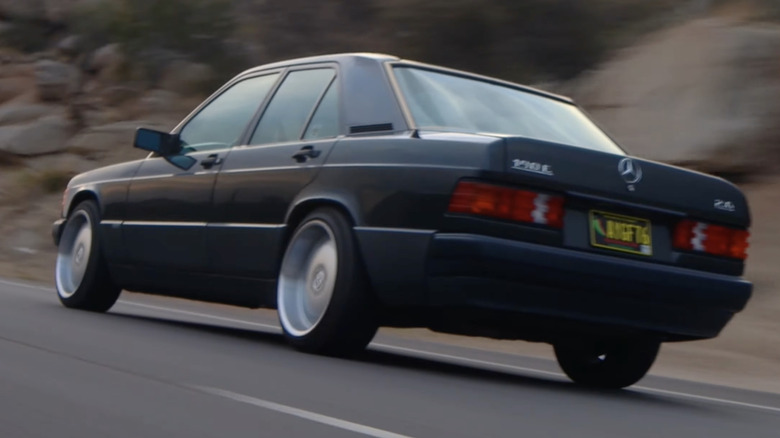
The 190E was Mercedes' first real attempt to shrink its traditional virtues into a more affordable compact sedan, and the resulting "Baby Benz" quickly proved it was not merely a budget imitation. The W201 introduced a patented five-link independent rear suspension designed to improve both ride comfort and handling precision, then demonstrated its enthusiast credentials through the 190E 2.3-16. Before it reached showrooms, three examples covered 50,000 kilometers at Nardò at an average speed of more than 150 miles per hour. That is a fairly persuasive way to announce that the smaller Mercedes was still built by people who considered ordinary validation testing insufficiently theatrical. Even the regular 190E carried the same upright seriousness as the company's larger sedans, just in a package that did not require its owner to resemble the chairman of a regional bank.
The reliability case is less dramatic but broadly reassuring. The 190E is generally regarded as robust and reliable, with little of major consequence commonly going wrong, while its body structure, paint, interior fittings, and suspension are all noted for holding up well. There are still version-specific concerns: Early engines used a single-row timing chain, while later cars received a more durable double-row setup, and chain rattle can indicate wear. You'll also want to check for cylinder-head-gasket oil leaks, as well as worn rear-suspension bushes that can affect handling. None of that grants immunity from age, but it leaves the 190E with a rare distinction: being an entry-level luxury car whose engineering doesn't feel entry level. It was the kind of German luxury precision that gave early-'90s Lexus something to aim for.
Volkswagen Type 1 Beetle
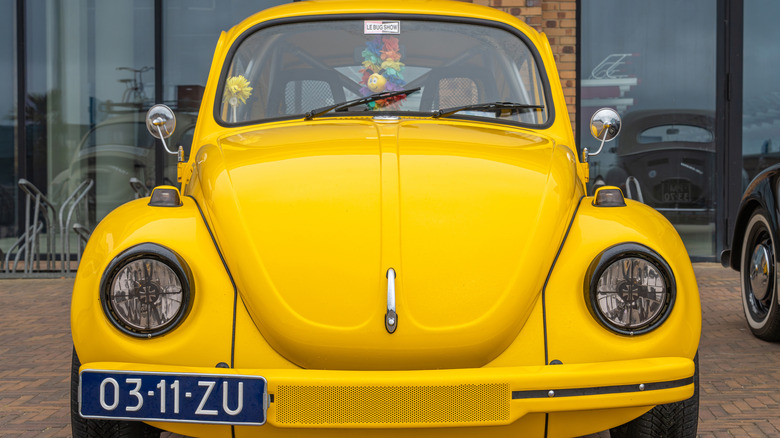
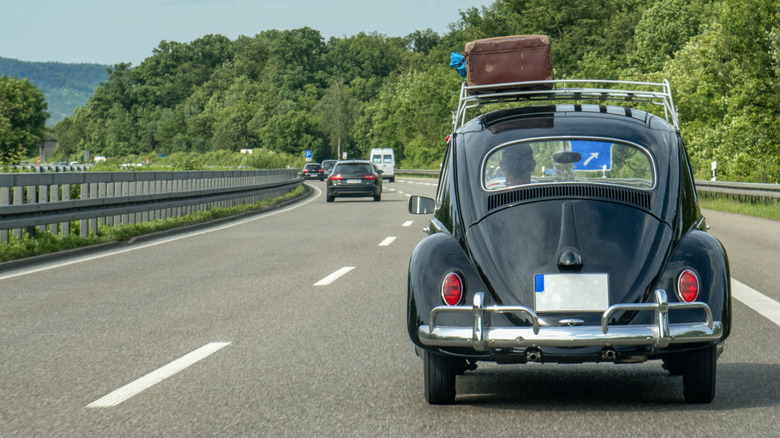
No German car has made a broader or more enduring case for reliability than the original Beetle. The Type 1 was never luxurious, fast, or technologically intimidating. It was an affordable people's car that was compact, practical, inexpensive to buy and maintain, and easy to repair. That uncomplicated mission carried it from prewar Germany into postwar reconstruction, American counterculture, family driveways, student parking lots, racetracks, beaches, and more movie roles than some professional actors manage. By 1972, the Beetle had exceeded the Ford Model T as the most-produced car in history, and its familiar shape remained fundamentally recognizable throughout the run. It did not need to become sophisticated because the world kept finding uses for what it already was.
Its reliability was built around a rear-mounted air-cooled engine that required less maintenance and was relatively easy to fix, along with mechanical simplicity that made roadside improvisation feel like an accepted ownership skill rather than an emergency. The Beetle was produced from 1938 until 2003, with more than 21.5 million built worldwide, an extraordinary reign for one basic design.
That doesn't mean every surviving car is dependable today. Rust, particularly beneath the battery, can seriously damage the structure, and decades of modifications or neglect can undo the virtues Volkswagen supplied. But as the long-reigning champion of German durability, the Type 1 closed the argument through sheer repetition: millions built, generations served, and one stubborn little shape that simply refused to disappear. You've probably noticed more on the road than the rest of this list combined.