

Time Has Been Kind To BMW's 'Bangle Butt' Styling
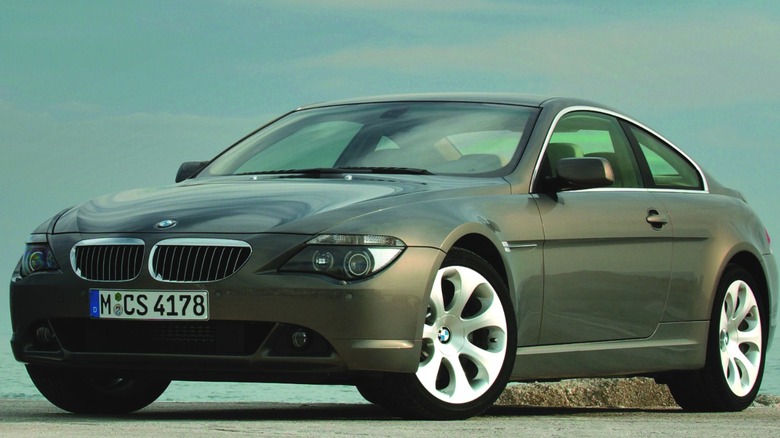
Modern BMWs are all rather bold-looking creations with lots of sharp creases, oversized kidney grilles, and hyper-modern interiors, but in the 1980s and '90s, BMW was regarded as a much more conservative automaker. Its cars were elegantly understated, with very subtle evolutionary visual changes from one iteration to the next, and they were all but universally lauded for their handsome, square-jawed looks. That all changed in the early 2000s, when Chris Bangle was at the reins of the Bavarian brand's design department, and BMW revealed the fourth generation of its flagship, the controversial E65 7 Series with that fateful "Bangle butt."
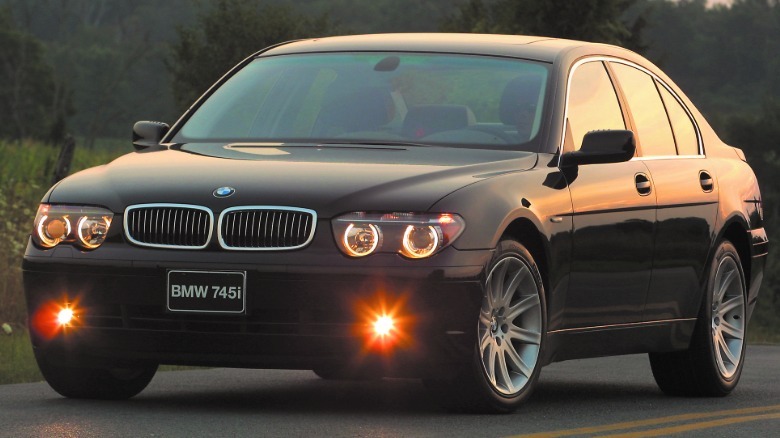
The third-generation E38 7 Series is regarded as one of the most perfectly designed and proportioned sedans ever made, and its star turn in the James Bond film "Tomorrow Never Dies" helped it earn its suave status. The E65 7 Series had to follow an awfully tough act, but one complaint echoed across the automotive universe: its Bangle butt. That's the not-so-kind nickname given to the design of its upright trunk flanked by swooping fenders and taillights tail lights that critics felt were disjointed and conflicting.
It may have started with the E65 7 Series, but all of Bangle's designs were mold-breaking
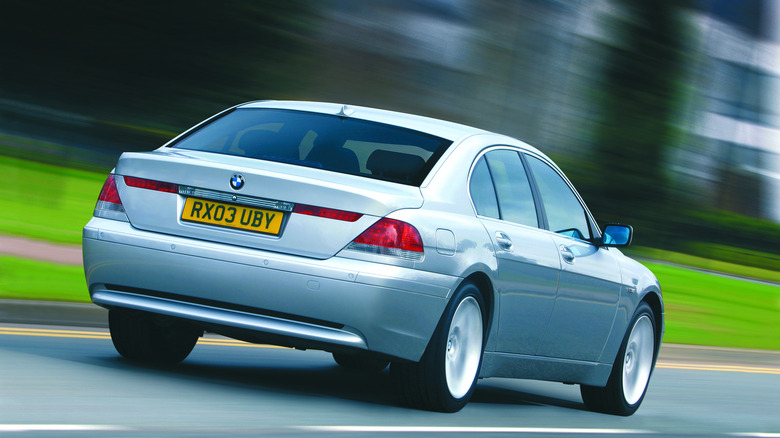
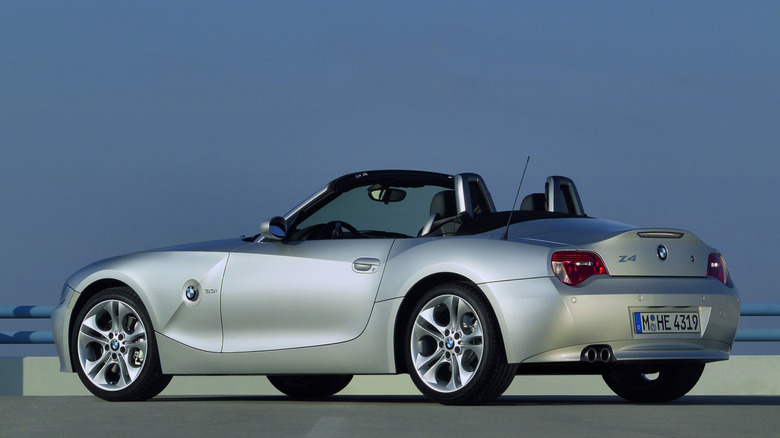
The story was vastly the same with the other redesigns that Bangle oversaw, from the E60 5 Series to the daring Z4. His designs may seem tame now, but in their day, they were seriously polarizing. BMW went from a stable of handsome, understated designs characterized by low, flat, and wide proportions, to one filled with dramatic lights, sharp body creases, and taller greenhouses.
Unsurprisingly, the traditionalist automotive media were put off by BMW's new design language, but I remember loving the bold new direction as a kid. [Ed. note: So did I -DG] The departure in design was also accompanied by a jarring departure in ethos, too: BMWs launched into the 21st century brimming with new technology that separated the driver from the machine, from the infamous iDrive system to active suspension and active steering.
 BMW
BMW
Many of BMW's recent designs — pre the new Neue Klasse cars, at least — were met with harsh criticism. Chief among them were the bucktooth nose on the 4 Series and M3, the in-your-face face of the G70 7 Series, and the pig-snouted XM. These shall we say bold designs have contextualized the comparative elegance of the Bangle-era Bimmers. Well, at least the ones who hated on the designs in their day might be revising their stances — like I said, I've loved the Bangle designs since they first hit the streets and made my tweenage loins froth, especially in the case of the 6 Series and Z4.
What a guy

Chris Bangle didn't singlehandedly design all of the BMWs that debuted under his tenure as Chief of Design at BMW Group, but every design did have to receive his stamp of approval prior to launching. He actually joined BMW AG in 1992, 10 years prior to the launch of his most polarizing design, after serving as the Director of Fiat Centro Stile/Design where he designed the svelte Fiat Coupé. He's an Ohio-born American who earned his undergraduate degree from the University of Wisconsin and studied design at the renowned Art Center College of Design in California.
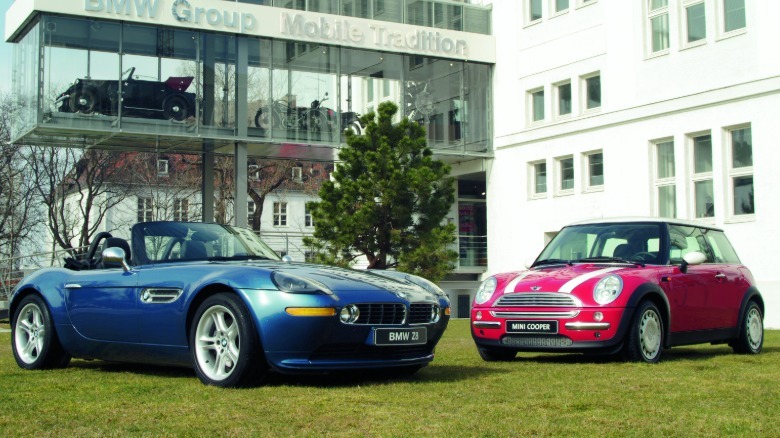
Naturally, as the head of design for BMW AG between 1992 and 2009, Bangle also led the reintroduction of the Mini brand, and the seventh-gen Rolls-Royce Phantom after the latter brand was acquired by BMW. He also oversaw the launch of the iconic E46 3 Series, the original E53 X5, and the show-stopping Z8.
 BMW
BMW
The most controversial designs he signed off on implemented a design language called "flame surfacing." Said to be inspired by human and fabric forms, Bangle even went so far as to create a spectacular concept car called the GINA that had a body made from fabric and a centrally split-opening hood that was remarkably reminiscent of another kind of gina.
Regardless of the controversial nature of his designs in their day, hindsight has been much kinder to Bangle's BMWs. He was awarded the American Prize for Design in 2021 by Good Design, which said, "If ever there was an avant-garde, revolutionary in automobile design in the post-years of Henry Ford, Bangle is our contemporary times' enfant terrible."
My two cents
I've been a fan of his designs since their daring debuts, and that has not changed one bit over the course of the couple of decades since they first made headlines. If you'd like added context for how his designs were received when they were new, I implore you to do some internet sleuthing and read original first-drive reviews from back in the day, as they're thoroughly entertaining.
Honestly, writing this has been a rather full-circle experience for me. Back when Bangle's designs were first stirring up controversy in the automotive media, I was just a nerdy little kid who would run straight to the magazine stand at Barnes & Noble so I could fervently flip through the glossy pages of the latest issues of all my favorite car magazines. At the time, my biggest dream in life was to one day see my name written on one of those glossy pages below a snappy headline, and though magazines may be going the way of the dodo, I am just as proud to see my byline below the famously snarky headlines of Jalopnik.