

If Everyone Followed The 80% Rule For Towing, We'd All Feel A Lot Safer
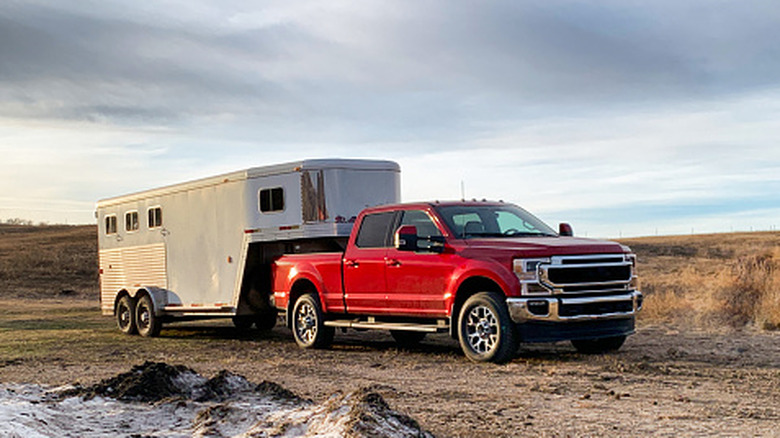
It's the middle of summer, and your kids are still out of school for a few weeks. There's time to load up the truck with all your gear, hitch up the camper or the boat, and get the heck out of Dodge for the weekend while you can. They aren't getting younger, and your vacation time doesn't roll over to next year. While you're hitching up the trailer and loading up with all of the stuff you need for the weekend, are you sure your vehicle can safely tow everything you're expecting it to?
Obviously, the first thing to check when towing with any vehicle is the manufacturer towing rating. If the people who made your car say it can tow 9,000 pounds, then it can surely pull the 30-footer Airstream Globetrotter you just bought, right? According to Airstream, that house on wheels weighs about 7,000 pounds, so you're well within the limit. Well, hold your horses a second, because that's dry weight. Fill up the 53 gallon fresh water tank, and you're adding another 425 pounds to the tally. Fill up the fridge, the cabinets, and pack the charcoal grille and stuff to entertain the kids for three days in the woods, and it adds up fast. You're easily pushing into the low-8,000 pound range, and dangerously close to the maximum tow rating.
The maximum towing capacity of your vehicle is set under ideal conditions with a brand new vehicle. It's best practice to keep your towed weight under 80% of the maximum – that's the 80% rule. The 80% rule is a guideline, not a written rule by manufacturers, but it helps people tow safely and reliably, while maintaining the integrity of their tow vehicle and trailer. And by that standard, the 9,000 pound upper limit means you probably shouldn't tow more than 7,200 pounds.
How does weight affect your towing?
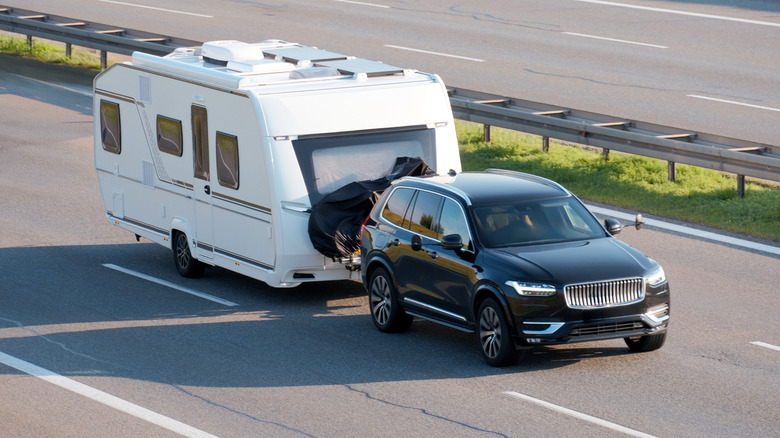
When choosing your tow vehicle and trailer, you should factor in a wide margin of safety to account for things like heavy head- and side-winds, steep inclines, a fully-loaded cabin that puts the truck near its GVWR limit, and aged vehicle limitations. Obviously, the best thing to do when towing is to meticulously maintain your vehicle so factors like maintenance, brakes, and tires aren't an issue. And regardless of how experienced you are at towing, or how well-maintained your rig is, pulling overweight is never going to be safe. Factor in a nice margin of error in vehicle weight, and you are much less likely to have an issue.
Overloading a tow can have detrimental effects to your ability to control the vehicle, potentially introducing high-speed load sway. At the same time, more tongue weight (the amount of weight the trailer is placing on your tow hitch) will increase the load on your rear suspension, potentially pushing the front of the vehicle upward, reducing load on the front suspension and reducing the effectiveness of the vehicle's steering and braking. It's best to stay well within the confines of the 80% rule to keep proper control of your vehicle and load.
The less weight you're pulling around, the better in many cases. Often the trailer will weigh more than the vehicle pulling it, so if it gets out of shape, there's little you can do behind the wheel to get it back in shape.
It's more than just weight
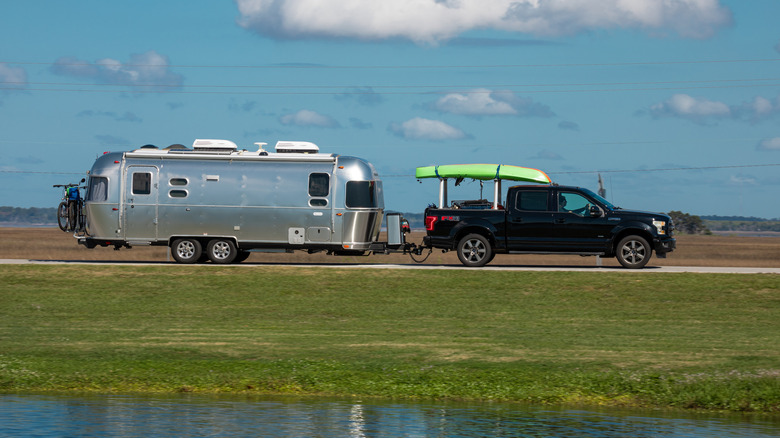
The sheer weight of your trailer isn't the only thing to be concerned with. How much you can tow safely depends on how the trailer is configured, how much weight is already in the vehicle, and how you distribute and control the load. Poorly distributing the load of your haul can have a similar effect to your towing experience as overloading the trailer, impacting driving safety. If your large load isn't properly controlled, you're in for a world of hurt. And a secured load is only as good as the car hauling it at speeds it can manage.
Anecdotally, Americans tend to haul their loads at much higher speeds than their European or Asian counterparts. I've seen large loaded horse trailers, campers, and even multi-car haulers zip past at well over the speed limit many times in my hundreds of thousands of miles of highway hauling. The faster you're towing, the more impact your weight is going to have on braking distance and maneuverability. Even following the 80% rule, these high-speed haulers are betting their lives and those of everyone around them on a probability, and that doesn't sit right with me.
Not only do you need to make sure your load isn't overweight, but it's properly secured, properly situated, and the tongue weight of the trailer doesn't exceed your vehicle's rating either. There are lots of variables out there on the road, so keeping your vehicle properly maintained, reduce the weight of your hauled load if possible, and lower the speed you're traveling. Make sure you get there safely, help set other driver's minds at east, have a blast while you're out for the summer, and get back home without a scratch.