

Why Companies That Make Hydrogen-Powered Semi Trucks Keep Going Belly Up
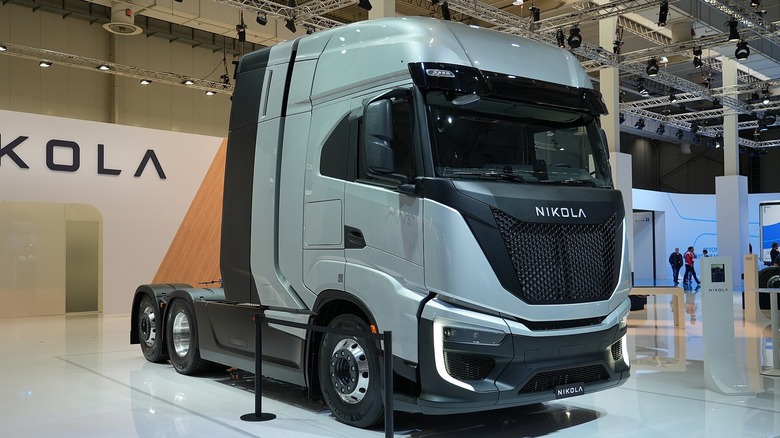
It's not all bad news on the fuel-cell front — as we'll discuss below — but there have been more than a few glitches on the way to realizing the promises of hydrogen-powered semis. Perhaps the most notable failure may have been from Nikola — the company brought to public prominence by convicted fraudster Trevor Milton – which filed for bankruptcy in 2025. However, that year also saw the end of the line for the smaller start-ups like Hyzon Motors alongside well-financed outfits such as the Renault-backed Hyvia. Meanwhile, OEMs including Daimler, GM, and Stellantis have all pulled back from previous hydrogen commitments.
These sudden shifts shouldn't be a complete surprise, though. One way to consider the current state of the hydrogen vehicle landscape is with the concept of the Gartner Hype Cycle, which begins when an innovation inspires the marketplace and triggers a peak of inflated expectations. However, this typically leads to a trough of disillusionment when the innovation doesn't live up to expectations. After bottoming out, this heads into a gradual upward slope as a product's real-world capabilities are explored before finally reaching a plateau of productivity when the technology finds mainstream success.
In this reading, hydrogen-powered semis may be still traveling the trough of disillusionment at this point in the game, leading some of their makers to give up on technology. Beyond that, however, hydrogen-truck start-ups are also dealing with some of the same big stumbling blocks as EV start-ups, such as the simple fact that creating a fresh car brand from scratch is a difficult task — especially when it requires a whole new fueling infrastructure to support it.
Have hydrogen-powered semis simply lost the race to battery-powered trucks?
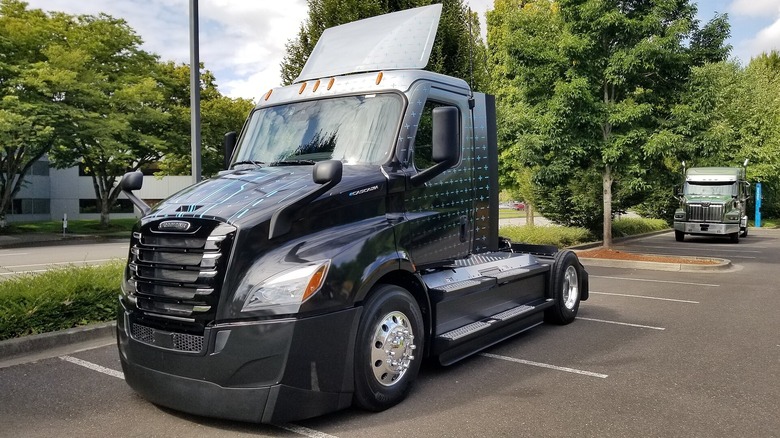
The rise of electric vehicles shows two more key reasons that hydrogen-powered semis and the companies behind them keep running into problems. For one, it takes an incredible amount of time and money to get just about any new vehicle into production, and committing those resources is not a guarantee of success. The list of non-legacy companies that tried their hand at building EVs and failed extends to names like Fisker, Bollinger, Lordstown Motors, Dyson, and Apple.
This country's EV infrastructure went through growing pains as well, and common problems with the EV charging process are still giving folks headaches in spite of the fact there are now more than 250,000 public charging ports in this country. The number of hydrogen-fueling stations, on the other hand, dropped from 84 to 78 between 2024 and 2025, the vast majority of which are in California and not all of which are prepared to service heavy-duty vehicles. This makes it prohibitively difficult for long-haul truckers to refuel anywhere else. Needless to say, hydrogen being difficult to find hasn't helped with sales of light-duty rides such as the Toyota Mirai either.
Indeed, one analysis published in Nature Electronics claims that the ship may have already has sailed on fuel-cell passenger cars, while the future for hydrogen-powered semis remains questionable. The progress made with EVs in terms of production and charging — combined with their own green advantages — means many potential hydrogen-truck shoppers can already enjoy the same sort of clean benefits promised by fuel cells. After all, battery-operated semis from the likes of Freightliner, MAN, Tesla, and Volvo – among others — are currently in production.
Are some companies still working on fuel-cell semis?
All that said, the hydrogen flame continues to burn for some automakers, with Toyota being a case in point. A major player in the hydrogen space, Toyota recently announced plans to join up with Daimler and Volvo as an equal partner in Cellcentric to support heavy-duty hydrogen fuel-cell semis. In addition, the Japanese automaker has partnered with Hyroad Energy to bring 40 Class 8 hydrogen-powered semi trucks to Southern California — albeit not in the way you might expect.
Toyota is handling the hydrogen fuel for the project, with Hyroad supplying the trucks. Now, the twist is that Hyroad doesn't make trucks, and the ones for the Toyota partnership are likely to come from the 113 hydrogen-powered semis it purchased when Nikola sold off its assets as part of its bankruptcy filing.
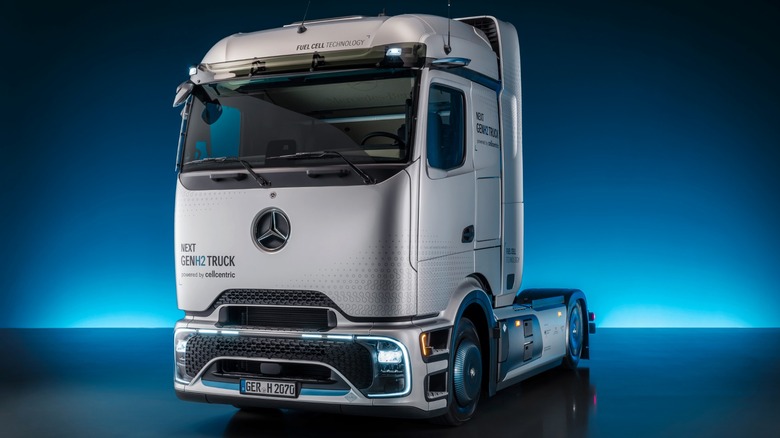
Further, it's worth pointing out that Cellcentric didn't just open for business when Toyota joined. Daimler and Volvo founded the company in 2021, and both European brands have developed road-going prototypes of their own. In fact, Daimler claims that its Mercedes-Benz NextGenH2 fuel-cell semi — the original GenH2 debuted as a concept in 2020 — will be put into limited production this year. The 100 trucks are expected to begin reaching customers by the end of 2026.
Volvo Trucks — which is separate from the Volvo car business — is taking a two-pronged approach to hydrogen fuel. Yes, it's working on fuel-cell semis, but it's also developing a hydrogen combustion engine. Trucks with these powerplants are expected to hit the road by the end of the decade.