

Why Taking Pictures Of Your Rental Car Is Still An Important Rule To Follow
Renting a car isn't always an easy, headache-free process. You're often in a hurry to get going, especially if you're picking up the car at an airport and trying to finish out a long day of travel, and rental offices can have mindbogglingly frustrating parking lot experiences, whether due to long lines from drop-offs and pick-ups jamming up the works or narrow paths through massive parking lots proving truly harrowing.
But just because you're in a hurry doesn't mean you shouldn't take the time to thoroughly document the state of your rental car. Always inspect your rental in the lot and take photos of every square inch of the vehicle. It might take you extra time, but it could save your neck when it comes time to return your ride. Despite the fact that we live in a world where AI-powered surveillance cameras can identify your car even if you don't have a license plate, many rental companies have yet to adopt vehicle imaging systems at scale.
That means that, if you don't have pictures to prove the condition the car was in when you drove it off the lot, you're effectively at the mercy of the rental company when it comes time to determine any damages. You are likely to be liable for any damage that the rental company hasn't notated up to the point where your rental starts, and without photo evidence, you'll have a hard time fighting any charges said damage would incur. While this may not happen every time, or even many times, the extra few minutes it takes to snap a few comprehensive photos will be well worth it for the added peace of mind.
What if the rental company does use automated imaging?
While not every rental car company has an automated imaging system that snaps all-around photos of their cars leaving the lot, many do, and it seems likely that more and more companies will adopt this technology as it becomes more advanced and more affordable. By the end of July 2026, there could be as many as 100 airport rental locations using such technology, in fact. But that doesn't change much on the consumer side of things. You'll still want your own photos as a contingency.
This imaging technology works by compiling images of a vehicle's exterior from multiple angles before you leave and after your car is delivered. The images are then run through an AI that compares the car's condition when you picked it up to the condition when you drop it off. These photos may be taken manually in an app by an employee of the rental company, or they could be taken automatically by drive-through cameras as you exit the rental parking lot.
It all sounds simple enough, but we know that such AI tools are still flawed. Just this summer, an auto journalist was detained by police after a Flock camera error, so we don't recommend trusting your wallet with a rental company's AI. It's also hard to verify whether a human ever looks at the data to verify the AI's conclusion. Plus, the program's conclusions can only be as good as the data it's provided, so poor image quality and human error can result in the AI producing false positives. Additionally, these systems don't always take photos of the interior, which you definitely want to document. The bottom line here is simple: taking your own photos protects you.
How to take thorough pictures of your rental before leaving the lot
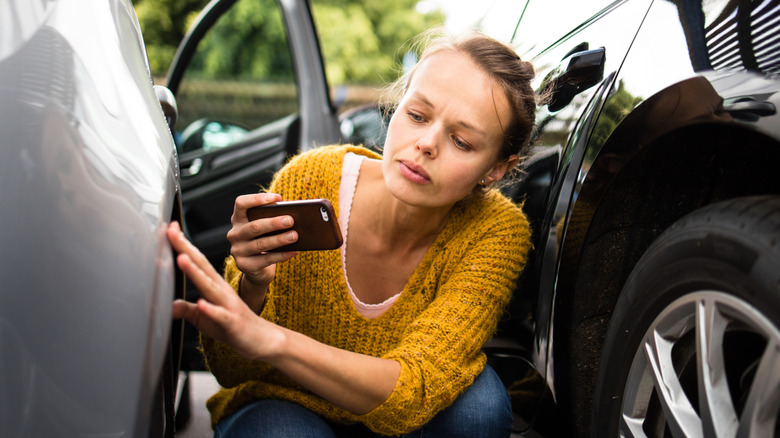
The best way to prevent a rental company from taking you to task over damage you didn't cause is to ensure that you take copious, high-quality photos of the vehicle's interior and exterior before you drive off. Rental companies offering cool cars may be extra eager to charge for damage, so take extra care to document absolutely everything if you're driving something a little ritzier. Make sure you have good lighting, and take a mix of wide shots that capture the whole car, closer shots that capture individual doors, panels, and seats, and close ups of any damage you can spot.
In this case, damage could be anything from small scuffs and scratches to dents, missing paint, and stained upholstery. If it could be even vaguely construed as damage, get a photo of it just in case. You also want to get a photo of the roof, the tires and rims, and any accessories that come with the car, like jacks, air pumps, and jumper cables. While you're at it, get a photo of the odometer, fuel meter, and windshield wipers.
After you've snapped all the necessary photos, double check that none are too grainy or out of focus, and retake any photos that don't clearly show the area of the car you were focusing on. You could call it good there, but we recommend backing the photos up, whether on cloud storage or by simply emailing them to yourself (or better yet, the rental company). Doing so ensures that you can still access the photos even if something happens to your phone on your trip.