

The Road Trip Rules For Driving Through National Parks Keep You And The Wildlife Safe
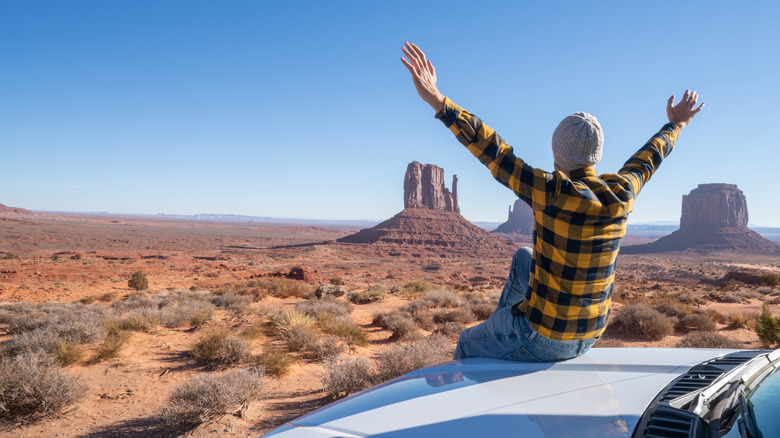
When the United States declared Yellowstone a public park in 1872, the concept of a national park was a relatively unique one. Among the government-protected landscapes of the world, Bogd Khan Uul in Mongolia and Main Ridge in Tobago are among the few that are older than Yellowstone National Park, and it wasn't until the designation of Yellowstone that the idea began to spread quickly around the globe. Since the founding of the National Parks Service (NPS) in 1916, the country's national parks have become one of the backbones of American culture.
These days, the National Park Service oversees 433 individual "units" — parks, preserves, memorials, etc. — and runs countless programs geared toward preserving these undeveloped places and educating the public about their history and ecology. These units get about 318 million visitors a year, making them a certified hit. Despite the fact that about half of the country is open to giving up on the car-centric way of American life, National Park visitors are driving up in droves, and it's actually kind of a problem.
According to the National Park Service, about one person a week dies in a car accident on a National Park road, and reckless and distracted driving are also putting wildlife at risk. The NPS is basically begging us to slow down and pay attention while visiting the country's breath-taking parks, and we'd better listen. National parks are a top-tier road trip destination, and by abiding by a few easy road trip rules, you can ensure that your next trip is as safe as it is stunning. Key guidelines include following standard driving rules, leaving no trace, rotating drivers, and being cautious around wildlife. While these guidelines are relatively straightforward, they're a bit more nuanced than some may realize.
Follow all the normal driving rules, you weirdos
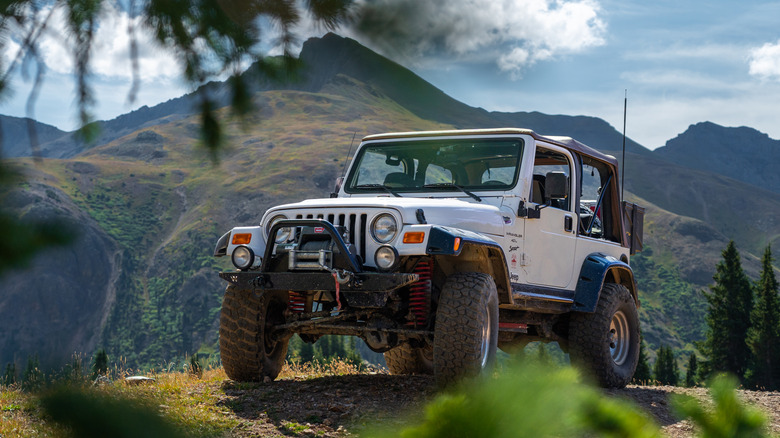
Once you get into the long, winding roads of a National Park, it can feel like you've entered a whole new world. I know well from experience just how enchanting many of these parks are, and it's easy to forget that you're still driving around a 2,000-pound hunk of metal. But the fact is that you remain on a road with all the normal rules and regulations.
National Park roadways have speed limits, just like any old road in town, but usually slower. Per the NHTSA, speeding contributed to about one-third of traffic fatalities in 2024, which means that one of the easiest things you can do to make your trip safer for yourself and the local fauna is totally within your control: just mind your speed. Likewise, even when you're driving in a seemingly remote area of the park, you're still sharing that road with other drivers, pedestrians, or animals. Drive like you're sharing the road, even when you can't see anyone or anything.
Driving long stretches of road through a National Park can feel leisurely, especially at the recommended speeds, and plenty of people make frequent stops to smell the fresh air, take pictures, or touch a really cool tree. But between all those stops, always put your seat belts back on. It's still illegal to ride unbuckled, even for kids. This one might seem like a big ask, especially with excited kids clambering to get a view outside, but it's important. Additionally, don't forget to drive sober. The fact that this even needs to be stated says a lot.
Leave no trace
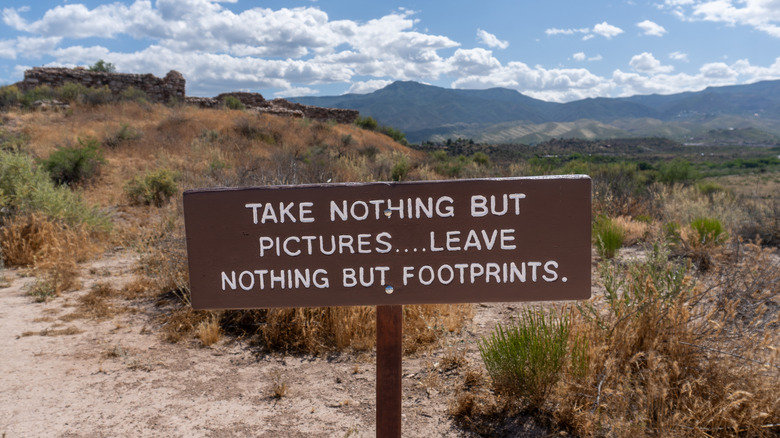
We've all heard the term, whether from our crunchy friend or a surly and disappointed park ranger. Leave No Trace (LNT) is an ethical guideline for interacting with the natural world, and it doesn't just mean no littering. But seriously, no littering.
The NPS follows a seven-principle Leave No Trace philosophy that all visitors should familiarize themselves with before arriving. The institution asks that you "Plan Ahead and Prepare" as step one, which involves checking weather, familiarizing yourself with the regulations of a specific park, and using maps or a GPS for safe navigation. You may also want to research and plan a route through the park to know what kind of roads and terrain you'll face.
The philosophy also urges visitors to "Travel and Camp on Durable Surfaces," and this is especially important for drivers. One wrong turn or risky maneuver could have you dealing with sand, mud, or even a stream. If your vehicle isn't suited to the route, you could get cited, and that includes trying to drive an AWD vehicle on a 4WD-only trail. This also means staying on trail. Forging your own path through a park can be more destructive than it may immediately seem.
Leaving a park as you found it is just good practice if you have any interest in preserving the beauty and health of a protected area, and it's especially important to be conscious behind the wheel since cars make a massive impact on our environment. Just look at what's happened in the Mojave Desert over the last 50 years. After researchers found a 96% decrease in Mojave tortoise populations since the 1970s, a judge shut down 2,200 miles of trails.
Change drivers frequently

Distracted driving is dangerous, and we all know it. Even at the low speeds found on many NPS roads, being distracted just for a moment can put people and wildlife in danger. National Parks are extraordinarily beautiful places, and you're not going to want to miss the singular views you'll find at many of them. However you decide to get your fix of these scenic vistas, just make sure you do it safely, and ideally not by sneaking glances here and there from the driver's seat. You owe it to yourself and the landscape before you to get a better look than that.
Assuming you have a road-trip buddy — which you should because road trips are way more fun with a pal — you should consider swapping drivers frequently and splitting the drive time equally between all available drivers. This allows everyone the opportunity to equally experience the scenery while lessening the risk of distracted driving. It wouldn't be fair to glue one person to the driver's seat and make them choose between keeping their eyes safely on the road and getting to observe the natural beauty around them.
Be wary of wildlife
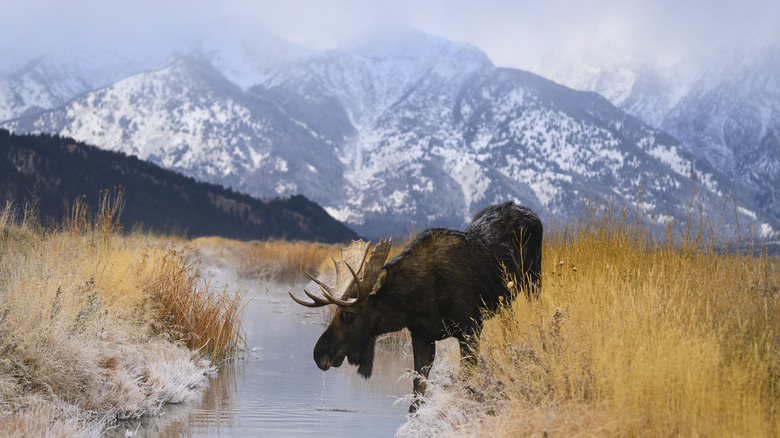
No, seriously. Stay away from the wildlife, no matter what it is or what kind of vibes you get from the friend-shaped critters that abound in National Parks. Year after year, people rock up to National Parks around the country, and either are oblivious to the potential danger of interactions between humans and wildlife, or just believe they're built different. The end results have included tourists getting knocked on their tail, flung eight feet in the air by a territorial animal, or even killed.
Obviously, watching the wildlife is one of the reasons we all love the National Parks so much, and viewing is encouraged. Still, interaction inherently poses dangers, whether for the visitors or for the wildlife itself. Subsequently, National Park road-trippers should follow the NPS guidelines for safe and healthy wildlife observation. Individual parks may have different rules for appropriate watch distances, but NPS guidelines generally recommend staying at least 25 to 50 yards (75 to 150 feet) away from most animals and a minimum of 100 yards (300 feet) from predators like bears, wolves, and wild cats. Not sure how far 100 yards is? Play it safe and just move back even farther. According to the Park Service, if an animal reacts to your presence, you know you're too close, and a pair of binoculars is your best friend.
As previously mentioned, keeping your distance isn't just for your own protection; it's also to keep the animals safe. Never feed or touch wild animals at National Parks when stopping during drives, and keep a close eye on any children in your party. When driving in wildlife areas, keep your eyes peeled for critters crossing the road or on the roadside, and always pull over completely when taking advantage of a photo opportunity.
Underestimate bears at your own peril
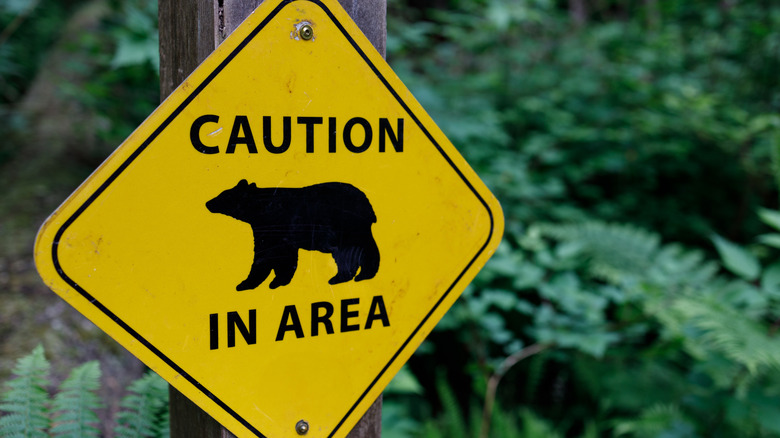
Yes, I already harped on about how important it is to avoid the wildlife at these parks. But too bad, I'm gonna do it some more. Bears are cute, extremely fluffy, and surprisingly social and curious. They will also ruin your life in 1,000 different ways. Unless you want to end up like Grizzly Man, you need to take every precaution necessary to avoid them.
If you see bear cubs, that's a sure sign mama bear is lurking nearby, and if she hasn't already seen you, you don't want to startle her. That means it's time to move away from the area, always staying as far from the cub as possible. If any bears are taking an interest in you, follow these NPS safety tips for bear encounters.
Bear safety on a road trip is as much about what you do outside the car as it is what you do inside the car, though. If you're driving through an area with bears, don't leave your car unattended with food in it, especially if you're staying overnight. Bears have been known to tear open car doors in search of food, so it's best to store anything remotely smelly or edible in a bear canister in a safe location. Ford may have bear-tested the F-150, but that doesn't mean you should follow suit.