

NHTSA Is Sick Of Self-Driving Cars Getting In The Way Of Emergency Responders
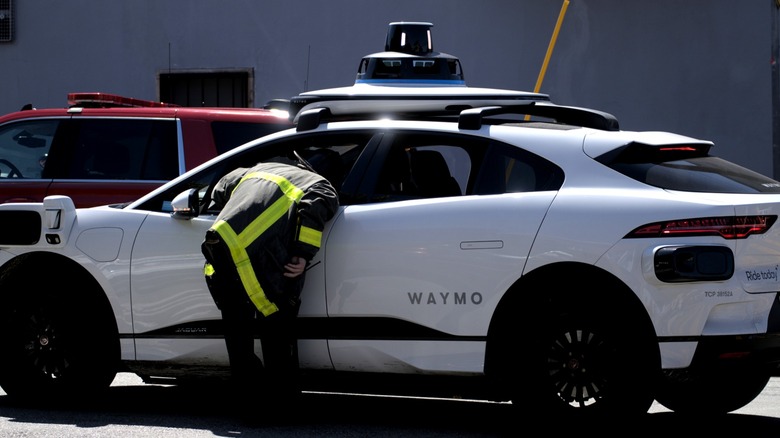
Despite the unending amount of headaches first responders willingly deal with on a day-to-day basis, technology over the last few years has forced a new mega-headache onto the front lines in the form of autonomous vehicles. Designed to get humans from place to place without a driver, these "robots" on wheels are the stars of first responders' nightmares and keeping them from attending to emergencies in a timely matter. Well, enough is enough, as the National Highway Traffic Safety Administration put out a letter this week that said autonomous vehicles getting in first responders' ways is absolutely "unacceptable" and the agency is determined to fix it.
The letter follows a recent closed-door meeting NHTSA had with law enforcement and first responders from areas where AVs are deployed to better understand the problems and nuances they've had to face while simply trying to do their job to save lives. What was shared there is unlikely to have been pretty, as even just the handful of incidents Jalopnik has covered in recent months doesn't paint a great picture.
Jonathan Morrison, NHTSA administrator, wrote, "To state it bluntly: an AV that cannot safely interact with first responders is a danger to the general public." ... "Every second matters when law enforcement officers, firefighters, or paramedics are answering a call because lives are on the line. That is why human drivers who impede these operations are subject to fines and even jail time."
The problem is more than just a minor software anomaly
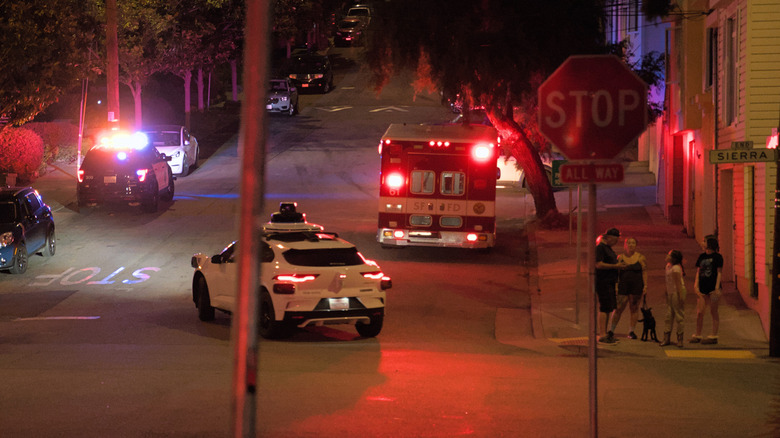
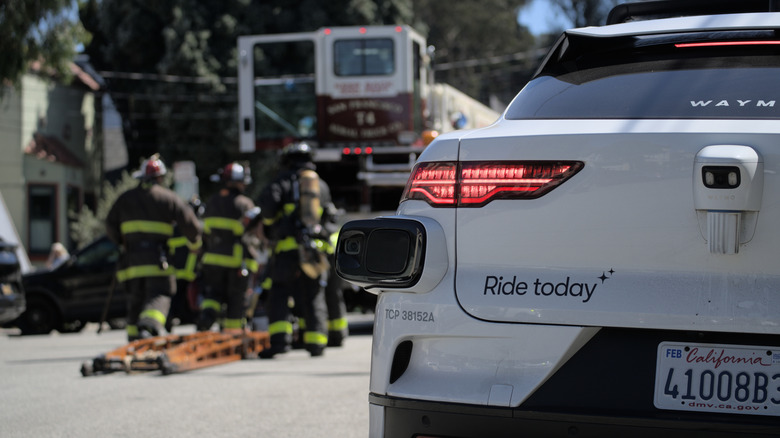
Morrison went on to cite examples familiar those multiple news sites — Jalopnik included — have reported on, like the blocking of ambulances and firefighters, or failing to recognize basic safety alerts and conditions. He told autonomous vehicle companies that issues with these vehicles blocking emergency crews, or not interacting with them appropriately or in a timely manner, is more than just a "minor software anomaly" or rare "edge cases" and that they need to do better, ordering them to dedicate all of their resources to fixing the issue as soon as possible. Like, yesterday.
Going forward, NHTSA plans to schedule meetings with the developers behind AVs to hear their solutions on how to fix the issue. After all, every minute wasted without a fix adds minutes to saving someone's life, and in emergencies you don't always have minutes.
The letter is validation for the individuals who have been on the literal front lines dealing with AVs, because hey, the government is finally taking this seriously. All the same, there may be some understandable room for hesitancy. If the problem were so simple to fix, why isn't it fixed already? And does Morrison really believe they'll come up with those solutions in a month, when I'm sure these developers are all too aware of how much of a hinderance their vehicles are to first responders?
You can't have it both ways
It all comes at a time when everyone's favorite reality show star Secretary of Transportation Sean Duffy is also pushing [re: rushing] to simplify autonomous vehicles so that this technology can be brought to the roads in a more timely matter. The letter actually kicks off talking about Duffy's AV Framework, the one I recently wrote about that would take away emergency brake pedals and levers in autonomous cars. Even then I wondered just how emergency responders would be able to disable or override a vehicle in an emergency, if those controls — or similarly easily-accessible and recognizable kill switches — were not available.
For the sake of first responders, I hope that Morrison and his crew are taking this seriously. I also don't believe NHTSA would actually be the problem in helping to resolve this mess. Really, hesitancy is drawn from Duffy's ill-informed efforts that contradict what even this letter is trying to accomplish. If NHTSA can finally push some change, it would actually help save lives.
And this is absolutely the time to be more than aggressive with AV companies and getting them to fix this as they continue to expand their driverless networks further across the United States. I mean, they could just take them off the roads until NHTSA is satisfied with those fixes. Instead, these cars will continue to plague a new swath of first response crews in new cities when they're called to the most dire of situations.