

Waymo's Confusion Around Emergency Vehicles Is Only Getting Worse: First Responders
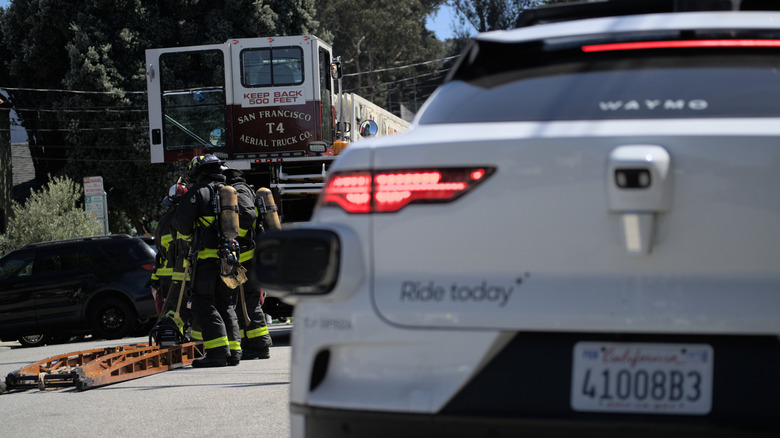
There's a pivotal thing bashed into your brain with a healthy dose of fear when you undergo training as a first responder: Every second counts. You are the first to a scene and everything you do, in the time you do it, will determine the outcome of someone's injuries or life. No pressure. So if anything were to get in-between you and say a compromised human, that's precious time ticking away that could lead to more serious injuries, even death. Already first responders have struggled in launch cities to navigate Waymos outright blocking emergency vehicles from responding to scenes, missing signals and violating simple traffic laws and etiquette. And things did start to improve. But officials in Austin and San Francisco are saying that Waymo's behaviors, and how the company responds to them in actual emergencies have regressed, making dealing with emergencies even worse.
A recent Wired article shared some of the discussion concerning the autonomous vehicle's behaviors from a private meeting between the Austin and San Francisco-based first responders and federal regulators at the National Highway Traffic Safety Administration. There, Mary Ellen Carroll, the executive director of San Francisco's Department of Emergency Management shared that first responders were "actually seeing something interesting: backsliding of some things that had been improved upon." Even more attention was drawn to Waymo's biggest weakness, "the human element" in emergency responses, where the car essentially froze, which created not only a headache for responders, but danger for everyone else.
Waymo cars have a hard time understanding emergencies
Jalopnik reported on one of those instances just last month when a Waymo vehicle blocked an ambulance from responding to a shooting in San Francisco that left three dead and 14 injured. In that case, emergency responders were able to get through to a victim relatively quickly, and get moving in a couple of minutes. In similar situations, though, those same officials said that it took up to 3 minutes to make a connection. In another San Francisco incident, one of the operators waited 53 minutes on Waymo's emergency toll-free hotline to get to a representative.
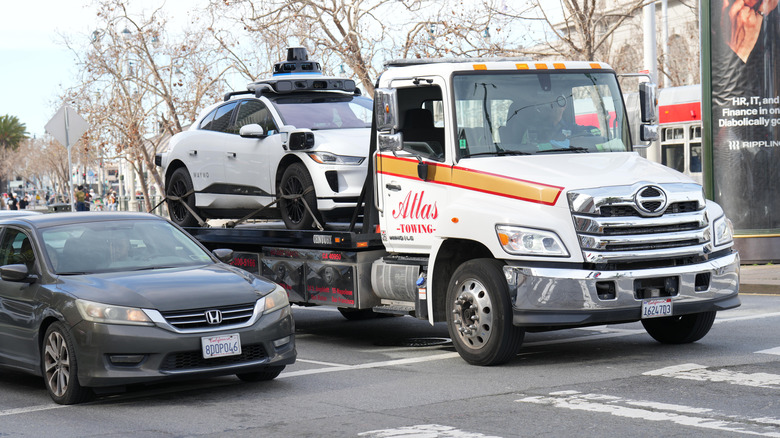
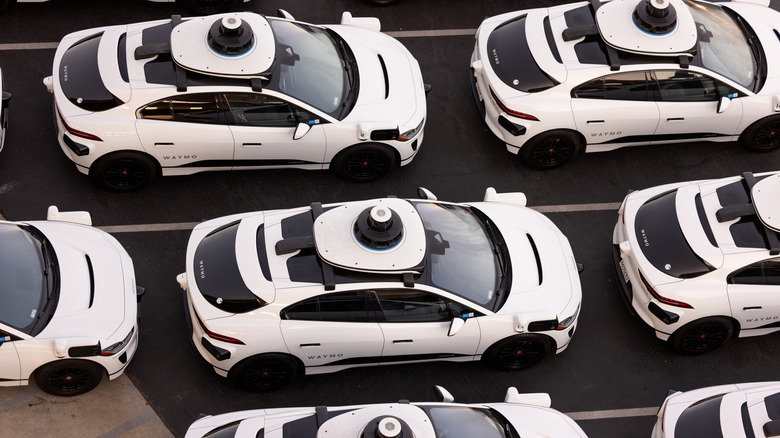
On the other side of things, in December, San Francisco experienced a three-hour power outage that stranded over a thousand Waymos across the city. Calls increased to emergency services, not just for actual emergency responses, but for reports of the frozen vehicles, which tied up critical phone lines. The majority of the Waymo vehicles did eventually move about after a few minutes, but 60 of those cars were bricked and required manual removal via critical emergency services.
Carroll has told city leaders scenarios like this keep her up at night. "Anything that brings a high volume of calls to 911 around these kinds of things can delay response, delay our call time for people that have true life-and-death situations."
Connecting to a human in a crisis shouldn't be this difficult
Waymo loves to tout that it trains first responders on how to handle its cars in emergency situations. But as someone who has trained as a first responder, and lives with a first responder, after reading the Google slideshow of training material available on the Governors Highway Safety Association site, it's lacking. Sure, it does include a near four-minute video that looked more like an ad for the autonomous driving service, the rest of the slides happen to provide a decent overview on what the car and service is, and what it does. Anyone who reads it should have a fairly basic understanding on how the car works, how it senses things, and how to disable it in an emergency.
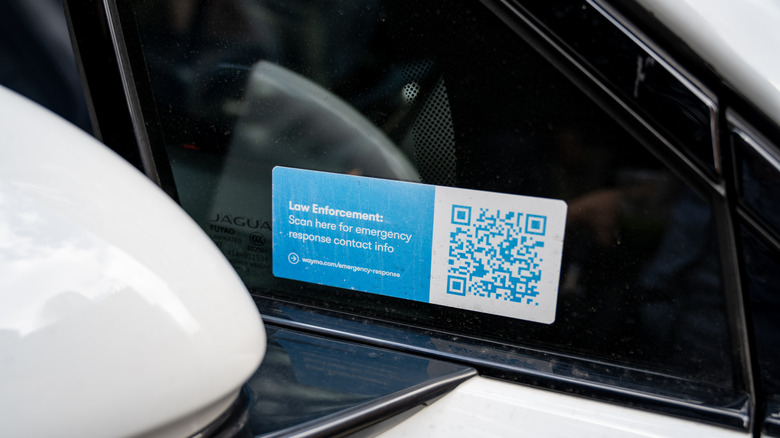
Yet the essential bit missing is what to do if the vehicle is not responding to you, the first responder, other than call a number stuck on the side of the car. Those on the front lines have to secure a scene or ensure the safety of all those trying to address an emergency, and that means moving (or disabling) cars in/out of harm's way, before they can attend to anyone that needs help. And Waymo already hasn't made that an easy process. If authorities can't get a car to respond hand signals — a responder's first line of direction, they're talking into the car or making a phone call and hoping (not guaranteed) someone answers, quickly.
Cities and states are forced to make every second count on their own
Since the ambulance incident, Waymo told Wired that it reached out to San Francisco officials to work on establishing more clear lines of communication. It's great for the California city, but how does that help the other areas facing the same critical misgivings?
While cities wait for Waymo's actions or Federal regulators to make strides in helping first responders respond to literal life and death situations, they, along with states, have been forced to take efforts into their own hands. Tuesday, California's Department of Motor Vehicles issued new regulations for autonomous vehicles that would require companies like Waymo to respond to first-responder calls in 30 seconds. Emergency responders will also be able to issue temporary "do not enter" directives to companies requiring autonomous vehicles to vacate an emergency area within two minutes and staying away from that area.
The emergency 30-second response push for front-line workers would be helpful, but the "do not enter" directives getting pushed to vehicles still requires extra steps and time, something first-responders really don't have. But at the same time, what other choice do they have when the actual problem is that the car (or the company) won't respond to a human, like a human, in the appropriate life-saving time?