

EU Wants To Slow Down Fast Drivers Using Satellites In Orbit
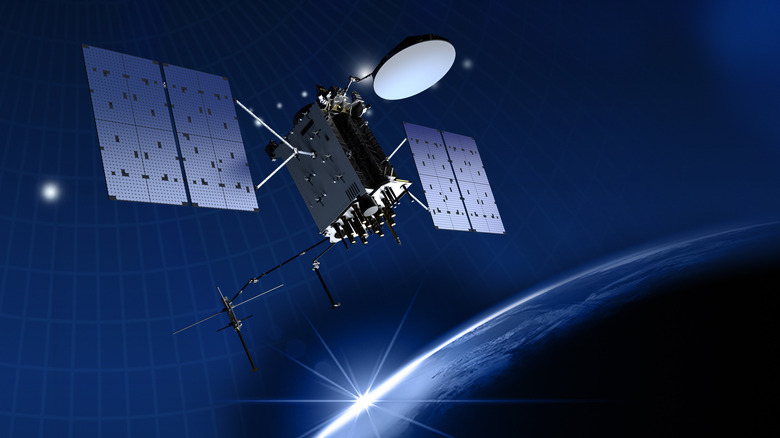
Speed limits exist for a reason, but the European Union is taking it a step beyond signs and ticketed enforcement, attempting to force cars to adhere to the limits regardless of the driver's commands. According to the Daily Mail, the European Commission is proposing that new cars in the EU should be electronically limited to the posted speed limit, based on GPS location, map data, and cameras.
Implementing this sort of speed restriction would be relatively easy. The technology already exists in many modern cars to adjust a car's speed based on posted signs — it would just take a little bit of programming. In fact, cars sold in the EU since 2024 already have a watered-down version of this, "Intelligent Speed Assistance" (ISA). It's not a speed limiter, but it does alert the driver if it thinks they are exceeding the speed limit. It's easy to ignore or override, as required by EU law. But a hard limit, rather than nagware, was the original plan, and has been in the works all along. From the Daily Mail:
'This was always just an interim stage,' one well-placed source said. 'Let's tell the driver, let's warn him, let's beep [when exceeding the speed limit]. But eventually we will just fix the speed of the car so you can't go over the speed limit.'
According to The Mail, the European Commission's proposal would make speed-limiting devices mandatory starting in 2030. Instead of a nag, ISA would become a hard limit. Whatever your car thinks the speed limit is, that would be the maximum speed allowed. There would be a temporary override function, but it's unclear how easy this would be to activate or how long the override would last.
Real world implications
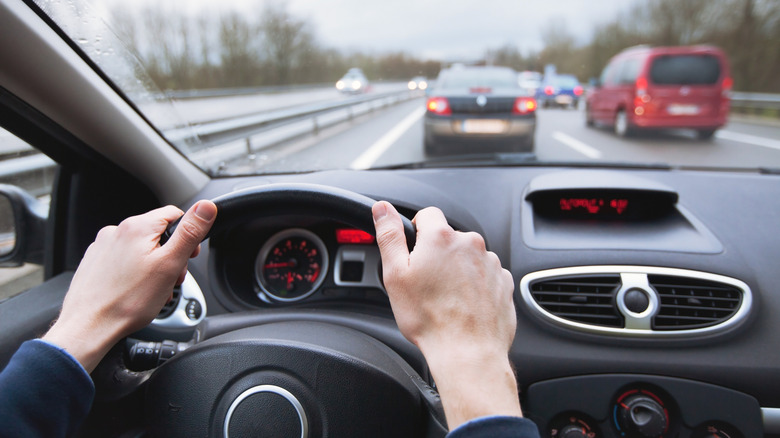
If every car on the road stuck to the speed limit, this wouldn't be such a big deal. But we know that's not the case. In a world where people routinely drive 10 or 20 mph over the limit, particularly where the limits are too low, a car electronically limited to the posted limit (especially around other cars that weren't limited) would be a moving roadblock. Impatient drivers may take risks, from tailgating to unsafe passes over a double yellow line — all to get away from the slowpoke who can't help going "only" the speed limit.
Another problem is the accuracy of speed limit data. A recent study by Thatcham Research shows that ISA systems are only 74.3% accurate, based on speed limit change events rather than accuracy over time as the EU tests. That means that one out of four times the speed limit changes, ISA gets it wrong.
I've certainly seen wildly inaccurate speeds displayed in Google Maps and on various nav systems. Google thinks the narrow, twisty dirt road I live on has a 65 mph limit, something only an experienced rally driver could achieve without crashing. I've also seen it telling me a certain stretch of a 55 mph state highway has a 25 mph limit. This is comical when it doesn't affect anything, but could be downright dangerous if a car was wrongly limited to 25 in a 55, both for the slow car itself as well as anyone flying up behind it.
Of course, this could never happen in the US, because "mah freedumz," right? Think again. Virginia and Washington both allow speed limiters as a condition of permitting habitual speeders to keep their licenses, and Illinois and Arizona are considering similar measures. California tried to require speed limiters for everyone in 2024, but Governor Newsom vetoed the bill. Starting in 2027, vehicles must have ISA tech (the current warning system, not the proposed speed limiter) to qualify as an IIHS Top Safety Pick+. Given that Europe already requires this, it would be simple enough for manufacturers to turn it on for US models as well.